
News
Quarter-century-old robbery case dismissed


A quarter-century-old robbery case came to a close yesterday when Colombo High Court Judge Lanka Jayaratne acquitted a former Army Captain and his driver, ruling that the prosecution had failed to present credible evidence.
Former Captain Udaya Shantha Kodituwakku and his driver U.H. Ilanga Shiran had been accused of storming a jewellery shop in Wellawatte on 04 April 2001, allegedly armed with a gun and a “Rambo knife,” and robbing a mobile phone worth Rs. 20,000 from an employee, Selvaturai Sivakumar.
Judge Jayaratne, delivering a sharply worded decision, said the prosecution’s account simply did not hold up. She noted that evidence suggested that the two accused had continued visiting the same jewellery shop and even maintained friendly conversation with the staff for more than a year and a half after the alleged robbery, and such behaviour she said was inconsistent with the prosecution’s claim. The judge also pointed out that the alleged stolen mobile phone had not been produced in court, while witness statements from the shop’s employees and owner were riddled with contradictions.
The case had already taken several twists. In 2004, the Mount Lavinia Magistrate—after referring the alleged weapons to the Government Analyst—found they were not firearms under the Firearms Ordinance but toy replicas, leading to the suspects’ release at the time. However, in 2007 the Attorney General revised the charges and filed fresh indictments before the High Court.
President’s Counsel Rienzie Arsecularatne, appearing for the defence, told court that as a result of the prolonged legal battle, Kodituwakku had been suspended from service and deprived of salary and entitlements since June 12, 2001.
Counsel Udara Muhandiramge, Hirimuthu Jayawardena and Namal Karunaratne also appeared for the defence.
By A.J.A. Abeyanayake

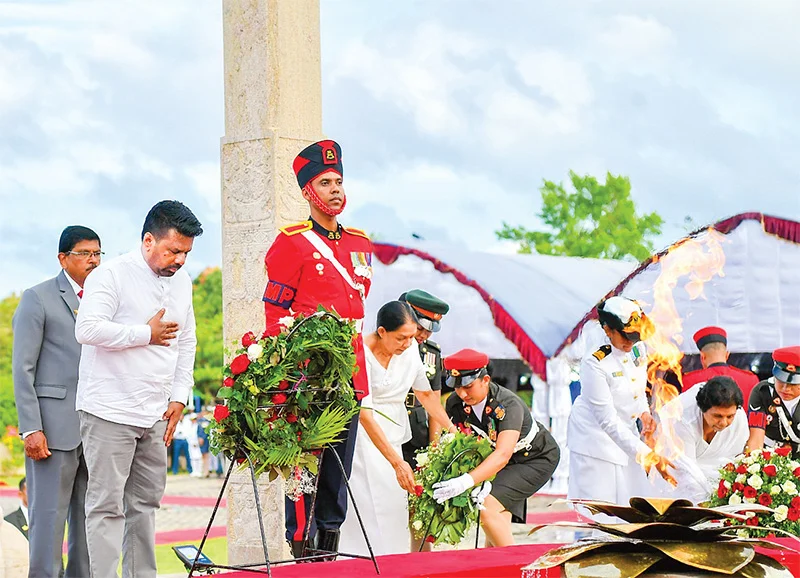
The government was committed to fulfilling the aspirations of war heroes who liberated the country, President Anura Kumara Dissanayake said yesterday, addressing the 17th National War Heroes’ Commemoration Ceremony held in Battaramulla.
The members of the security forces had made a tremendous contribution towards bringing relief to the people and their sacrifices had to be honoured not only with remembrance but also through action to rebuild the nation, President Dissanayake said, stressing that everything possible had to be done to ensure that the people would not suffer due to conflicts again.
Praising the armed forces for the role they played in disaster response and national emergencies, the President said the government was working hard to strengthen the country’s international standing while ensuring the rule of law and judicial independence.
Sri Lanka belonged to all communities and there should be no division along ethnic lines.
President Dissanayake added that the government’s focus was to prevent the recurrence of conflict and to build a democratic society where equality before the law was guaranteed and all citizens had equal opportunity regardless of status.
News
H’tota elephant management reserve essential to halt ecological destruction and rising human-elephant conflict – Minister Patabendi
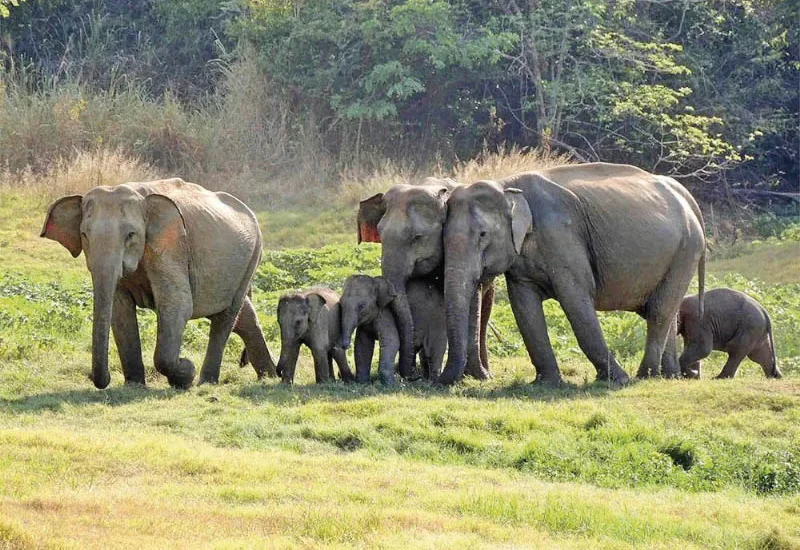
Environment Minister Dhammika Patabendi yesterday sounded a strong warning over the rapid destruction of elephant habitats in the Hambantota region, declaring that the proposed Hambantota Elephant Management Reserve was no longer an option but an urgent national necessity to prevent a deepening environmental crisis.
Addressing a media briefing convened to create public awareness on the reserve, Dr. Patabendi said decades of political interference, illegal land grabs, deforestation and unplanned development had pushed Sri Lanka’s elephant population and rural communities into a dangerous confrontation.
“Sri Lanka is witnessing an environmental tragedy unfold before our eyes. Forests are shrinking, elephant corridors are being blocked, and wild elephants are being forced into villages and farmlands in search of food and water,” the Minister said.
He stressed that the Hambantota region had become one of the country’s most critical human-elephant conflict hotspots due to aggressive land conversion and irresponsible exploitation of natural ecosystems.
“The elephant is paying the price for human greed and shortsighted planning. If we continue to destroy forests in the name of development without ecological discipline, the consequences will be catastrophic not only for wildlife, but also for people,” he warned.
Dr. Patabendi said the proposed Elephant Management Reserve would serve as a scientifically managed buffer to protect vital elephant corridors, regulate land use, and reduce deadly encounters between elephants and humans.
He noted that Sri Lanka continued to record alarming numbers of elephant and human deaths annually, describing the situation as a “national environmental emergency.”
“Human-elephant conflict is no longer merely a wildlife issue. It is directly linked to food security, rural safety, water resources and ecological stability. The country cannot continue to address this crisis with temporary fences and political rhetoric,” he said.
The Minister also took aim at illegal encroachments and destructive activities within sensitive forest areas, warning that strict action would be taken against those responsible for environmental destruction.
“There are organised attempts to exploit forest lands for private interests while ignoring the irreversible damage caused to biodiversity and ecosystems. Such actions cannot be tolerated any longer,” he said.
Dr. Patabendi stressed that sustainable development could not be achieved at the expense of forests and wildlife, adding that environmental conservation must become a central pillar of national policy rather than an afterthought.
Environmentalists said Sri Lanka’s elephant population was increasingly under pressure due to shrinking habitats, fragmented migration routes and expanding human settlements.
The Minister called on politicians, state institutions and the public to support long-term conservation measures instead of promoting short-sighted solutions driven by vested interests.
“We have reached a decisive moment. Either we protect these ecosystems now or future generations will inherit a country stripped of its forests, wildlife and ecological security,” he warned.
The Environment Ministry is expected to initiate further scientific consultations and stakeholder discussions before moving ahead with the reserve’s implementation framework.
By Ifham Nizam
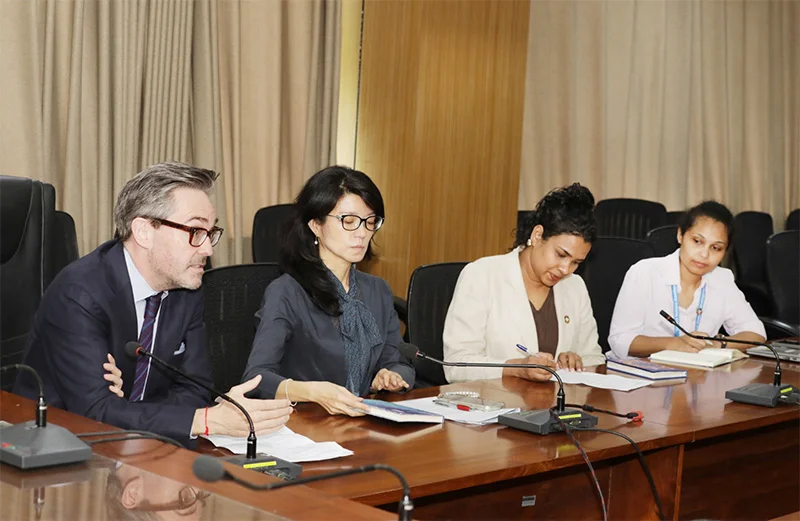
UN Resident Coordinator here, Marc-André Franche, said yesterday that efforts to establish ‘Unified Civil Registry’ programme was underway. Led by UNDP and the World Health Organisation (WHO), system mapping, capacity building, and baseline surveys have already been completed, he said, adding that ‘mobile clinics’ programme, implemented by UNDP in support of the Registrar General, has received the appreciation of many, including at the UN Headquarters in New York.
According to him the project would be completed by November 2027.
The ongoing project is meant to digitalise Sri Lanka’s Civil Registration and Vital Statistics (CRVS) system, strengthening regional administration and local government institutions, and fast-tracking the electoral reform process.
Public Administration, Provincial Councils and Local Government Minister, Professor Chandana Abayarathne, and Marc-André Franche and officials discuss ways and means of bringing the project to a successful conclusion when they met at the Ministry premises, located at Independence Square, Colombo 07.

Taijul takes six as Bangladesh complete 2-0 sweep

At least 10 dead as huge floods sweep southern and central China

Ebola outbreak may be spreading faster than first thought, WHO doctor warns

Sooryavanshi’s stunning 93 takes Rajasthan Royals closer to IPL playoffs

Showers in the Western, Sabaragamuwa, Northern, North-western and Southern provinces and in Anuradhapura, Kandy and Nuwara-Eliya districts

Govt. committed to fulfilling aspirations of war heroes who liberated country: AKD

‘Dates have the highest sugar content to fight Coronavirus’

Sunday Island 27 December – Headlines

#SundayIsland 17th December – Headlines

Sunday Island – 28th March

Sunday Island Headlines – 21 March

Sunday Island – 21st February – Headlines
-

 Features3 days ago
Sri Lankan Airlines Airbus Scandal and the Death of Kapila Chandrasena and my Brother Rajeewa
-

 News4 days ago
Lanka’s eligibility to draw next IMF tranche of USD 700 mn hinges on ‘restoration of cost-recovery pricing for electricity and fuel’
-

 News3 days ago
Kapila Chandrasena case: GN phone records under court scrutiny
-

 News3 days ago
Rupee slide rekindles 2022 crisis fears as inflation risks mount
-

 Opinion6 days ago
Electricity tariffs have skyrocketed: Can further increases be prevented?
-

 Business3 days ago
Expansion of PayPal services in Sri Lanka officially announced
-
 Features5 days ago
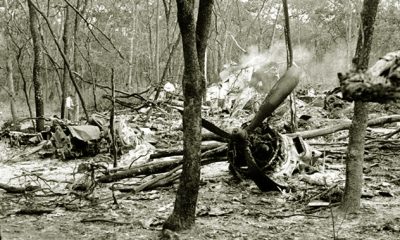
Mysterious Death of United Nations Secretary General Hammarskjöld
-

 News3 days ago
Court orders further arrests in alleged USD 42 Mn NDB fraud case