
Latest News
India smell victory after 15-wicket day on a tough Eden Gardens pitch

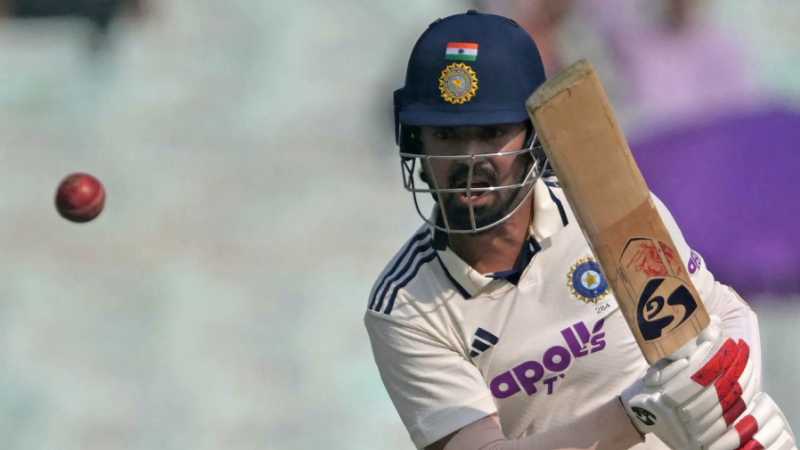
India started the second day 122 runs behind in the first innings with nine wickets in hand. Less than six dramatic hours of cricket later, they were sensing a win, having reduced South Africa to effectively 63 for 7 in their second innings. Fifteen wickets fell on the day, Shubman Gill retired with a neck spasm, 39 remained the top score in the Test, and 57 the top partnership. This was the lowest top score in the first two innings of a Test in India, and the lowest in any Test since Durban 2010-11 between the same sides.
Absolutely nobody predicted the pitch would turn out to be so difficult to bat on. It looked like a normal Indian track, good for batting for first two days, but the top surface began to come off in the second half of the first day. On the second day, it became near unplayable. Even the fast bowlers drew generous help to take 11 of the 26 wickets to fall.
The pitch might seem at odds with India’s public utterances after the series loss to New Zealand last year that they want to play on more balanced surfaces, but commentator Dinesh Karthik said on air that it was not watered on the day before the Test, which comes across as unusual.
What wasn’t unusual was that the best player on this moving day was Ravindra Jadeja, who scored 27 largely trouble-free runs before his old-fashioned technique of hiding the bat behind the pad got him out lbw to Simon Harmer.
Harmer himself showed all the hype was real, that he is now a vastly improved bowler to the one that showed up in India 10 years ago, taking 4 for 30 to keep South Africa in arrears of only 30 after being bowled out for 159 on the first day. Jadeja, though, showed 30 was plenty with an unerring unbroken spell of 13-3-29-4 as South Africa ended the day on 93 for 7.
When the day began, and indeed even after the wicketless first hour, it looked like India were setting themselves up for a decisive first-innings lead. KL Rahul, the top-scorer in the match, and India’s new No. 3 Washington Sundar put together the joint-highest partnership of the match. Introduced only in the second hour of the day, Harmer produced immediate results, turning one past Washington’s edge and the next onto the edge.
At 75 for 2, India were 84 behind South Africa, still a comfortable position to be in. Gill, whose neck seemed to be in some discomfort in the morning warm-ups, then went into a spasm as soon as he swept Harmer for four.
While Rahul, Rishabh Pant and Jadeja – 39, 27 and 27 – looked good in their own individual ways, the eventual wicket-taking delivery was always around the corner. Rahul made the mistake of following Keshav Maharaj’s extravagant turn, Jadeja was done in by the natural variation, and Pant fell to extra bounce for Corbin Bosch.
Maharaj will be disappointed he went at over four an over, but the combination of Harmer and Marco Jansen made light of India’s batting depth, which generally is the case on such pitches. In Kagiso Rabada’s absence, Jansen’s analysis of 15-4-35-3 kept South Africa alive in the Test. India lost their last four wickets for 36.
By the time India started bowling for the second time, with a little over half an hour to tea on day two, it made complete sense to open with spin. Jasprit Bumrah, who got a five-for in the first innings, did open the bowling, and from the end where bowlers had generated uneven bounce, but it wasn’t long before South Africa were facing spin from both ends with little breathing time or space.
Kuldeep Yadav took the wicket of Ryan Rickelton with what turned out to be the last ball of the middle session, one that didn’t turn and also had the batter playing back when he should have been forward.
Kyle Verreynne copped flak for trying to slog-sweep Axar Patel, but there weren’t many scoring opportunities on that pitch with in-out fields. A similar attacking strategy came off for Jansen for a while as he scored 13 but even he get a feather on a sweep off Kuldeep.
The catching of both sides remained sensational with Rahul capping the day off with a low slip catch off a deflection of the keeper Pant. Temba Bavuma defended well and threw in the occasional sweep to end the day unbeaten on 29 off 78, but it seemed he still had a lot to do with the bat to give South Africa a shot at a win.
Brief scores:
South Africa 159 and 93 for 7 (Temba Bavuma 29*; Ravindra Jadeja 4-29) lead India 189 (KL Rahul 39, Simon Harmer 4-30, Marco Jansen 3-35)by 63 runs
(Cricinfo)

Latest News
Sun directly overhead Madampe, Thorayaya, Thotagamuwa, Rattota and Kalavanchikudy about 12.09 noon today (03)

The sun is going to be directly over the latitudes of Sri Lanka from 28th of August to 07th of September due to its apparent southward relative motion.
The nearest places of Sri Lanka over which the sun is overhead today (03) are Madampe, Thorayaya, Thotagamuwa, Rattota and
Kalavanchikudy about 12.09 noon.
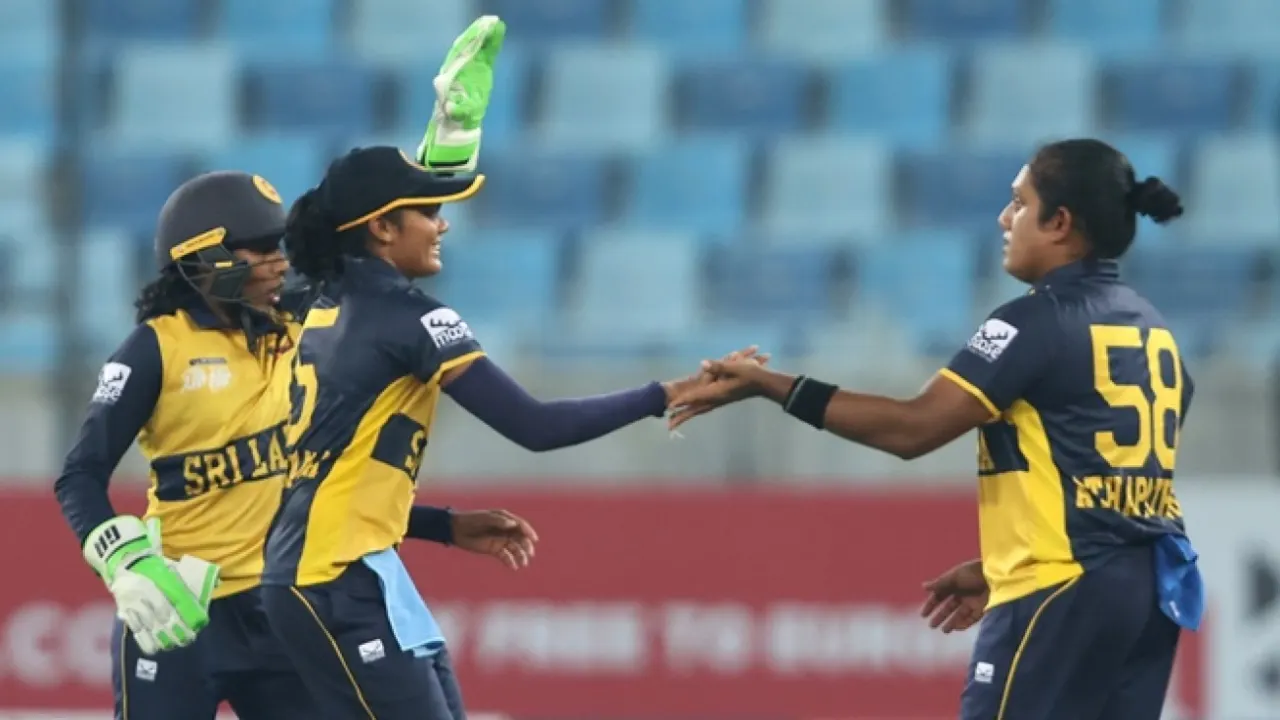
A Chamari Athapaththu seven-wicket haul and Nilakshika Silva’s 50 off 35 saw defending champions Sri Lanka withstand a valiant Indonesian side to register a resounding 75-run victory in their Asia Cup match in Dubai.
Athapaththu was undoubtedly the pick of the bowlers, as she started and finished Indonesia’s slide with career best figures of 7 for 05, inclusive of a hat-trick – nearly two in fact. Chasing a target of 125, the opening pair of Maria Corazon and Rahmawati Pangestuti struck 16 runs in the first two overs, but once spin came into play scoring slowed down to a trickle and Indonesia were eventually bowled out for 49 in the 19th over.
Sri Lanka, too, had found it tough to combat Indonesia’s mix of spin and slow-medium seamers as they stumbled to 62 for 6 in the 13th over, but their innings received a timely boost as Nilakshika countered with a trademark back-against-the-wall effort to drag her side to a total that seemed about par on a pretty sluggish surface. In the end it proved to be plenty.
Sri Lanka struggle early on
Having been put in to bat on a fresh surface, Sri Lanka were perhaps guilty of a little complacency against their less-fancied opponents. Time and again the top order sought to find the boundary, and time and again they failed to find their timing.
On a wicket where the ball was hardly coming on, the Sri Lankan batters’ tunnel vision focused squarely on boundary hitting and eschewed strike rotation; there were 19 dot balls in a powerplay that had fetched 31 runs for the loss of two wickets.
By the halfway point of the innings, the dot count had risen to 28. The scorecard, meanwhile, read 47 for 5. Indonesia, to their credit, did well to bowl to their fields and frustrate the Lankan batters.
Sanjana Kavindi got to double-digits with a pair of nicely struck boundaries, but she was the only one of Sri Lanka’s top five to do so – and she was eventually done in on 15 missing an attempted cut on a straight one.
Nilakshika brings the Silva-lining
With recognised batting fast running out, Sri Lanka needed someone to take control of the innings, and as she has done so often over recent years it was Nilakshika that stood up to be counted.
She first strung together 17 off 18 with Kaushini Nuthyangana, but when Nuthyangana fell Nilakshika produced a masterclass in batting with the tail. She cajoled Kawya Kavindi to keep rotating the strike, and when the opportunity arose she was unerring in finding the boundaries – including Sri Lanka’s first and only six of the innings in the penultimate over.
Their seventh-wicket partnership eventually ended on 50 off 36, reached simultaneously alongside side Nilakshika’s fifty – her third in T20Is – but by then she had already ushered her side to safety.
Athapaththu steals the show
In Chethana Vimukthi, Sri Lanka might have their first ever genuine fast bowler but on a wicket where the ball was not quite coming on, pace never seemed like the answer. For the first two overs of the chase, Indonesia’s openers did well to find boundaries against Vimukthi and and fellow seamer Kawya, but then Sri Lanka introduced their spinners.
Athapaththu promptly castled Pangestuti before removing Corazon and Rada Rani off consecutive deliveries in her next over. Here she missed her hat-trick by a whisker, a yorker narrowly missing Desi Wulandari’s off stump.
She brought herself back into the attack in the 14th and removed Nanda Sakarini, and she capped things off by achieving her hat-trick at the second time of asking, taking three wickets off what proved to be the final three deliveries of the innings.
Scores:
Sri Lanka Women 124 for 7 in 20 overs (Sanjana Kavindi 15, Nilakshika Silva 50, Kawya Kavindi 15*; Ni Ariani 1-23, Sang Maypriani 2-15, Ni Luh Dewi 3-32, Sofia Velic 1-21) beat Indonesia Women 49 all out in 18.3 overs (Rahmawati Pangestudi 10, Ni Made Putri Suwandevi 12; Kavya Kavindi 1-14, Sugandika Kumari 1-03, Chamari Athapaththu 7-05, Kavisha Dilhari 1-02) by 75 runs
[Cricinfo]

The Memorandum of Understanding (MoU) relating to the project to provide technological solutions to prevent wild elephants from being hit by trains was signed yesterday (01) afternoon at the President’s Media Centre, under the patronage of Secretary to the President Dr Nandika Sanath Kumanayake.
Coordinated through the “Clean Sri Lanka” programme, the project is being implemented as a public-private partnership, with the Railway Department, the Department of Wildlife Conservation and the Forest Conservation Department working together, with full financial support from People’s Bank.
The system consists of three-beam detection, passive infrared (PIR) sensors, automatic temperature sensors and a tamper alarm system to detect animals weighing more than 20 kilogrammes and unauthorised interference. Signal lights (red/yellow/green) installed on either side of the railway tracks, together with a special screen installed inside the locomotive cab, will alert the driver in advance to the exact location of an elephant.
A demonstration test of the system was successfully conducted at the Pinnawala Elephant Orphanage premises in the presence of the relevant officials, following which a report on the system was prepared.
The system will be implemented as a pilot project from next month at 13 locations where wild elephant accidents are frequent. A newly developed website is also scheduled to be launched to enable the progress of the project to be viewed live.
Additional General Manager of Railways P.D.S.B. Chandrasena, Director General of Wildlife Conservation M.S.L.R.P. Marasinghe, Conservator General of Forests S.C. Palamakuumbura and Chairman of People’s Bank Chandana Guniyangoda signed the relevant MoU. Officials from the Clean Sri Lanka Secretariat, including Presidential Additional Secretary (Clean Sri Lanka) Engineer S.P.C. Sugeeshwara, as well as senior officials from the Railway Department, Department of Wildlife Conservation, Forest Conservation Department and People’s Bank, were also present.
[President’s Media Division]

India to host inaugural Women’s Champions Trophy in February

Sun directly overhead Madampe, Thorayaya, Thotagamuwa, Rattota and Kalavanchikudy about 12.09 noon today (03)

Afternoon thundershowers in the Northern, North-central, Eastern and Uva provinces in next few days, starting from today (03).

22A: SC urged to suspend hearing, appoint full bench

Govt. seeks NATO assistance

Recent ‘Ice’ detection at the Colombo Port made on US intelligence – Embassy

‘Dates have the highest sugar content to fight Coronavirus’

Sunday Island 27 December – Headlines

#SundayIsland 17th December – Headlines

Sunday Island – 28th March

Sunday Island Headlines – 21 March

Sunday Island – 21st February – Headlines
-

 News7 days ago
Eight politicians in drug kingpin probe
-

 Features5 days ago
“Wrap Me Up in My Blazer”— A Gentlemanly Bradby Reminiscence
-

 Business7 days ago
Sri Lanka opens up: A new season of direct connectivity
-

 Features4 days ago
When Sri Lankan stories find their own voice
-

 Features7 days ago
Redefining ageing in Sri Lanka
-

 Editorial7 days ago
The toxic legacy of two lakes
-
 Business7 days ago
Jaffna Teaching Hospital secures lifeline water supply via ADB-funded Thalaiyadi sea water desalination plant
-
 Features5 days ago
JVP/NPP government as seen from outside by Lionel Bopage now domiciled in Australia