
Features
Revenue Mirage: Why Budget 2026 celebrates wrong numbers

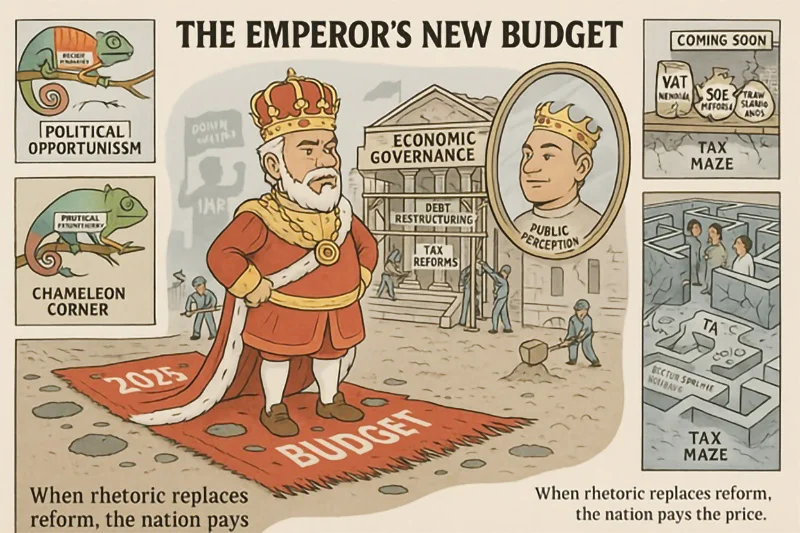
 There’s a fundamental challenge in democratic governance: opposition parties can critique freely, but governing requires navigating complex trade-offs. President Anura Kumara Dissanayake’s 2026 budget offers a compelling case study in this transition, revealing significant gaps between campaign rhetoric and the constraints of fiscal management.
The IMF Framework: From Critic to Custodian
Perhaps the most striking aspect of this budget is the government’s relationship with the IMF Extended Fund Facility. During opposition years, the current administration vocally opposed the IMF programme, characterizing it as compromising national sovereignty. Public protests were organized, and the austerity measures were framed as economically damaging to ordinary citizens.
However, the budget speech presents a markedly different narrative, emphasizing the government’s role in completing “complex negotiations” and maintaining programme commitments. This represents a significant policy evolution that warrants examination.
From a financial perspective, the IMF programme’s core elements, foreign reserve stabilisation, debt restructuring, and tax reform, were indeed instrumental in preventing economic collapse. These measures, implemented by the previous administration, created the foundation upon which current stability rests. The question for analysts and citizens alike is whether this shift represents genuine policy learning or political opportunism.
This matters because credibility in economic management depends on consistency and acknowledgment of institutional continuity. When governments claim credit for the frameworks they previously opposed without explaining their changed perspective, it undermines the analytical foundation necessary for sound policy evaluation.
Infrastructure Policy: Reconciling Past and Present
The budget’s infrastructure commitments present another area requiring careful scrutiny. Historically, the governing party opposed major development projects through legal challenges and public campaigns, characterizing highways and ports as economically unsound or corruption-prone ventures.
The current budget, however, emphasizes connectivity and infrastructure development as economic priorities. While corruption concerns in previous projects deserve independent investigation, the broader question is whether infrastructure opposition was principled or political.
From an accounting perspective, infrastructure delays carry real costs: project escalation, opportunity costs from delayed economic benefits, and reduced investor confidence. When political parties transition from opposing to promoting similar projects, the financial community needs clarity on what analytical framework guides these decisions.
This isn’t about political hypocrisy; it’s about understanding whether infrastructure assessments are based on consistent cost-benefit analysis or shifting political winds. Investors and development partners require this clarity for rational decision-making.
Fiscal Targets: The Revenue Growth Gamble
The budget’s fiscal strategy raises substantive concerns about achievability. The IMF programme mandates a primary surplus of 2.3% of GDP, alongside specific targets for tax base expansion and expenditure control. These aren’t suggestions, they’re contractual obligations with measurable consequences for non-compliance.
The budget appears to rely heavily on revenue growth from economic expansion to meet these targets. While growth-driven revenue is desirable, it’s also uncertain. This approach contains inherent risks:
First, economic growth projections may not materialise as forecast, creating revenue shortfalls. Second, expenditure commitments are typically sticky, easier to promise than to cut. Third, the IMF’s programme reviews occur quarterly, meaning deviations become apparent quickly.
Sound fiscal management requires conservative revenue estimates and concrete expenditure controls. Betting on optimistic growth scenarios without backup plans represents a higher risk tolerance than international creditors typically accept. The financial community will watch quarterly reviews closely to assess whether this optimism was justified.
State Enterprise Reform: The Missing Implementation Plan
State-owned enterprise reform represents perhaps the budget’s most significant omission. The IMF programme explicitly requires SOE restructuring to reduce fiscal drains, these entities have historically imposed substantial costs on government finances through operational losses and inefficient capital allocation.
The budget mentions “restructuring” and “strategic partnerships” but provides minimal detail on timelines, financial targets, or governance reforms. Critically absent is any discussion of depoliticising board appointments, which professionals recognize as fundamental to effective corporate governance.
Without concrete implementation frameworks, these commitments remain aspirational. Financial markets and credit rating agencies evaluate governments on execution, not intentions. The absence of measurable milestones suggests either incomplete planning or reluctance to commit to potentially unpopular reforms.
Tax Policy: Complexity Versus Neutrality
The budget’s tax structure introduces significant complexity through sector-specific holidays and concessions for technology, agriculture, and exports. From a tax policy perspective, this approach conflicts with established best practices.
The IMF programme emphasises tax base broadening and simplification, principles supported by decades of economic research. Complex tax systems create several problems:
• Investment distortion: Companies make decisions based on tax treatment rather than economic fundamentals
• Administrative burden: Both taxpayers and revenue authorities face higher compliance costs
• Lobbying opportunities: Special interests seek favorable carve-outs, potentially compromising revenue neutrality
• Base narrowing: Exemptions reduce the pool of taxable activity, contradicting programme objectives
Effective tax reform typically moves toward fewer rates, broader bases, and minimal exemptions. The budget’s approach suggests either disagreement with this conventional wisdom or political pressure to accommodate special interests. Neither explanation provides comfort regarding long-term fiscal sustainability.
The Revenue Paradox: Short-Term Gains, Long-Term Risks
The budget celebrates achieving 15.4% government revenue to GDP, the highest in two decades, the government has claimed, as evidence of fiscal success. However, this achievement warrants closer examination of its composition and sustainability. A significant portion stems from import duty collection, particularly from the vehicle import surge following relaxed restrictions. While this generates immediate revenue, it triggers a dangerous economic chain reaction: substantial foreign reserve outflows for vehicle imports, currency depreciation pressure as reserves diminish, and ultimately, inflation through increased costs of essential imported commodities. The rupee’s recent weakening validates these concerns. This revenue strategy essentially trades long-term monetary stability for short-term fiscal optics, a particularly concerning approach for a nation still rebuilding foreign reserve buffers post-default.
The Global Currency Context: Compounding Vulnerabilities
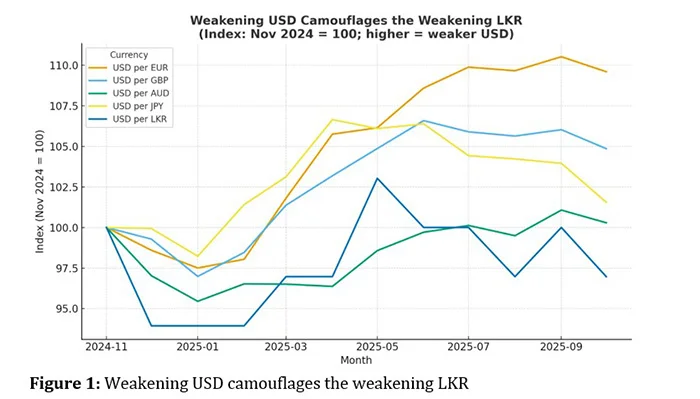
The rupee’s depreciation pressure occurs against a backdrop of significant USD volatility in global markets. The US dollar has experienced its weakest performance since 2020, declining approximately 10.7% against a basket of major currencies in the first half of 2025. The Dollar Index has fallen 4-5% year-to-date, with notable movements including a 12.6% rise in EUR/USD and a 7.7% yen appreciation (Figure 1). For Sri Lanka, this creates a compounding problem: while the rupee weakens due to domestic factors like reserve depletion from vehicle imports, USD instability against major currencies adds another layer of unpredictability to import costs and foreign debt servicing obligations. The budget appears not to have adequately addressed in its revenue and expenditure projections. (See Figure 1)
The Digitalization Disconnect: Ambition Versus Allocation
The budget outlines ambitious digitalization objectives spanning tax administration, public service delivery, and government operations, initiatives that could genuinely improve efficiency and reduce corruption. However, the allocation of merely Rs.1000 million rupees for these comprehensive digital transformation plans reveals a fundamental disconnect between rhetoric and resource commitment. Modern digitalization projects require substantial investment in infrastructure, software systems, cybersecurity, training, and change management. Comparable initiatives in similar economies typically require budgets several orders of magnitude larger. This minimal allocation suggests either severe underestimation of implementation costs or lack of serious intent behind the digitalization promises. Setting unrealistic targets without adequate funding doesn’t constitute policy, it creates inevitable implementation failures that further erode public trust in government capability.
Campaign Commitments: The VAT Retreat
Pre-election promises included removing VAT from essential items, medicines, educational materials, and basic foods. This resonated with citizens facing cost-of-living pressures and differentiated the party from previous administrations.
The budget delivers only narrow, symbolic VAT exemptions while emphasizing revenue preservation for the primary surplus target. This represents a significant policy reversal within months of assuming office.
From a public finance perspective, this shift is understandable, VAT provides substantial, stable revenue that’s difficult to replace. However, the lack of transparent communication about this pivot creates a credibility problem. Citizens who voted based on these promises deserve explanation of the fiscal constraints that made them unworkable.
This pattern, broad promises followed by narrow delivery, risks eroding public trust, which is itself a form of social capital essential for implementing difficult reforms. Governments that acknowledge constraints honestly typically maintain better long-term credibility than those that quietly abandon commitments.
Transparency and Debt Disclosure
For a nation emerging from sovereign default, transparency in debt management is paramount. International creditors, domestic investors, and rating agencies all require detailed information on restructuring progress, contingent liabilities, and medium-term fiscal strategy.
The budget provides only high-level debt obligation summaries, lacking granular detail on negotiations with commercial and bilateral creditors beyond China. This opacity creates several problems: Market uncertainty: Investors cannot accurately price risk without information, speculation: Information vacuums get filled with rumors, often worse than reality, missed confidence-building: Transparency itself signals competent management
Modern debt management emphasizes disclosure as a tool for reducing borrowing costs and building credibility. The budget’s limited transparency represents a missed opportunity to strengthen market confidence.
Governance Maturity and Fiscal Credibility
This budget reveals the inherent tension between political campaigning and economic management. While some policy evolution is natural as parties transition to governance, the pattern here suggests incomplete reconciliation between past rhetoric and present responsibility.
The financial community evaluates governments on consistency, transparency, and execution. On these metrics, the budget raises concerns:
• Consistency: Claiming credit for frameworks previously opposed without acknowledgment
• Transparency: Limited disclosure on critical debt and SOE metrics
• Execution: Vague reform commitments without implementation details
Sri Lanka’s economic recovery depends on maintaining international confidence while addressing citizen needs. This requires honest communication about constraints, concrete implementation plans for reforms, and acknowledgment of institutional continuity across administrations.
The budget represents neither disaster nor triumph; it’s a document reflecting the difficult learning curve of governance. The question moving forward is whether subsequent budgets and quarterly reviews demonstrate growing sophistication or continued tension between political instinct and economic necessity.
Economic management isn’t performance, it’s about building institutional credibility through consistent, transparent, and evidence-based policy. The nation’s recovery depends on this maturity developing quickly.
(The writer, a senior Chartered Accountant and professional banker, is Professor at SLIIT, Malabe. The views and opinions expressed in this article are personal.)

Features
Illegal solar push ravages Hambantota elephant habitat: Environmentalist warns of deepening crisis
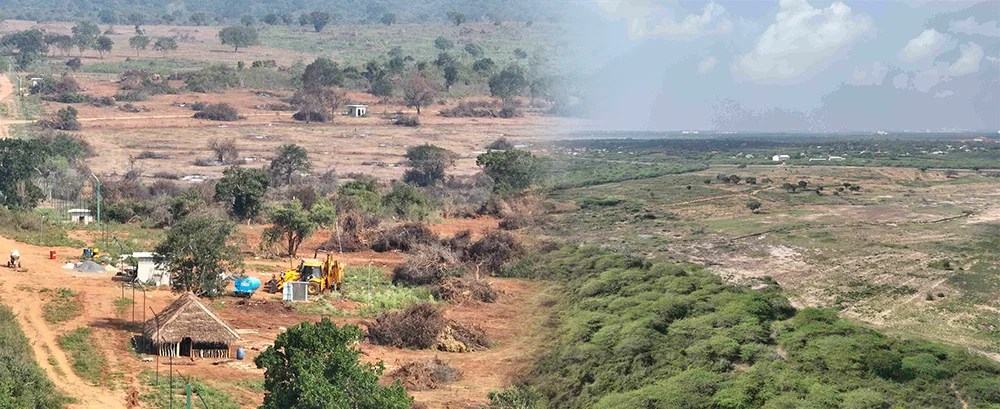
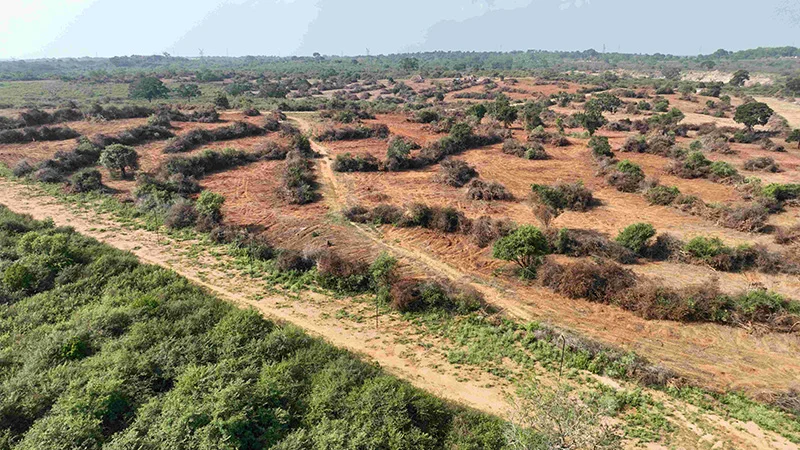
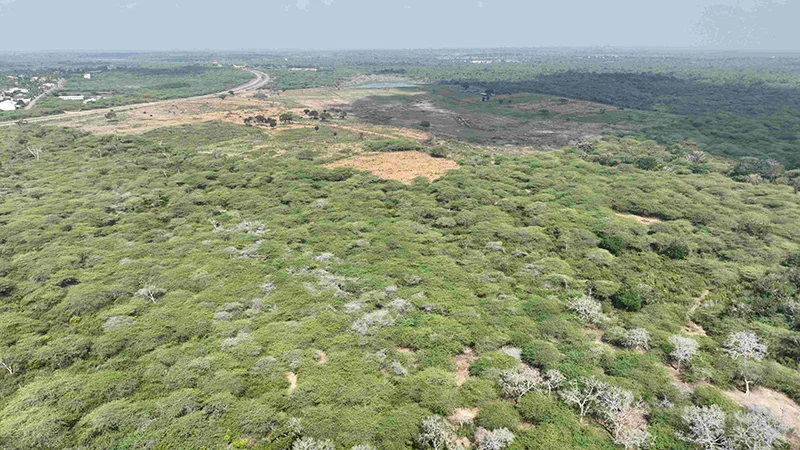
A large-scale move to establish solar power plants in Hambantota has triggered a major environmental and social crisis, with more than 1,000 acres of forest—identified as critical elephant habitat—cleared in violation of the law, environmental activist Sajeewa Chamikara said.
Chamikara, speaking on behalf of the Movement for Land and Agricultural Reform, said that 17 companies have already begun clearing forest land along the boundaries of the Hambantota Elephant Management Reserve. The affected areas include Sanakku Gala, Orukemgala and Kapapu Wewa, which are known to be key elephant habitats and long-used movement corridors.
He said that what is taking place cannot be described as development, but rather as a large-scale destruction of natural ecosystems carried out under the cover of renewable energy expansion.
According to Chamikara, the clearing of forests has been carried out using heavy machinery, while large sections have also been deliberately set on fire to prepare the land for solar installations. He said that electric fences have been erected across wide stretches of land, effectively blocking elephant movement and fragmenting their natural habitat.
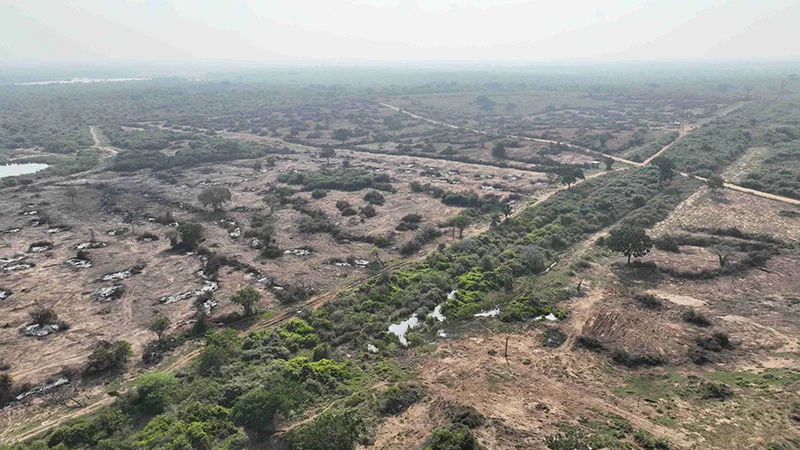
“These forests are not empty lands. They are part of a living system that supports wildlife and nearby communities. Once destroyed, they cannot be easily restored,” he said.
The projects in question include a 50 megawatt solar development undertaken by five companies and a larger 150 megawatt project implemented by 12 companies. The larger project is reported to be valued at around 150 million US dollars.
Chamikara stressed that these projects are being carried out in a coordinated manner and involve extensive land clearing on a scale that raises serious environmental concerns.
He further alleged that certain companies had paid about Rs. 14 million to secure support and move ahead with the projects. He said this points to a troubling failure of oversight by state institutions that are expected to protect forests and wildlife habitats.
“This is not only an environmental issue. It is also a serious governance issue. The institutions responsible for protecting these lands have failed in their duty,” he said.
Chamikara pointed out that under the National Environmental Act, any project of this scale must receive prior approval through a proper Environmental Impact Assessment process.
He said that clearing forest land before obtaining such approval is a direct violation of the law.
He added that legal requirements relating to archaeological assessments had also been ignored. Under existing regulations, large-scale land clearing requires prior evaluation to ensure that sites of historical or cultural value are not damaged.
“The law is very clear. You cannot go ahead with projects of this nature without proper approval. What we are seeing is a complete disregard for legal procedure,” Chamikara said.
The environmental impact of these activities is already becoming visible. With their natural habitats destroyed, elephants are increasingly moving into nearby villages in search of food and shelter. This has led to a sharp rise in human-elephant conflict in several areas.
Areas such as Mayurapura, Gonnooruwa, Meegahajandura and Thanamalvila have reported increasing encounters between humans and elephants. According to Chamikara, more than 5,000 farming families in these areas are now facing growing threats to their safety and livelihoods.
He warned that farmers are being forced to abandon their lands due to repeated elephant intrusions, while incidents involving damage to crops and property are rising. There have also been increasing reports of injuries and deaths among both humans and elephants.
“This is turning into a serious social and economic problem. When farmers cannot cultivate their lands, it affects food production, income and rural stability,” he said.
Chamikara also raised concerns about the broader environmental consequences of clearing forests for solar power projects. While renewable energy is promoted as a solution to reduce carbon emissions, he said that destroying forests undermines that goal.
“Forests play a key role in absorbing carbon dioxide. When you clear and burn them, you are increasing emissions, not reducing them. That defeats the purpose of promoting solar energy,” he explained.
He added that large-scale deforestation in dry zone areas such as Hambantota could also affect local weather patterns and reduce rainfall, which would have further negative impacts on agriculture and water resources.
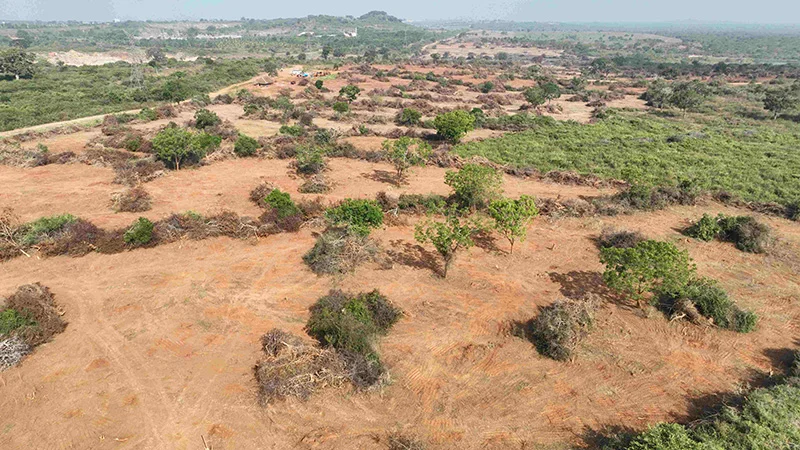
Chamikara called for a shift in policy, urging authorities to focus on more sustainable approaches to solar power development. He said that rooftop solar systems on homes, public buildings and commercial establishments should be given priority, as they do not require clearing large areas of land.
He also recommended that solar projects be located on degraded or abandoned lands, such as areas affected by past mining or other low-value lands, rather than forests or productive agricultural areas.
“Renewable energy development must be done in a way that does not destroy the environment. There are better options available if there is proper planning,” he said.
Chamikara urged the Central Environmental Authority and the Department of Wildlife Conservation to take immediate action to stop ongoing land clearing and investigate the projects. He stressed that all activities carried out without proper approval should be halted until legal requirements are met.
He warned that failure to act now would lead to long-term environmental damage that could not be reversed.
“If this continues, we will lose not only forests and wildlife, but also the balance between people and nature that supports rural life. The consequences will be felt for generations,” he said.
The situation in Hambantota is fast emerging as a critical test of whether development goals can be balanced with environmental protection. As pressure grows, the response of authorities in the coming weeks is likely to determine whether the damage can still be contained or whether it will continue to spread unchecked.
By Ifham Nizam
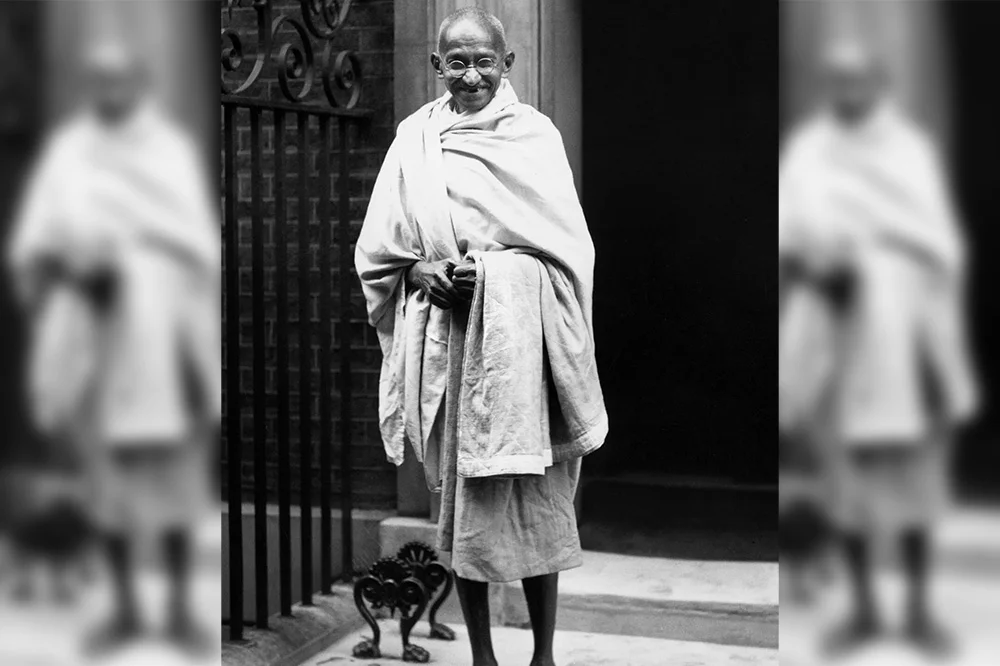
 All credit to the Tamil Nadu government for taking concrete measures to perpetuate the memory of the renowned Mahatma Gandhi of India, who on account of his moral teachings stands on par with the likes of Socrates, Plato, Aristotle, Confucius and Jalaluddin Rumi, to name a few such all-time greats. The time is indeed ripe to draw the world’s attention to the Mahatma’s humanistic legacy which has resonated in the hearts of peace-oriented sections the world over down the decades.
Under its mega developmental blueprint titled ‘ Tamil Nadu 2030’, the Tamil Nadu government, among other things, intends transforming villages into centres of economic growth in conformity with the Mahatma’s vision of making the village the fundamental unit of material and spiritual advancement. Thus will come into being the ‘Uttamar Gandhi Model Villages Project’, which will be initially covering 10 village Panchayats. (Please see page 3 of The Island of March 11, 2026).
The timeliness of remembering and appreciating anew the teachings of Mahatma Gandhi resides in the utter lawlessness that has been allowed to overtake the world over the last few decades by none other than those global powers which took it upon themselves to usher in a world political and economic order based on the UN Charter and the Universal Declaration of Human Rights. Mainly in ‘the dock’ in this regard are the permanent members of the UN Security Council.
As is plain to see, the international law and order situation has veered out of control. Principal priorities for the international community or what’s left of it is to prevent the current mainly regional war in the Middle East from degenerating dangerously into another world war, coupled with the task of eliminating the possibility of another nuclear holocaust.
The most scorching of ironies is that the world’s ‘number one power’, the US, has virtually lost its way in the ‘Global Disorder’ it has been party to letting lose. For instance, instead of making good its boast of militarily neutralizing Iran and paving the way for the constant flow of fuel and gas from the Strait of Hormus by itself and Israel, it is now appealing to the rest of the West to come to its assistance. Not surprisingly, US allies are indicating their unwillingness to help pull the US’ ‘chestnuts out of the fire’.
Oil and gas are the veritable life blood of countries and going ahead it should not come as a surprise if impatience gets the better of the major powers and the nuclear option is resorted to by some of them under the dangerous illusion that it would be a quick-fix to their growing economic ills and frustrations.
All the above and more are within the realms of the possible and the need is pressing for humanistic voices to take centre stage in the present runaway crisis. As pointed out in this column last week, Realpolitik has overtaken the world and unless the latter is convinced of the self-destructive nature of the major powers’ policy of ‘meeting fire with fire’ to resolve their disputes, annihilation could be the lot of a good part of the world.
For far too long the voice of humanity has been muted and silenced in the affairs of world by the incendiary threats and counter-threats of the big powers and their allies. No quarter has been bold enough in these blood pressure-hiking slanging matches to speak of the need for brotherly love and compassion among nations and countries. But it’s the language of love and understanding that is the most pressing need currently and the Mahatma in his time did just that against mighty odds.
At present the US and Iran are trading threats and accusations over military-related developments in the Gulf and it’s anybody’s guess as to what turn these events will take. However, calming voices of humanity and moderation would help in deescalating tensions and such voices need to go to the assistance of the UN chief and his team.
The Mahatma used the technique of ‘Satyagraha’ or the policy of non-violent resistance to oppose and dis-empower to a degree the British empire in his time and the current major powers would do well to take a leaf from Gandhi. The latter also integrated into the strategy of non-violent resistance the policy of ‘Ahimsa’ or love and understanding which helped greatly in uniting rather than alienating adversaries. The language of love, it has been proved, speaks to the hearts and minds of people and has a profoundly healing impact.
Mahatma Gandhi defined the ideal of ‘Ahimsa’ thus: ‘In its positive form, “Ahimsa” means the largest love, the greatest charity. If I am a follower of “Ahimsa”, I must love my enemy or a stranger to me as I would my wrong-doing father or son. This active “Ahimsa” necessarily includes truth and fearlessness.’ (See; ‘Modern Indian Political Thought; Text and Context’ by Bidyut Chakrabarty and Rajendra Kumar Pandey, Sage Publications India, Pvt. Ltd., www.sagepub.in).
In the latter publication, the authors also defined the essence of ‘satyagraha’ as ‘protest without rancour’ and this is seen as ‘holding the key to his entire campaign’ of non-violent resistance. From these perspectives, the teaching, ‘hatred begets hatred’ acquires more salience and meaning.
Accordingly, the voice of reason and love needs to come centre stage and take charge of current international political discourse. The UN and allied organizations which advocate conflict resolution by peaceful means need to get together and ensure that their voices are clearly heard and understood. The global South could help in this process by seeing to the vibrant rejuvenation of organizations such as the Non-aligned Movement.
An immediate task for the peace-oriented and well meaning is to make the above projects happen fast. In the process they should underscore afresh the profound importance of the teachings of Mahatma Gandhi, who is acclaimed the world over as a uniting and healing political personality and prophet of peace.
If the Mahatma is universally acclaimed, the reason is plain to see. Put simply, he spoke to the hearts and minds of people everywhere, regardless of man-made barriers. The language of peace and brotherhood, that is, is understood by everyone. The world needs more prophets of peace and reconciliation of the likes of the Mahatma to drown out the voices of discord and war-mongering and ensure that the language of humanity prevails.

 The Future Model Hunt extravaganza, organised by Rukmal Senanayake, and advocacy trainer Tharaka Gurukanda, held in late January 2026, has brought into the limelight four outstanding contestants who will participate, at the international level, this year – Sandeepa Sewmini, Demitha Jayawardhana, Diwyanjana Senevirathna, and Nimesha Premachandra.
Nimesha took the honours as Mrs. Tourism Sri Lanka 2026 and was featured in The Island of 05th March,
Sandeepa Sewmini was crowned Miss Supranational 2026 and will represent Sri Lanka at the big event to be held in Poland later in the year.
A Business Management and Human Resources student, she will be competing under the guidance of Rukmal Senanayake from the Model With Ruki – Model Academy & Agency.
The Mister Supranational Sri Lanka crown went to Demitha Jayawardhana, a 20-year-old professional model and motocross rider.
Apart from modelling he is engaged in his family business.

Demitha Jayawardhana: Mister Supranational Sri Lanka 2026
Demitha is also a badminton player with a strong passion for sports, fitness and personal growth.
In fact, he is recognised for his strength, discipline, and passion for fitness.
A past student of Wycherley International School and St Peter’s College, Colombo, Demitha is currently in his second year of Economics Management at the Royal Institute of Colombo.
He will represent Sri Lanka at the 10th edition of the Mister Supranational pageant, in Poland, in August, 2026.
Mister and Miss Supranational are annual international beauty pageants, held in Poland, and are designed to discover new talent for the modelling and television industries and produce instant celebrities.
The competition focuses on elegance, intelligence, and social advocacy, with contestants, representing their countries.
The newly appointed Miss Teen International Sri Lanka 2026 is Diwyanjana Senevirathna.
She was crowned at the Future Model Hunt and will represent Sri Lanka at the Miss Teen International 2026 pageant in India.
Diwyanjana is noted for her grace and dedication to representing the country at this prestigious event that aims to celebrate talent, intelligence, charm, and individuality, and provide a platform for young girls to showcase their skills.

Our objective is to ensure that the Commission to Investigate Allegations of Bribery or Corruption operates as an independent institution, free from any external influence – PM

Showers above 50 mm can be expected at some places in the Central, Sabaragamuwa and Uva provinces and in Ampara district.

Oil nears $110 a barrel after gas field strike

Iran’s intelligence minister Esmail Khatib killed in air strike

Heat Index at ‘Caution Level’ in the Western, Sabaragamuwa, North-central, Southern and North-western provinces and in Monaragala, Mannar, Vavuniya and Mullaitivu districts

Pay hike demand: CEB workers climb down from 40 % to 15–20%

‘Dates have the highest sugar content to fight Coronavirus’

Sunday Island 27 December – Headlines

#SundayIsland 17th December – Headlines

Sunday Island – 28th March

Sunday Island Headlines – 21 March

Sunday Island – 21st February – Headlines
-

 Business3 days ago
Browns EV launches fast-charging BAW E7 Pro at Rs. 5.8 million
-

 Life style4 days ago
From culture to empowerment: Indonesia’s vision for Sri Lanka
-

 News1 day ago
CIABOC questions Ex-President GR on house for CJ’s maid
-

 Opinion6 days ago
M. D. Banda: Memories of Appachchi – II
-

 Business5 days ago
Sri Lanka Institute of Information Technology raises the bar for academic excellence
-

 Latest News4 days ago
QR code system will be implemented for fuel with effect from 06.00 a.m. today (15th)
-

 News2 days ago
Australian HC debunks misleading travel risk claims for Sri Lanka
-

 News5 days ago
Crypto loopholes funnel Lankan funds abroad