
Business
Levi & Dili: Styling Sri Lanka’s new generation of fearless women


In a fashion landscape often crowded with ‘me too’ products, a new Sri Lankan label is making a statement that is as much about identity as it is about aesthetics. Levi & Dili, the creation of Founder and CEO Ganga Wijayawardane, is emerging as a powerful platform for the modern woman, championing a philosophy where style meets substance.
With a formidable background in International Marketing, Wijayawardane is now channeling her corporate expertise into her lifelong passion for design. The result is a fashion line with an international-contemporary feel, characterised by clean silhouettes, unusual fabric combinations, and curated, hand-picked accessories. But what truly sets Levi & Dili apart is its soul.
“The Levi & Dili woman stands for all women who long to be more, do more, to move beyond traditional roles,” Wijayawardane states. The brand’s designs are intentionally bold and eye-catching, crafted to reflect the multifaceted personality of its wearer. She is envisioned as an entrepreneur, a boss lady, a creative force, a resilient mother – a real woman who is “fearless, focused, and free.” This triad is not just a tagline but the brand’s core design brief, reflected in visuals that showcase capability and agency.
This ambition is matched by a steadfast commitment to quality. The label adheres to rigorous standards through small, controlled production batches, vetting suppliers, and conducting thorough fabric and wear tests. This promise of “affordable luxury” is a key pillar, offering fewer, better pieces with durable materials and considered details that flatter multiple body types. “We spend where it matters – fit, finishing and materials – and edit out anything that adds cost without value,” she explains.
Customer experience remains deeply personal, a non-negotiable for the brand. Online, real stylists are available for consultations, ensuring a high-touch service that continues post-purchase. While currently operating through e-commerce and pop-ups across Colombo, strategic plans are underway for a dedicated design studio, a stepping stone to a future flagship store.
Looking ahead, Wijayawardane’s vision is expansive. Within five years, she sees Levi & Dili as a leading Fashion House, setting the tone for Sri Lankan fashion and moving internationally. The goal is to be a Maison renowned not just for its designs and quality finishes, but for its key message: empowering a new generation of financially independent women who live fully and contribute significantly to the economy.
Levi & Dili is more than clothing; it is a wearable testament to the ambitious, modern Sri Lankan woman.
For new customers: Shop online and at announced pop-ups. For styling help, contact the team at support@leviandili.com or 077 555 2941.
By Sanath Nanayakkare ✍️




The Asian Development Bank is no longer treating digitalisation as a secondary development theme. Increasingly, the bank views digital infrastructure as the economic nervous system of Asia’s future growth model – a strategic national asset now considered as critical to economic competitiveness as highways, ports, and power grids.
That shift carries an important message for countries like Sri Lanka: modernise digital systems rapidly or risk falling behind regional competitors.
This was among the clearest signals emerging from the 59th Annual Meeting of the ADB held in Samarkand from May 3 to 6, where digital connectivity and technology-driven growth dominated many of the bank’s strategic discussions.
The ADB is steadily repositioning itself from being primarily a traditional infrastructure lender into a major catalyst for digital transformation across Asia and the Pacific. At multiple forums in Samarkand, bank officials and sector experts repeatedly stressed that digital connectivity is no longer simply a technology issue. It is now deeply tied to productivity, governance, financial inclusion, education, healthcare, climate resilience, and regional economic integration.
A key figure driving this agenda is Antonio García Zaballos, Director of the Digital Sector Office at the ADB. Widely recognised for his expertise in telecommunications regulation and broadband policy, Zaballos emphasised that digital infrastructure should be treated as essential national infrastructure rather than a luxury service.
Under the ADB’s Strategy 2030 framework and subsequent policy reviews, digital transformation has emerged as one of Asia’s defining development priorities. The bank’s digital agenda now broadly focuses on expanding broadband access, building digital public infrastructure, supporting e-governance, promoting fintech and digital payments, strengthening cybersecurity, developing AI-ready economies, and advancing regional digital integration.
Discussions in Samarkand also highlighted a persistent reality: despite rapid mobile and internet growth across Asia, the region’s digital divide remains severe. Millions in rural communities, small businesses, and low-income populations still lack affordable and reliable digital access. For the ADB, digitalisation is therefore not merely an innovation agenda, but also an inclusion challenge.
One of the strongest indications of the bank’s ambitions came with the announcement of a regional connectivity initiative involving energy and digital infrastructure investments worth up to US$70 billion by 2035. A central component is the proposed “Asia-Pacific Digital Highway” – a major initiative aimed at expanding fibre-optic networks, satellite systems, and regional data centres.
ADB President Masato Kanda observed that energy and digital access would ‘define the region’s future,’ while emphasising that cross-border digital networks could reduce costs and widen economic opportunity across Asia and the Pacific.
Zaballos and other ADB officials also stressed the importance of regulatory modernisation, public-private partnerships, and regional coordination to build stronger broadband ecosystems. Their policy focus increasingly includes affordable internet access, cybersecurity frameworks, digital public infrastructure, cross-border data governance, and digital inclusion for underserved populations.
Another major pillar of the ADB’s strategy involves digital economy agreements and harmonised regional regulations. According to ADB research released in 2025, digital trade, AI governance, cross-border payments, and cybersecurity standards are rapidly becoming central to regional economic integration.
The bank increasingly sees fragmented digital regulations as a growing obstacle to regional commerce. As a result, it is promoting interoperable payment systems, common digital standards, regional cybersecurity cooperation, and coordinated cross-border data governance frameworks.
This has particular relevance for South Asia, where digital fragmentation still limits deeper regional trade integration.
For Sri Lanka, the implications are significant. Although the country enjoys relatively high mobile penetration and comparatively strong digital literacy, major gaps remain in rural broadband access, government digital integration, SME digitalisation, cybersecurity preparedness, and digital export competitiveness.
ADB’s growing emphasis on digital public infrastructure and regional connectivity could align closely with Sri Lanka’s ambitions to expand fintech services, IT exports, e-governance systems, and digital entrepreneurship.
The larger question now is whether policymakers – particularly the Ministry of Digital Economy – can move quickly enough to position Sri Lanka within this rapidly evolving regional digital architecture. In Asia’s next development cycle, digital readiness may well determine which economies move ahead – and which are left struggling to catch up.
By Sanath Nanayakkare

Nations Trust Bank PLC (NTB) commenced the financial year on a positive note, delivering a strong performance for the three months ended 31st March 2026, with a Profit After Tax (PAT) of LKR 4.6Bn, marking a 12% yearonyear increase. The results were supported by steady asset growth, stable Net Interest Margins (NIMs), and prudent risk management, reflected in a low Net Stage 3 Ratio of 1.10%. A robust capital position further supported the Bank’s performance, with Return on Equity (ROE) reaching 18.98%, indicating the Bank’s continued momentum and a positive outlook for growth in the year ahead.
Nations Trust Bank, Director and Chief Executive Officer, Hemantha Gunetilleke, stated,
“The Bank’s performance in 1Q 2026 highlights its strength and the progress of its strategy as we move into the next phase of growth. This is reflected in the expansion of our loan book and our continued focus on supporting customers across consumer, commercial and corporate segments. In doing so, the Bank has contributed to broader economic growth in Sri Lanka, supporting investment and expansion across key sectors. As we further strengthen our capital and liquidity positions, we remain focused on delivering value through high service standards, improved digital capabilities, and a strong customer focus.”
Business
LOLC Life Assurance expands branch network to strengthen customer accessibility and service excellence
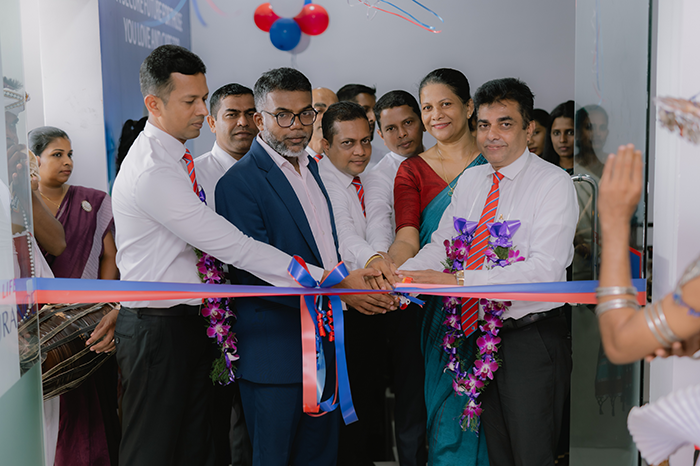
LOLC Life Assurance continues to reinforce its commitment to delivering accessible, customer-centric life insurance solutions through the strategic expansion of its branch network across key locations in Sri Lanka. The recent opening of new branches in Mathugama and Beruwala marks a significant milestone in enhancing customer accessibility, improving service convenience, and delivering inclusive insurance protection across these strategically important key regional markets.
This expansion reflects the company’s continued focus on bringing life insurance services closer to customers, ensuring greater convenience, improved responsiveness, and stronger community-level engagement. By strengthening its physical presence, LOLC Life Assurance aims to provide personalised support and seamless access to its comprehensive range of life protection and investment solutions.
The new Beruwala branch, located at No. 207, Galle Road, Beruwala, and the Mathugama branch, located at No. 110/1, Aluthgama Rd, Mathugama were officially opened by Mr. Jayantha Kalinga, Chief Operating Officer of LOLC Life Assurance together with the company’s senior management team. As a trusted life insurer in Sri Lanka, LOLC Life Assurance remains committed to innovation, superior customer experience, and inclusive financial protection, further strengthening its vision of becoming a lifelong partner that offers security, care, and confidence at every stage of life.
The relocation of the Jaffna branch to No 62/3, Stanley Road, Jaffna reflects the company’s ongoing efforts to optimise its branch network through improved infrastructure and enhanced accessibility. The branch was officially reopened in the presence of Mr. Chandana L. Aluthgama, Executive Director and Mr. Jayantha Kalinga, Chief Operating Officer of LOLC Life Assurance, providing a more modern and customer-friendly environment aligned with the region’s growing economic activity. The upgraded facility is expected to further enhance customer experience by ensuring efficient access to the company’s full suite of life insurance solutions.

Lanka’s eligibility to draw next IMF tranche of USD 700 mn hinges on ‘restoration of cost-recovery pricing for electricity and fuel’

Sanath Nishantha’s brother sentenced to jail over assault case

SJB sees govt. hand in allowing unlawful take over of Malwana property by student activists

Lanka and Belarus draw roadmap for deeper cooperation in trade, industry, agriculture, tourism, education, and people-to-people ties

Govt. to overhaul internal auditing and financial oversight mechanisms in SOEs

ADB’s digital push signals a wake-up call for Sri Lanka

‘Dates have the highest sugar content to fight Coronavirus’

Sunday Island 27 December – Headlines

#SundayIsland 17th December – Headlines

Sunday Island – 28th March

Sunday Island Headlines – 21 March

Sunday Island – 21st February – Headlines
-

 News6 days ago
Lanka Port City officials to meet investors in Dubai
-
 News3 days ago
Ex-SriLankan CEO’s death: Controversy surrounds execution of bail bond
-

 Features4 days ago
When University systems fail:Supreme Court’s landmark intervention in sexual harassment case
-
Features4 days ago
High Stakes in Pursuing corruption cases
-

 Midweek Review3 days ago
A victory that can never be forgotten
-

 News7 days ago
President of Vietnam and delegation departs Sri Lanka
-
 Features6 days ago
Serving as MR’s Deputy Finance Minister and the travel the job entailed
-

 Features6 days ago
Bengal Turns BJP, Didi Falls