
Latest News
Sodhi, Duffy three-fors trump late Springer-Shepherd blitz in thriller


The series that keeps on giving. After two humdingers in Auckland, the third T20I between West Indies and New Zealand in Nelson was shaping up to be a more sedate contest, with the visitors having slipped to 88 for 8 in 12.3 overs, chasing 178, staring at a comprehensive defeat. Surely game over, right?
Shamar Springer and Romario Shepherd, however, had other ideas. In a stunning rearguard action, the duo added 78 runs for the ninth wicket off just 39 balls to keep West Indies’ chase alive. From 90 off 45, they brought the equation down to 13 off seven. But New Zealand, just as they did in the second T20I, held their composure in the end.
Jacob Duffy pulled off a stunning return catch off the final ball of the 19th over to send back Springer. And with 12 needed of the final over, Kyle Jamieson stepped up for the second game running to dismiss Romario Shepherd. New Zealand won the third T20I by nine runs to go 2-1 up in the five-match series.
Electing to bat, New Zealand recorded 177 for 9 in their 20 overs on the back of Devon Conway’s 56 off 34 balls and Daryl Mitchell’s 24-ball 41. The final score was threatening to be a lot more, but three run-outs and Matthew Forde and Jason Holder’s two-fors denied New Zealand a late charge.
Ish Sodhi’s 3 for 34 and Duffy’s two-wicket opening over had West Indies on the mat, before the visitors threatened to pull off the improbable again. In the end, they fell short… again.
The game was done, the writing was surely on the wall, but Shepherd and Springer proved otherwise. When the duo got together, West Indies were in all sorts at 88 for 8 in the 13th over. Springer slog swept Sodhi over deep midwicket first ball. Shepherd soon joined him, smashing Duffy for six over fine leg and then slicing him over point. At the time, a comprehensive New Zealand win felt just two mis-hits away, but these mis-hits never came.
Both Springer and Shepherd found the boundaries regularly. Springer muscled Mitchell Santner over long-on, and then walloped Jamieson for back-to-back fours. By the time the 18th over from James Neesham was taken for 19, West Indies believed. With 24 needed of 12, it was their game to lose, especially when Duffy was sent out of the stadium for a 103m six over long-on by Shepherd.
But Duffy, who had struck two telling blows earlier, dove low to his left and plucked out a stunner as Springer fell for a superb 20-ball 39. Jamieson, who had defended 16 in the previous match, was now tasked with defending 12 in Nelson. He went the hard-length way, rattling Shepherd with the extra bounce. With the equation down to ten off two, Jamieson bowled a shin-high full toss that was miscued to only as far as Mitchell at long-off.
A third-straight last-over finish has now gone New Zealand’s way.
Much before the Shepherd-Springer mayhem, West Indies looked in complete disarray. Jamieson conceded three fours in his opening over, but as Duffy had all series, he kept at it. He bowled Amir Jangoo, chopping back onto his stumps first ball. Three balls later, he had Shai Hope caught at deep backward square leg. At the other end, however, Jamieson continued to bleed runs and also put down Alick Athanaze, as West Indies breezed past 50 in 6.3 overs.
Sodhi’s introduction flipped the script. He had Athanaze caught behind with a long-hop, while Michael Bracewell sent back Sherfane Rutherford. Sodhi then found Rovman Powell swinging for the hills, but Powell missed instead and saw his stumps in a mess. By the time Sodhi trapped Forde lbw for 4, West Indies had lost 6 for 35 in less than six overs.
At the time, the game was poised for an early finish, but Shepherd and Springer gave the visitors hope.
Earlier, Conway – managing to avoid his series nemesis Forde in the opening over – got into his groove, pumping Akeal Hosein over deep midwicket for a huge six. Forde himself was tight with his lines and conceded just 14 in his three overs in the powerplay. This spell included getting rid of Tim Robinson, who was looking to turn the fast bowler around the corner, but popped a straightforward return catch instead.
However, West Indies bled runs at the other end. Hosein’s two overs went for 21, while Shepherd conceded 11 runs, as New Zealand reached 47 for 1 after six overs.
Athanaze, more in the side for his top-order batting, had never bowled in any of his 11 T20Is before this game. The decision to introduce him right after the powerplay was surprising. Bowling with his cap on, Conway first pulled a short ball through midwicket, before lifting Athanaze inside-out over covers, on a delivery that also turned out to be a front-foot no-ball. While Conway couldn’t make use of the free-hit, Ravindra ended the over lofting Athanaze straight down the ground as New Zealand collected 16 runs in the seventh, giving their innings much-needed impetus.
By this time, Conway gotten a hang of the Nelson surface and brought out his repertoire of shots. He scooped Shamar Springer over short fine leg, before thrashing him past point to move into the 40s. He reached his 12th T20I fifty by mowing Hosein over cow corner, while Ravindra at the other end also got going nicely. He struck back-to-back fours against Holder, as New Zealand racked up 49 runs in the four overs after the powerplay.
At 96 for 2 after ten, New Zealand had their eyes set on 200, but poor running and effective West Indies bowling held them back. Ravindra’s sprightly knock was cut short by Shepherd, whose slower offcutter stopped on the surface and caught Ravindra’s leading edge to extra cover.
Conway was then undone by some Athanaze brilliance: Mitchell squeezed a fuller-length Springer delivery to the left of deep midwicket and called for two right away. Conway responded, but Athanaze sprinted to his left and fired a direct throw at the non-striker’s end to find the opener well short.
With the run rate slowing down, Mitchell took Hosein downtown for two sixes and a four in the 15th over before Bracewell was run out. Forde made a mess of Neesham’s stumps with a quick and full ball, while Santner sliced a low Springer full toss outside off to deep point.
When Holder removed Mitchell and Mitchell Hay in the 19th over, New Zealand had slid from 144 for 3 to 169 for 8 in 21 balls. The hosts managed only 35 runs in the last five overs, losing six wickets to fall well short of what they would have wanted at the halfway stage of their innings.
In the end, it was just enough.
Brief scores:
New Zealand 177 for 9 in 20 overs (Devon Conway 56, Tim Robinson 23, Rachin Ravindra 26, Daryl Mitchell 41, Michael Bracewll 11; Maththew Forde 2-20, Romario Shepherd 1-23. Jason Holder 2-31, Shamar Springer 1-36) beat West Indies 168 in 19.5 overs (Alick Athanaze 31, Ackeem Auguste 24, Romario Shepherd 49, Shamar Springer 39; Kyle Jamieson 1-35, Ish Sodhi 3-34, Jacob Duffy 3-36, Michael Bracewell 1-07, Mitchell Santner 1-29) by nine runs
[Cricinfo]


Stafanie Taylor navigated a huge scare at the hands of Scotland as West Indies scrapped their way to a second win of the Women’s T20 World Cup.
Taylor, playing her first match of the tournament, injected much-needed impetus to the West Indies’ innings with a boundary-laden 47 not out off just 19 deliveries striking at 247.36 after West Indies had slumped to 85 for 5 in the 15th over of the match.
A spirited half-century by just-turned 21-year-old opener Darcey Carter while battling a leg injury took Scotland close to victory in the face of a nervy performance with the ball and in the field from West Indies. She shared half-century partnerships with Latherine Fraser and Ailsa Lister, but Hayley Matthews’ 3 for 19 in four overs, which included 13 dot balls, gave her side just enough hope to hold onto and Aaliyah Alleyne’s three wickets in the 19th over stifled Scotland just as they threatened to take the match away once more.
Fraser had been outstanding for Scotland with 2 for 34, a spectacular catch on the boundary’s edge to remove opener Qiana Joseph and the sharp run-out of Shemaine Campbelle, West Indies’ star in their nail-biting victory over New Zealand on Saturday.
West Indies became bogged down by a disciplined Scotland bowling attack complemented by excellent fielding all round. But, led by Taylor, they scored 69 runs in the last six overs to set Scotland a sizeable target – one the qualifiers came far closer to reaching than their opponents would have liked.
Taylor came in with her side floundering and in desperate need of someone to give their innings a belated jump start. Jahzara Claxon struck West Indies’ first six on the last ball of the 17th over, heaving a short one down the leg side from Kathryn Bryce over cow corner as she and Taylor looked to accelerate. But Bryce, stationed in the same spot in the field four balls later, claimed a straightforward catch to remove Claxton and give Fraser her second wicket.
Taylor picked off boundaries down the ground and over the covers then launched twin sixes back over the bowler’s head and over deep extra cover before a third, 83m maximum over deep midwicket to give West Indies’ bowlers plenty to defend.
Scotland were sharp in the field from the outset and their bowlers kept a lid on West Indies’ openers Matthews and Joseph, who managed just 13 runs in the first three overs. Rachel Slater was particularly frugal, conceding only a wide from her opening over. An out-of-sorts Matthews produced a premeditated release shot over midwicket for four off Gabriella Fontenla, who was making the ball swing nicely. But it was Joseph’s attempt to properly break the shackles which proved her undoing and demonstrated just how up for the contest Scotland were.
Fraser offered a contender for catch of the tournament so far when Joseph muscled a Slater delivery to deep midwicket. Fraser leapt to pluck the ball from the air just inside the boundary then showed wonderful spatial awareness to avoid touching the sponge with her elbow by mere centimetres as she landed. By the end of the powerplay, West Indies were 33 for 1 and Matthews had scored 12 off 17. She managed just two more before backing away to a quicker delivery from Fraser and losing her middle stump as Scotland celebrated a spectacular start.
Sarah Bryce dropped a tough chance behind the stumps off Campbelle, on 28 when she walked past a Fraser delivery which deflected off the keeper’s gloves and ran through fine leg to the boundary. She made no mistake as sister Kathryn, who had frustrated West Indies with her superb lengths, lobbed one up outside off as Deandra Dottin advanced and turned to see her bails whipped off.
West Indies had only found the boundary seven times up to that point, at the end of the 13th over, so they were scampering singles wherever they could get them. There was to be no reprise of Campelle’s previous innings when she was run-out by Fraser on the next ball and then Kirstie Gordon pinned Chinelle Henry lbw to plunge West Indies further into danger.
Scotland began the run chase at a far more impressive clip than their opponents, Carter reeling off four boundaries in the first three overs and Fraser again in the action with 13 runs off six deliveries. Carter appeared to hurt her leg while trying to work a Matthews delivery down the leg side and she received a life on 19 when Joseph dropped what should have been a sitter for Campbelle high behind the stumps. Running between the wickets became increasingly laboured for Carter but she refused to give up and she raised her ninth half-century in T20Is off 53 balls.
After five overs, Scotland were 51 without loss, but then Matthews made the crucial strike, beating Fraser on the sweep with a faster ball that kept low. That sparked a collapse of four wickets for seven runs in the space of two overs. Matthews removed Kathryn for a second-ball duck, miscuing to mid-off and claimed her third when she trapped Megan McColl lbw attempting a reverse sweep.
Three balls earlier, McColl had been dropped by Campbelle, running from behind the stumps almost to midwicket and, shortly after McColl was dismissed, Campbelle left the field, apparently feeling unwell, to be replaced by substitute wicketkeeper Mandy Mangru. Carter and Lister stuck at their task, however, in the face of some wayward bowling and clumsy fielding as the tension started to show on West Indies. Dottin, playing her 150th T20I, sent down three wides in a row to start the 18th over then, after two fours in three balls to Carter, she broke down in tears. Her team-mates rallied round her and she managed to concede just one more run.
With Scotland needing 22 runs off the last two overs, Alleyne finally ended Carter’s knock with a return catch off a top edge then removed Lister and Gordon with consecutive balls. While West Indies continued to struggle with their ground fielding, they scraped home as Joseph removed Slater and Fontenla in the space of three balls right at the end.
SCORES:
West Indies Women 153 for 6 in 20 overs (Qiana Joseph 13, Hayley Matthews 14, Shermaine Campbelle 36, Deandra Dottin 14, Jahzara Claxton 16, Stafanie Taylor 47*; Kathryn Bryce 1-30, Rachel Slater 1-23, Katherine Fraser 2-34, Kirstie Gordon 1-36) beat Scotland Women 146 in 20 overs (Darcey Carter 59, Katheryne Fraser 20, Ailsa Lister 33; Aaliah Alleyne 3-11, Hayley Matthews 3-19, Afy Fletcher 2-16, Qiana Joseph 1-29) by seven runs
[Cricinfo]

Thirty-five people have been killed after gunmen struck Niger’s largest airport on Thursday, officials say – the second attack in less than five months.
Residents in the predominately Muslim country told the BBC they had just finished their morning prayers when explosions and gunshot sounds rang out from Diori Hamani international airport, located in the capital, Niamey.
Niger’s defence ministry said the fatalities comprised 22 assailants, 11 soldiers, and two civilians.
On Thursday evening, Al-Qaeda affiliate Jama’at Nusrat al-Islam wal-Muslimin [JNIM] claimed responsibility for the attack.
Niger has been fighting an Islamist insurgency for a decade and in January, an organisation linked to the Islamic State group claimed responsibility for an attack on the same airport.
Thursday’s violence settled by mid-morning and security forces have since launched a manhunt for any remaining attackers.
Lawalli Tsalha, who lives near the airport, which also hosts a military base, told the BBC: “We finished our prayer at about 05:50 (04:50 GMT) and shortly afterwards we heard a loud bang – like something had exploded, perhaps a tyre.
“It was only a little later that we realised what was happening.”
Authorities said alongside the 22 attackers that were killed, another four were wounded. They added that 20 suspects had been arrested.
A large cache of weapons including RPG-7 launchers, AK-47 rifles, explosives, grenades, communications equipment and thousands of rounds of ammunition were also reportedly seized.
Armed local residents joined the manhunt, though witnesses told the BBC that security personnel attempted to stop civilians getting involved.
One resident, who did not wish to be named, said: “The attackers mixed in with the local population, so finding them was not easy. Civilians picked up machetes and sticks to defend themselves and to strike anyone they did not recognise who came their way.”
The airport vicinity had been locked down on Thursday afternoon, with security forces searching vehicles entering and leaving the area.
African Union Commission Chairperson Mahmoud Ali Youssouf “strongly condemned” the assault and praised Nigerien forces whose actions “made it possible to repel the attack and secure the airport facilities.”
Diori Hamani international airport is one of Niger’s most sensitive security installations, serving as both a civilian aviation hub and a military base.
It also hosts facilities linked to the Alliance of Sahel States (AES), which comprises Niger and its neighbours, Mali and Burkina Faso.
All three countries are run by juntas which came to power in part because of a failure to deal with years of jihadist violence in the region.
In January’s attack on the airport, four military personnel were injured and 20 attackers were killed, Niger’s defence ministry said.
At the time, the head of Niger’s military government, which has been in power for three years, thanked Russia for its help in foiling the attack. Abdourahamane Tiani also accused the presidents of France, Benin and Ivory Coast of backing those responsible.
He did not give details of what help Russia had provided, or provide any evidence to support his accusations against the other countries.
In recent weeks, authorities in Niger have demolished neighbourhoods near the airport, citing “terrorist risks”.
They have also extended the airport’s perimeter fence and installed more than 350 surveillance cameras, AFP reports.
[BBC]
Latest News
US lifts naval blockade as Iran’s supreme leader says Trump made deal ‘out of desperation’

The US has dropped its naval blockade of Iran after the two countries signed a deal to end the war in the Middle East.
US Central Command confirmed the end of the blockade on X “in accordance with the President’s direction”, and said some US vessels would remain “in the general area”.
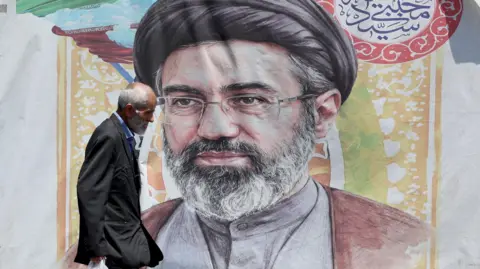
Soon afterwards, Iran’s Supreme Leader Mojtaba Khamenei said he had approved the deal with the US despite having a “different view”, without elaborating. He said he allowed it to go ahead after assurances from Iran’s President Masoud Pezeshkian that he would “protect the rights of the Iranian nation”.
Khamenei said President Trump had “out of desperation, used all kinds of leverage” to bring the deal about.
The supreme leader said that while there would be “in-person negotiations in the future” between Tehran and Washington, this “will not mean acceptance of the enemy’s position”.
This is the first time Khamenei has responded to the agreement. He has not been seen in public since he took office in March following the killing of his father and predecessor, Ayatollah Ali Khamenei, in the 28 February US-Israeli strikes on Iran that sparked the regional war.
Trump did not directly respond to Khamanei’s statement, but posted on Truth Social that he expects a ceasefire to take effect “on all fronts”, including between Israel and Iran-backed Hezbollah in Lebanon, and that he expects countries in the Middle East to “maintain their commitment to allowing our negotiations” to take place.
The US-Iran deal centres around 14 core points, including the reopening of the Strait of Hormuz, a requirement that Iran should never have a nuclear weapon, and a commitment to a $300bn (£227bn) fund for the “reconstruction and economic development” of the country – although the US is not required to contribute.
It also binds both sides to achieving a final deal in a “maximum” of 60 days, which could be extended with mutual consent.
The official signing ceremony had been set to take place in Switzerland on Friday. However, mediator Pakistan told the BBC it had been cancelled because the deal had already been signed remotely. US and Iranian representatives are still expected to meet in Switzerland for further talks.
Speaking to reporters at a White House briefing, US Vice-President JD Vance said the deal had come into effect, triggering the 60-day period of further talks, and that he would likely head to Switzerland for “technical negotiations”.
He did not confirm when, adding that Iran was “not an easy country to get out of” and that they were “trying to figure out exactly when that was going to happen”.
Trump’s decision to end the war with Iran has raised criticism from some in the US, including Republicans dismayed by the terms of the deal – especially the provision of a reconstruction fund for Iran.
Republican Senator Bill Cassidy described the agreement as the “worst foreign policy blunder in decades”.
“Iran’s nuclear ambitions were not curbed, and they have learned that threatening the Strait of Hormuz works,” he said.
Vance defended the deal on Thursday, saying that Iran will not receive money or sanctions relief unless it meets obligations set out in the agreement.
He said the deal, known as the Memorandum of Understanding (MoU), requires Iran to destroy its stockpile of enriched uranium, and show it will not fund proxy groups in the region.
Vance also castigated members of Israeli Prime Minister Benjamin Netanyahu’s cabinet for criticising the Iran deal, saying they should “wake up and smell the reality”.
“If I was in the cabinet of the Israeli government, I might not be attacking the only powerful ally that I have anywhere left in the entire world,” the vice-president told reporters.
In an interview with the New York Times also published on Thursday, Vance named Israel’s national security minister Itamar Ben Gvir and finance minister Bezalel Smotrich as critics of the deal.
He said: “I guess my response to them would be – what is your exact proposal? You’re a country of nine million people. You can’t just kill your way out of solving every single national security problem that you have.”
Netanyahu himself stressed the importance of maintaining Israel’s close ties with the US on Thursday, saying Washington had stood “shoulder to shoulder” with the country during the war with Iran.
But both Israel and Hezbollah have carried out strikes against each other since the US-Iran agreement was announced, including strikes reported in Lebanon on Thursday that killed three people.
Israel argues its conflict against Hezbollah is separate from its war on Iran. Hezbollah has also rejected the terms of the deal between Iran and the US.
Vance told reporters that Israel would have to respect the peace process with Iran, which he said was good for them, stating that attacks in Lebanon’s capital Beirut that kill civilians are “not acceptable”.
[BBC]

Cricket journalist and broadcast legend Qamar Ahmed dies aged 88

Stafanie Taylor, spinners help West Indies overcome Scotland threat

Showers will occur at times in the Western, Sabaragamuwa and North-western provinces and in Galle, Matara, Kandy and Nuwara-Eliya districts

Thirty-five killed as gunmen attack Niger’s biggest airport

Creditor receives USD 2.5 mn as Lankan public bears loss from theft of Treasury funds

Former Minister Nalin raises defence of double jeopardy

‘Dates have the highest sugar content to fight Coronavirus’

Sunday Island 27 December – Headlines

#SundayIsland 17th December – Headlines

Sunday Island – 28th March

Sunday Island Headlines – 21 March

Sunday Island – 21st February – Headlines
-

 News4 days ago
Release of 2025 O/L results likely to be delayed
-

 Sports4 days ago
Tharanga set for high-profile javelin clash in Ostrava
-

 Features5 days ago
Politics of protected species
-

 News3 days ago
Beijing Capital Airlines to resume flights to Colombo signalling boost to tourism
-

 News4 days ago
Theft of USD 2.5 mn from Treasury: CoPF accused of complicity in NPP cover-up
-

 News6 days ago
Commonwealth lawyers urge Lanka to uphold rule of law
-

 Opinion4 days ago
Decoding Trump’s 12.5% “Forced Labor Tariff” on Sri Lanka
-

 Features2 days ago
Killing of Colombo’s ancient trees — a warning on UN’s World Desertification Day – 17 June