
Business
Understanding Standard Customs Inquiry Procedures


Aligning with global best practices requires Sri Lanka to embrace independent and impartial reviews where necessary
Sri Lanka Customs plays a vital role in safeguarding the national economy, both through its regulatory responsibilities and revenue collection functions. As the country’s border control authority, the Department is tasked with facilitating legitimate trade while preventing illegal activities such as smuggling and other forms of illicit cross-border movement.
As a regulatory body, Customs must also remain accountable for the actions it takes. In fulfilling its mandate, Sri Lanka Customs—similar to Customs administrations worldwide—may be required to initiate investigations that lead to formal inquiries. These investigations are conducted in line with globally accepted standards and procedures, reflecting the Department’s role in international law enforcement and its responsibility to uphold transparent, fair, and consistent practices.
Customs investigations are typically initiated upon detecting irregularities such as misdeclaration, undervaluation, or violations related to imports and exports. At present, the full inquiry process is carried out internally within the institution, without the requirement to seek an independent review. This internal structure means that matters involving external parties are handled without impartial or third-party oversight.
Although the goods or interests under inquiry often belong to private entities, decisions are made exclusively by the officials, which can give rise to concerns regarding transparency and potential conflicts of interest. A comparable investigative approach is also followed by other regulatory bodies in Sri Lanka.
Global norms
Internationally, administrative bodies engaged in decision-making are expected to uphold principles of fairness and impartiality. Accordingly, processes must adhere to key standards such as impartial decision-making, the right to be heard, transparency, access to review mechanisms, and overall procedural fairness.
In line with these norms, the World Customs Organization—through Chapter 10 of the General Annex to the Revised Kyoto Convention (RKC), the global framework for simplifying and harmonizing customs procedures—emphasises that decisions affecting traders or individuals must be subject to review. Likewise, the Trade Facilitation Agreement of the World Trade Organization (WTO), in Article 4, requires member states to ensure that importers and exporters have access to mechanisms for review or appeal of customs decisions.
The United Nations Conference on Trade and Development (UNCTAD) also highlights that fair administrative procedures are essential to preserving public trust and ensuring compliance within customs operations. Similarly, the OECD Recommendation on Regulatory Policy and Governance (2012) underscores the need for administrative bodies to maintain accountability, transparency, and procedural fairness in enforcement and adjudication processes.
Global best practices
International practice has moved toward transparent, multi-stage dispute-resolution frameworks, ensuring that decisions can be reviewed independently. This shift has created an opportunity for Customs administrations worldwide to incorporate impartial review mechanisms outside their internal structures.
In the United Kingdom, functions are distinctly separated: tax collection and border control are handled by different institutions, and appeals are adjudicated by an independent lower-level tribunal. Decisions of this tribunal may then be appealed to the Upper Tribunal and subsequently through the regular court hierarchy.
In India, review and appeal functions are assigned to the Customs, Excise and Service Tax Appellate Tribunal (CESTAT), a statutory quasi-judicial body established under the Customs Act to adjudicate complex customs and tax disputes.
Similarly, Thailand has adopted a structured, tiered review system. Disputes undergo initial internal review by subject-matter experts, after which appeals may be taken to the national judiciary. Higher-level appeals are handled by the Customs Board of Appeals, which includes external experts, ensuring an additional layer of independent oversight.
To strengthen fairness and accountability
The international examples above demonstrate the value of clearly separating investigative, decision-making, and review functions. Such structures reinforce impartiality, enhance accountability, and strengthen public confidence in the inquiry process. These models reflect globally recognised best practices that promote transparency and fairness in customs administration.
Sri Lanka’s current framework primarily operates through an internal review process. In addition to the above, introducing an external, independent review mechanism—aligned with international standards—would further strengthen trust, impartiality, and institutional accountability. As a border control authority and a key regulator of import and export activity engaged in global trade systems, adopting internationally practised adjudication approaches would enhance the credibility and reliability of Sri Lanka Customs at every level of operation.
By Nadeeka Dissanayake

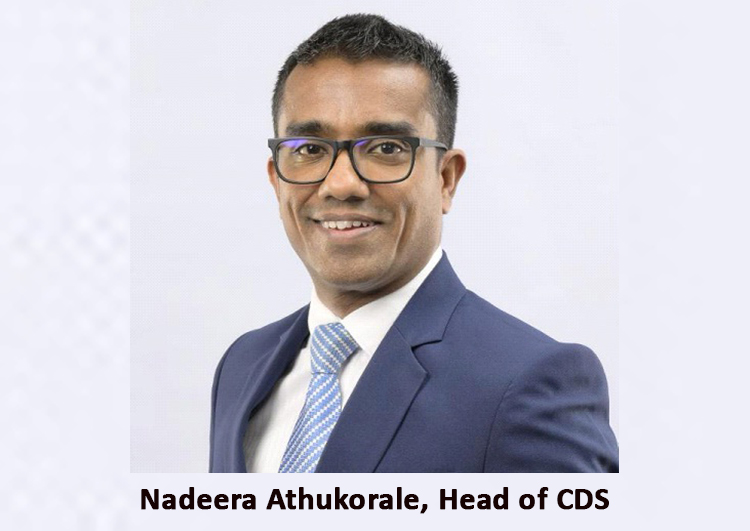
Central Depository Systems (Pvt) Ltd (CDS), a subsidiary of the Colombo Stock Exchange (CSE), has reached a milestone as total registered accounts surpassed the 1 million mark. This achievement coincides with the approach of the organization’s 35th anniversary in September 2026, marking three and a half decades of providing depository infrastructure for the Sri Lankan capital market.
Since its inception in 1991, the CDS has held the distinction of being the first depository in the South Asian region. In its core capacity as a depository, the institution is responsible for holding a wide array of securities including shares, debentures, corporate bonds, and units belonging to investors in electronic form.
The crossing of the one million account threshold also reflects the aggressive broad basing of the retail investor market over the past five years. This expansion is largely attributed to the comprehensive digitalization of the CSE, which has created accessibility for individuals across the country. Digital tools such as the CSE Mobile App and the “CDS e-Connect” portal have revolutionized how investors interact with the stock market, providing them with real time access to their holdings and a seamless interface for account management. The “CDS e-Connect”, originally launched in 2016 and revamped in 2021, has become a one stop shop for stakeholders, by offering services such as client profile management, real time balance and transaction viewing, eNomination facility, monthly statements and newly introduced dividend payment history viewing option. From 2016, by offering eStatements and SMS alert facilities CDS ensures transparency and security for the CDS accountholders. By decentralizing account openings and introducing online facilities in 2020, the CDS successfully brought the stock market to the fingertips of the general public, moving away from the traditional, paperwork heavy processes that once characterized the industry.
A critical pillar of this 35-year history was the 2011 launch of the full dematerialization drive. This initiative was designed to significantly reduce the movement of physical certificates, which were prone to loss, damage, and forgery. Today, the success of this drive is evident as the CDS holds 97 percent of listed equity and 100 percent of corporate debt in scripless form. This near total transition to electronic records has provided a secure and accessible service environment. The Central Control Unit plays a vital role, ensuring that all functions performed by the depository and its participants align with strict rules and regulatory guidelines. By identifying operational, financial, and market risks early, the CDS maintains the integrity of the ecosystem and fosters trust among both domestic and international investors.
Beyond its primary depository functions, the CDS has significantly expanded its influence through the Corporate Solutions Unit (CSU), established in 2017. The CSU was created to standardize and elevate the benchmarks for corporate action services in Sri Lanka and has since grown through the strategic acquisition of PW Corporate Registrar arm. This diversification allows the CDS to expand registrar services and manage corporate actions for both listed and unlisted companies, providing a holistic suite of services that includes the distribution of dividends, rights issues, and e-applications for Initial Public Offerings (IPOs). The digitization of issuer services has been a hallmark of the CSU’s work, introducing innovations such as eDividend payments, eWarrants, and eNotices. These advancements have streamlined the process for issuers while ensuring that shareholders receive their entitlements promptly and securely.
The strategic outlook for the CDS is now centred on the newly formed Research and Development Unit, which is essential to the organization’s vision for the future. This unit functions as a Project Management Office and is responsible for developing innovative services. By cultivating strategic alliances and international collaborations, the R&D unit ensures that the CDS remains a future forward institution capable of adapting to the evolving needs of the global financial sector.
As the CDS looks toward its 35th year of service, it remains focused on digital transformation, strategic partnerships that power progress, new service offerings and enhanced international relations. The integration of new technologies continues to ensure robust infrastructure for the next generation of market participants.
Head of CDS Nadeera Athukorale commenting on the vision of the CDS, remarked “By balancing its core depository duties with non-core registrar and consultancy services, the CDS has positioned itself for long term sustainability and industry leadership.”
The achievement of one million accounts serves as a testament to the resilience and adaptability of the Sri Lankan capital market infrastructure, demonstrating CDS’ ability to facilitate a growing digitized market while continuing to serve as the backbone of the nation’s investment landscape. (CSE)

TONIK, a new hospitality venture under Sri Lanka’s Acorn Group, has unveiled its vision to place culture, storytelling and design at the heart of island exploration, positioning itself as the next Sri Lankan hospitality brand to achieve global recognition.
Built on the Acorn Group’s decades of expertise across aviation, travel, logistics and leisure in multiple Asian markets, TONIK aims to elevate Sri Lanka’s tourism by translating the “soul” of destinations into curated experiences. The brand’s philosophy, “Every Stay Is a Story”, treats villas and boutique hotels as “living narratives” shaped by architecture, memory, craft and community.
The venture addresses a key market gap: while Sri Lanka features exceptional independent villas, many struggle with visibility and global reach. TONIK seeks to resolve this by amplifying each property’s unique value proposition – transforming distinctiveness into revenue -generating potential for owners.
“TONIK’s philosophy aligns with the evolution of our industry- where authenticity and meaningful experiences are no longer optional but essential,” said Harith Perera, Partner at Acorn Group. “Sri Lanka’s narrative deserves platforms that elevate its voice globally.”
For property owners, TONIK offers access to Acorn’s intelligence networks across the Maldives, Middle East, Europe and Asia, including insight into High-Net-Worth travel patterns.
CEO Sundararajah Kokularajah said: “By nurturing properties as living narratives, we aim to shape a new chapter for tourism – authentic, future-ready and deeply Sri Lankan.”
By Sanath Nanayakkare

SDB bank relocated its Warakapola Branch to a new location with a modern, fresh look and ample parking, further strengthening its commitment to delivering an enhanced, customer-centric banking experience. The newly refurbished branch, located at No. 221/E, Colombo Road, Warakapola, will officially open its doors to customers.
The relocation reflects SDB bank’s ongoing efforts to adapt its branch network to today’s banking requirements, ensuring clients enjoy a refreshed, welcoming, and efficient service. The upgraded branch features contemporary design and improved facilities, providing greater convenience and a seamless banking experience for individuals, entrepreneurs, and businesses in the Warakapola area.
As part of its continuous transformation journey, SDB bank has prioritised innovation and service excellence in reimagining the Warakapola Branch. The new premises have been thoughtfully designed to meet evolving customer needs while fostering stronger engagement with the local community and business sector.
Kapila Ariyaratne, Executive Director / Chief Executive Officer of SDB bank, stated, “The relocation of our Warakapola Branch reflects SDB bank’s dedication to providing our customers a modern and enhanced banking experience with convenience and personalised service. This modern space is designed to meet evolving needs while reinforcing our strong ties with the local community. We remain committed to delivering innovative and customer-focused financial solutions that support regional and national growth.”
The enhanced branch environment is expected to serve both existing customers and new clients in the region, reinforcing SDB bank’s growing island wide presence. Through this relocation, the Bank continues to demonstrate its commitment to sustainable growth, service excellence, and meaningful community engagement.
SDB bank invites its valued customers and the Warakapola community to visit the new branch and experience the enhanced facilities firsthand.
A future-ready bank, dedicated to offering customer-centric and comprehensive support tailored to each individual’s needs, SDB bank is a licensed specialized bank regulated by the Central Bank of Sri Lanka, with a listing on the Main Board of the Colombo Stock Exchange and a Fitch Rating of BB +(lka).
Through the network of 94 branches island-wide, the bank provides a comprehensive range of financial services to its Retail, SME, Co-operative, and Business Banking clients across the country. Environmental, Social, and Governance (ESG) principles are deeply ingrained in SDB bank’s ethos, with a steadfast focus on uplifting local communities and businesses through sustainable practices. The bank is particularly committed to promoting women’s empowerment, sustainable development of SMEs, and digital inclusion, aiming to propel Sri Lanka to new heights.
Ceremonial opening of SDB bank Warakapola Branch
From left to right,
Binesh Aravinda – Head of Branch Banking – SDB bank,.A.D.Walisinghe – Chairman Kegalle Sanasa District Union, Kapila Ariyaratne – Executive Director/ Cheif Executive Officer – SDB bank, Chitral De Silva – Cheif Business Officer – SDB bank

Qatar partially reopens airspace as Iranian strikes continue to hit Gulf

The final voyage of the Iranian warship sunk by the US

AI-generated Iran war videos surge as creators use new tech to cash in

Huge explosions rock major Tehran airport as Israel strikes ‘regime infrastructure’

India hit back but Sutherland, Hamilton impress to give Australia the edge

Heat Index at ‘Caution Level’ in the Sabaragamuwa province and, Colombo, Gampaha, Kurunegala, Anuradhapura, Vavuniya, Hambanthota and Monaragala districts

‘Dates have the highest sugar content to fight Coronavirus’

Sunday Island 27 December – Headlines

#SundayIsland 17th December – Headlines

Sunday Island – 28th March

Sunday Island Headlines – 21 March

Sunday Island – 21st February – Headlines
-

 Features5 days ago
Brilliant Navy officer no more
-

 Opinion5 days ago
Sri Lanka – world’s worst facilities for cricket fans
-

 News2 days ago
Legal experts decry move to demolish STC dining hall
-

 Features5 days ago
A life in colour and song: Rajika Gamage’s new bird guide captures Sri Lanka’s avian soul
-

 News1 day ago
University of Wolverhampton confirms Ranil was officially invited
-

 Business3 days ago
Cabinet nod for the removal of Cess tax imposed on imported good
-

 Features6 days ago
Overseas visits to drum up foreign assistance for Sri Lanka
-

 Features6 days ago
Sri Lanka to Host First-Ever World Congress on Snakes in Landmark Scientific Milestone