
Latest News
Rs. 169 billion allocated for 2026, to support the aspirations of decent and comfortable living

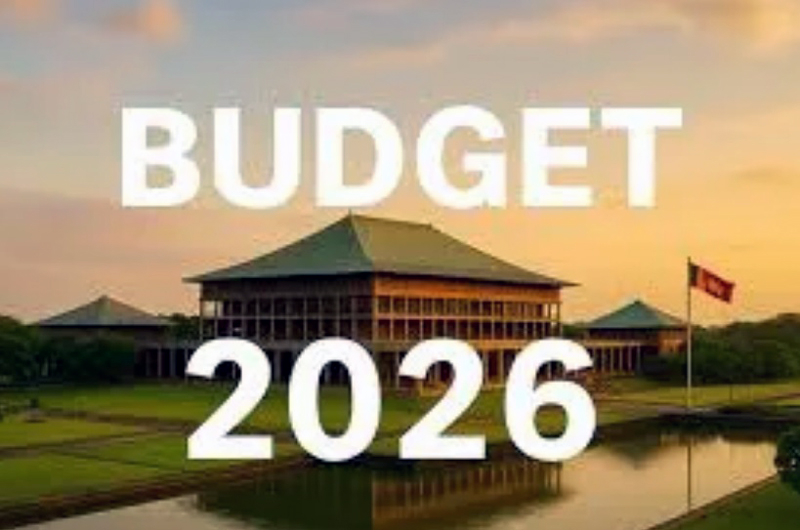
The government has allocated Rs. 169 bn (Rs. 85.7 bn as recurrent expenditure and Rs. 0.64 bn as capital expenditure) to provide around 1 million new pipe-borne water supply connections in the medium term, provide uninterrupted safe drinking pipe borne water through around 342 existing water
supply schemes to 3.1 million houses, industries, and other entities, ensuring sustainability of around 3,780 community water supply schemes islandwide, continuation of the construction activities of around 20,000 housing units targeting low income people in 2026 and the development of rural infrastructure covering entire country.

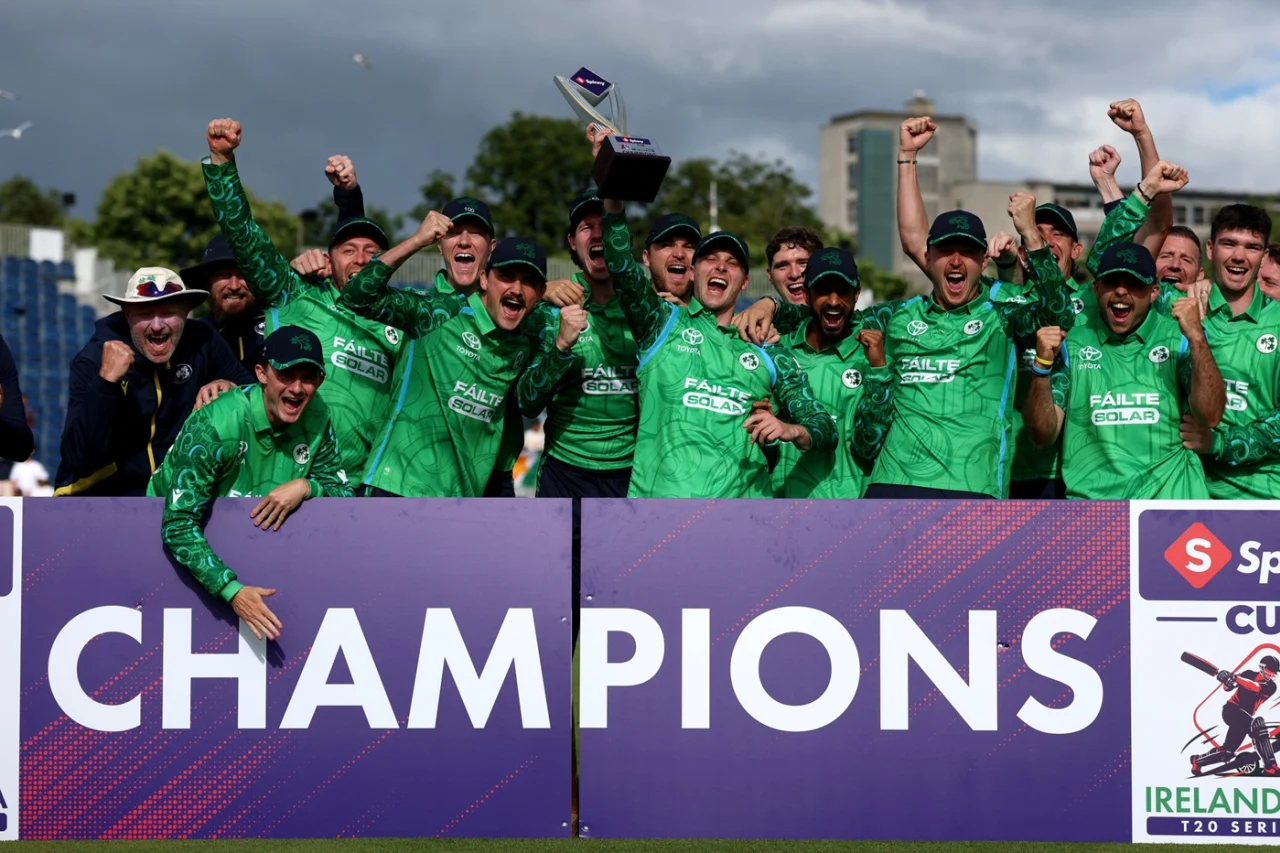
So nice they had to do it twice. Ireland have swept the T20 World Champions 2-0. That meant India’s unbeaten run which spanned 16 series and nearly three years has been irrevocably broken. The stars of this supreme result were Harry Tector, who scored a determined half-century to help put 154 on the board, and Jai Mondra, who picked up three wickets in the blink of an eye.
Tector, playing his 100th T20I, was brought to the crease in the second over. His first runs were off the inside edge. The rest were both timely and thought out. He held the innings together for Ireland and in doing so highlighted just why he is a valued member of this side. Tector absorbed the pressure at one end, willing to countenance risk only when the odds were in his favour, like when Suryansh Shedge, in the middle of leaking 22 runs in a over bowled a free hit ball that was full toss. That went for six. Ben Calitz, at the other end, was a little more willing to go for his shots. Their 65-run partnership, off 44 balls, formed the backbone of a total of 154. At that point, Cricinfo’s forecaster only gave Ireland an 18% chance of victory.
Shivam Dube picked up two wickets in two balls and broke the partnership that was the biggest threat to India. He had Calitz caught at deep point, a wicket created by good process. Dube led the batter to the square boundary which was a lot bigger than the straight one. He also made it harder for Calitz to access his power by bowing wide of off stump and making him reach out. Gareth Delany came out at the fall of that wicket and was undone by a wobble seam delivery that nipped back in and crashed into his stumps. It could’ve been the ball of the series were it not for what Moondra did in the chase.
Picked in place of Prasidh Krishna, and making his T20I debut, Prince picked up three wickets and went for less than run a ball. He was able to do so because he had threat whether he went short and into the pitch or full and into the blockhole. His final two wickets came in the last over of the innings, which he was given ahead of the more established Harshit Rana. One was back of a length to dismiss Tector. The other was a slower ball to topple Liam McCarthy. This varied skillset that he has, on top of the pace he can produce, might just have marked him out as a very real prospect for the 2027 ODI World Cup.
That was a sign in the crowd and it had plenty of airtime as Moondra dismissed Sanju Samson with the first ball of the chase – a venomous inswinger – and added Abhishek Sharma before that over was out. It was only the fourth time in the entire history of T20Is that both openers had fallen for golden ducks.
A modest target might have been helping India hold their nerve with the scoreboard reading 1 for 2 but Moondra kept making it difficult. The left-arm quick highlighted the slowness of the pitch when he had Shreyas Iyer dragging a wide ball back onto his stumps and then was part of an incident that revealed just how much this series has got under the opposition’s skin. He delivered the ball that led to Ishan Kishan’s run-out – off a direct hit by Ross Adair – and the batter left the field wringing his hands at Tilak Varma. India were 35 for 4. Their composure had been shattered.
India went 48 deliveries without a boundary off the bat, between the fifth and 13th overs. This was a function of both the conditions and their sorry state. The Belfast pitch was loathe to let the ball come onto the bat. Also, it was covered with enough grass that any scrambled/wobble seam delivery was getting purchase. Tilak and Axar appreciated the situation they were in and tried to take the game deep. The 12th over though wasn’t that. Matt Hollard dismissed Axar with a bit of extra bounce. Dube came out and even he, who scores a majority of his runs in boundaries, could only find two.
Ireland were brave to pair him up with a left-arm spinner in the death. Matt Humprheys knowing he was at the unfavorable end of the match-up did the only thing he could. He denied the short straight hit. A deliberate ball halfway down the pitch ended up in deep square leg’s hands – the long boundary was used perfectly – and broke India’s chase. Tilak fell seven balls later for 55 off 46 and soon that was that.
Scores:
Ireland 154 for 8 in 20 overs (Ross Adair 16, Harry Tector 53, Lorcan Tucker 15, Benn Calitz 37, George Dockrell 19; Arshdeep Singh 2-35, Harshit Rana 1-17, Prince Yadav 3-22, Shivam Dube 2-25) beat India 153 for 9 in 20 overs (Ishan Kishan 12, Shreyas Iyer 10, Tilak Varma 55, Axar Patel 14, Shivam Dube 20, Harshit Rana 21; Matt Hollard 3-26, Jai Moondra 3-32, Mathtthew Humpreys 1-28, Harry Tector 1-40) by one run
[Cricinfo]
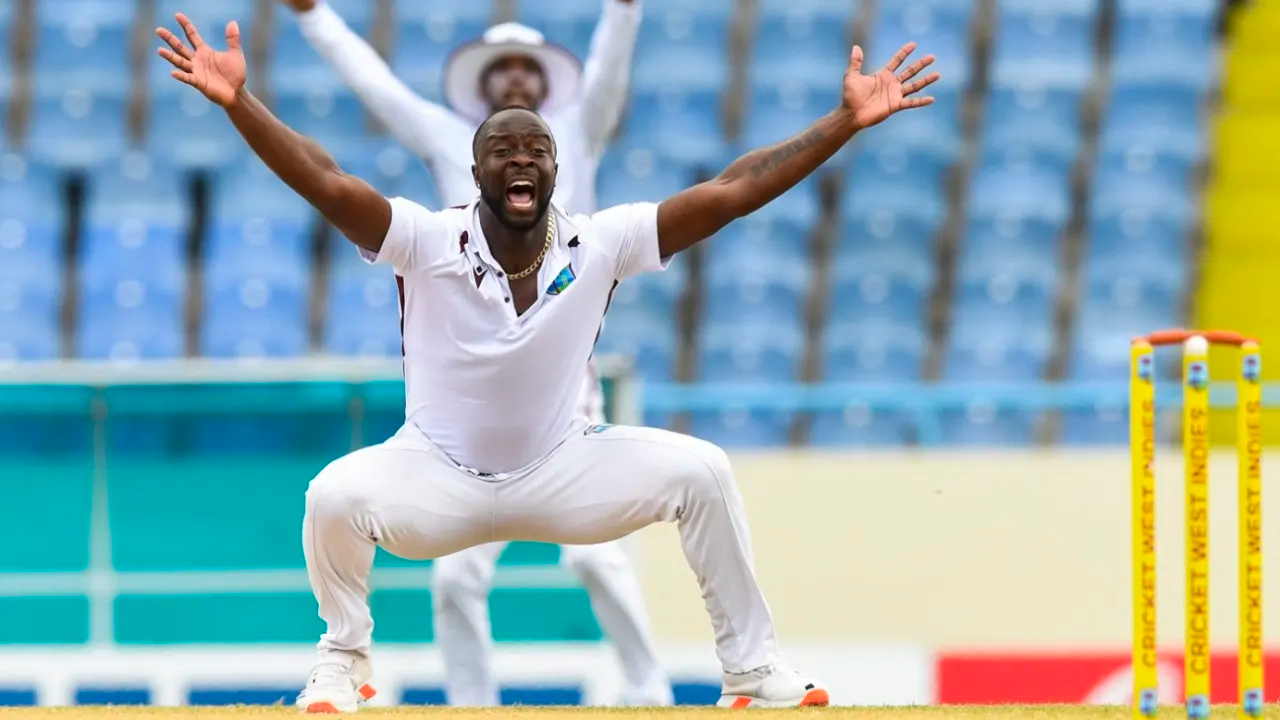
Kemar Roach rampaged his way to his 300th Test wicket, Jayden Seales, Shamar Joseph and Alzarri Joseph all bowled menacing spells, and West Indies blasted Sri Lanka out for 101, completing a behemoth innings-and-217-run victory.
Gaining significantly more movement in the air and off the surface than Sri Lanka’s quicks had, West Indies’ fast bowlers threatened to take wickets right through day four’s 27.2 overs. It was Roach that was getting the ball to hoop most, however, finding massive inswing into the right-hander, often late in the ball’s trajectory, to threaten the pads and stumps of the right-handers he bowled to, and the outside edges of the left-handers.
Roach’s 300th wicket was the ninth of Sri Lanka’s innings, Asitha Fernando’s stumps being clattered by a full one speared in from wide of the crease. He was mobbed by adoring team-mates who seemed to take even more delight in his milestone than him, and was later presented a West Indies Test shirt with the number 300 on it to commemorate the occasion. He is the first West Indies bowler since Curtly Ambrose to the milestone. Among fast bowlers, only Courtney Walsh, Ambrose, and Malcolm Marshall have more wickets for West Indies than him.
Sri Lanka were woeful with the bat, and played like a team fatigued from 160.5 overs in the field on days two and three. Dinesh Chandimal was the only batter who managed even some semblance of resistance, batting out 60 balls for his 43. No other batter in the top six managed a double figure score. Some were pinged in front by balls that jagged in. Others nicked off against deliveries that moved away. Two – Kamindu Mendis and Kusal Mendis – had the tops of their off stumps pinged after they had left the ball. West Indies bowled exquisite lines, and rarely bowled a bad ball. Even Sri Lanka’s exceedingly rare boundaries tended to come from full deliveries when the bowlers had gone looking for swing.
After Roach opened the day’s wicket-taking in the first over, swinging a ball into Nishan Madushka’s pads, Seales struck in his own first over, getting nightwatcher Kasun Rajitha to edge to the cordon. Soon after, Shamar Joseph struck twice, pinging Kamindu’s off stump as he shouldered arms, before pinging Dhananjaya de Silva’s front pad to catch him lbw. Late in the session, Alzarri got himself a wicket too, in similar fashion. Having got a ball to leave Kusal, he had the next one jag back into Kusal, who had also let the ball hit his off stump uninterrupted.
Sri Lanka went to lunch at 81 for 6 and it only took West Indies 6.1 further overs to remove the remaining batters. Roach struck twice in two overs to get to his 300th, and after some strong words exchanged with Lahiru Kumara and Sonal Dinusha, Seales took the final wicket to complete a stunning victory.
West Indies, essentially, have dominated this Test from start to finish. And they were so spectacularly dominant in days three and four, they crushed an opponent that had been expected to compete.
Scores:
West Indies 626 for 9 dec in 160.5 overs (Amir Jangoo 233, Roston Chase 194; Milan Rathnayaka 5-124) beat Sri Lanka 308 in 71.5 overs (Dhananjaya De Silva 120, Dinesh Chandimal 54; Justin Greaves 3-39) & 101 in 31.2 overs (Dinesh Chandimal 43; Kemar Roach 4-51, Jayden Seales 3-14, Shamar Joseph 2-19) by an innings and 217 runs
[Cricinfo]
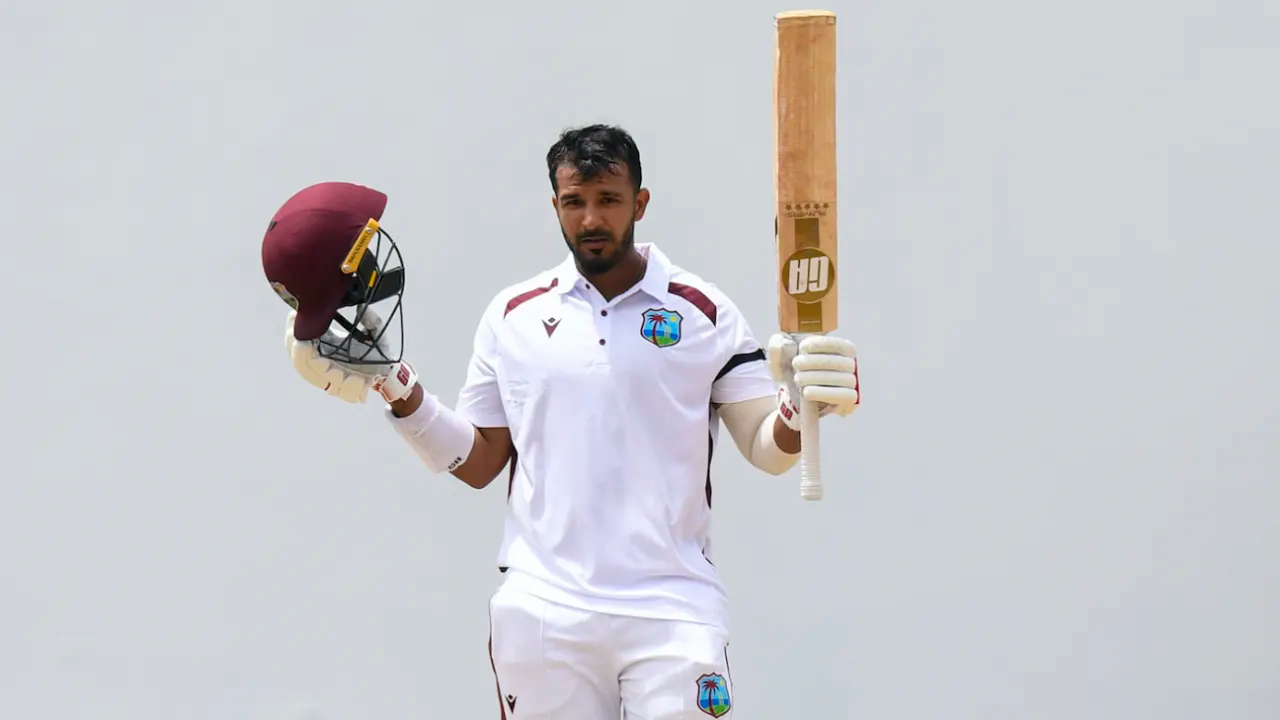
Amir Jangoo amassed 233, RostonChase hit 194, and through a record-breaking 401-run partnership, the pair slow-roasted Sri Lanka on day three in Antigua. Their gargantuan stand delivered West Indies to a position of extraordinary strength, securing them a 318-run first innings lead. That in the four overs they got to bowl at Sri Lanka, West Indies dismissed the dangerous Pathum Nissanka, and created other chances, buoying them further heading into day four.
Jangoo and Chase now not only have the highest sixth wicket stand in the history of Test cricket, they also have the second highest partnership for West Indies, behind only Garfield Sobers and Conrad Hunte. Both batters improved on their previous first-class high scores, Chase easily beating his 137 not out, and Jangoo surpassing his domestic 218.
That Jangoo produced a knock of such astonishing concentration, and expansive range, in just his third Test innings was especially impressive. Until he got out attempting to accelerate about midway through the last session, his innings was largely chanceless. He batted 373 deliveries on his own, and he and Chase batted 100.2 overs, seeing out three complete sessions together. Though they had begun slowly, both batters sped up through the day and were finding boundaries off both the quicks and spinners through the second and third sessions of the day.
Sri Lanka’s attack found the pitch utterly docile for most of day three. They were missing their fastest quick Lahiru Kumara, who went off the field with a hamstring niggle early the previous day. Their quicks were earnest in the first hour, but once Jangoo and Chase saw out the second new ball (the ball was four overs old when day three began) with a period of disciplined batting, Sri Lanka’s quicks lost some venom, and captain Dhananjaya de Silva went increasingly to his spinners – Sonal Dinusha in particular.
The one exception for Sri Lanka was Milan Rathnayaka, who was intense in each of his day three spells, and created chances even in a dreary second session, having Chase dropped by a diving wide slip for 108. Later in the day, it would be Rathnayaka who would break the enormous stand, and would go on to complete a well-deserved five-wicket haul, finishing with 5 for 124. Dinusha, the left-arm spinning allrounder, conceded 234 runs himself in this innings, though he did also pick up two wickets, including that of Chase.
Patience had defined Jangoo and Chase’s batting in the first hour. Jangoo, for example, didn’t score off the first 15 deliveries he faced on day three, while Chase was only marginally less defensive. When conditions began to ease after the first hour, however, they began to slip into more fluent modes of operation. In the afternoon session, when the pair really propelled West Indies into the ascendancy, they plundered 136 runs at a rate of more than five an over. Jangoo was especially strong square of the wicket on the offside and down the ground. Chase was excellent through the covers. Jangoo, additionally, would sometimes tonk the spinners over the straight boundary.
Right through the day the pair would notch up milestones – both for themselves, and the partnership. The milestone that drew the most raucous celebration came soon after tea, when Jangoo completed his double with a sweep through square leg, leaping in the air as he took off for the run. Although only hundreds were in attendance, the house was on its feet for him, coach Daren Sammy and the West Indies dressing room giving him an especially warm ovation. Having come into the XI only as a replacement player for the injured Shai Hope, Jangoo has essentially made himself undroppable for the second Test.
After tea the pair took the scoring up even one further gear, Jangoo hitting some memorable sixes over square leg, while Chase continued to drive powerfully. Jangoo was out attempting to repeat a pulled six though the ball was not quite short enough for that shot. The resultant top-edge was gobbled up by the wicketkeeper. Chase was out much later, under-edging Dinusha into his stumps when a sweep went awry. He was six short of what would also have been his first double century.
Rathnayake would take two further wickets before West Indies declared the innings. Nissanka was out caught behind feeling for a Jayden Seales away-swinger first ball of the second over. Nightwatcher Kasun Rajitha could have been out too, had Jangoo at short leg held a sharp, low chance off the bowling of Kemar Roach.
Scores:
Scores: Day 3 Stumps
Sri Lanka 308 and 15 for 1 (Kasun Rajitha 4*, Nishan Madushka 2*; Jayden Seales 1-5) trail West Indies 626 for 9 dec (Amir Jangoo 233, Roston Chase 194; Milan Rathnayaka 5-124) by 303 runs
[Cricinfo]

Tector and Moondra headline Ireland’s historic series sweep against India

Roach’s 300th wicket headlines West Indies’ innings win over Sri Lanka

Showers will occur at times in the Western, Sabaragamuwa and North-western provinces and in Galle, Matara, Kandy and Nuwara-Eliya districts.

LAWASIA warns against ad hoc initiative to increase judges’ retirement ages

Countrywide drug bust:7, 300 youths arrested

ANP leader further remanded

‘Dates have the highest sugar content to fight Coronavirus’

Sunday Island 27 December – Headlines

#SundayIsland 17th December – Headlines

Sunday Island – 28th March

Sunday Island Headlines – 21 March

Sunday Island – 21st February – Headlines
-
 Opinion6 days ago
Ranasinghe Premadasa: The man who would not take ‘No’ for an answer
-
 News2 days ago
Another 1,132 Sri Lankan Personnel to be deployed for United Nations Peacekeeping Missions
-

 Opinion5 days ago
Sri Lanka’s national security: Justice, reconciliation, and forward-looking vigilance
-

 News6 days ago
US Assistant Secretary of State for South and Central Asian Affairs meets President
-

 News3 days ago
Kelaniya emerges as highest ranked Lankan uni in Times Higher Education Sustainability Impact Ratings
-

 Opinion4 days ago
A triumph for Pakistan’s skilled diplomacy at Iran-US talks
-

 Editorial6 days ago
FCID’s big catch
-

 Features5 days ago
US-Iran war, global exchange rates and Sri Lankan Rupee