
News
$5.8 mn in funding for FAO-led projects in seven countries

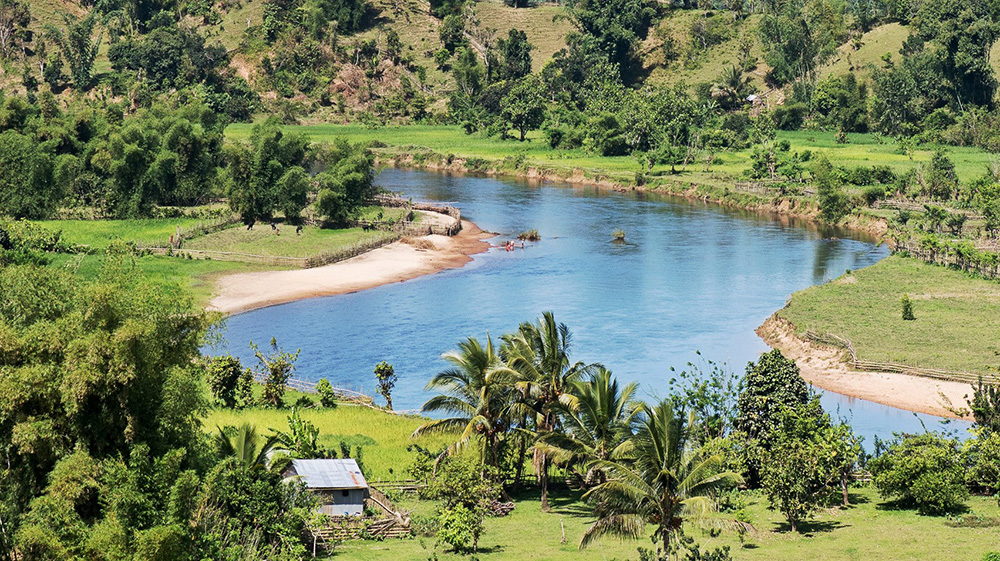
Sri Lanka and Nepal among beneficiaries
The Food and Agriculture Organization of the United Nations (FAO) has helped seven countries secure $5.8 million in financing from the Kunming Biodiversity Fund (KBF) to integrate biodiversity into agrifood systems and drive action under the Kunming-Montreal Global Biodiversity Framework (KMGBF).
The FAO issued the following statement yesterday (6): “The selected projects support multiple KMGBF targets on sustainable agriculture, ecosystem protection, knowledge management, the control of invasive species and the engagement of local communities – including Indigenous People – in biodiversity management for food and agriculture.
FAO Director-General QU Dongyu welcomed the announcement, saying: “The Kunming Biodiversity Fund is instrumental in helping developing countries achieve global biodiversity goals through sustainable agriculture under the overarching guidance of the Four Betters, and in amplifying the central role of agrifood systems in halting biodiversity loss, promoting food diversity and providing solutions to the climate crisis.”
Launched by the People’s Republic of China in 2021 during the first part of the UN Biodiversity Conference under China’s Presidency, the KBF supports developing countries for biodiversity protection and in meeting the KMGBF’s global goals, with a focus on regions rich in biodiversity but in need of stronger capacity and resources.”
The funding will target the following projects:
1. Mainstreaming biodiversity into agrifood systems to implement National Biodiversity Strategies and Action Plans (NBSAPs)
This project aims to mainstream biodiversity into agrifood systems by creating enabling conditions that accelerate the implementation of NBSAPs in Madagascar, Uganda, and Mexico. It will enhance policy alignment, strengthen institutional capacity, improve financial incentives for biodiversity-friendly practices, and promote knowledge sharing.
2. Empowering communities through knowledge management of ecosystems and species to achieve the KMGBF in the Cook Islands
By improving knowledge systems, modernizing data, and promoting sustainable practices, the project will empower communities to conserve, restore, and manage biodiversity. It will establish a national ecosystem classification, revitalize the biodiversity database, and support community-led conservation using traditional knowledge and agroecology, with a focus on women and youth.
3. Effective management of invasive alien species for ecosystem benefits in Nepal
By focusing on halting the spread and managing existing populations of invasive alien species, the project aims to reduce their impact on biodiversity and local livelihoods through community-based action, participatory approaches, and stronger institutional capacity.
4. Prevention and control of invasive alien species for enhanced biosecurity in Sri Lanka
This project will strengthen national capacity to prevent and manage invasive alien species by improving border controls, training frontline teams, and involving communities in removal efforts and awareness campaigns.
5. Strengthening ecosystem resilience and sustainable management of Lake Eğirdir in Türkiye
The project will raise public awareness and promote biodiversity-friendly practices to protect the lake and its ecosystems. It will also support water-efficient agriculture and encourage sustainable livelihoods in the region.
The role of agrifood systems in implementing the KMGBF
Agrifood systems are directly linked to more than half of the KMGBF’s targets. FAO plays a key role in their implementation by fostering policy coherence, promoting best practices, and scaling up innovations to accelerate progress towards global biodiversity goals.
FAO is committed to transforming agrifood systems into drivers of sustainable development. This transformation is central to reversing biodiversity loss while ensuring food security, improved nutrition and resilient livelihoods for all.



INS Sindhukesari, a submarine serving in the Indian Navy, arrived at the port of Colombo on 03 May 26 to undertake Operational Turnarounds.
The visiting submarine was welcomed by the Sri Lanka Navy in precision with naval traditions.
Throughout its stay in the island, the submarine’s crew is scheduled to participate in a variety of programmes organized by the Sri Lanka Navy, including visits to several tourist attractions in Sri Lanka.
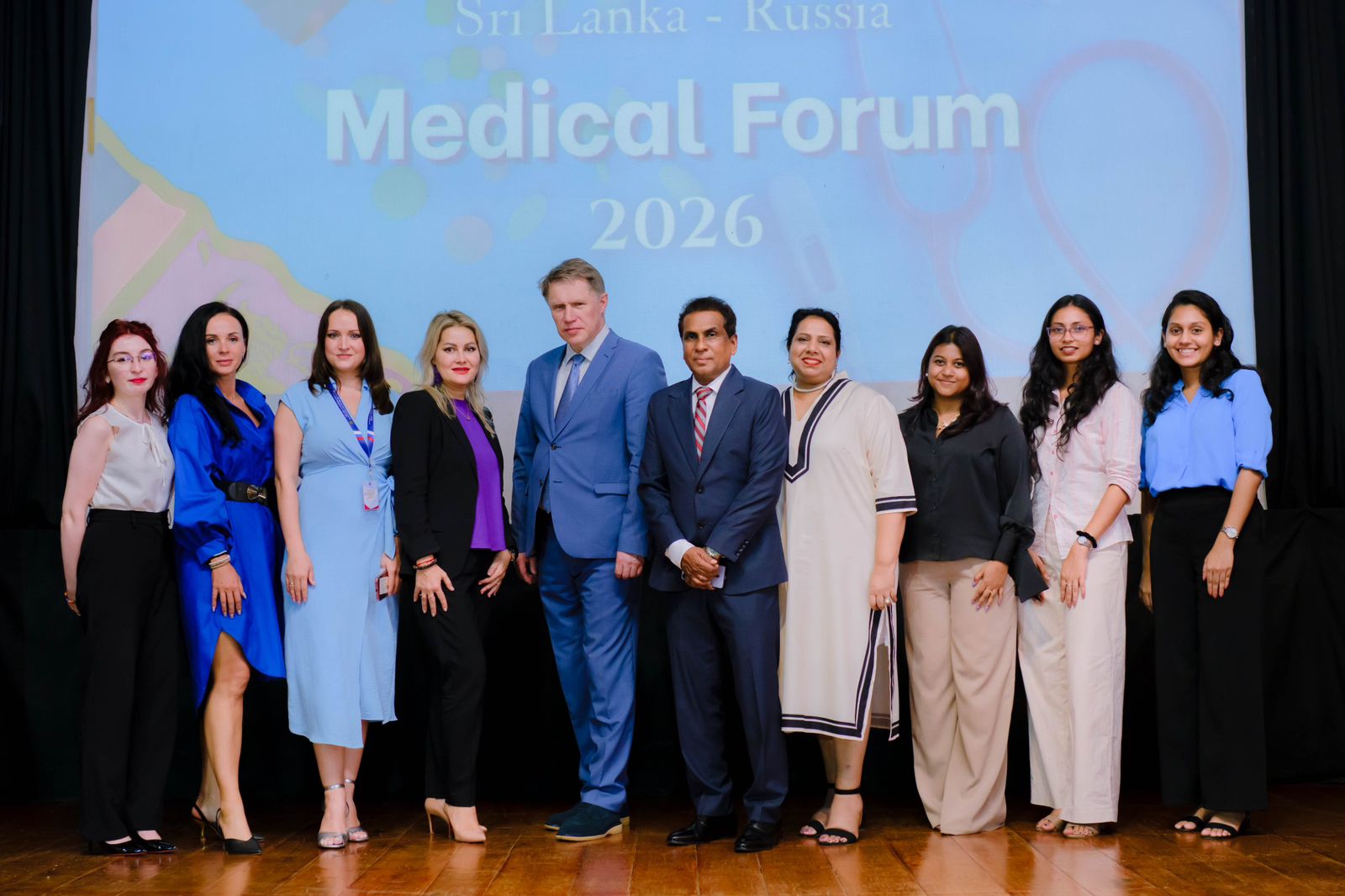
Mikhail Murashko, Minister of Health of the Russian Federation, officially visited the Russian House in Colombo to attend the Sri Lanka–Russia Medical Forum, where members of the Sri Lanka Russia Business Council and graduates from the Association of Sri Lankan Graduates from Socialist countries (ASLGSC) attended.
This historic gathering was graced by rectors and representatives from several world-class Russian medical institutions, including Kursk State Medical University, Sechenov First Moscow State Medical University, and Tver State Medical University, among others.
The forum commenced with an address by Minister Murashko, during which Russian medical graduates in attendance raised pertinent questions regarding medical and pharmaceutical sector opportunities in Sri Lanka.
Levan Dzhagaryan, Ambassador of the Russian Federation to Sri Lanka and the Maldives, together with Madam Maria L. Popova, Counsellor of the Embassy of the Russian Federation in Sri Lanka & the Maldives and Director of the Russian House in Colombo, graced the occasion. Both officials expressed strong support for continued collaboration and future initiatives between the two nations.
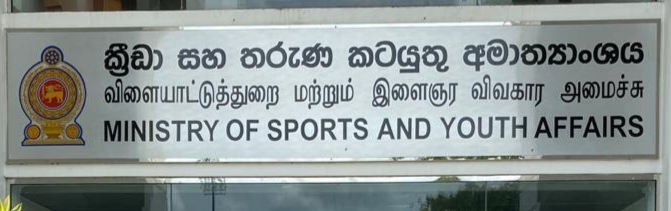
The official appointment letters for the members of the newly established “Cricket Transformation Committee” (CTC) were handed over on Monday (04) by the Minister of Youth Affairs and Sports, Sunil Kumara Gamage.
The following members received their letters of appointment at the Ministry premises:
Sidath Wettimuny
Thushira Radella
Prakash Schaffter
Ms. Avanthi Colombage
The Ministry also noted that veteran cricketers Roshan Mahanama and Kumar Sangakkara, who are key members of the committee, are currently overseas. Their official appointments will be formalised immediately upon their arrival in Sri Lanka.
The Cricket Transformation Committee has been mandated to oversee the administration and drive structural reforms within Sri Lanka Cricket (SLC) in accordance with the powers vested in the Minister under the Sports Act No. 25 of 1973.

INS Sindhukesari arrives in Colombo

Minister of Health of the Russian Federation attends the Sri Lanka–Russia Medical Forum

Members of Sri Lanka Cricket Transformation Committee Officially Appointed

Three prison guards arrested following the death of an inmate

Showers or thundershowers will occur at most places of the island after 1.00 pm.

CJ urged to inquire into AKD’s remarks on May 25 court verdict

‘Dates have the highest sugar content to fight Coronavirus’

Sunday Island 27 December – Headlines

#SundayIsland 17th December – Headlines

Sunday Island – 28th March

Sunday Island Headlines – 21 March

Sunday Island – 21st February – Headlines
-

 News7 days ago
Treasury chief’s citizenship details sought from Australia
-

 News6 days ago
Rooftop Solar at Crossroads as Sri Lanka Shifts to Distributed Energy Future
-
 News5 days ago
“Three-in-one blood pressure pill can significantly reduce risk of recurrent strokes”
-

 News7 days ago
Central Province one before last in AL results
-

 Sports7 days ago
Well done AKD!
-

 News2 days ago
USD 3.7 bn H’tota refinery: China won’t launch project without bigger local market share
-
 News21 hours ago
CJ urged to inquire into AKD’s remarks on May 25 court verdict
-

 News5 days ago
Alarm raised over plan to share Lanka’s biometric data with blacklisted Indian firm