
Latest News
Government committed to addressing the challenge posed by dangerous drugs – President

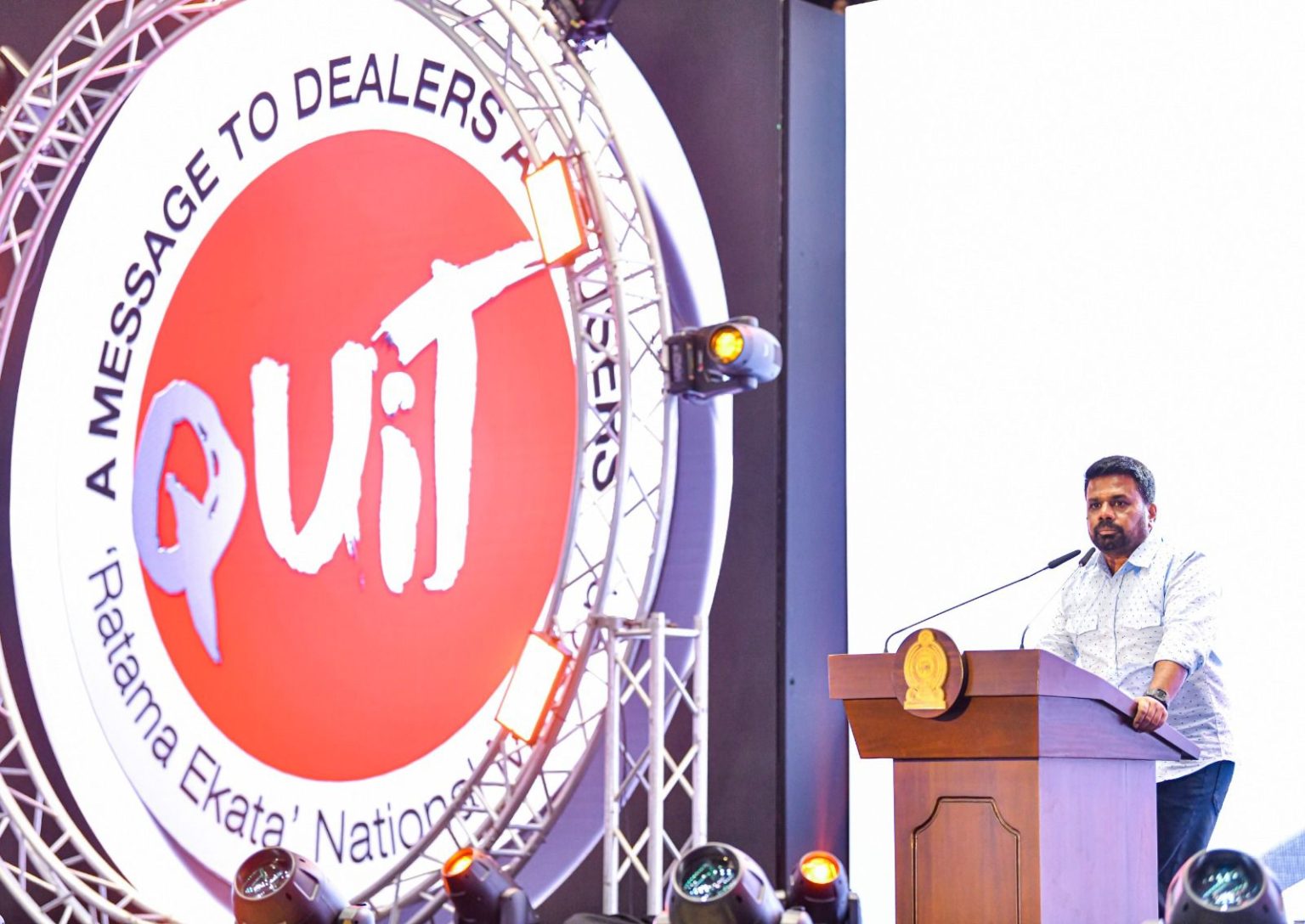
President Anura Kumara Dissanayake while attending the launch of the national operation ‘A Nation United: Eradicating the Menace of Narcotic Drugs’ held on Thursday (30) morning at the Sugathadasa Indoor Stadium in Colombo. highlighted the mobilization of the broadest possible public movement against harmful drugs, with a strong commitment to completely eliminate this threat from the nation and liberate both future generations and society from its influence, the President also urged drug dealers and users to disengage from it without delay.
The President stressed that his government is not prepared to allow the narcotics trade, which has become a national scourge destroying the country’s economy and society while claiming the lives of schoolchildren and the youth, to continue any further. He added that ‘A Nation United’ national operation has now been activated as a multi-sector programme incorporating enforcement, rehabilitation, prevention, public awareness, religion, sports and culture.
Pointing out that the drug trade is not something that emerged naturally, but has long been fostered with the support of politicians and certain state officials, the President said that the present government has now ended the environment in which criminals could build influence under political protection. Therefore, the President stated that he is instructing state officials, who assist these networks to sever all ties and withdraw from them. President Dissanayake emphasised that no one involved in this trafficking will be allowed to remain hidden any longer.
The President also invited religious leaders to take the lead in overcoming this crisis by making use of the cultural bond between villages and places of worship. The President urged media institutions to report on matters relating to drug trafficking responsibly and sensibly, maintaining restraint and social decorum, in order to support the success of this initiative.
Furthermore, the President stated that a larger allocation would be set aside in the upcoming budget for the rehabilitation of those addicted to drugs and that a National Operations Centre would be established with the involvement of all relevant parties.
The spread of dangerous drugs in the country has reached the level of a national catastrophe and it has been observed that numerous crimes are linked to drug trafficking. The government has recognised that the menace must be uprooted through an efficient decision-making mechanism and a nationwide programme with broad public participation. Accordingly, ‘A Nation United’ national operation has been launched to accomplish this national objective.
Under this programme, it is expected to raise social awareness of the threat through a broad campaign, dismantle the networks linked to drug trafficking, strengthen rehabilitation opportunities and offer opportunities for individuals seeking to overcome drug dependence.
Expressing his views President Dissanayake further stated;
We are gathered here today with the purpose of defeating the deceptive menace that has engulfed our country. We know how deep-rooted and destructive this scourge is. Our children, our wider society and we as a nation have become victims of this dangerous threat. This is not a challenge that emerged overnight. It has gradually developed over decades and has now ruined the entire social fabric. At this junction, we clearly have two paths before us. One is to let things continue as they are and merely watch the destruction unfold. The other is to rise up against it. I, along with our government, have chosen to take a stand and fight back.
This menace is destroying our children. Sixty-four per cent of those imprisoned in our country have been arrested for drug-related offences. It is destroying the entire future of our youth. The age group most affected, the young generation between 18 and 24, is being dragged into ruin, with their hopes and futures shattered. Consequently, we cannot afford to remain passive observers. Each of those young individuals has parents, a mother and father who held high hopes for their child from the day of their birth. Yet now, they are forced to witness, powerless, as their children are ravaged right before them. They endure pain. They face stigma. The fabric of family disintegrates. When a husband falls victim to addiction, it represents the most profound tragedy that a family can encounter.
As a result, the entire family structure is under threat of disintegration. Meanwhile, this destructive whirlwind is sweeping through villages across the country. A criminal underworld is expanding within communities and society as a whole is being undermined. A large share of road accidents today in our country is linked to drug abuse. The majority of child and women abuse cases occur because the perpetrators are addicted to drugs.
The economy of the country has also been severely destabilized. The Special Task Force has had to be deployed to protect the Katunayake–Colombo Expressway, because electrical cables are being cut and stolen. Batteries from the elephant fences are being removed. Iron frames from bridges and culverts are being vandalised and carried away. This tragedy has created instability across the whole of society. Therefore, for social stability and peace and for the protection and wellbeing of every child, every woman and every citizen, this menace must be defeated. We are determined that the action we are taking will lead us to victory and finally overcome this scourge.
Vast sums of money circulate within this illegal trade. Drugs are being sold for huge profits. The amounts seized alone demonstrate the enormous scale of the supply network. Immense wealth has been accumulated through this trade, which has become a massive black-market enterprise. Rivalries are emerging as these groups fight for control of the market. Recent shootings have been identified as clashes between such competing factions.
How did such a large number of firearms, ammunition, and shooting incidents arise? It is understood that every stable society possesses a state mechanism designed to maintain security and order. However, financial influence has permeated this state mechanism. We cannot confront this issue while we persist in overlooking these truths.
Only the State should have the authority to hold licensed firearms. How then did these arms reach criminals? Seventy-three T-56 assault rifles from a certain military camp were transferred into the hands of these groups. They have also been supplied with ammunition. Payments have been made into bank accounts for these transactions. A police officer even sold his service weapon and fled. In this way, financial power has infiltrated and swallowed up the institutions of the State.
The Police and the Armed Forces are working tirelessly to combat this. However, many have fallen prey to the immense financial power behind these criminals. Consequently, a “black state” has formed within the legitimate state institutions built to ensure national and public security. The Department of Motor Traffic has issued number plates for vehicles that do not exist. The Department of Immigration and Emigration, a crucial institution that issues legal travel documents to protect national security, has seen certain officials provide two or three passports to underworld leaders. Corrupt links within Customs have also been exposed.
Thus, beneath the official State structure, a second network has been established to serve criminal interests. This country cannot have two states. There can only be one State, the legitimate State built by the democratic power of the people. The black state must be dismantled and brought to an end.
This issue has now infiltrated political parties. Some individuals have become Councillors and Chairpersons, while others are preparing separate documents to contest elections. At one point, this network grew under the protection of certain politicians. The fundamental seeds for establishing political influence, Councillors, government, even attemps to controlling governance, have already been planted and we have identified them. This is not something that emerged naturally; it has evolved over a long period with the blessing and involvement of certain politicians and public officials.
At present, the public lives in fear of breaking away from this network. Those who attempt to leave are often shot and killed. Society has been pushed into an extremely dangerous situation. This is not something that arose naturally behind it lies clear political backing, as well as the support of certain state officials. We all know that some individuals could not have earned their wealth through legitimate employment, it is visible to everyone. Now, we have reached a decisive moment where this menace must be brought to an end. Many people are saying that if this government does not act, no one else will. This has now become the desperate plea of mothers across the country and with that hope and determination, we must and we can accomplish this task.
Our Police Department is fully committed to addressing this issue. We are preparing the police force accordingly. We have also instructed other officials to immediately withdraw from these networks. Safeguard your employment, dignity and the value of your position step away from these activities without delay. Otherwise, we will take action to remove you. This scenario has even extended to roles that ought to uphold the rule of law. I would like to remind all parties concerned that none of you are concealed any longer; we are aware of everything. Please keep this in mind. The truth is now evident before us, and thus, I urge you once more to withdraw without delay.
At the same time, we urge those who have become addicted to drugs to immediately stop using them. We are ready to support your recovery. If addressed individually, none of our children should have to bear responsibility for this situation. Many who have fallen into addiction believe that, in the absence of economic stability, music, sports or any other form of enjoyment, intoxication is their only source of relief. This is not their fault. The truth is, today we lack a strong sports culture something that existed in our country decades ago.
In the past, children in our villages played together. Today, although sports still exist, the general public is no longer culturally connected to them. Therefore, blaming the youth serves no purpose. Instead, we must create a new sports culture and provide opportunities for recreation, music, literature and community engagement. We intend to launch a comprehensive programme to achieve this.
At the same time, it is our responsibility to rehabilitate those who have become addicted. Rehabilitation centres have already been established for this purpose. We urge parents to bring their children forward and entrust them to us we will help them recover from addiction and return them to you as responsible citizens. A significant allocation has been made in the upcoming budget to strengthen these efforts and improve facilities. Therefore, no one struggling with addiction should fear seeking help.
In a similar manner, individuals engaged in trafficking must relinquish their activities. We are establishing a National Operations Centre that will bring together the Police, the Armed Forces and all relevant agencies. This centre will integrate the Customs Department, the Department of Immigration and Emigration, the Department of Motor Traffic, the Police, the Armed Forces and the Intelligence Units into a single coordinated network. With this system in place, no one will be able to remain hidden any longer. We already know who they are and where they operate. Continuous discussions and raids are being carried out in this regard. If we allow our country, our children and our society to fall victim to a small group of criminals, then we must question who we are as society. Let it be remembered this country does not belong to them.
We have also discussed initiating this mission in collaboration with the Maha Sangha and other religious leaders. The connection between the village and religious institutions must be utilized as a key weapon in combating this menace. We urge all religious leaders to play an active role in conveying this message to society. Let us unite in this effort to liberate our society from this destructive influence.
Furthermore, I expect that the media will maintain the necessary restraint and professionalism while reporting on this issue. Beyond that, you hold the power to convey important messages to society regarding this menace. For this reason, we are deeply grateful for the support and cooperation of the media in advancing this mission.
Currently, various community-based organizations and non-governmental organizations are already participating in this rehabilitation process. They are contributing significantly according to their respective capacities. By providing the necessary support, we aim to coordinate all these community and non-governmental organizations to implement this programme effectively. We therefore extend an invitation to them to actively participate in this initiative.
Accordingly, the most important responsibility in freeing the country from this menace lies with the political authority. The authority that stems from a politician’s connections and his close ties with specific individuals results in a perceived dominance. This imposed authority, wielded by organized criminal groups, undermines investigations. When such investigations take place, they resort to shooting and killing people in broad daylight.
Within our political system, no undue or imposed authority is created. Instead of attracting power, we neutralize it; this is the key turning point. Our police force is highly capable. Any attempt at agitation or unrest is thoroughly monitored and within a short period, the police department has successfully brought criminals to justice. They are well-equipped to handle these challenges. Behind every unresolved crime in our country, there has been political protection but this is not due to any lack of skill or competence on the part of the police.
Consequently, if the Police and relevant institutions are granted the necessary authority, this issue can be overcome. The failure to do so was due to the political leadership. I make this statement without favoring any particular political party. This is the reason for the rise of drugs and organized crime. As a result, their initial strength, which was political power, has now been diminished.
Today, the Sri Lanka Police have taken on significant risk to implement this operation. In doing so, police officers have become direct targets of criminals. From the voices raised against them, we can clearly understand who is truly behind this menace. Therefore, we must grant them full autonomy and authority so that together, we can bring this to a decisive conclusion.
The public must actively engage in this effort. These criminal networks are no secret, the sellers, the wholesale traders are known, yet in fear. What is needed is a strong, united public voice against them. Criminals must be isolated in their villages. To achieve this, we are mobilizing a widespread public voice, from the top levels down to local communities. Public Safety Committees have already been established to support this and it is essential that the voices of the people join this movement.
We are implementing this initiative through a multifaceted approach. Arrests, rehabilitation, prevention, public awareness, sports and cultural activities all these areas must work together in unison. No matter how determined an individual may be tackling this menace alone is impossible. For this reason, it is essential that we all unite and act collectively.
In summary, we urge both the sellers and those who are addicted to promptly disengage. In response, we are now establishing a strong public campaign. This collective effort will undoubtedly dismantle this menace. Together, we will protect our future generations and society from this destructive force. Let us unite and act decisively”.
The event was attended by the Maha Sangha led by the Most Venerable Anunayake Theros of Malwathu and Asgiri Chapters, alongside Catholic, Hindu and Islamic clergy, Prime Minister Dr. Harini Amarasuriya, Ministers and MPs, Governors, foreign Ambassadors and High Commissioners, senior government officials, including the Secretary to the President, Ministry Secretaries and District Secretaries, Heads of Security Forces as well as scholars, artists, athletes and school students.

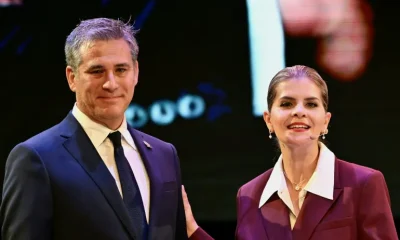

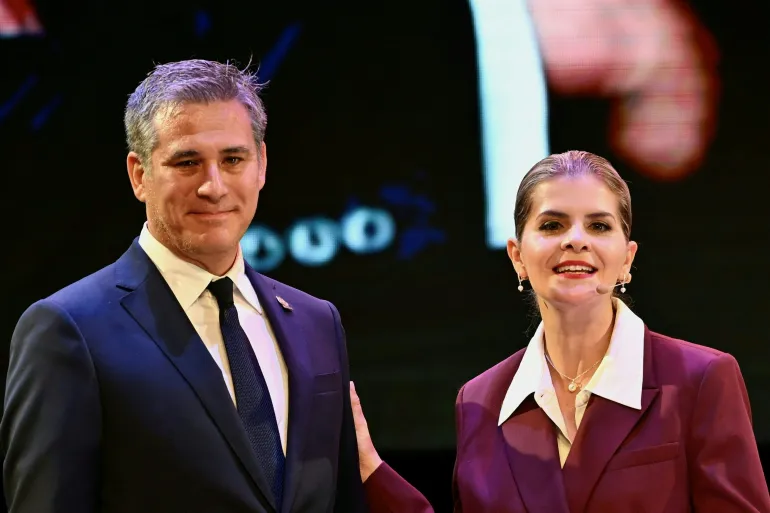
Costa Rican President Laura Fernandez has fired Foreign Minister Manuel Tovar after he attended a US-led regional security summit with United States President Donald Trump without notifying her, an omission the government has said blocked her own participation and caused major strategic harm to the country’s interests.
Fernandez said that she should have been the one to attend the meeting of Trump’s anti-cartel “shield of the Americas ” alliance in New York. The coalition says its mission is to combat drug trafficking and organised crime across the region.
Tovar attended “without giving prior notice or informing” the president, a conservative Trump ally, of his participation, Costa Rica’s government said.
Several right-wing Latin American presidents also participated in the meeting, which took place on the sidelines of the United Nations General Assembly in New York. Fifteen coalition members issued a joint statement declaring their intent to impose asset freezes and visa restrictions and seek criminal liability for members and supporters of 24 criminal organisations.
The gathering was the administration’s latest effort to rally the region behind a more aggressive approach to drug trafficking. Since returning to office last year, Trump has designated cartels as foreign “terrorist” organisations and ordered dozens of strikes on boats in the Caribbean and eastern Pacific that US officials say were carrying narcotics bound for the US.
(Aljazeera)
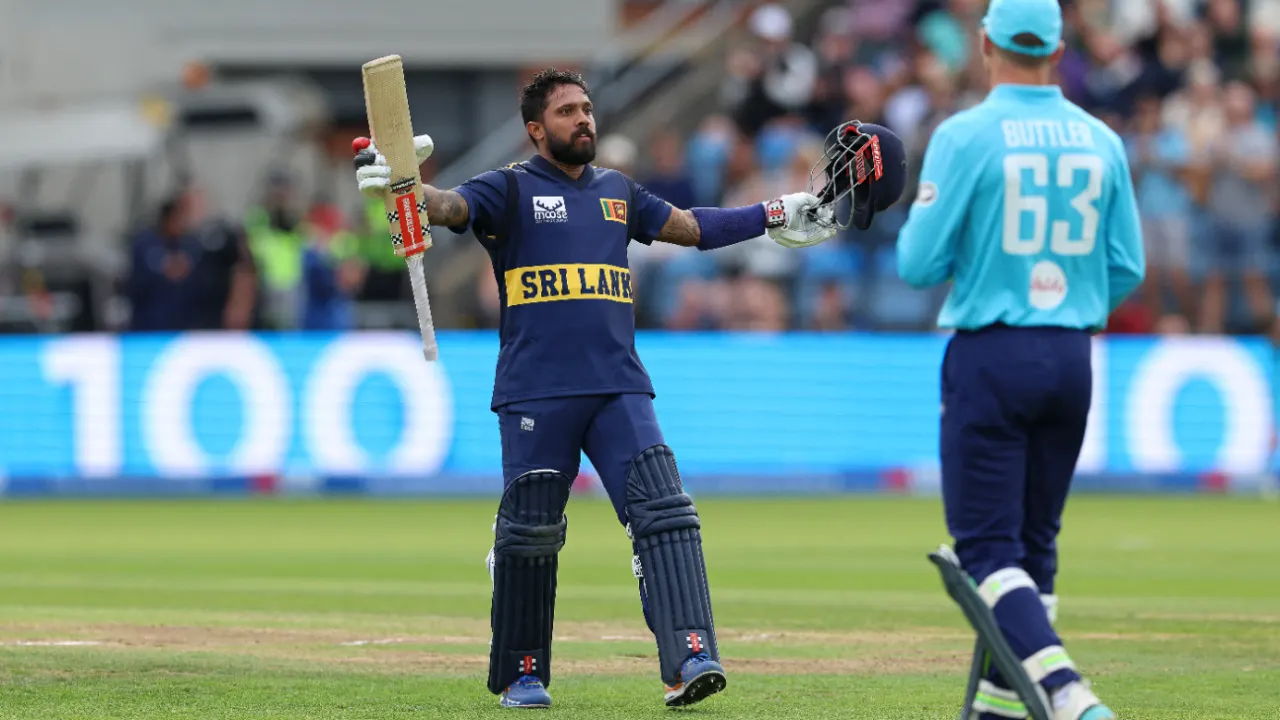
Seven years on from their last away ODI victory against England. – also at Headingley – Sri Lanka repeated the trick, and kept the series alive, ahead of the decider at The Oval on Sunday with a hard fought 16-run win.
On a true surface that offered plenty of runs, Sri Lanka executed their plan A with the kind of gusto that has been sorely lacking across this tour. Kusal Mendis’ seventh ODI ton led the way, and he was sufficiently backed up by the likes of Pathum Nissanka (25), Kamindu Mendis (54), Pavan Rathnayake (48) and Janith Liyanage (32).
Then with the ball, Sri Lanka survived a potentially game-breaking opening stand, a Jos Buttler onslaught, and a Will Jacks rearguard salvo to snag what seemed at times a rather improbable win. Dunith Wellalage took many of the plaudits, with his 3 for 49 paving the way for Sri Lanka’s fightback with the ball, as did Asitha Fernando for a spell of exemplary death bowling.
Arguably the defining moment of the chase, however, came when Buttler had to retire hurt on 67 from 45 balls with what the ECB described as a hamstring “twinge”. Though he later limped back out to resume his innings, he was visibly hampered as he lasted just four more balls. In between whiles, a chase that had been cruising at 253 for 4 skidded off course. England had needed 68 off 75 at the moment of Buttler’s injury. They managed just 52 for 5 in the remainder of their innings.
The common consensus at the halfway point was that Sri Lanka’s 321 for 6 was par for the course, but considering it was their highest first-innings total against England in ODIs since 2018 – and just their third score of 320 or more since the start of 2024 – it was still cause for minor celebration.
The broadcaster’s win predictor at the start of the England chase – 70-30 in favour of the hosts – highlighted just what they thought of this type of surface, and the type of batting England possessed. That England had never actually chased a total this high against Sri Lanka mattered less so.
And once Ben Duckett and Tom Banton had blitzed 82 runs inside the opening powerplay – two fewer, incidentally, than Sri Lanka managed in their final 10 – on the way to a substantial opening stand of 143 off 119, the result all but seemed a formality.
The breakthrough came utterly against the run of play too, as Wellalage found a foothole outside the left-hander’s off stump and ripped one through bat and pad, as Duckett reached out in vain for the flashy drive.
Then, at the end of Wellalage’s next over, Banton waltzed right past another one that gripped on the surface as Kusal swiftly dislodged the bails. And just like that both openers were back in the pavilion.
Even so, Sri Lanka might not have dared believe, given how far ahead of the game England were at this point. But when Wellalage struck a third time in three overs, this time trapping their serial tormentor, Harry Brook, leg before – a decision upheld on review – the old muscle memory of spin-strangled chases under lights at the Khettarama in Colombo perhaps began to stir. Particularly with the pitch also beginning to exude some hallmarks of those dry Colombo pitches.
But, just as swiftly as Sri Lanka had thought about clawing their way back in, England reclaimed control of the chase. And they were led unerringly by Buttler. Across partnerships of 46 from 28 with Joe Root, and 51 from 56 with Will Jacks, Buttler was in utter command of the contest. But then, in the 38th over, his hamstring went, and after battling on for two more balls, he limped off.
At that point, the required rate was less than a run-a-ball with six wickets in hand. By the time he was forced to return to the middle, the equation had flipped to 27 needed off 14. In between whiles, Sri Lanka throttled like they’ve never throttled before, giving up just one boundary in the 60 deliveries between Buttler walking off and walking back on.
With England seven-down by this point, the odds had firmly shifted in favour of Sri Lanka, but with Jacks and Buttler both capable of knocking off the required runs with just a few swings, the game was still in the balance. A six to the end the 48th over proved as much. But that would be the last boundary of the game as Eshan Malinga and Dilshan Madushanka squeezed through the final two overs to complete a famous victory.
What the result showed more than anything else is that, while Sri Lanka might be quite a way off the pinnacle of T20 cricket, in ODIs – as they have shown over recent years – they certainly have the capacity to kick it with the best, albeit not on as consistent a basis as they would like. Most of their best performances however have come at home, and on that front Thursday’s performance might be particularly heartening.
Sri Lanka’s best white-ball batting efforts in recent times have invariably coincided with significant input from either Nissanka or Kusal, and that trend wasn’t about to change here. Nissanka had looked promising during 33-ball 25, but his time in the middle was cut short by a fuller one from Atkinson that nipped back and trapped him lbw – a tight call that was held up upon review after replays showed umpire’s call on wickets hitting.
This brought Kusal to the crease, and he along with his namesake, Kamindu, proceeded to put on a 137-run stand from 120 deliveries, an innings-defining partnership that set the platform for Sri Lanka’s highest first-innings total against England in ODIs since 2018.
But it was one that might have been snuffed out before it had ever found its legs had Atkinson held on to a skier off Kusal when the Lankan skipper was on 18. Sri Lanka ensured they would exact the full toll for that drop, as Kusal proceeded to dine on a much more welcoming surface than the one at Chester-le-Street in the first ODI.
In the 20 overs between the 10th over – when Kusal entered – and the start of the 30th over – when Kamindu was caught at long-on – 11 of them saw Sri Lanka manage at least one boundary. And it meant that Sri Lanka’s 200 came up in the 32nd over, at which point a score in the region of 340 was on the cards.
The near seven-an-over scoring between the two Mendises owed much to one particularly expensive over taken off Josh Tongue, in which Kusal banished him for three fours and a six. Nineteen came off it – it was Sri Lanka’s most fruitful of the entire tour, such has been the dour nature of their batting efforts.
It was also a boundary that brought up Kusal’s century, a sumptuous drive through the covers off a luckless Jamie Overton, off whose bowling it was that Kusal had been dropped.
Following Kamindu’s dismissal there was a run-a-ball stand of 40 between Kusal and Pavan Rathnayake, but the former was unable to see the game through to the death overs, finding deep midwicket instead with an attempted slog sweep off Rehan. This brought about Sri Lanka’s first real lull in scoring, as they trudged to 237 for 4 by the end of the 40th over.
The innings seemed at a crossroads at this point, but Rathnayake and then Liyanage ensured that Sri Lanka would not completely squander the platform their skipper had helped set. Better sides might have managed to push for maybe 20-30 runs more, but that is a problem for another day; for now, Sri Lanka will savour a rare perfect evening.
Scores:
Sri Lanka 321 for 6 in 50 overs (Kamindu Mendis 54, Kusal Mendis 121, Pavan Rathnayake 48; Gus Atkinson 2-55, Rehan Ahmed 2-48 ) beat England 305 for 9 in 50 overs (Tom Banton 73, Ben Duckett 67, Jos Buttler 69, Will Jacks 52; Dilshan Madushanka 2-54, Eshan Malinga 2-50, Dunith Wellalage 3-49) by 16 runs
[Cricinfo]
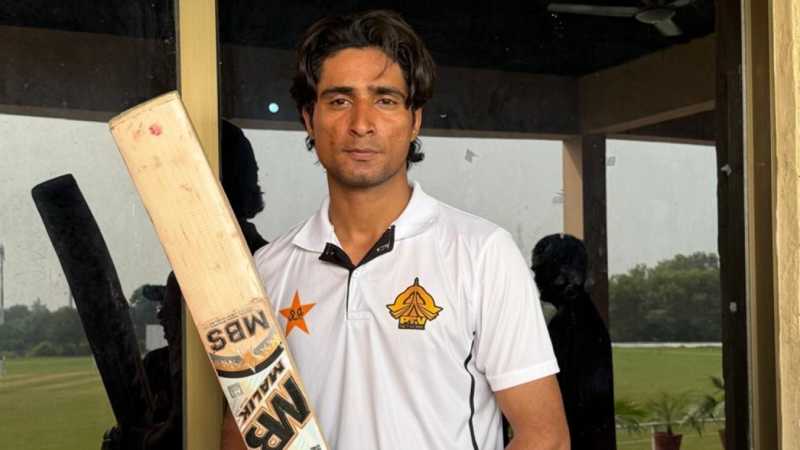
Muhammad Shazad has broken the record for the fastest first-class century by a Pakistani batter, reaching the mark in just 49 balls.
The right-hander smashed eight sixes and 12 fours in his innings of 114 off 62 balls for Pakistan Television against Kingsmen Academy at the Diamond Cricket Ground in Islamabad on the opening day of the third round of the President’s Trophy.
This is Shahzad’s sixth first-class century in 21 matches. Batting at No. 5, he walked out when PTV were struggling at 34 for 3 and struck a 143-run stand with Mohammad Taha, who made 43. Shahzad has also played 22 List A matches and 26 T20s. He made his PSL debut for Islamabad United in the 2025 season, playing six matches.
Misbah-ul-Haq previously held the record for the fastest first-class century by a Pakistan batter for his 56 ball effort against Australia in the second Test at Abu Dhabi in 2014. Misbah, at the time, levelled Viv Richards’ record for the fastest Test century. But that record was broken two years later by Brendon McCullum, when he made a 54-ball century against Australia in Christchurch in the second Test of the series.
Shahzad has come through the PCB’s age-group programme, playing for Pakistan’s Under-16 and Under-19 sides. He played in the 2020 Under-19 World Cup in South Africa.
(Cricinfo)

‘Vision’ Programme Marks Two Years

Costa Rica minister fired for unapproved meeting with Trump in US

At least 41 die as boat capsizes in DRC’s Lake Tanganyika

Showers will occur at times in the Western, Sabaragamuwa, Southern, Central and North-western provinces

Sajith vows to scrap 22A under future govt.

Two retired female Navy officers remanded over disappearance of two women during war

‘Dates have the highest sugar content to fight Coronavirus’

Sunday Island 27 December – Headlines

#SundayIsland 17th December – Headlines

Sunday Island – 28th March

Sunday Island Headlines – 21 March

Sunday Island – 21st February – Headlines
-

 News6 days ago
Shanakiyan urges urgent action over reported death sentence for Lankan in Saudi Arabia
-

 News5 days ago
Namal Rajapaksa Buddhist gambit fails, bail denied
-
 Features5 days ago
Why the spelling Sri Lankan names in English vary
-

 Features5 days ago
Three bands, a new identity: Sri Lankan wolf snake recognised as distinct species
-
 Business5 days ago
SLIIT holds largest-ever convocation
-

 News5 days ago
Govt monitors reported Saudi death sentence – Foreign Ministry
-

 News5 days ago
Vehicle prices drop by up to Rs. 1 mn, says importers’ body
-

 Business5 days ago
All-new Bolero MaXX Pik-Up unveiled in Lanka