
Latest News
WWC 2025: India and New Zealand in must-win territory with rain in the Navi Mumbai air

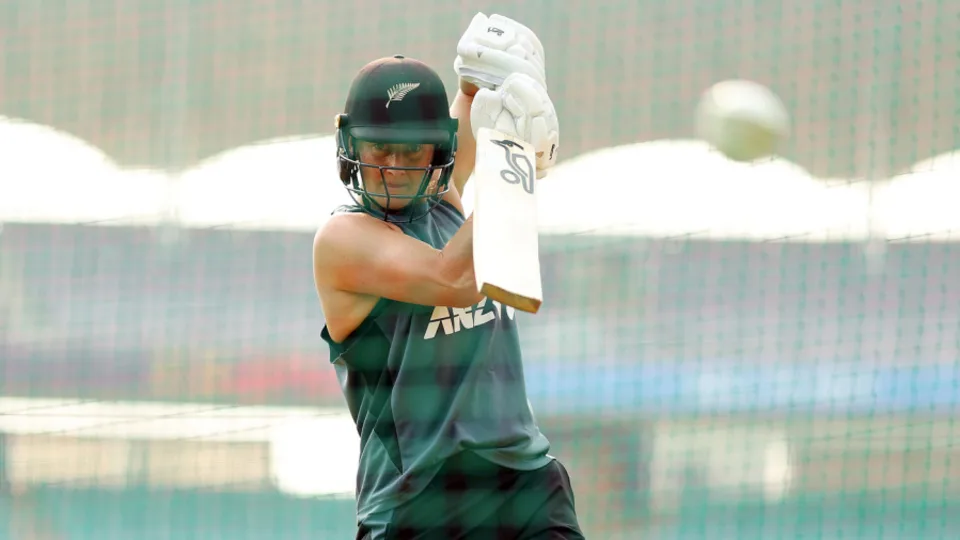
The pressure on India is higher than ever. Three successive losses in matches they could have won, mounting criticism, and five games in, they are still tinkering with combinations. But they now return to Navi Mumbai, a venue many in the squad know well through T20Is and the WPL, needing just a win against New Zealand to reach the semi-finals.
New Zealand haven’t had it easy either. Their last two matches were washed out, and qualification now requires them to win both remaining games, against India and England. It’s a tougher ask, but not beyond a side that just celebrated the first anniversary of their T20 World Cup win, where they beat India in the opening match. They have won 34 out of the 57 ODIs against India, including six of their last nine encounters since 2022.
Their campaign this time started with heavy defeats to Australia and South Africa, before they bounced back against Bangladesh. But they remain over-reliant on Sophie Devine with the bat, and their thin spin attack – with just Amelia Kerr and Eden Carson – has had limited impact on slower pitches.
India, on the other hand, have had different contributors in every game but haven’t settled on a clear first-choice XI. After four matches with five bowlers, they dropped Jemimah Rodrigues to play an extra bowler against England. The move did seem to work as England were kept to 288 for 8 after a strong start, but India’s batting faltered under pressure in the chase, which has been a familiar story. They will want to address that.
The weather could, however, have a say. Devine called the washouts in Colombo “frustrating” , and the forecast for today isn’t encouraging either. Rain hit Navi Mumbai for over two hours in the evening two days before the match, cancelling India’s training session. A washout, however, would favour India, considering New Zealand have a tougher opponent in England to face in their last game, and just haven’t been able to get any sort of momentum going.
After a promising start to the tournament, India’s young pacer Kranti Gaud has hit a bit of a bump. Her early spells, full of discipline and pinpoint yorkers, have been impressive, but her death bowling has come under the scanner. Against South Africa, she opened with a tidy 1 for 19 in five overs, only to concede 40 off her final four. She went wicketless in the last two games, conceding 73 runs off nine overs against Australia and 46 off eight against England. On a Navi Mumbai surface expected to be more batter-friendly, Gaud will need to recalibrate quickly if India are to keep New Zealand quiet.
New Zealand are still waiting for their openers to turn up. Suzie Bates and Georgia Plimmer have endured a poor run – their partnership average of 10.66 is the second-worst among all teams this tournament. Bates followed two ducks with a 29 (run out) against Bangladesh, while Plimmer has managed just 35 runs across three games, struggling for fluency throughout. A more batting-friendly pitch probably awaits them at the DY Patil Stadium, where they will hope to give their side a strong start.
Will India revert to five bowlers for the crucial fixture? While their bowlers pulled things back well in the last ten overs against England, India might think they need the experience of Rodrigues at No. 5.
India (possible): Smriti Mandhana, Pratika Rawal, Harleen Deol, Harmanpreet Kaur (capt), Richa Ghosh (wk), Amanjot Kaur, Sneh Rana, Deepti Sharma, Renuka Singh/Jemimah Rodrigues, Kranti Gaud, Shree Charani
New Zealand had kept their senior pacer Lea Tahuhu out tactically in the match against Sri Lanka, but brought her back in for the Pakistan game. They are likely to stay with the same XI.
New Zealand (possible): Suzie Bates, Georgia Plimmer, Amelia Kerr, Sophie Devine (capt), Brooke Halliday, Maddy Green, Isabella Gaze (wk), Jess Kerr, Rosemary Mair, Eden Carson, Lea Tahuhu
[Cricinfo]

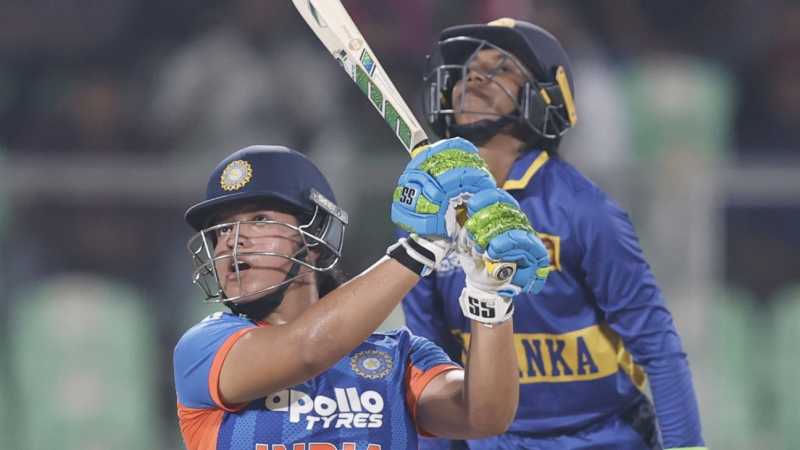
The inaugural Women’s Champions Trophy, scheduled for February 2027, will be moved out of Sri Lanka with the SLC set to be stripped of hosting rights. Cricinfo has confirmed that the six-team event will be played at a different venue in the same window, and it is likely to be held in India. The new hosts will be confirmed at the next ICC board meeting in October.
Sri Lanka have lost the right to stage the tournament, which was due to be their second ICC event in a year after they also co-hosted the 2026 men’s T20 World Cup, because of government interference in their board. The SLC has an interim administration, called the Transformation Committee, which was put in place by the Sri Lankan government and will oversee major board changes including to the constitution.
The ICC does not recognise politically appointed administrations and SLC representatives have not been at ICC board meetings since the Transformation Committee was put in place.
The change in venue could significantly impact the Sri Lanka side, who only qualified for the event by virtue of it being held in their country. The competition is limited to the top six teams on the ICC rankings and, as of the rankings update on Saturday, Sri Lanka are currently seventh. Australia, England, India, New Zealand and South Africa make up the top five. West Indies are sixth and would have originally missed out but if Sri Lanka do not qualify, then the Caribbean could sneak in.
This will be the second time in three years that Sri Lanka have lost out on an ICC event. In 2023, the 2024 men’s Under-19 World Cup was taken away from them for the same reasons and moved to South Africa.
In any case, while the Transformation Committee is in charge, SLC’s electoral processes stand suspended. The Transformation Committee’s official task is to reform that very electoral system, and the Sri Lanka Cricket constitution in general. According to the country’s laws, this can only be done through parliament.
The Transformation Committee has said it has produced a fresh constitution which is expected to be taken up in parliament over the next few weeks. Members of that Transformation Committee told Cricinfo that it expects for SLC elections to take place before the end of 2026, so long as the parliamentary process runs smoothly.
(Cricinfo)
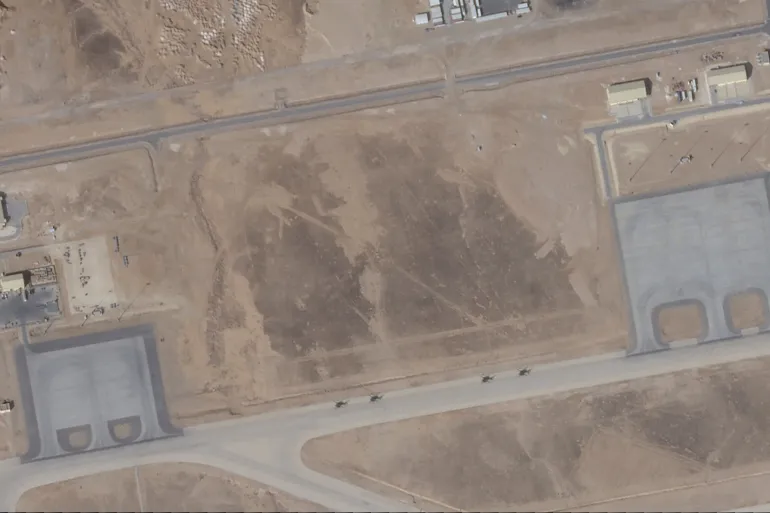
Iran says it launched missiles at two US bases in Jordan following a US attack on Larak Island in southern Iran earlier on Sunday.
In a statement reported by Iranian news agencies on Sunday, the Islamic Revolutionary Guard Corps (IRGC) said the combined missile and drone operation, which it called “Punishment of the Aggressor”, hit the King Hussein and Al Azraq bases in Jordan.
The exchange of attacks is the first flare-up in violence between the two sides since late July.
The IRGC said the strikes “destroyed the technical and repair infrastructure, as well as the enemy fighter deployment sites”, inflicting significant damage.
Jordan reported intercepting eight missiles soon after the IRGC announced the attack.
“Air defence systems intercepted eight missiles that breached the Kingdom’s airspace at dawn today, Monday,” the Jordanian military said in a statement.
No injuries were reported at either base.
“Aggression and crimes will not solve the enemy’s desperation in attempting to weaken the Islamic Republic’s control over the Strait of Hormuz, and every attack will be met with even more devastating responses,” the IRGC statement said.
Tehran had promised to retaliate for Sunday’s US attack on Larak Island.
The strikes risk renewing the military confrontation as Washington shifts from its bombing campaign to a financial pressure strategy on Tehran, and as the US-Israel war on Iran enters its seventh month.
On Monday, the US military denied that its Sunday attacks were an “act of aggression”.
[Aljazeera]
Latest News
Sun directly overhead Neriyakulam, Punewa, Kebithigollewa, Pankulam and Sinhapura at about 12.10 noon today (31)

The sun is going to be directly over the latitudes of Sri Lanka from 28th of August to 07th of September due to its apparent southward relative motion.
The nearest places of Sri Lanka over which the sun is overhead today (31) are Neriyakulam, Punewa, Kebithigollewa, Pankulam and Sinhapura about 12.10 noon.

Sri Lanka lose Women’s Champions Trophy hosting rights

Iran attacks US bases in Jordan after US strikes Larak Island

Showers will occur in the Western, North-western and Sabaragamuwa provinces and in Galle, Matara, Kandy and Nuwara-Eliya districts.

Sun directly overhead Neriyakulam, Punewa, Kebithigollewa, Pankulam and Sinhapura at about 12.10 noon today (31)

BASL takes exception to Justice Ganepola being denied a place in SC

Sajith challenges govt. to hold PC polls

‘Dates have the highest sugar content to fight Coronavirus’

Sunday Island 27 December – Headlines

#SundayIsland 17th December – Headlines

Sunday Island – 28th March

Sunday Island Headlines – 21 March

Sunday Island – 21st February – Headlines
-

 News6 days ago
Missing doctor’s body found in Mahiyanganaya
-

 News6 days ago
Australia declines to release Finance Secy Suriyapperuma’s citizenship details
-
 News6 days ago
22A: BASL suggests CJ recuse himself from hearing petitions
-

 News3 days ago
Eight politicians in drug kingpin probe
-

 Features1 day ago
“Wrap Me Up in My Blazer”— A Gentlemanly Bradby Reminiscence
-

 Business3 days ago
Sri Lanka opens up: A new season of direct connectivity
-

 Features3 days ago
Redefining ageing in Sri Lanka
-
 Features5 days ago
Insights from Chieftains of Uva: Genealogy of two Kandyan Families – Part II