
Features
Teaching Sri Lanka’s 2009 UNHRC Geneva Win: The Barcelona Lecture

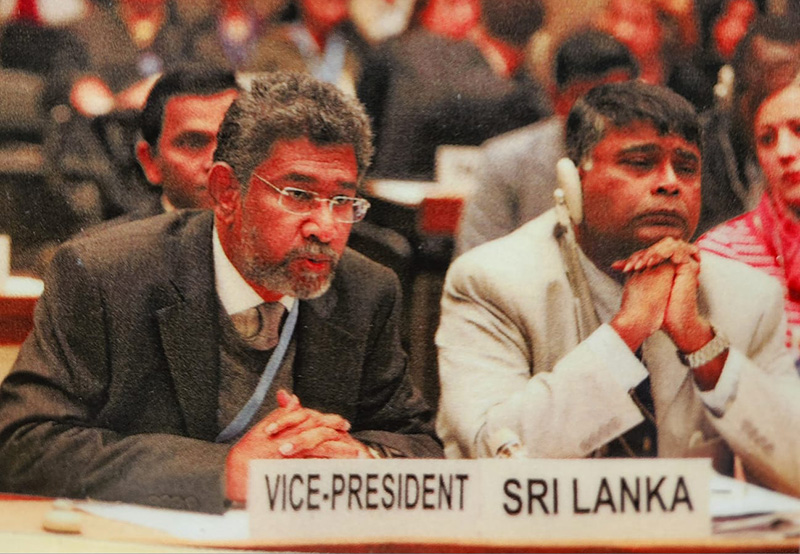
With the discussion on Sri Lanka and the UNHRC resurfacing this year, the singularity of Geneva 2009 and Sri Lanka’s decisive victory has been noted in Parliament by the Leader of the Opposition.
Though no Lankan institution ever asked me to explain that 2009 outcome, it has figured amply in international scholarly literature.
When I served as Ambassador to France, Spain and Portugal, the prestigious Barcelona Institute for International Relations (IBEI), Spain, invited me to deliver a lecture on the topic in May 2012, the third anniversary of the 2009 outcome. I readily agreed, given that Prof Fred Halliday, Emeritus Professor of International Relations at the LSE and iconic Marxist scholar had spent the last five years of his life as Research Professor at IBEI.
My lecture was chaired by Prof Robert Kissack, Co-ordinator of the MA programme, former student of Prof Halliday at the LSE and his successor at IBEI. A discussant was Dr Margarita Petrova, whose specialization is ‘The Politics of Norm Creation’. Her doctoral dissertation won the American Political Science Association’s Prize for best dissertation in International Relations (2008).
I thought it appropriate to publish the text/transcript of my lecture in a Sri Lankan newspaper because it reconstructs context and conceptual underpinnings of the strategy that succeeded—exceptionally, as it turns out.
The Barcelona Lecture, May 24th 2012
I am especially glad to be here because I knew that one of my intellectual heroes from my early teens, Prof. Fred Halliday, spent many years here and was very fond of this place. I am gratified that Prof Robert Kissack who invited me and is chairing this lecture was a protégé and colleague of his.
As you would have gathered from Dr Kissack’s introduction, I am not a career diplomat. Now that usually is a disclaimer but in my case it means that I am more responsible for what I have done — and not done –as a diplomat than a career diplomat would be. I cannot use the usual cop-out and say I was only following orders. Therefore, I was far more vulnerable to the kind of questions and criticisms that you may ask, and I welcome them because I wrestle with these issues everyday myself as well, as an academic and as a former political activist.
Few things are as difficult as meeting the test of objectivity when discussing a significant event or process in which one played a frontline role. A fairly safe method is to commence with assessments of that event, process and role made by sources which were critical or hostile. While these may not themselves be objective, at least their subjectivity would err on the other side and therefore constitute a litmus test of sorts.
Outside of purely partisan ethnic propaganda, the most serious negative account of Sri Lanka’s war and the conduct of the Sri Lankan state is the solidly researched, well written, intelligent and readable book, The Cage by Gordon Weiss. It contains an entire chapter, 30 pages long, on the international and diplomatic dimension of the conflict’s closing stages (Ch 9: The Watching World). That it does so confirms that diplomacy was an important arena of struggle and contradicts the conception of diplomacy as mood setting Muzak for making nice.
Weiss focuses on the UN in two theatres, New York and Geneva. In an earlier chapter he makes clear the situation in New York:
“As the situation unfolded, the positions of China, Russia and India became clear. There would be no resolution from the UN Security Council warning Sri Lanka to restrain its forces. China and Russia, with separatist movements of their own would veto any motion within the Council. India struck a pose of outward ambivalence, even as it discreetly encouraged the Sri Lankan onslaught, though urging it to limit civilian casualties. But of the veto-wielding ‘perm five’ in the Security Council, it was China…which was the largest stumbling block” (pp.139-140)
“In the halls of the UN in New York, Mexico, which held one of the rotating Security Council seats, tried to have Sri Lanka formally placed on the agenda. While Western and democratic nations broadly lined up in support, it quickly became clear that China would block moves to have the council consider Sri Lanka’s actions….The possibility of an influential Security Council resolution remained distant…Sri Lanka had deftly played its China card and had trumped.” (pp 200-201)
Thus, at the UN New York, Sri Lanka was structurally safe, and in Weiss’ book, its diplomats in that theatre at that time, remain unnamed. The UN Geneva is brought to life rather differently in Weiss’ volume:
“On 27 May at the Palais des nations in Geneva, the UN High Commissioner for Human Rights, Navanethem Pillay, addressed the Human Rights Council and called for an international inquiry into the conduct of both parties to the war. While the EU and a brace of other countries formulated and then moved a resolution in support of Pillay’s call, a majority of countries on the Council rejected it out of hand. Instead, they adopted an alternative motion framed by Sri Lanka’s representatives praising the Sri Lankan government for its victory over the Tigers…” (p229)
In his concluding chapter Weiss describes my role:
“Dayan Jayatilleka, one of the most capable diplomats appointed by the Rajapaksa regime, had outmanoeuvred Western diplomats to help Sri Lanka escape censure from the UN Human Rights Council in Geneva (p256)”.
In his Notes he makes this evaluation: “Jayatilleka was the most lucid of the vocal Government of Sri Lanka representatives…” (p 330)
Gordon Weiss is not the only critical source available to the student of international relations for the objective understanding of Geneva 2009. Some of it is in Wikileaks, cables going not only from Geneva to Washington and back but even from cable traffic from the US Embassy in France and conversations between Ambassador Susan Rice and UN Human Rights High Commissioner Navi Pillay.
Here’s an observation about Geneva 2009, made by the international award-winning journalist and author Nirupama Subramanian:
“As Sri Lanka mulls over last month’s United Nations Human Rights Council resolution, it may look back with nostalgia at its 2009 triumph at Geneva. Then, barely a week after its victory over the LTTE, a group of western countries wanted a resolution passed against Sri Lanka for the civilian deaths and other alleged rights violations by the army during the last stages of the operation. With the blood on the battlefield not still dry, Sri Lanka managed to snatch victory from the jaws of diplomatic defeat, with a resolution that praised the government for its humane handling of civilians and asserted faith in its abilities to bring about reconciliation.” (The Hindu)
There has also been some academic research and publication. The most interesting is a piece which helps advanced students of international relations understand the deeper dimension and wider ramifications—far wider than Sri Lanka—of the battles in UN forums including most notably the May 2009 Special session. This essay talks about a clash on norms which took place in the UN Human Rights Council over the Sri Lankan issue and that the Sri Lankan diplomats played a role of ‘norm entrepreneurs’.
Research scholar David Lewis presented a paper at the University of Edinburgh, entitled ‘The failure of a liberal peace: Sri Lanka’s counterinsurgency in global perspective’, and published in Conflict, Security & Development, 2010, Vol 10:5, pp 647-671. Lewis is Senior Research Fellow at the Centre for International Co-operation and Security in the Department of Peace Studies, University of Bradford, and headed the International Crisis Group’s Sri Lanka programme in 2006-7. He writes:
“Many of the battles over conflict-related norms between Sri Lanka and Europe took place in UN institutions, primarily the Human Rights Council (HRC)…it was Sri Lanka which generally had the best of these diplomatic battles…”
“Although this process of contestation reflects shifting power relations, and the increasing influence of China, Russia and other ‘Rising Powers’, it does not mean that small states are simply the passive recipients of norms created and contested by others. In fact, Sri Lankan diplomats have been active norm entrepreneurs in their own right, making significant efforts to develop alternative norms of conflict management, linking for example Chechnya and Sri Lanka in a discourse of state-centric peace enforcement. They have played a leading role in UN forums such as the UN HRC, where Sri Lankan delegates have helped ensure that the HRC has become an arena, not so much for the promotion of the liberal norms around which it was designed, but as a space in which such norms are contested, rejected or adapted in unexpected ways…”
“As a member of the UN HRC Sri Lanka has played an important role in asserting new, adapted norms opposing both secession and autonomy as possible elements in peace-building—trends that are convergent with views expressed by China, Russia and India…”
“The Sri Lankan conflict may be seen as the beginning of a new international consensus about conflict management, in which sovereignty and non-interference norms are reasserted, backed not only by Russia and China but also by democratic states such as Brazil.” (Lewis: 2010, pp. 658-661)
So, there we have it; that’s the story as seen by critical observer-analysts.
The backdrop of the special session of the UN Human Rights Council in 2009 was emotionally as highly charged as you can possibly imagine. The long Sri Lankan war was reaching its endgame, but what would that endgame be?
There was a lot of pressure not only from the Tamil Diaspora communities from the émigrés but also the liberal humanitarian view that there would be a blood bath which had to be stopped by a humanitarian intervention. It took the formula of a ‘humanitarian pause’. Lakhdar Brahimi and Chris Patten had written a piece in the New York Times about the imminent “bloodbath on the beach”. The EU Parliament was pushing a resolution for a ‘humanitarian pause’ and the resumption of negotiations with the Tigers. This was the template for the resolution that was planned for the UN Human Rights Council.
A very serious special session of the sort that was held years later on Syria or Libya in the UN Human Rights Council, was sought to be held. This required 16 signatures. The Sri Lankan team together with our friends and allies in the Non-Aligned Movement, in the South Asian Association for Regional Cooperation (SAARC) etc., fought a bitter rearguard action to prevent the 16 signatures’ requisite for the holding of a special session and managed to hold it back while the war was on. I was fully conscious of what we were doing in fighting hard to hold back the 16 signatures from being obtained so that a special session could not be moved in which there could have been a UN mandated call for a ‘pause’ on what would be the final attack on the Tigers.
Shortly after that the war was over on the 18th-19th of May 2009, the last signature was obtained. The EU was one signature short for 10 days and then it got that signature and then the session moved on at full speed. Instead of waiting for the EU resolution to be tabled and voted on, Sri Lanka together with the Non-Aligned Movement seized the initiative. We presented a resolution of our own. The special session was held on the 26th-27th May 2009 and it went down to a vote. Because of the nature of the counter-resolution that we crafted together with the Non-Aligned Movement, we obtained almost a two-thirds majority of the UN Human Rights Council.
In a search for a synthesis of values, our resolution actually contained quite a few of the points made by the EU resolution, i.e. everything that was unobjectionable, that was progressive, that was generally liberal in the EU’s resolution. It is the defence of sovereignty, but a national or state sovereignty invested with a commitment to popular sovereignty, that enabled us to obtain the support that we did and to defeat the resolution against us.
The battle of norms was not simply the liberal humanitarian interventionism versus a simple reiteration of national sovereignty. Rather, it was the kind of ideology that you would find Brazil, India, Indonesia, the emergent democracies, very comfortable with: a strong defense of national sovereignty but no less strong commitment to progressive reform.
It was indeed a clash of norms but it would be wrong to see it in an over simplified fashion, in which it is presented by many on either side of the divide. It is usually projected as liberal humanitarianism or ‘liberal humanitarian interventionism’ if you are critic of it, versus old fashioned Westphalian sovereignty, now renamed ‘Eastphalian’ sovereignty.
But we know certainly from Gramsci, and reinforced by Poulantzas and Laclau, that in the political arena you do not have simple contention. It is not a football game of two clearly demarcated sides. You are talking about constellations, about blocs, complex agglomerations with their own changing hegemony. This is true also about ideologies and it is ideologies that help cement these blocs. So, what we are talking about are hybrids on both sides, and you find that one prevails over the other depending on (a) the hybrid (b) the situation.
Liberal humanitarianism or liberal humanitarian intervention prevailed in the case of former Yugoslavia/Kosovo but did not prevail in the case of Sri Lanka in 2009. ‘Liberal humanitarian interventionist’ calls work only when dealing with certain kind of situation, certain kind of regimes/states or involving a movement of a certain sort.
I must confess that I rather liked Dr. Kissinger’s book On China because he understands why the Chinese see things the way they do, with a focus on national/state sovereignty. This is true not only about China but also about Vietnam and many of those societies and nations which see themselves as ancient. Old societies, States which had been in existence for millennia and which therefore have a very acute sense of what external intervention can do.
I reiterate an old point made by Lenin, Trotsky and Gramsci, in terms of the nature of State and society in the East and the West. The State is a much harder nut to crack, the further East you go. But a simple reassertion or assertion of State sovereignty in the absence of a situation in which it is credible, and in the absence of other ideals and values, does not prevail either! One has to always try to understand and discern the constellation of ideas and therefore the blocs that the contending parties have been able to put together.
This is the concluding lesson that I would draw out: if you lose the moral high ground, you lose the vote. If you succeed in occupying the moral high ground and displacing your foes from it, not only in your own eyes but in a universal sense, you win.
BY Dr. Dayan Jayatilleka

 At a time when Sri Lanka’s foreign policy is coming under intense scrutiny by some local sections it is only right that impartial and independent commentators shed some clarity on what fundamental foreign policy directions Sri Lanka ought to take. The extremely fluid and complex nature of current international politics renders such an understanding crucially important.
Given its vulnerabilities in a number of spheres Sri Lanka has no choice but to persist in broadly following the path of Non-alignment. That is, it should be ‘a friend of all and an enemy of none’, to the extent possible. However, it does not follow that in the process it could compromise what is seen as its national interest.
The latter point needs stressing against the backdrop of the criticisms the Sri Lankan government has been attracting from some quarters over what is made out to be some opaqueness in security and defence cooperation agreements it has entered into with India. It remains advisable for the Sri Lankan government to enter into pacts of this nature with India, but the government is obliged to disclose the contents of these agreements to the Sri Lankan people without undue delay in consideration of the uncompromisable sovereign rights of a people in a democracy.
However, there is no denying that the government should make it a central foreign policy premise to always work in cooperation with India. A consideration of what it cost Sri Lanka in the past to be in a disharmonious relationship with India and how such policy missteps worked against Sri Lanka’s best interests ought to dictate to Sri Lanka the advisability of maintaining uninterrupted cordial ties with India. Moreover, common sense ought to drive home to a country the costs of being at loggerheads with one’s closest neighbour who has also proved a ‘ready friend in deed.’
That said, it is the bounden duty of Sri Lanka’s diplomatic community or establishment to ensure that such cooperation does not degenerate into a policy of subservience towards India. That is, finesse and farsightedness in local diplomacy become prime requirements.
While India’s geographical location and physical size, besides her other strengths, contribute towards her centrality in regional and world affairs, her neighbours would be thinking and acting far-sightedly if they not only focus on India and her legitimate interests but also ensure continuous friction-free intra-South Asian relations. That is, for them collective South Asian well being should be of fundamental importance.
Much more than for India perhaps, such harmonious ties are of inestimable importance to India’s neigbours who are up against multiple vulnerabilities which are to a great extent regionally rooted. The latter could never, that is, afford to take their minds off the region’s collective development prospects.
The above are some of the reasons why it could prove highly counter-productive and self-defeating for the ‘South Asian Eight’ to render dormant and ineffective the historic SAARC organization. Rather than ‘dead’ SAARC has been allowed to drift into the ‘Limbo of Forgotten Things.’
The growing inter-dependence of the ‘SAARC Eight’ ought to impress on the collectivity the need to step-up regional cooperation in multiple areas which impinge on its members’ legitimate interests. For instance, the youth-led ‘Cockroach’ revolts, first in India and subsequently outside, should convince South Asia that it is continuing to be plagued in a major way by poverty and equity-linked issues. That is, West-inspired, largely market economics-dictated ways to see an end to poverty are simply not working completely.
Likewise climate-related questions are ravaging South Asia in unimaginable ways; Nepal being just one case in point. The rationale for regional cooperation remains valid and undefeated. It is time for revived and stepped-up SAARC cooperation. That is, the solutions to the region’s development dilemmas need to be found in mainly the region.
This amounts to making a case for a continued sense of ‘Southasianness’ among the SAARC countries. That is the conviction should be firm that they know their developmental challenges best and that answers to these issues must be primarily evolved by the grouping itself in cooperation with concerned sections.
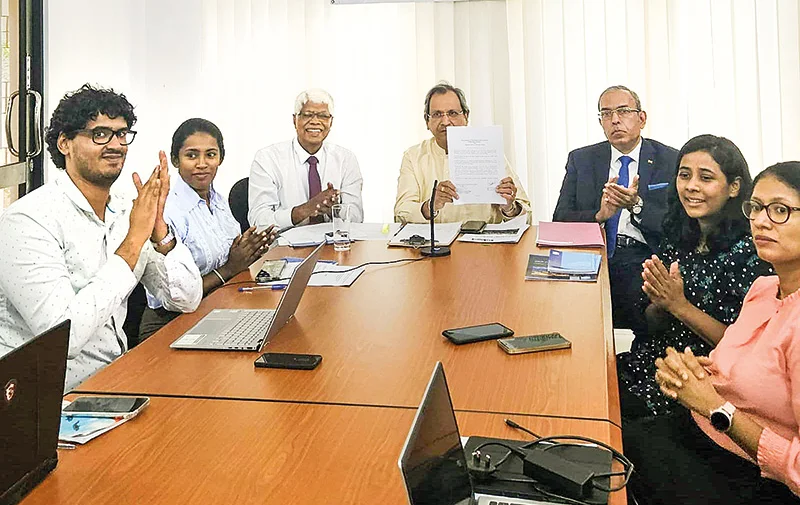
From the above viewpoints the Regional Centre for Strategic Studies (RCSS), Colombo did very well to tie-up with the South Asian University (SAU), India, to increase public awareness on the developmental problems affecting South Asia and for initiating a number collaborative measures that aim at ameliorating them. The relevant agreement was formalized in early September at the RCSS. The sealing of the pact took place under the aegis of SAU President Prof. K.K. Aggarwal and RCSS Executive Director Ambassador Ravinatha Aryasinha.
A press release issued by the organizations said the collaboration aims ‘to foster research networks, partnerships and collaborations for transformative change across South Asia.’ It also mentioned that the partnership marked the first agreement to be signed by SAU with an independent think tank in Sri Lanka.
Among other things, pacts such as the above are bold moves in the direction of fostering a spirit of intellectual independence in those areas of the South facing some of the stiffest developmental challenges. Rather than ‘import’ solutions to these challenges from outside the region, the SAU-RCSS initiative aims at fostering fresh approaches to evolving solutions to problems that are uniquely South Asian.
It is hoped that the SAU and RCSS initiative while leading a to a greater degree of Southern intellectual independence in the area of development thinking would also help in kick-starting the SAARC process all over again in a major way.
What ought to lend fresh urgency to the latter undertakings are fast-breaking current developments in international politics. It ought to be perceived by the most underdeveloped regions of the South that going forward their well being would matter least or not at all to the major powers of both East and West.
For example at the time of writing the foremost among US and Chinese political leaders are meeting in the US in what is made out to be a historic coming together of sorts to address issues of common concern. It is highly unlikely that the parties would be addressing the economic preoccupations of the least developed countries. The same goes for other states that matter from the East and West.
Essentially, the US and China would be looking at ways of strengthening business ties that matter majorly for them. The South and its issues would prove to be of peripheral interest, if at all they happen to matter to the protagonists. Such developments ought to be fresh reminders to the South and their collaborative organizations that there is no escaping self-help and joint solidarity.

by Prof. M.W. Amarasiri de Silva
Adult literacy has for a long time been one of Sri Lanka’s greatest sources of pride, serving as a social indicator that has set the country apart from several of its neighbours in the region. For many years Sri Lanka has been recognised for keeping its literacy rates at a level like those of middle-income countries and even some high-income ones, even though it has faced economic difficulties and political instability. However, since new global research has now shown an unexpected and concerning decline in adult literacy in several high-income countries, it is important to consider what this means for Sri Lanka.
The phenomenon described by Jishnu Das, Yash Dhuldhoya and Ethan Sager, the unexplained fall in functional literacy among adults in wealthy nations. calls for a more thorough examination of the nature of literacy, the pressures exerted by the modern information environment, and the vulnerabilities that Sri Lanka might encounter as it moves towards a more digital, ageing and complex society. Even though Sri Lanka’s basic literacy rates remain high and steady, the global trend acts as a warning that literacy is not a fixed accomplishment but a dynamic capability which must be continually fostered, safeguarded and adapted to changing circumstances.
Decline in functional literacy
The drop in literacy rate in high-income countries is not due to people losing the ability to read or write in the ordinary way. On the contrary, it reflects a decline in functional literacy, which is the capacity to deal with, understand, and apply information in real-life situations. This kind of literacy involves following instructions, comprehending official documents, using digital interfaces, interpreting medical information, and making sense of complicated texts that demand continuous attention.
Researchers stress that the decline cannot be attributed merely to disruptions caused by COVID-19 or the increasing use of smartphones; instead, there is going on something more fundamental: a weakening of the cognitive and informational bases that adults need to function properly in modern society. In countries such as the United States, the percentage of adults regarded as functionally illiterate has increased significantly, indicating that even highly educated societies are having difficulty in keeping up the skills required to handle ever more complex streams of information.
Sri Lanka immune?
At first sight, Sri Lanka seems to be immune from this trend. The country’s adult literacy rate is still above 92 per cent and youth literacy is even higher. According to the 2024 Census, literacy rates exceed 97 per cent among people aged ten and over, with nearly equal levels between the sexes. These figures show the continued strength of Sri Lanka’s system of free education, a system which in the past has guaranteed widespread access to school and has produced generation after generation of citizens who could read and write at a basic level.
There has also been a steady improvement in educational attainment, with an increasing number of adults finishing secondary education and a larger proportion going on to tertiary institutions. Unlike the mysterious drops observed in rich countries, Sri Lanka’s literacy figures demonstrate stability and even a slight improvement.
However, although the surface appearance is reassuring, an even more complicated reality exists. The literacy figures for Sri Lanka only record basic literacy, that is, the ability to read and write simple sentences, and they do not include measures of functional literacy. It is impossible to tell from these statistics whether adults can interpret a bank statement, understand a medical prescription, use an online government portal, or critically assess information that is spreading on social media. As is shown by the global trend, having a high level of basic literacy does not ensure a strong degree of functional literacy. On the contrary, functional literacy can fall even if basic literacy stays the same. This difference is important for Sri Lanka, particularly since the country is currently experiencing rapid digitalization, demographic ageing, and social change.
Major risk factor
A major risk factor is the move towards digital information environments. In high-income countries, researchers believe that the prevalence of smartphones and short-form digital content may be diminishing people’s ability to engage in deep reading. Nowadays, individuals take in information in short, rapid segments by scrolling through social media feeds, quickly reading headlines, and viewing short videos. Such behaviour decreases the opportunity for sustained reading, which is necessary for keeping comprehension, critical thinking, and the capacity to deal with complex information intact.
Sri Lanka is going through a comparable change. There has been a sharp increase in the number of people using smartphones, and social media sites have become the main sources of news, leisure, and communication. Although there are many advantages to having digital access, it also results in a situation where superficial reading becomes the standard approach and could therefore lead to a decline in functional literacy over time.
Demographic ageing as challenge
A further challenge that is coming up is demographic ageing. Sri Lanka is rapidly moving towards becoming an ageing society, with an increasing number of older people who might experience cognitive decline, have less exposure to new information, and enjoy few opportunities for further learning. In high-income countries, ageing populations have led to a fall in functional literacy since older individuals have had difficulty adapting to digital systems and complicated bureaucratic procedures.
The older generation in Sri Lanka, many whom were educated many decades ago under different curriculum standards, could end up becoming increasingly vulnerable in a world in which essential services, such as banking and healthcare, are being moved online. If appropriate support is not provided, the country may witness a growing gap between basic literacy and functional literacy among older adults.
In Sri Lanka, the way in which administration and the workplace are organised has in the past placed greater trust in personal communication and on basic forms of documentation. What in high-income countries would require complex reading is instead carried out through face-to-face contact in Sri Lanka. Nevertheless, this situation is now changing. Government services are becoming available online, banks are introducing digital systems, and in workplaces there is an increasing need for employees to use electronic systems. Since these changes are happening at a faster rate, the demand for functional literacy will increase. Should adults not be able to meet these new demands, Sri Lanka might start to see the kind of decline in literacy that has been seen in other places.
Misinformation and disinformation
Another worry is the spread of misinformation and disinformation. In Sri Lanka, there has already been the quick dissemination of false information via social media, with this having an impact on public health, politics, and social cohesion. Since functional literacy is essential for allowing people to assess sources, doubt the claims made, and tell the difference between reliable information and falsehoods, a lack of functional literacy causes societies to be more open to manipulation, polarisation, and confusion.
The fact that there has been a global drop in functional literacy at the same time as misinformation has increased points to a dangerous feedback cycle: when literacy is low people become more prone to misinformation, and the misinformation in turn damages their ability to think critically about information. Given that the country has a high level of social media use and a lack of digital literacy training, Sri Lanka should take this risk seriously.
Even though there are these risks, Sri Lanka has several advantages which can assist in avoiding a drop in functional literacy. The country’s system of basic education is still strong, showing high enrolment figures and good results in basic literacy.
Families in Sri Lanka still place a great deal of importance on education and reading is still a respected cultural activity. Furthermore, because of its relatively small size and the fact that it has a centralized form of government, it is more efficient than in bigger countries to carry out nationwide literacy campaigns. These strengths offer a firm basis for developing new strategies for protecting and improving functional literacy.
Literacy a process
It should be realised by Sri Lanka that attaining literacy is not a single accomplishment achieved in childhood. In the modern world, literacy must be a skill that is constantly put into practice, kept up to date and adapted to changing circumstances. The fact that adult literacy is declining worldwide shows that even in wealthy countries with well-developed education systems deterioration can occur if adults are not supported in keeping their cognitive and informational abilities. Sri Lanka cannot afford to be careless.
It is necessary for the country to invest in adult education, in programmes concerning digital literacy and in the development of cognitive skills for all age groups. It also needs to establish ways of measuring functional literacy rather than just basic literacy so that policymakers can detect emerging weaknesses and act in advance.
A vital measure is to increase the opportunities for adult learning. Although Sri Lanka has effective literacy programmes based in schools, the country’s infrastructure for adult education is limited. Community centres, libraries, universities, and vocational institutes should take on a more significant role by providing courses, workshops, and reading programmes which are tailored for adults. The programmes should place an emphasis not just on reading and writing but also on digital navigation, critical thinking, and information processing. Adults should be given the chance to practise the skills that are necessary for them to function effectively in a rapidly changing world.
Importance of digital literacy programmes
It is just as important to have digital literacy programmes. Since an increasing number of services are being offered online, adults need to learn how to use digital tools with confidence and in a safe manner. This involves knowing how to fill out online forms, moving around on government websites, using banking apps, and being able to spot misinformation. The digital literacy courses available should be accessible, affordable, and adapted to different age groups, especially older adults who might feel put off by technology. Schools can also contribute by incorporating digital literacy into their curriculum so that future generations acquire good functional literacy skills from an early age.
Sri Lanka should also investigate introducing policies which promote cognitive health among older people. Since cognitive decline can lead to a deterioration of functional literacy, it becomes more difficult for older individuals to deal with information. It is possible to help keep cognitive function by setting up programmes that promote reading, social interaction, physical activity, and continued learning. During regular medical visits, healthcare professionals should include cognitive assessments so that any problems affecting literacy-related skills can be picked up early.
Sri Lanka needs to create tools for measuring functional literacy, since the figures available on basic literacy give an incomplete account of the country’s capabilities. By using assessments of functional literacy like those employed in high-income countries, Sri Lanka would be able to monitor how well its adults can apply their literacy skills in real-life situations.
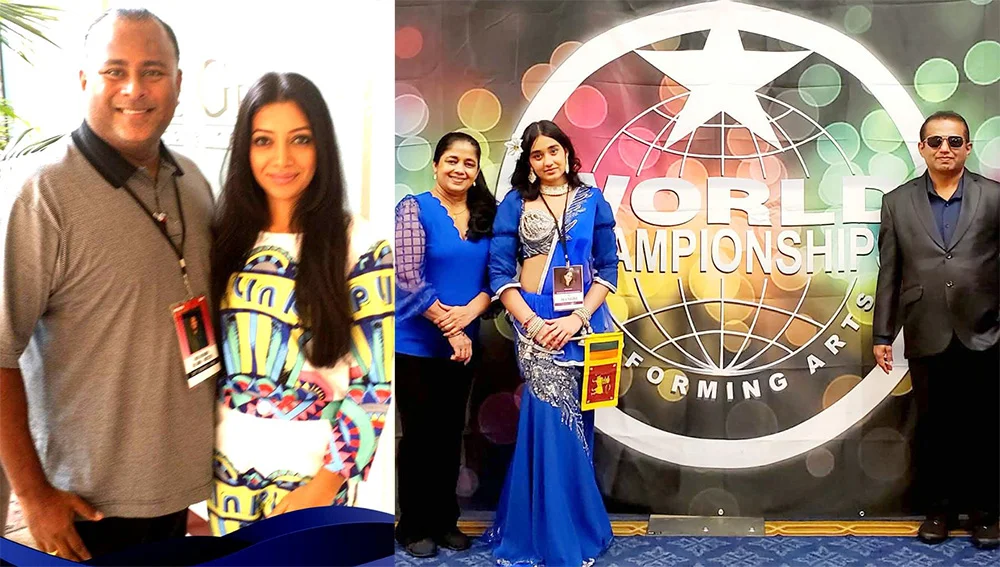
 The World Championships of Performing Arts (WCOPA) is known globally as the Olympics of performing arts, but Sri Lankans came to know of it more closely when Natharie Wickramasinghe, representing Team Sri Lanka at WCOPA 2026, in Las Vegas, earned a Bronze Medal in the Ethnic/Folklore Dance category.
Behind Sri Lanka’s WCOPA journey is Sri Lanka-born Chris Rajendra, who migrated to the United States in 2007, and deserves special congratulations.
Passionate about discovering and promoting talent, Chris has been actively involved in the pageant and performing arts, industry since 2002.
A major milestone came in 2015, when he introduced WCOPA, to Sri Lanka, for the first time, creating an international platform for Sri Lankan performers.
Sachini Ayendra became the very first candidate to represent Sri Lanka at WCOPA, in 2015, marking the beginning of Team Sri Lanka’s journey.
Chris served as National Director for Team Sri Lanka from 2015 to 2018, and has returned to the role for the 2026–2027 term, continuing his commitment to identifying, developing and promoting Sri Lankan talent internationally.
His involvement in pageantry and performing arts includes:
Recruiter, Miss Nevada United States – 2014

Chris Rajendra: National Director – WCOPA Team Sri Lanka
Manager, Miss Colombia Las Vegas – 2013 to 2017
Director for the West Coast and International Divisions of Ms. Latina International and Ms. International World – 2017
National Director for Team Sri Lanka – WCOPA, 2015–2018 and 2026–2027
Co-National Director for Team USA – WCOPA 2026
In the USA, Chris began his career in retail before transitioning into insurance and financial services, where he built extensive experience in sales, marketing, leadership and business development.
He owned and operated a brokerage, affiliated with multiple insurance companies, and later served as Marketing Director with Transamerica and World Financial Group.
As his business expanded across Las Vegas and California, he continued to hone his expertise in sales, marketing and client relations. He now works as a Sales Executive at Hilton Grand Vacations.
Looking ahead, Chris will shortly launch the application process for Team Sri Lanka 2027, giving talented Sri Lankan performers another opportunity to represent the country on the world stage.
The 2027 World Championships of Performing Arts will take place in Las Vegas, USA, in July or August 2027.
Through his work in both the corporate and performing arts worlds, Chris Rajendra continues to combine leadership, networking and talent development — creating opportunities for Sri Lankan performers to showcase their abilities on a global platform.

Muhammad Shahzad smashes fastest first-class hundred by a Pakistani batter

Gul, Kharote spin Afghanistan to victory over Japan in Asian Games opener

Showerss above 100 mm are likely at some places in the Western, Sabaragamuwa, Central and North-western provinces and in Galle and Matara Districts

Mirabai Chanu wins Asian Games silver as Ri breaks weightlifting record

Trump greets China’s Xi Jinping on arrival for three-day US

BASL calls for conscience vote on 22nd Amendment

‘Dates have the highest sugar content to fight Coronavirus’

Sunday Island 27 December – Headlines

#SundayIsland 17th December – Headlines

Sunday Island – 28th March

Sunday Island Headlines – 21 March

Sunday Island – 21st February – Headlines
-

 News6 days ago
Shanakiyan urges urgent action over reported death sentence for Lankan in Saudi Arabia
-

 News7 days ago
Bid for Basil’s extradition nears final stage: Police
-

 News5 days ago
Namal Rajapaksa Buddhist gambit fails, bail denied
-

 Features5 days ago
Why the spelling Sri Lankan names in English vary
-

 Features5 days ago
Three bands, a new identity: Sri Lankan wolf snake recognised as distinct species
-
 Business5 days ago
SLIIT holds largest-ever convocation
-

 News5 days ago
Govt monitors reported Saudi death sentence – Foreign Ministry
-
 News5 days ago
Vehicle prices drop by up to Rs. 1 mn, says importers’ body