
Latest News
Stolen treasures, a crown dropped as thieves fled – and serious questions for Louvre security

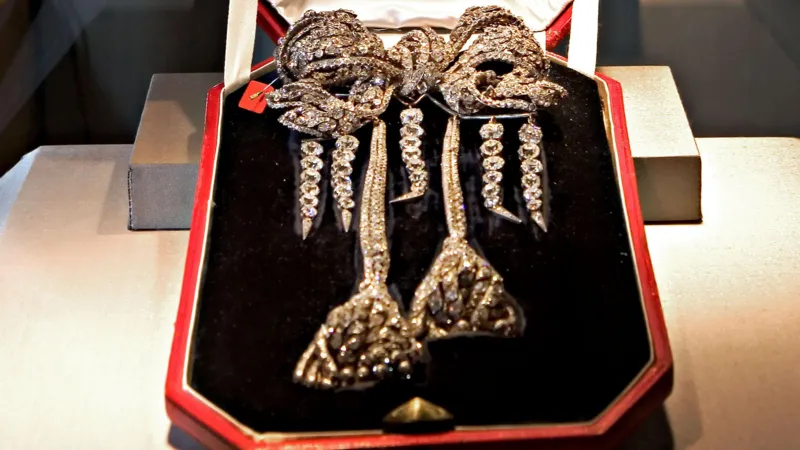
It is the most spectacular robbery at the Louvre museum since the Mona Lisa disappeared in 1911.
And it poses serious questions about levels of security covering French artworks, at a time when they are increasingly being targeted by criminal gangs.
According to France’s new interior minister Laurent Nuñez, the gang that broke into the Apollo Gallery on Sunday morning was clearly professional.
They knew what they wanted, had evidently “cased the joint” in advance, had a brazenly simple but effective modus operandi, and needed no more than seven minutes to take their booty and get away.
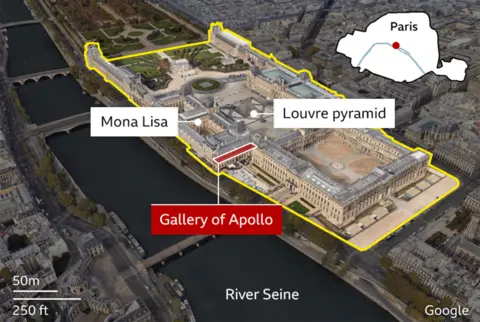
In a truck equipped with an elevating platform of the type used by removal companies, they parked on the street outside, raised themselves up to the first floor, then used a disc-cutter to enter through a window.
Inside the richly decorated gallery they made for two display-cases which contain what remains of the French crown jewels.
Most of France’s royal regalia was lost or sold after the 1789 Revolution, but some items were saved or bought back. Most of what was in the cases, though, dates from the 19th Century and the two imperial families of Napoleon and his nephew Napoleon III.
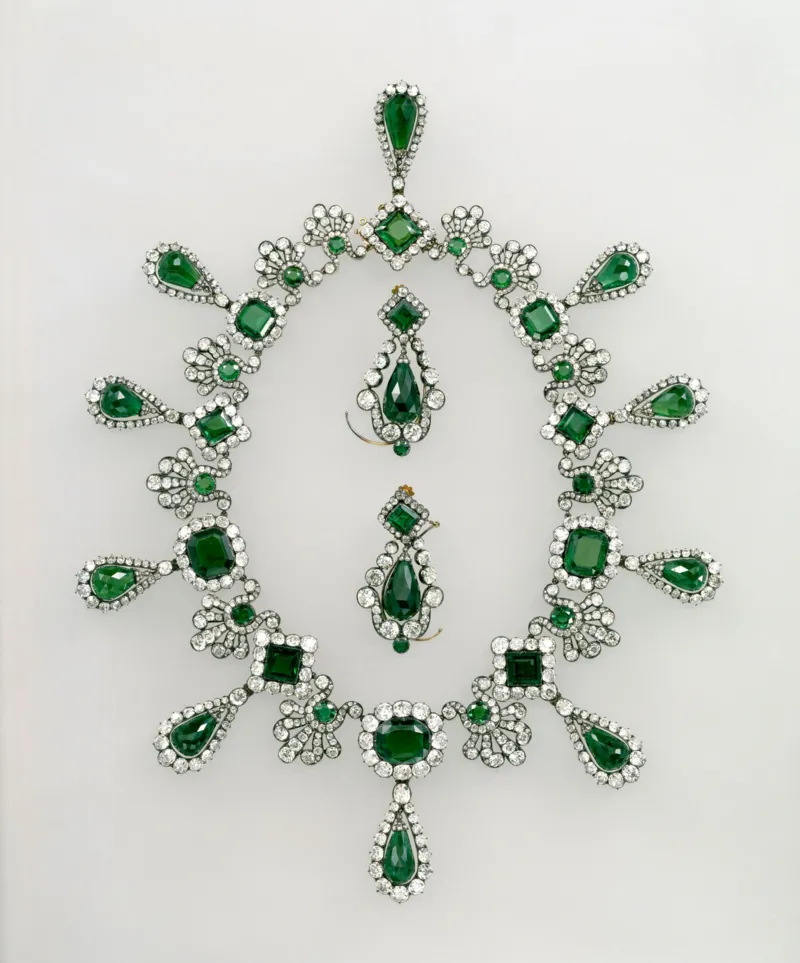 The Marie Louis necklaces and a pair of earrings were among the items stolen (BBC)
According to the authorities, eight items were taken including diadems, necklaces, ear-rings and brooches.
They had belonged to Napoleon’s wife the empress Marie-Louise; to his sister-in-law Queen Hortense of Holland; to Queen Marie-Amelie, wife of France’s last King Louis-Philippe, who ruled from 1830 to 1848; and to the empress Eugénie, wife of Napoleon III, who ruled from 1852 to 1870.
A crown of the empress Eugénie was also taken, but was recovered damaged near the museum after the thieves seemingly dropped it.
In a statement the culture ministry said that the alarms had sounded correctly. Five museum staff who were in the gallery or nearby followed protocol by contacting security forces and protecting visitors.
It said the gang had tried to set fire to their vehicle outside but were prevented by the intervention of a museum staff-member.
The heist took place in a gallery just a short walk from some of the world’s most famous paintings – such as the Mona Lisa.
But the criminal groups that order heists like this do not target world-famous paintings that cannot ever be displayed or sold. They prefer items that can be converted into cash – and jewels top the list.
However huge their historical and cultural value, crowns and diadems can easily be broken apart and sold in bits. Even large and famous diamonds can be cut. The final sales price might not be what the original artefact was worth, but it will still be considerable.
Two recent museum thefts in France had already alerted the authorities to the growing audacity of art gangs, and a security plan drawn up by the culture ministry is gradually being put into effect across France.
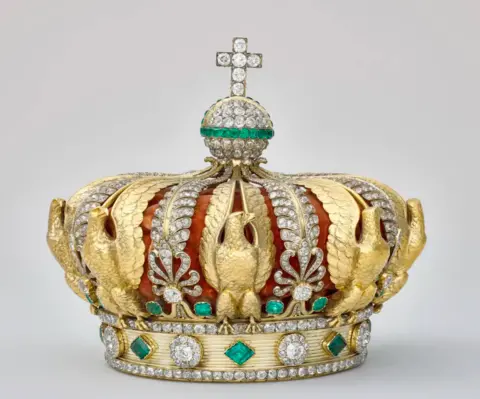 Thieves attempted to take Empress Eugenie’s crown but apparently dropped it during the getaway (BBC)
“We are well aware that French museums are vulnerable,” said Nuñez.
In September thieves took raw gold – in its mineral state – from the Natural History Museum in Paris. The gold was worth about €600,000 (£520,000) and will have been easily disposed of on the black market.
In the same month thieves took porcelain worth €6m from a museum in Limoges – a city once famous for its chinaware. The haul could well have been commissioned by a foreign buyer.
The Louvre contains thousands of artworks that are famous around the world, and an equal number of more obscure items that are nonetheless culturally significant.
But in its 230-year history there have been relatively few thefts – largely thanks to the tight security in place.
The most recent disappearance was of a landscape by the 19th Century artist Camille Corot. Le Chemin de Sèvres (The Road to Sèvres) was simply removed from a wall in 1998 when no-one was looking, and has not been seen since.
But by far the most famous theft was the one that took place in 1911, when Leonardo da Vinci’s La Joconde – better known now as the Mona Lisa – was taken. The culprit back then hid in a closet overnight, then was able to remove the painting from its frame, wrap it up in his smock, tuck it under his arm and walk out.
It turned out he was an Italian nationalist who wanted the artwork brought back home. It was found in Italy in 1914 and returned to the Louvre.
Unless they have a quick success in catching the thieves, today’s investigators are unlikely to be so lucky.
The first aim of the gang will be to disperse the jewels and sell them on. It will not be hard.
(BBC)


Former first lady Shiranthi Rajapaksa, wife of former President Mahinda Rajapaksa was produced before the Hulftsdorp court, after being arrested by officers of the Commission to Investigate Allegations of Bribery or Corruption (CIABOC) and produce

Smriti Mandhana has been named India’s all-format women’s captain on the same day Harmanpreet Kaur stepped down from the role after nearly a decade since she first took over.
Mandhana – vice-captain to Harmanpreet for much of this period – has previously led India in four ODIs and 18 T20Is, apart from captaining Maharashtra in domestic cricket and Royal Challengers Bengaluru in the Women’s Premier League.
Mandhana’s first assignment will be the limited-overs series against Zimbabwe beginning with the three T20Is in Raipur from October 16. On Tuesday, Mandhana was part of the selection meeting chaired by Amita Sharma to pick the squad for the tour.
Terming the appointment a “special honour”, Mandhana also acknowledged the contributions of her predecessor in her welcome note.
“I would also like to acknowledge Harmanpreet and the contribution she has made as captain over the years,” she was quoted as saying by the BCCI. “She has led the team with great commitment and has been an important part of our journey.
“I understand the responsibility that comes with this role and look forward to working with the team, learning along the way and giving my best to take Indian cricket forward.”
Mandhana’s appointment comes on the back of a review meeting held on Monday in Guwahati. Chaired by secretary Devajit Saikia, the meeting was also attended by Mandhana, Harmanpreet and head coach Amol Muzumdar to chart a roadmap forward, with an eye on next year’s inaugural Women’s Champions Trophy in February as well as the T20 World Cup and Los Angeles Olympics in 2028.
Mandhana, India’s best all-format batter, has been knocking on the doors for a while. Earlier this year, she led RCB to their second WPL title, in which she also top-scored in the final.
In September, she overtook Mithali Raj to become the leading run-scorer in women’s international across formats. Her 18 international hundreds are also the most in women’s cricket. She is also the first Indian woman to score centuries in all formats.
[Cricinfo]
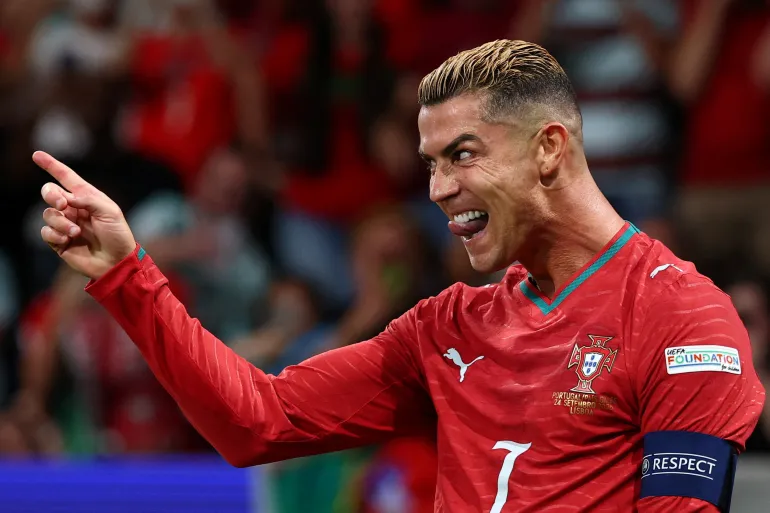
Cristiano Ronaldo has accused Portugal coach Jorge Jesus of twice breaking his word, saying a failed agreement to publicly explain his omission against Norway drove him out of the camp, but insisting he remained available after any punishment.
In a lengthy statement, the 41-year-old gave his account of the dispute that prompted his departure from Copenhagen before Portugal’s Nations League match versus Denmark last week.
Ronaldo said Jesus had agreed a plan under which the forward would miss the Norway and Denmark matches to manage his fitness. However, on the day of the Norway game, the coach told him he would play for 30 minutes.
“Everyone knows the rest. I warmed up from halftime onwards, watched the minutes tick by and wasn’t called on,” Ronaldo said.
“The manager had broken his word to me.”
Portugal’s captain and all-time leading scorer said a subsequent meeting with Jesus, attended by his club side Al Nassr’s sporting director Simao Coutinho, produced an agreement for the coach to clarify events at his next news conference.
According to Ronaldo, an eight-point document was prepared saying he had never demanded playing time, had respected Jesus’s decisions and that the coach asking him to warm up without bringing him on had been a mistake.
Ronaldo said the agreed notes did not require Jesus to apologise to him but said the coach’s public remarks bore no resemblance to their private discussion.
“It was the second time he had broken his word to me,” Ronaldo said. “I decided to leave the training camp without waiting for any further broken promises.”
The statement provided Ronaldo’s account, but on Sunday, after Portugal’s win over Norway, Jesus denied he had made any agreement with the player, nevertheless leaving the door open for his return.
The Portuguese Football Federation (FPF) did not immediately respond to a request for comment about Ronaldo’s statement.
Ronaldo apologised for failing to greet supporters after the Norway match and for leaving his teammates, accepting that his captaincy made his conduct more serious.
“The consequences of my actions must be assessed and punished by the Portuguese Football Federation,” he said.
Despite the rupture, Ronaldo said he was not limiting his international ambitions to a farewell appearance.
“If I’m physically fit, playing for my club – scoring goals, I hope – after serving whatever suspension is imposed on me, I’ll be available, as I’ve always been until now, to compete and win for our national team,” he added.
(Aljazeera)

Former first lady Shiranthi Rajapaksa arrested by CIABOC

U.S. Navy ship USS Tulsa arrives in Colombo for replenishment visit

Smriti Mandhana appointed India captain across formats

Ronaldo apologizes for Portugal walkout; says Jesus broke promise

Showers in the Western, Sabaragamuwa, Central, Uva, North-western and Southern provinces and in Anuradhapura and Mannar districts

Fuel crunch looms

‘Dates have the highest sugar content to fight Coronavirus’

Sunday Island 27 December – Headlines

#SundayIsland 17th December – Headlines

Sunday Island – 28th March

Sunday Island Headlines – 21 March

Sunday Island – 21st February – Headlines
-

 News7 days ago
US-assisted ‘Ice’ detection: NPC to examine IGP’s move to transfer drug-busting team
-

 Editorial6 days ago
Colombo Port drug bust: The plot thickens
-

 Editorial7 days ago
Drug busting, transfers and trust deficit
-

 Features4 days ago
The first woman in the foreign service or Ceylon Overseas Service it was then called
-
 News7 days ago
Sri Lankan facing death penalty in Saudi Arabia: Mano G appeals to Crown Prince
-

 Editorial5 days ago
Fuelling discontent and protest
-

 News3 days ago
Geneva takes up Sallay’s case and govt. ignores opportunity to answer accusations
-

 Latest News4 days ago
Tharindu Rathnayake, bowlers secure Asian Games Bronze for Sri Lanka