
Latest News
Marsh secures seven-wicket canter after Starc, Hazlewood set game up

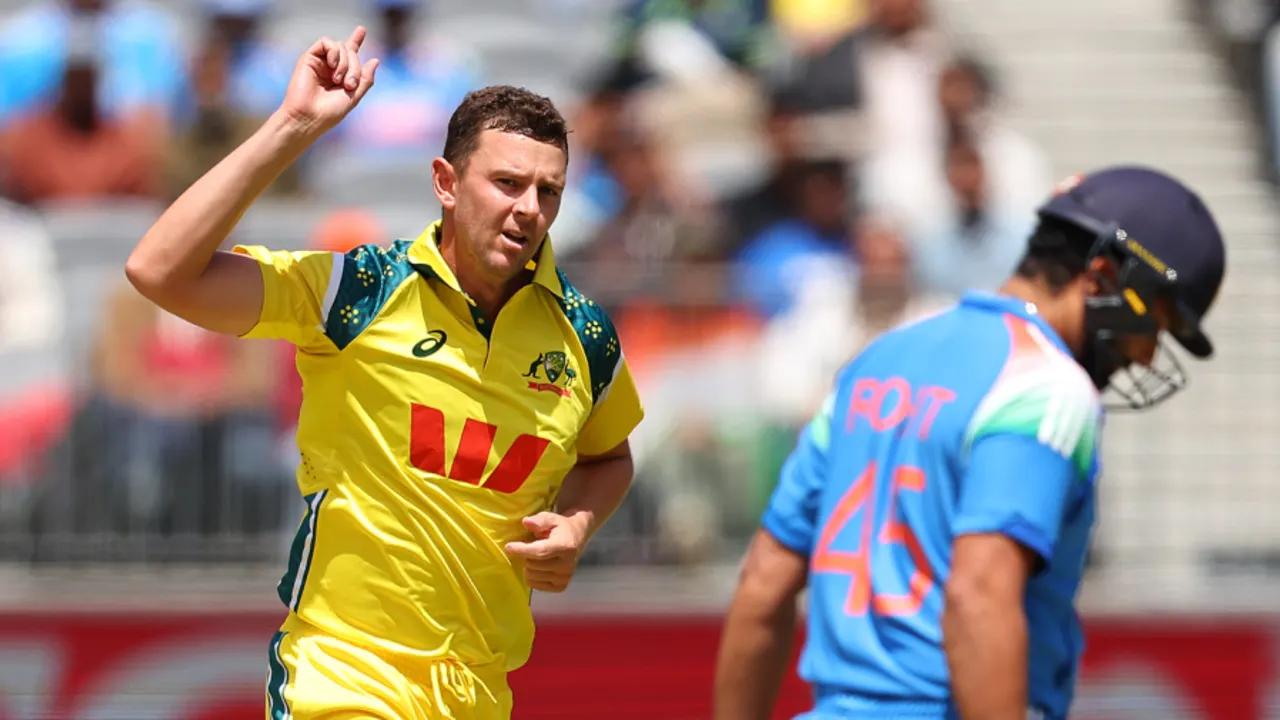
Mitchell Marsh spoiled counterpart Shubman Gill’s ODI captaincy debut after Rohit Sharma and Virat Kohli struggled in their much-anticipated comeback to international cricket.
On a damp day at Optus Stadium, the series-opening ODI was reduced to 26 overs per side with India making 136 for 9, after a series of rain delays frustrated the crowd of 42,423, having slumped to 45 for 4 against impressive new-ball bowling, particularly from Josh Hazelwood.
The weather did improve later in the day as Marsh’s unbeaten 46 off 52 balls powered Australia past their revised target of 131 runs in the 22nd over. ODI debutant Matt Renshaw finished 21 not out – almost nine years after he made his Test debut.
There was an expectation that Marsh and fellow opener Travis Head would come out aggressively, but batting was not easy in seaming conditions under lights. Head’s recent patchy form continued after slashing left-arm quick Arshdeep Singh straight to deep third, raising India’s hopes.
Marsh played against type initially, scoring just a couple of singles off his first nine deliveries, until muscling Arshdeep for six over the leg-side. With his eye in, he took the aerial route to good effect and was in total command apart from copping a blow to the helmet from a Mohammed Siraj short ball.
It wasn’t all smooth sailing for Australia with Matt Short unable to make the most of his chance at No. 3, tamely succumbing on 8 to left-arm spinner Axar Patel who was the standout performer for India with a strong allround effort.
Wicketkeeper-batter Josh Phillipe did grab his opportunity with a rollicking 37 from 29 balls in his return to the ODI team after four years having earlier performed well with the gloves.
It was a disappointing ODI return for India since their Champions Trophy triumph in March. Their batting order was not helped by numerous rain delays as the covers were used for the first time at Optus Stadium since the ground opened in 2018.
During the brief passages of play, their top order struggled to handle the back of a length bowling from Australia’s trio of quicks. Much to the disappointment of the many fans wearing blue shirts in the terraces, Rohit made a scratchy 8 while Kohli fared even worse after falling for an eight-ball duck.
Hazlewood utilised the bouncy conditions to menacing effect, bowling 35 dot balls in his brilliant spell of 2 for 20 from seven overs. Left-arm spinner Matt Kuhnemann, who was required to operate at the death with Hazlewood and Mitchell Starc bowled out, and ODI debutant Mitchell Owen also claimed two wickets.
With menacing clouds forming above, a rarity for cricket games in usually sun-baked Perth, Marsh had no hesitation to bowl despite very little grass on the surface.
Kohli has particularly fond memories of Optus Stadium having produced one of his greatest Test tons on the ground in 2018 and he also made his final Test century there last year.
Having shown no signs of rust during India’s net session ahead of the match, Kohli was pinned down by the accuracy of Hazlewood and Starc, who suckered him into a drive to catch the outside edge that was brilliantly caught at backward point by Cooper Connolly.
In likely his last game in Perth, Kohli received a standing ovation from some fans on his way to the sheds as India slumped further after Rohit had earlier been deceived by Hazlewood’s sharp bounce and nicked to second slip.
A lean looking Rohit had showed off his fitness with a quick single to get off the mark. However, other than a gorgeous straight drive, he looked sluggish much like his struggles in recent days in the nets.
The pressure fell on Gill and hopes were high that he could replicate his outstanding start to his Test captaincy, which has yielded five tons from 13 innings.
Less than a week after leading India in their Test win over West Indies, Gill showed trademark class to punch a boundary down the ground off Hazlewood before having to fight hard against probing new ball bowling.
Having seen off Starc, Gill’s debut captaincy knock ended with a whimper on 10 after he tickled down the leg side to gift Nathan Ellis a first ball wicket.
India were probably relieved by the persistent drizzle and for the first time since 1983 an ODI in Perth was shortened due to rain.
During a brief resumption, Shreyas Iyer gloved a well-directed short delivery from Hazlewood to the alert Philippe to leave India 45 for 4.
Further rain delays truncated the overs as Axar and KL Rahul on resumption had no choice but to stand and deliver. The pro-India crowd, muted for much of the day, suddenly came alive until Axar holed out to hand Kuhnemann his first wicket on home soil.
Despite consecutive sixes from Rahul, India fell away at the back end other than a very late flourish from Nitish Reddy in his ODI debut but it proved not nearly enough.
Brief scores:
Australia 131 for 3 in 21.1 overs (Mitchell Marsh 46*, Josh Phillipe 37, Matt Renshaw 21*) beat India 136 for 9 in 26 overs (Axar Patel 31, KL Rahul 38; Josh Hazelwood 2-20, Mitchell Owen 2-20, Mathew Khunemann 2-26) by seven wickets (DLS)
[Cricinfo]


The Rose Bowl, which has been awarded to the winner of ODI series between the women’s teams of Australia and New Zealand since 1985, has now been expanded to include T20Is as well.
New Zealand’s three match T20I tour of Australia, which begins on Sunday at the North Sydney Oval, will be the first T20I edition of the Rose Bowl. The teams will get to face off again for the trophy in March 2027 when they meet again for three ODIs, also in Australia.
For Rose Bowl series that include matches in both white-ball formats, the trophy will go to the team with the most wins overall. In case of a drawn series, the current holder will retain the trophy.
“The Rose Bowl is a prestigious trophy that holds a lot of meaning to current and past players, and it’s a series we’ve always taken a lot of pride in competing in,”Catherine Campbell, NZC’s chief cricket operations officer and a former New Zealand player, said. “With so much T20I cricket now being played, this is a brilliant opportunity to keep the Rose Bowl relevant and to build on the history between us and our Australian rivals.”
New Zealand captain Melie Kerr was excited by the broadening of opportunities to compete for the Rose Bowl.
“We’re all aware of what the Rose Bowl represents and the importance it holds in the White Ferns whakapapa [genealogy],” said Kerr. “Great players and teams have fought for it over the years and we’d love the opportunity to claim our own piece of that history.”
Australia have held the Rose Bowl continuously since wresting it back from New Zealand in 2000. Since that 3-0 win, Australia have won 18 times with one series – in 2008-09 – shared 2-2. Overall, Australia have won 26 of the 31 ODI series played for the Rose Bowl, with New Zealand winning three times and three series drawn.
North Sydney will host all three T20Is of the upcoming Rose Bowl series, on October 18, 20 and 22.
[Cricinfo]
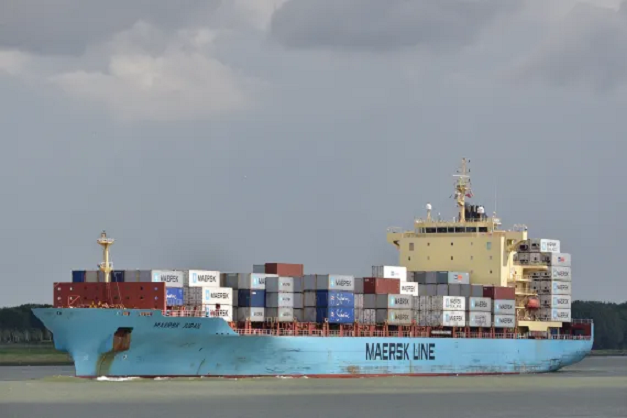
US President Donald Trump claims the US Navy’s “effective” blockade has stopped all Iranian ships from crossing the Strait of Hormuz.
Iran’s Islamic Revolutionary Guard Corps (IRGC) navy says a supertanker carrying more than two million barrels of crude oil has struck a sea mine while attempting to cross the Strait of Hormuz through an “unauthorised” route.
The collision caused a huge explosion and a major fire on board the vessel, the IRGC said in a statement reported by semi-official Tasnim news agency.
It alleged that the tanker had turned off all tracking and radar systems, attempting to pass through the strait using deception and with US military support.
‘The Strait of Hormuz is closed’, the IRGC navy warned, adding that vessels violating Iranian regulations would face severe consequences for relying on US backing.
[Aljazeera]
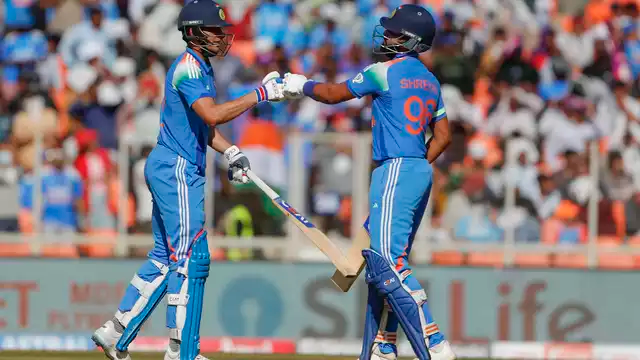
Squad for the first three ODIs: Shubman Gill [C], Rohit Sharma, Virat Kohli, Shreyas Iyer [VC], KL Rahul [WK], Nitish Kumar Reddy, Axar Patel, Naman Dhir, Anshul Kamboj, Gurnoor Brar, Ruturaj Gaikwad, Arshdeep Singh, Ishan Kishan [WK], Mohammed Siraj, Prasidh Krishna*, Kuldeep Yadav
Squad for fourth and fifth ODIs: Shreyas Iyer [C], Rohit Sharma, Virat Kohli, Tilak Varma, Ishan Kishan [WK, VC], Nitish Kumar Reddy, Axar Patel, Naman Dhir, Auqib Nabi, Gurnoor Brar, Ruturaj Gaikwad, Arshdeep Singh, Kumar Kushagra [WK], Mohammed Siraj, Yash Thakur, Kuldeep Yadav
[Cricbuzz]

Rose Bowl expanded to include Australia vs New Zealand T20Is

Trump claims US Navy blockade stops Iranian ships in Hormuz

Showers above 75 mm are likely at some places in the Western, Sabaragamuwa, Central and North-central provinces and in Trincomalee and Mullaitivu districts

Cut power bills by 3-5%, don’t hike them, consumers demand

Asgiri Mahanayake calls for immediate release of Gnanasara Thera

Lanka Air Force joins multinational exercise in India

‘Dates have the highest sugar content to fight Coronavirus’

Sunday Island 27 December – Headlines

#SundayIsland 17th December – Headlines

Sunday Island – 28th March

Sunday Island Headlines – 21 March

Sunday Island – 21st February – Headlines
-

 News6 days ago
Sri Lanka escalates anti-graft drive with Shiranthi’s jailing
-

 Latest News5 days ago
Farhan and Sadaqat help Pakistan seal series in style
-

 News6 days ago
Iranian ships stranded, Lanka fears US sanctions
-

 Latest News4 days ago
Nissanka’s return headlines Sri Lanka’s Test squad against Pakistan
-

 Features5 days ago
Intake 16: 45 years of duty and honour
-

 News5 days ago
Malwathu Chapter issues statement on talks with President over Gnanasara Thera’s robes
-

 News6 days ago
Navi Pillay’s Lankan affairs in focus as she wins 2026 Nobel Peace Prize
-

 News5 days ago
CP alleges NPP has taken the blame for illegal US sanctions on Iranian vessels