
News
Lead to underfunding education, other key public services: HRW


Sri Lanka: Ruinous tax policies stoke inequality
Sri Lanka’s tax policies played a driving role in the country’s devastating 2022 economic crisis and have contributed to the chronic underfunding of education and other public services, Human Rights Watch has said in a report released on Oct. 15. The government of President Anura Kumara Dissanayake should urgently adopt measures to uphold its human rights obligations and enact reforms to a system that presently favors companies and wealthy people while failing to deliver adequate revenues.
The 101-page report, “Tax Giveaways, Struggling Schools: How Low Taxes Drove Sri Lanka’s Economic Crisis and Squandered its Education Lead,” describes how Sri Lanka’s successive governments have adopted policies that resulted in inadequate revenues, contributing not only to Sri Lanka defaulting on its debt but also to a decades-long decline in public education spending as a share of Gross Domestic Product (GDP) to among the lowest in the world. It also documents the impacts of inadequate funding on children’s right to education. Moreover, low corporate and personal tax revenues have led to an average of 80 percent of taxes coming from goods and services, which generally are regressive because they claim a higher share of poorer people’s income.
“For decades, Sri Lanka has been hostage to economic policies that starve its government of revenue and reflect a myopic focus on GDP growth,” said Sarah Saadoun, senior economic justice researcher at Human Rights Watch. “In practice, that means education spending has fallen well behind the pace of growth, turning the country from a global leader in public education to a laggard.”
Human Rights Watch interviewed over 70 people, including those affected by the economic situation and familiar with the public education system, as well as a wide spectrum of prominent Sri Lankan economic experts. Human Rights Watch also conducted a comprehensive analysis of relevant data and research relevant to Sri Lanka’s tax policies and education spending.
These policy failures have infringed upon children’s right to education, Human Rights Watch found. Sri Lanka’s education spending dropped from between 3 to 5 percent of GDP in the two decades following independence, a time when the country was an education champion among postcolonial countries, to 1.5 percent of GDP in 2022, among the lowest in the world.
Low tax revenues also contributed to Sri Lanka defaulting on its debt in April 2022, which precipitated an economic crisis including widespread job and income loss alongside a sharp rise in the cost of living that remains devastating for human rights.
While former President Gotabaya Rajapaksa introduced sweeping tax cuts in 2019 that dealt a devastating blow to revenues, Human Rights Watch found that the problem began in the late 1970s, when Sri Lanka began an economic shift common at that time that deprioritized social spending and liberalised trade. The resulting sharp decline in tax revenue from trade and other sources was not replaced by a progressive tax system that appropriately benefited from the ensuing growth.
In particular, the government began regularly granting companies broad tax exemptions through an opaque body highly vulnerable to abuse. In 2022, the cost of tax exemptions reached a staggering amount equivalent to 56 percent of revenues, or nearly three times the education budget. The government also collects only a small amount of taxes from personal income and assets and has not ensured that tax agencies have the capacity and accountability needed for tax enforcement.
The report’s focus on education illustrates a broader deprioritization of social spending, but the squandered potential is particularly salient in education, an area in which Sri Lanka was once widely regarded as a global leader. Sri Lanka was among the first countries to establish free primary and secondary education for most people.
Human Rights Watch found that low spending has led to schools charging fees to cover the cost of basic resources, posing significant hardship to many families. Inadequate public funds have also led to a vast disparity in resources based on students’ socioeconomic status. Low corporate and personal income tax revenues have led the government to heavily rely on taxes and goods and services—called “indirect taxes”—such as value-added tax (VAT) that weigh more heavily on poorer people.
In March 2023, the International Monetary Fund (IMF) approved a $3 billion bailout to Sri Lanka and creditors restructured the country’s debt, although its debt servicing obligations remain very high. In 2024, the government paid 57 percent of its revenue to creditors. In January 2025, President Dissanayake’s National People’s Power (NPP) party took office following a campaign that promised sweeping economic reforms, including reducing regressive taxes and improving education.
The government should consider eliminating corporate tax exemptions given their high cost, questionable effectiveness, and vulnerability to abuse, Human Rights Watch said. The government should also adopt other progressive tax measures, such as a wealth tax.
The case of Sri Lanka reflects the challenges many governments face under the current international tax system. For example, tax competition pressures governments into offering tax incentives that fuel a race to the bottom, depriving many governments of the necessary revenue to fulfill human rights. These challenges highlight the importance of ongoing negotiations for a United Nations tax treaty to build international rules informed by human rights imperatives and increased cooperation that would enable governments to end this negative spiral.
Under international human rights law, states are obligated to take steps to the “maximum of their available resources” to progressively realize the rights to health, education, social security, and an adequate standard of living, among other economic, social, and cultural rights. States are obliged not only to act individually, but also through international assistance and cooperation. This necessarily implicates states’ fiscal practices and tax policies domestically and in international fora.
Sri Lanka’s new government has taken some positive steps, such as providing an LKR 6,000 (about $20) bursary to some families to help with education-related costs, but it has only marginally raised the education budget. It should continue to increase the education budget, with a goal of reaching the internationally agreed benchmark of 4 to 6 percent of GDP allocated to education, Human Rights Watch said. The government of President Dissanayake should also urgently adopt measures to uphold its human rights obligations and enact reforms to a system that currently favors companies and wealthy people while failing to deliver adequate revenues.
“Sri Lanka’s economic quagmire makes clear that growth alone is not enough to fulfill human rights,” Saadoun said. “The government should finally establish a progressive tax system and use its income so that it adequately funds education and other public services that benefit all Sri Lankans.”





Advisory for strong winds and rough seas for Multi-day boats in the Bay of Bengal deep sea areas
Issued by the Natural Hazards Early Warning Centre
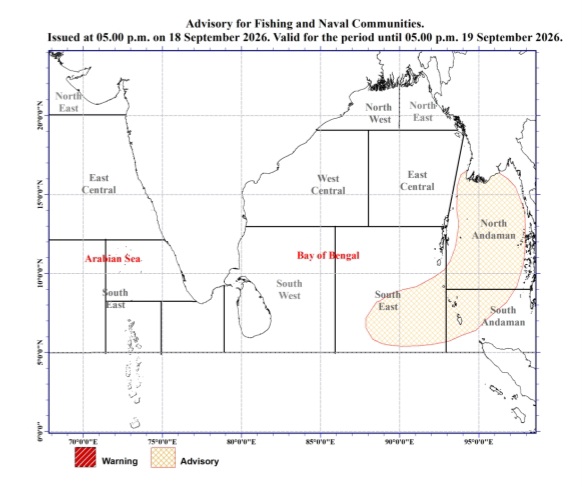
Issued at 05.00 p.m. 18 September 2026, valid for the next 24 hours.
PLEASE BE AWARE!
The atmospheric disturbance to the North of the Andaman Islands in the Bay of Bengal, is likely to develop into a low pressure area within the next 24 hours.
Due to its influence, wind speed over the Bay of Bengal sea areas will increase during the next few days starting from
tomorrow (19th).
The wind speed in the sea areas marked under the “Advisory” category on the map below will increase to 55-65 kmph at times and those sea areas will be rough or very rough at times.
Navel and fishing communities engaging the activities over this sea area are advised to be vigilant and be attentive to the future forecasts and bulletins issued by the department of Meteorology in this regards.


Text and Pic by Priyan de Silva
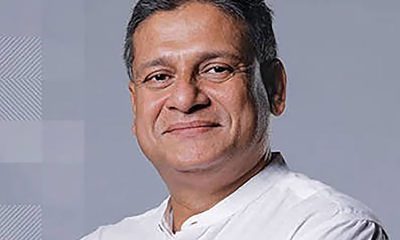
Director General of the Commission to Investigate Allegations of Bribery and Corruption (CIABOC) Ranga Dissanayake has questioned whether some promises contained in the National People’s Power (NPP) manifesto, A Thriving Nation – A Beautiful Life, could be fulfilled even if the government wanted to implement them.
Dissanayake raised the issue during a discussion following the release of the third biannual report on manifesto monitoring by the March 12 Movement, at the BMICH, on Wednesday.
He questioned whether the report had taken into account legal and institutional constraints affecting the implementation of certain pledges.
Citing the proposal to establish Anti-Corruption Investigation Offices in each district, Dissanayake said such offices could be established only with the agreement of CIABOC and that amendments to the Anti-Corruption Act would be necessary.
He also referred to the pledge to abolish the Executive Presidency, noting that successive governments had made similar commitments since 1994. He questioned whether there had been adequate consideration of where the powers vested in the Executive President would be transferred if the system were abolished.
On the proposal to establish a Public Prosecutor, Dissanayake questioned whether the Government intended to maintain the office alongside the Attorney General, who currently performs prosecution-related functions.
Executive Director of the Institute for Democratic Reforms and Electoral Studies (IRES) Manjula Gajanayake said Dissanayake’s remarks should be regarded as his personal views and not as Government policy.
Monitoring and Evaluation Consultants M. Thilakarajah and D.D. Mataharaarachchi presented the third-phase findings, covering January to June 2026.
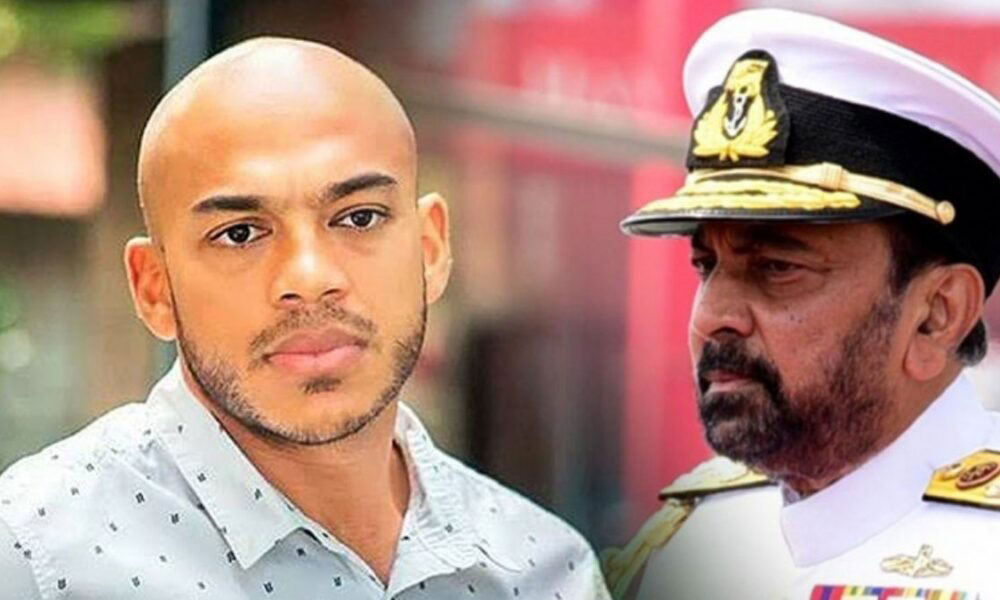
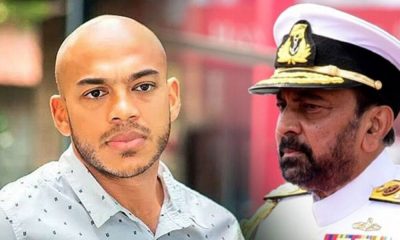
The corruption case filed by the Commission to Investigate Allegations of Bribery or Corruption (CIABOC) against former Navy Commander, Admiral of the Fleet Wasantha Karannagoda, and Yoshitha Rajapaksa was set for a pre-trial conference by the Colombo High Court.
The case was taken up before the Colombo High Court on Thursday (17), when the accused, who are currently out on bail, appeared before the court. After considering the submissions made, the court ordered that the case be called for a pre-trial conference.
The CIABOC had filed the case against the accused, alleging that a corruption offence was committed by sending Yoshitha Rajapaksa, son of former President Mahinda Rajapaksa, for training at the Royal Naval College in the United Kingdom despite him not having the required qualifications.

Advisory for strong winds and rough seas for Multi-day boats in the Bay of Bengal

Showers in the Western, Sabaragamuwa and North-western provinces and in Galle, Matara, Kandy and Nuwara-Eliya Districts

Some NPP manifesto promises may be difficult to fulfil – CIABOC DG

Yoshitha and ex-Navy chief Karannagoda’s case fixed for PTC

Court orders probe into Wimal’s rally speech

Court to rule on Dilith’s writ petition on September 30

‘Dates have the highest sugar content to fight Coronavirus’

Sunday Island 27 December – Headlines

#SundayIsland 17th December – Headlines

Sunday Island – 28th March

Sunday Island Headlines – 21 March

Sunday Island – 21st February – Headlines
-

 News6 days ago
Gnanasara Thero absconding after SC ruling
-

 Opinion5 days ago
From Galkissa (Mount Lavinia) to Tambuttegama
-

 Business6 days ago
HNB Finance strengthens Board with four independent directors
-

 News2 days ago
US embassy won’t comment on IGP’s probe into joint drug raid
-

 Sports6 days ago
Culture within cricket team worrying authorities
-

 Features5 days ago
Sri Lanka’s university crisis: Brain drain and union action demand urgent reform
-

 Features4 days ago
The emptying university: why are academics leaving?
-

 News6 days ago
House to debate 22A, Judicature Bill next week