
Foreign News
Peru’s president removed from office amid soaring crime


Peru’s Congress has voted to remove President Dina Boluarte from office, hours after a late-night session was called to debate her impeachment.
An overwhelming majority of lawmakers from across the political spectrum approved her ousting on grounds of “permanent moral incapacity”.
In an address on national television following the vote, Boluarte questioned the implications it would have on the stability of Peru’s democracy.
One of the world’s most unpopular leaders, with an approval rating of 2-4%, Boluarte’s tenure has been plagued by frequent protests, scandals and investigations, as well as a surge in gang violence.
Anti-government protests have escalated in recent months amid soaring crime. There was renewed anger earlier on Thursday following a shooting at a concert in the capital, Lima.
A total of 122 out of 130 lawmakers voted for Boluarte’s removal early on Friday, following votes resoundingly in favour of four motions of impeachment.
Congress leader Jose Jeri was sworn in as interim president early on Friday. Peru does not currently have a vice-president.
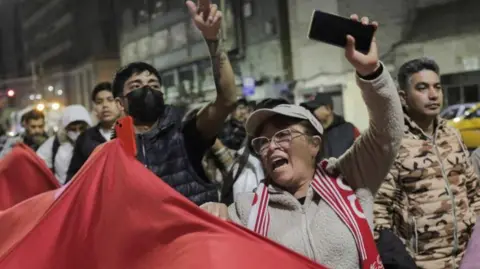
Boluarte did not appear before Congress for the overnight hearing. A crowd of protesters brandishing Peruvian flags outside the Congress building erupted in cheers after the vote was declared.
“At all times I have called for unity,” she told Peruvians after being removed, adding: “In this context, I had not thought of myself but of the more than 34 million Peruvians who deserve better.”
Protests have punctuated the 63-year-old leader’s less than three years in office, which followed the impeachment and imprisonment of her predecessor, Pedro Castillo.
Her presidency was overshadowed by several investigations, including a corruption inquiry dubbed “Rolexgate” over allegations she accepted Rolex watches as bribes.
Another probed whether she abandoned her post when she failed to appoint a caretaker president during an absence for nose surgery. She has denied any wrongdoing.
In July, her decision to double her salary to almost 35 times that of the monthly minimum wage in Peru was met with scorn and derision. Her economy minister noted at the time her salary had been the second lowest of 12 countries in South America.
Thursday night’s successful impeachment bid was the latest in a series of attempts to remove Boluarte from office ahead of elections next April.
“The only way of moving forward is Dina Boluarte’s impeachment,” Congresswoman Susel Paredes said in a post on X on Thursday.
Among the lawmakers who voted to remove Boluarte from office were factions once loyal to the president, including conservative parties that had previously supported her.
Boluarte rose to power in December 2022, when former President Castillo was impeached after attempting to dissolve Congress to avert his removal. She was elevated to the post as she was vice-president at the time.
Peru’s first female president, Boluarte was the Andean nation’s sixth leader since 2018. Three former leaders are behind bars.
In January 2023, weeks after taking office, an inquiry was launched into Boluarte and some of her key ministers on charges of “genocide, qualified homicide and serious injuries”.
It followed the death of more than 50 Castillo supporters in a government crackdown on demonstrations calling for her resignation and fresh elections.
In the first three months of her presidency, there were more than 500 protests over her rule.
[BBC]


Five people have been killed and 16 injured in a Houthi missile attack targeting the presidential palace in the port city of Aden in southern Yemen, which is the seat of the internationally-recognised government, officials say.
Information Minister Moammar al-Eryani told the BBC that the prime minister and other ministers were unhurt when five ballistic missiles hit al-Maashiq Palace.
The Houthis’ military spokesman, Yahya Sarea, said they struck “the Saudi enemy’s military operations headquarters in Aden”.
A coalition led by Saudi Arabia backs the government and is providing air support for an offensive by pro-government forces against the Iran-backed Houthis.
Yemeni health minister Qasim Buhaibeh said the casualties included “those working to guard the site and civilian employees”.
The country’s Prime Minister Shaya Zindani condemned the Houthis’ attack on Aden, calling it “cowardly” and a “continuation of their criminal behaviour”.
He said the government continued to carry out its duties and vowed that it would not weaken the resolve of its forces to continue operations against the Houthis on Yemen’s south-western Red Sea coast and other front lines.
Earlier, the Houthis denied that they had attacked Saudi Arabia on Thursday, after the coalition said its forces had intercepted a cruise missile in the Medina region, home to one of Islam’s holiest shrines.

The Houthis have been launching missiles and drones at airports, oil and gas facilities, and military bases in Saudi Arabia in retaliation for the strikes on the territory that they control in western Yemen, including the capital Sanaa.
On Saturday, a Houthi missile strike killed 13 people at Riyadh’s international airport, which was the deadliest attack in Saudi Arabia in more than a decade.
Saudi Arabia’s deputy foreign minister accused Iran of encouraging the Houthis to escalate their conflict with the kingdom.
“Iran continues to arm, train and support the Houthi militia in violation of UN Security Council resolutions,” Rayed Krimly told reporters, according to AFP news agency.
“We think that the escalation by the Houthis at this latest stage of the conflict is encouraged by Iran,” he added.
There was no immediate response from Iran’s government. However, it has previously denied supplying weapons to the Houthis and said it only supports them politically.
Iran’s foreign minister has also said it is ready to provide “any assistance necessary to facilitate the start of talks” between Saudi Arabia and the Houthis.
Yemen has been devastated by a civil war that began in 2014, when the Houthis ousted the internationally-recognised government from Sanaa. The conflict escalated in 2015, after the Saudi-led coalition of Arab states intervened in an attempt to restore the government’s rule.
A four-year-old informal ceasefire began to unravel in July, when the Houthis announced a “maritime embargo” against Saudi Arabia and began missile and drone attacks on Saudi airports, oil facilities and tankers in the Red Sea.
The Houthis said they were retaliating for what they call a Saudi blockade of their territory, as well as an air strike on Sanaa airport that they blamed on the kingdom.
The conflict escalated in September after the Houthis seized part of Yemen’s south-western Red Sea coast near the Bab al-Mandab Strait, a chokepoint for global shipping. Their advance contributed to a rise in oil prices following six months of war between the US, Israel and Iran.
Last week, pro-government forces said they had regained control of territory overlooking Bab al-Mandab after launching a major counter-offensive with the support of Saudi air strikes.
At least 1,282 people have been killed and 5,890 injured in the fighting in Yemen since 6 August, according to the government’s health ministry.
The UN says another 201,000 people have been displaced and that there has been an alarming surge in suspected cholera cases.
(BBC)
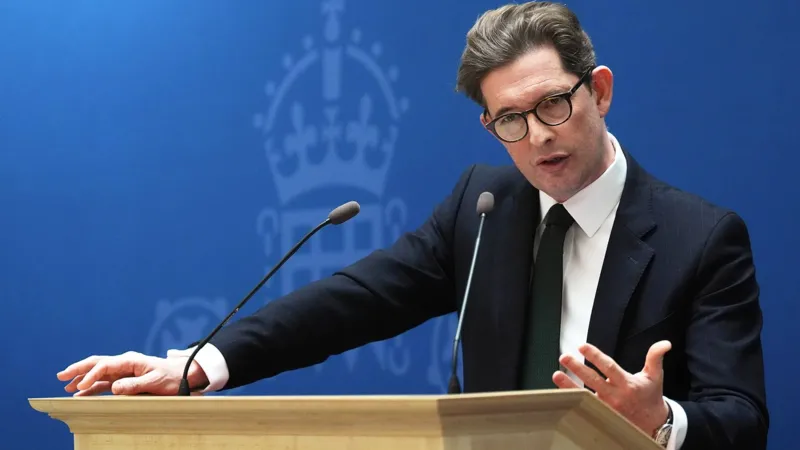
MI5 is devoting more resource to countering state threats than during the Cold War, the head of the intelligence service has said.
Sir Ken McCallum said threats from foreign adversaries had quadrupled in the last decade, with Russia “aggressor number one” as well as increased Iran-linked aggression against Jewish sites and military bases.
At an annual speech in London, MI5’s chief said Russia was waging hybrid warfare at a time when AI was “supercharging the cyber-security contest between attackers and defenders”.
He also warned of rising threats from “extreme right-wing terrorism” and said MI5 had “caught terrorists seeking to exploit AI,” including by integrating the technology with drones.
He said the biggest threat from the misuse of AI was extremist groups using the technology to harness new and existing bioweapons.
However, he noted that work countering terrorism and state threats was now “pretty much of equal scale” which he described as a “huge shift” in recent years.
Sir Ken said Russia had stopped short of “conventional conflict” against Nato and is instead trying to unsettle European countries while its progress in its full-scale invasion of Ukraine is “minimal and horrifically costly”.
Hybrid warfare or hybrid attacks are loose terms which tend to describe non-military methods, for example cyber-attacks, sabotage or misinformation, designed to exert pressure and destabilise an adversary.
These are quite often employed using proxies, but Russia always denies involvement in such attacks despite growing evidence to the contrary.
Sir Ken said MI5 successes in identifying and expelling Russian spies from the UK had left the Kremlin dependent on paying proxies for attempted attacks.
“With its traditional covert footprint eviscerated by almost 1,000 expulsions since the invasion, the Kremlin’s global toolkit is weak, he said.
“So we see them scrambling to pay criminals to do their bidding.”
He added: “These are not the actions of a great power with the strategic upper hand.”
His comments come as a growing number of leaders across Europe have warned Russia may be preparing attacks to test their commitment to supporting Ukraine.
Asked after the speech about Prime Minister Andy Burnham’s recent comments that Russia interfered with the Brexit referendum, Sir Ken said it was “not new news” that there had been attempts from Moscow but distinguished between “interference attempted” and “outcome achieved”.
He said it was a matter of public record that there were pieces in Russian media and “so-called internet trolls and bot farms” seeking to influence the Brexit debate, but also stressed that the result of the 2016 referendum was “not in dispute”.
He added that he was “worried” about the the ongoing debate on Russian interference.
“I am a little bit anxious that we don’t play into our adversaries’ hands by making these trolls look 10ft tall,” he told reporters.
Meanwhile, Sir Ken warned that Iran is also expanding a hybrid campaign in the UK.
The intelligence chief said there had been 50 arrests in the last year over Iran-linked activities.
Much of this Iranian aggression has been aimed at Jewish communities, Sir Ken added, and also at “harder targets, like military sites”.
Sir Ken did not mention arrests at RAF Fairford directly during his speech, but told reporters afterwards the incident was “not unique”.
He added: “We have seen Iranian interest beyond RAF Fairford in the UK.”
The incident at the airbase in Gloucestershire, where three suspicious vans were seen parked nearby, has seen seven people arrested and bailed by counter-terrorism police.
Burnham has said the incident was “almost certainly directed by Iran’s Islamic Revolutionary Guard”.
The MI5 head said in his speech: “What I can say is that those who seek to cause mayhem on British streets – whether hired thugs here or their paymasters overseas – will meet an unflinching response.”
Sir Ken added that the National Security Act – a 2023 law designed to target people working against UK interests for foreign powers – is in heavy use, and has been employed to tackle threats from China as well as Iran and Russia.
On the emerging threat posed by AI, Sir Ken said: “It can produce propaganda and radicalising material tailored to the individual.
“We’ve caught terrorists seeking to exploit Al to improve their reconnaissance and attack methodologies, with Al-enabled drones adding a new twist.”
Sir Ken said the bioweapons threat posed by AI was “not yet realised” but warned the technology has the “potential to change the stakes”.
“These risks are real. The UK Intelligence Community – MI5, GCHQ, MI6 – is working closely with the UK’s globally respected AI Security Institute to take them on.”
Sir Ken said AI poses unknown threats, telling Thames House: “Put at its simplest, human history has given us no experience of facing an actor which is smarter than we are”.
He announced MI5 had launched an AI Threat Assessment Centre, which he said would assess sources and “separate the bluster from the realities”.
In April, the UK’s terrorism threat level was raised to severe for the first time in five years, meaning an attack is highly likely.
Sir Ken said Islamist groups like Al Qaeda and so-called Islamic State both continue to direct and inspire attacks, while the increased risk was also driven “in significant part” by extreme right-wing terrorism.
He continued: “Over the last year the most marked trend has been an increase in cases where extremist versions of anti-immigration and anti-Muslim grievance are tipping into terrorist intent.”
Sir Ken said extreme right-wing terrorism tended to “skew young”, driven by the internet – adding that MI5 had in recent months investigated a “radicalised extreme right-wing 13-year-old here in the UK”.
He said: “That investigation generated insight that enabled one of our international partners to prevent a lethal attack on their soil.”
[BBC]
Pope Leo XIV has been diagnosed with lung cancer but had successful surgery to remove a lower lobe of his right lung, the Vatican has said in a medical bulletin.
The 71-year-old underwent a 90 minute surgery on Tuesday at Rome’s Gemelli Hospital and was subsequently diagnosed with lung adenocarcinoma.
“After the operation, the Pope awoke normally and returned after a brief period of observation to his room on the 10th floor,” the Vatican said in a statement.
The lump was first detected during what the Vatican has described as “routine checks”.
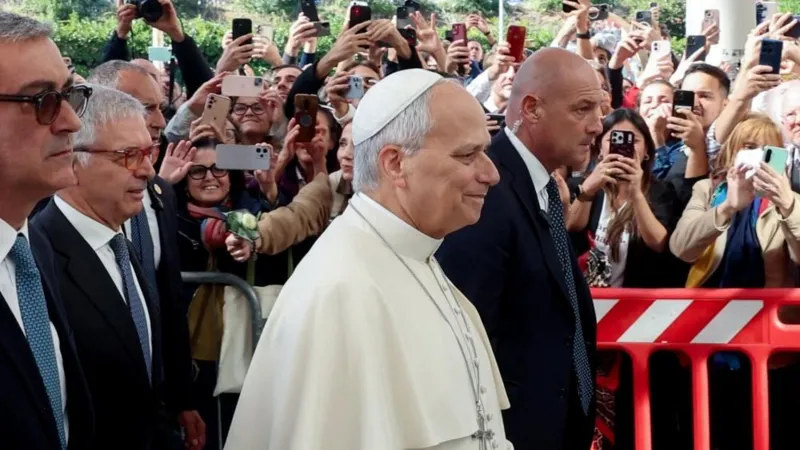
Earlier, large crowds gathered outside the hospital to greet the Pope, with some waiting for several hours.
They cheered greetings and well wishes as he passed, while he waved and smiled back through the lowered back window of his car.
He was then met by staff on the hospital steps. “I’m sorry,” one of them commiserated, to which the Pope gave a smile and a shrug. “We’re here for you,” he was assured.
In its statement, the Vatican said the whole lower lobe of the Pope’s right lung was removed “to ensure the procedure was radical”.
A Vatican source told Agence France-Presse news agency further tests were being carried out to see if there was any sign the cancer had spread.
It was Leo XIV himself who on Sunday announced news of his operation to the world, speaking from the balcony in St Peter’s Square after delivering the traditional Angelus blessing.
He said the nodule, or growth, on his lung was “contained” and had been found “at a very early stage”, but that doctors had advised him to have it removed.
Gemelli’s thoracic surgery team operated on the Pope, whose schedule has already been cleared until 20 October to give him time to recover.
Nodules are quite common and not necessarily cancerous, but after it was examined the medical team confirmed it was pulmonary adenocarcinoma, “as suspected by pre-operative tests”, the Vatican said.
The Vatican has stressed that the pontiff, who is generally thought to be fit, had no symptoms of infection or illness.

Cardinal Kikuchi Tarcisio Isao of Tokyo wrote on social media that he’d had an audience with Pope Leo on Monday, and said the pontiff felt “nothing wrong” physically.
He said the Pope had decided to check in for surgery as soon as possible because he was due to travel to Latin America in early November, and was keen to stick to that plan.
The trip is particularly significant because it includes a visit to Peru, where the pontiff was a missionary and then a Bishop for many years.
Despite all the reassurances, the news has shaken Catholics all over the world.
“Am I worried? Yes, because I certainly wasn’t expecting anything like this,” Vatican Secretary of State Cardinal Parolin told journalists on Tuesday.
He agreed that the news was like a “bolt from the blue”, but said the cardinals had been struck by the Pope’s “serenity” and were confident in his recovery.
Outside Gemelli Hospital, which has treated several popes and is home to a large statue of John Paul II, a few Catholics lingered after the pontiff was admitted.
Carla had come specially, wanting to be close.
“He seems calm, so we are calm too – even though illness is always unpleasant,” she told the BBC. “We will wait here and pray.”
[BBC]

Iyer to lead in last two New Zealand ODIs, Kushagra earns maiden call-up

Pope pictured for first time since surgery and cancer diagnosis

Qatar announces ‘massive’ solar plant project in Lebanon

Samagi Spice Exports to launch Ceylon Cinnamon based beverage range

Asian Cup in Saudi Arabia could be postponed by a year amid Houthi attacks

Houthi missile attack on Yemeni presidential palace kills five, minister says

‘Dates have the highest sugar content to fight Coronavirus’

Sunday Island 27 December – Headlines

#SundayIsland 17th December – Headlines

Sunday Island – 28th March

Sunday Island Headlines – 21 March

Sunday Island – 21st February – Headlines
-

 News6 days ago
Sri Lanka escalates anti-graft drive with Shiranthi’s jailing
-

 News7 days ago
NPP govt. reminded of its responsibilities as US warship leaves Colombo
-

 Latest News7 days ago
Farhan, Sadaqat help Pakistan ace 183 chase to go 1-0 up
-

 Latest News5 days ago
Farhan and Sadaqat help Pakistan seal series in style
-

 News6 days ago
Iranian ships stranded, Lanka fears US sanctions
-

 Latest News4 days ago
Nissanka’s return headlines Sri Lanka’s Test squad against Pakistan
-
 News7 days ago
Interdicted top House official Kularatne receives special recognition in Mexican Parliament
-

 Features5 days ago
Intake 16: 45 years of duty and honour