
Latest News
WWC 2025: Mooney’s rescue act for the ages denies Pakistan a historic win


Beth Mooney’s masterful maiden World Cup century rescued Australia from 76 for 7, set up a match-winning total of 221 and denied Pakistan the opportunity to pull off the first upset of the tournament. Australia are now at the top of the points table, with two wins and a washout while Pakistan remain winless in last place.
Mooney continued a magnificent 2025, in which she now averages 63.42, with an innings that was a class above anyone else on a slow, low turner in Colombo. Only two other batters, Alana King and Sidra Amin, got more than 20; King’s innings came with Mooney at the other end. The pair shared a 106-run ninth-wicket stand and King’s 51* was the highest score for a player batting at No.10 or lower in women’s ODIs. They completely eclipsed the efforts of Pakistan’s spinners, who shared six wickets for 98 runs in their 30 overs and gave their side real hope before the batters completely faded away.
Pakistan were bowled out for 114, undone by seam and swing. As much as Pakistan will need to question their batting, they will wonder how they squandered the opportunity to bowl Australia out for one of their lowest World Cup scores after getting themselves into a position of such advantage. The answer lies in Mooney’s approach.
Unlike all the other batters, she demonstrated an ability to play late and move in the crease and showed patience in the face of extreme pressure. All told, Mooney hit 11 fours in her century and ran 44 singles, nine twos and a three. She earned the right to play with freedom at the end and Australia’s final flourish of 81 runs in the last 10 overs including 53 off the last four, iced the cake.
Their takedown of Diana Baig, who conceded 74 in her 10 overs, will also ask questions of Pakistan’s bowling options. They only had five at their disposal and while four had an excellent day out, they could not close things out quickly enough after Fatima Sana chose to bowl in hot, humid conditions because she suspected spin could play a role. She was proved right almost immediately.
Sana introduced spin in the form of Sadia Iqbal in the fifth over, Iqbal ended it by drawing Alyssa Healy forward as she tried to flick. Healy gave Baig a simple catch at midwicket.
Four balls later, Sana, after bowling 12 dot balls and with her hero Ellyse Perry at the other end, had Phoebe Litchfield playing across the line and skying it straight up. The Pakistan captain kept her composure to take a good catch. In the end, Sana did not get to bowl to Perry at all as she took herself off to go all spin.
Nashra Sandhu struck with her fifth ball when Perry came down the track, was beaten by turn and Sidra Nawaz did some excellent work behind the stumps to break them. With that, Sandhu became the leading wicket taker for Pakistan in ODI World Cups, going past former captain Sana Mir and she showed no signs of stopping. In her next over, Sandhu deceived Annabel Sutherland with the one that held its line and beat the inside edge to bowl her.
Though left-arm spin has been the discipline of destruction at this tournament, offspinner Rameen Shamim was not to be denied a share of the spoils. Ash Gardner chipped Shamim straight to Sana at midwicket. Then, Sandhu sent one down slow, Tahlia McGrath tried to get it over extra cover but could not get to the pitch of the ball and sliced it to Baig, who lunged forward to take the catch in the infield.
When Georgia Wareham was done in by extra bounce and gave Shamim a relatively simple return catch, Australia were 76 for 7 – the second lowest at the fall of the seventh wickets since 67 for 7 against New Zealand in 1993. Sandhu thought she had the eighth in the 23rd over when Garth missed a straight one and was given out lbw but she reviewed and replays showed she had hit the ball.
That proved crucial as it allowed Australia to rebuild, in a similar fashion to the way they did after being 128 for 5 against New Zealand. This time, they were able to do it against a Pakistan attack that had to go back to their seamers, in the absence of another spin option. Sana brought herself back on in the 28th over and should have run Garth out but got herself into a poor position at the non-striker’s end. She also had to go back to Baig, and Australia’s 100 and Mooney’s fifty both came off her in a sign of things to come.
The eighth-wicket stand between Mooney and Garth grew 39 before another Nawaz special behind the stumps. Baig sent a full ball down leg, Garth missed the flick with her front foot out of the crease and back heel lifted. Nawaz reacted quickly to collect, stay low and break the stumps. Australia were 115 for 8 and again, Pakistan could not close things out.
King did a sterling job of holding her end and helped Mooney drag the innings into its latter stages. Mooney was on 85 when she was given lbw to Iqbal, against a delivery that turned in and pinned her on the back leg. She reviewed and ball tracking showed it was doing too much and would have missed leg stump. King was 17 off 35 at the time.
Mooney entered the nineties when she whipped Baig behind square and moved swiftly to 97 with a cut that went to the deep-third boundary. Her hundred came with a single off Sana, and then she let King have some fun. King took 13 runs off Baig’s final over and then back-to-back sixes off Sana’s last over to bring up 50 off 48 balls. Mooney then smashed two more fours before being dismissed off the last ball as she cut Sana to cover.
Pakistan’s demoralisation with how they fielded showed in their batting. Sadaf Shams looked nervy initially, edged Megan Schutt between the keeper and slip and then nicked off against Garth. Schutt got on the board three overs later when Muneeba Ali was caught low by Sutherland at mid-off, in a dismissal that looked eerily similar to Heather Knight’s not out against Bangladesh.
Nawaz, promoted to No.4, had no footwork when she edged Garth to Healy, Schutt had Natalia Pervaiz caught by Mooney at slip and then Garth bowled Eyman Fatima, playing and missing as she attempted a slog. Pakistan were in a mess at 31 for 5 and it didn’t get much better.
Sana chopped a short Sutherland ball onto her stumps before Sidra Amin and Shamim put on 29 in 52 balls, which was Pakistan’s best stand. Spin ended it when Amin picked out Sutherland at long-on. Pakistan were 78 for 7 but had no batters to take them close. Shamim and Sandhu delayed the inevitable for 68 balls in a 25-run stand. Pakistan were dismissed in 36.3 overs and their net run rate plunged to -1.887.
Brief scores:
Australia Women 221 for 9 in 50 overs (Alyssa Healey 20, Beth Mooney 109, Alana King 51*; Fatima Sana 2-49, Rameen Shamin 2-29, Nashra Sandhu 3-37) beat Pakistan Women 114 in 36.3 overs (Sidra Amin 35; Kim Garth 3-14, Annabel Sutherland 2-15, Megan Schutt 2-25) by 107 runs
[Cricinfo]


The Italian Naval Vessel ‘ITS Giuseppe Garibaldi’ arrived in Sri Lanka today, 9 September 2026, on a replenishment visit.
The Sri Lanka Navy welcomed the visiting ship in accordance with naval traditions at the port of Colombo.
‘ITS Giuseppe Garibaldi’ is a 180m long Landing Helicopter Aircraft Vessel commanded by Captain Marco GUERRIERO.
During the ship’s stay in Sri Lanka, the Commanding Officer of ‘ITS Giuseppe Garibaldi’ is scheduled to call on the Commander Western Naval Area.
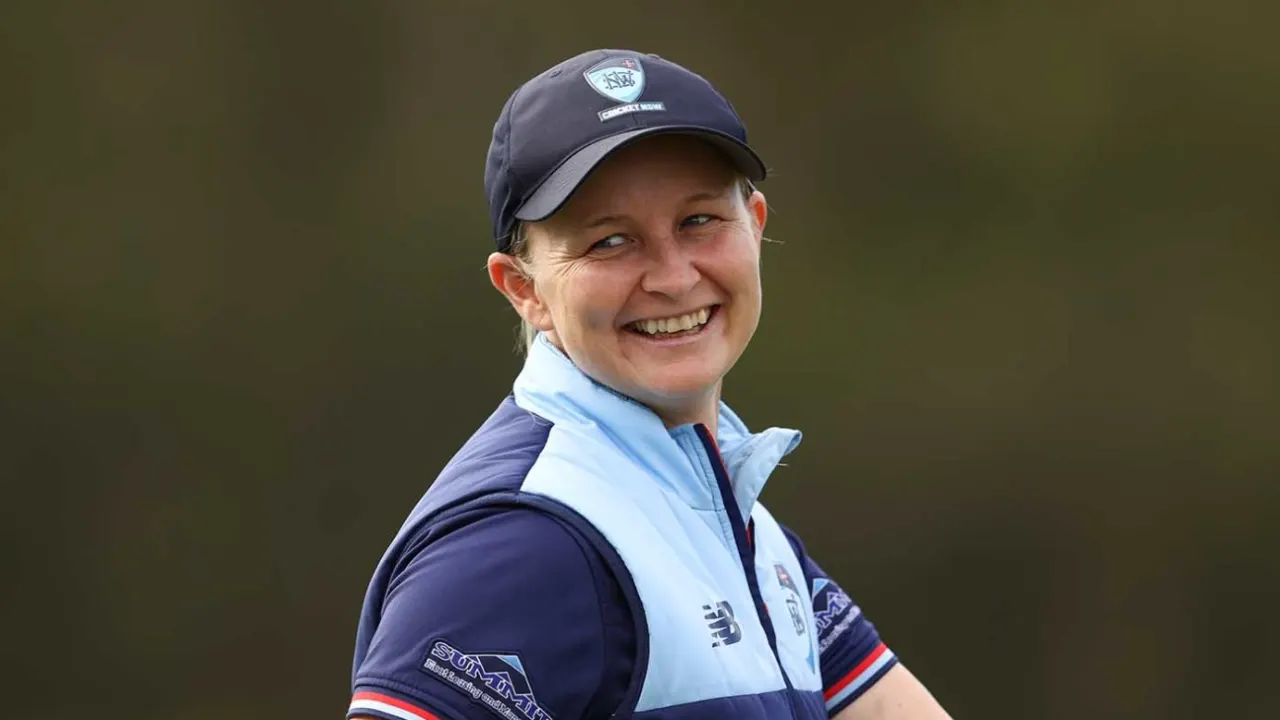
Leah Poulton the former Australia batter turned coach and administrator, will join England Women as managing director, succeeding Clare Connor.
Poulton will be charged with overseeing the success of the international team and pathways after the ECB cited her “impressive track record driving women’s cricket forward in Australia”.
Poulton earned 90 caps for Australia before retiring in 2015 and has spent the past six years as head of elite female cricket at Cricket New South Wales. There, she oversees cricket performance operations across two WBBL franchises, women’s state cricket and one of the world’s largest women’s cricket talent pathways.
Before that, she spent three years at Cricket Australia as a High Performance Coach, where she was instrumental in setting up Australia’s enviable women’s high-performance pathway, which included developing the Australia A and Under-19s women’s teams.
In her new role, she will be accountable for the performances of England Women, England Women A, England Women Under-19s and the overall women’s high-performance system.
Poulton will start in her new role in November with England set to host the Women’s Ashes next summer. She fills the role vacated by Connor, who announced earlier this year that she would be leaving the ECB after a career spanning 18 years, and will work closely with England Women’s head coach Charlotte Edwards and captain Nat Sciver-Brunt.
“I’m incredibly excited and honoured to be joining England, and to have the opportunity to help shape our programmes and, most importantly, invest in our people,” Poulton said. “I’m looking forward to working with Charlotte, Nat and the wider team, building on the strong foundations already in place and taking the programme forward.
“I know how vital strong pathways and a healthy domestic game are to sustained success, so I’m looking forward to connecting with people across the game and helping give the next generation of English players every opportunity to thrive. It’s a huge privilege to be part of England Women, and I can’t wait to get started.”
Richard Gould, the ECB’s CEO, said that with the senior women’s team had made under Edwards, appointed last year, and having reached the final of their recent home T20 World Cup, England Women were well placed for a successful era.
“I’m delighted to welcome Leah on board to help us build on this and take us to the next level,” Gould said. “She has a deep understanding of international cricket from her playing career and has built an impressive reputation in her time in administration.
“I believe she and Lottie will be a formidable combination, and will continue the team’s progress and development as we compete for the ICC Women’s Champions Trophy and Women’s Ashes in 2027.”
[Cricinfo]
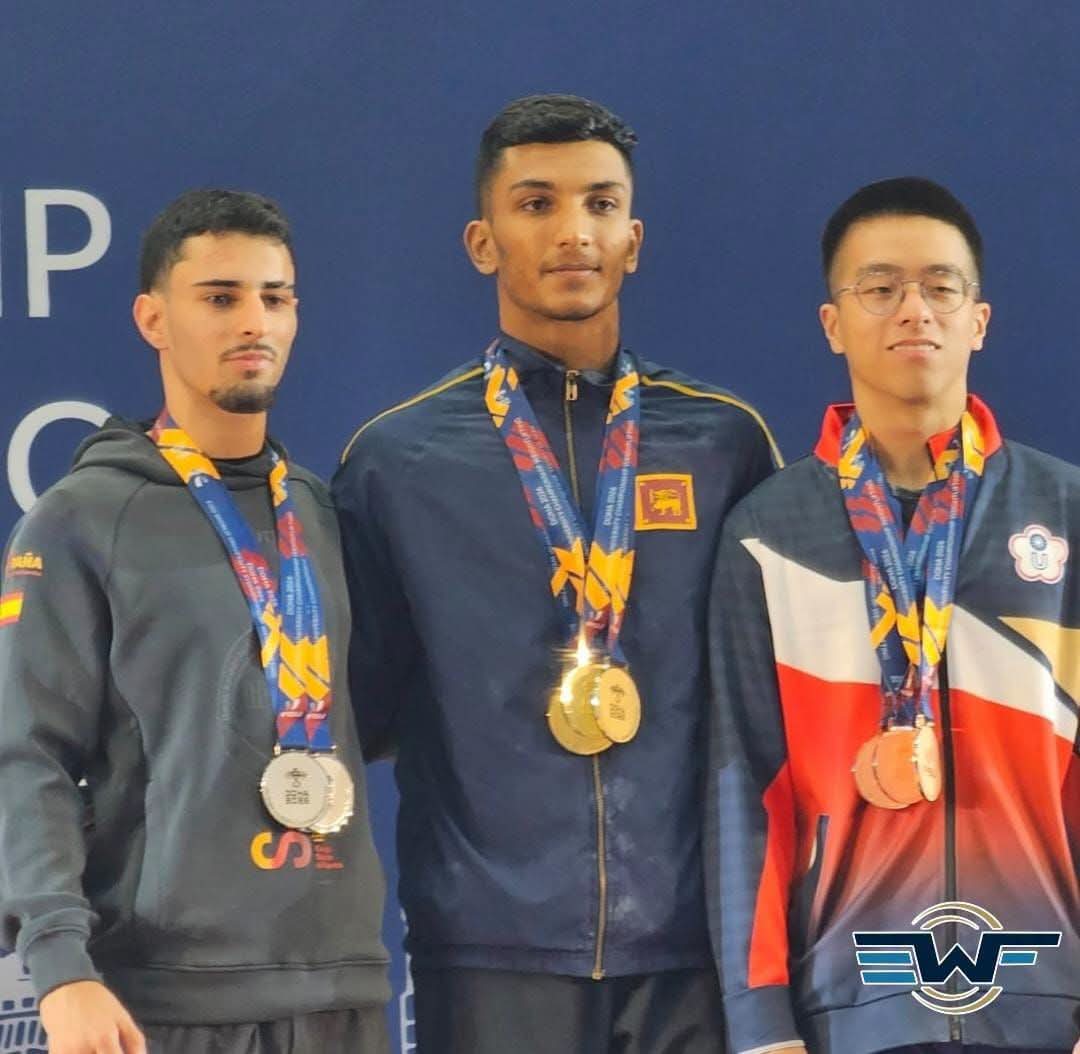
University of Sri Jayewardenepura weightlifter Avindu Liyanagedara made history yesterday by becoming the first Sri Lankan university student to win a gold medal at a World University sports event, as Sri Lanka made a spectacular start to the 2026 World University Weightlifting Championship in Doha, Qatar.
Liyanagedara won the men’s 60kg title, while Sabaragamuwa University’s Nipun Dissanayake added a bronze medal in the 65kg category on the opening day of the championship.
Liyanagedara lifted 105kg in the snatch and 132kg in the clean and jerk for an impressive combined total of 237kg.
Spain’s Gomez Martinez took the silver with 228kg, while Chun-Yen Tang of Chinese Taipei won bronze with 227kg.
Dissanayake also secured a podium finish in the 65kg class with a total of 220kg, comprising a 100kg snatch and a 120kg clean and jerk.
Iran’s Mohhadov Tehran won the gold with 289kg, with Moldova’s Ion Badanev taking silver with 288kg.
Liyanagedara’s achievement represents a landmark breakthrough for Sri Lankan university sport. His gold is the first gold medal won by a Sri Lankan university student at a World University sports event, while Dissanayake’s bronze further strengthened the country’s historic opening-day showing.
The Sri Lanka University Sports Association has entered five male and two female athletes for the championship, with University of Colombo’s Sujan Walgampaya serving as team manager and coach.
The championship continues in Doha until September 12, with Sri Lanka already assured of a memorable place in the history of World University sport through Liyanagedara’s historic gold medal.

Italian Naval Vessel ‘ITS Giuseppe Garibaldi’ arrives in Colombo

England Women appoint Leah Poulton as managing director

Bangladesh bank on bowlers in bid to bring India down

Avindu makes history with first World University gold for Sri Lanka

Establishment of National Trade Negotiation Committee (NTFC) and Trade Policy Consultation Committee.

Showers will occur in the Western and Sabaragamuwa provinces and in Galle and Matara districts

‘Dates have the highest sugar content to fight Coronavirus’

Sunday Island 27 December – Headlines

#SundayIsland 17th December – Headlines

Sunday Island – 28th March

Sunday Island Headlines – 21 March

Sunday Island – 21st February – Headlines
-

 News7 days ago
Denied of promotion to SC despite vacancies, justice Gurusinghe retires
-

 News7 days ago
22A: SC urged to suspend hearing, appoint full bench
-

 News5 days ago
Namal remanded until Sept. 18 over Airbus deal investigation
-

 Latest News4 days ago
Tharanga creates history with Diamond League crown in Brussels
-
 News7 days ago
Govt. seeks NATO assistance
-

 News4 days ago
Dispute which triggered listed company director being detained at BIA resolved
-

 Editorial7 days ago
Strange arithmetic goes unchallenged
-

 Features3 days ago
After the parade: What a traffic OIC’s walk-out tells us