
Editorial
When lessons of history go unlearnt


Monday 6th October, 2025
Former President Mahinda Rajapaksa has returned his official bulletproof vehicle in compliance with a government directive, according to the Opposition. There has been no response from the government to the Opposition’s claim. When it came under fire for reducing security provided to the former Presidents, on a previous occasion, the NPP claimed that the levels of security for all political leaders were determined on the basis of threat assessments. Successive governments have used this excuse for reducing security provided to their political opponents.
Those who failed to prevent the Easter Sunday terrorist bombings in 2019 despite the availability of actionable intelligence and repeated warnings are still in the key positions of the defence establishment––thanks to their political connections. So, how can the defence authorities be expected to assess security threats properly?
The NPP leaders made a solemn pledge to the public that they would downsize the VIP security divisions immediately after forming a government. They said the government leaders must not be given anything that was not available to the ordinary people, and they would travel in buses and trains. But none of the NPP MPs use public transport. Security for the President and the Prime Minister has been increased—and rightly so. They must be provided with maximum possible security. The former Presidents, who provided political leadership for the country’s war on terror, must be protected likewise. If not for the defeat of the LTTE, the NPP leaders would not have been able to visit the North and the East, much less conduct election campaigns in those parts of the country. If the former Presidents have committed any wrongful acts, they should be dealt with according to the law, but their security must not be reduced for political reasons.
All previous governments sought to curtail their political opponents’ movements by reducing their security. This is the name of the game in Sri Lankan politics. The boot is now on the other foot, and those who stooped so low as to curtail their political rivals’ security are now letting out howls of protests. Two wrongs however do not make a right.
The NPP seems to think that the SLPP leaders are trying to make a comeback the way they did during the Yahapalana government, and therefore their efforts must be frustrated at any cost. The SLPP insists that the curtailment of former President Mahinda Rajapaksa’s security is part of the government’s strategy to intimidate and restrain the Opposition. In the 06 May local government polls, the SLPP fared slightly better than it had done in last year’s presidential and parliamentary elections. But it has a long way to go before being in a position to pose a formidable political challenge to the incumbent government unless the latter ruins things for itself big time. If the NPP exercises control over its politicians, practises what it preached during its election campaigns and fulfils its key promises, the Opposition will have its work cut out to turn the tables on it. Hence the need for it to remain intensely focused on the economic front, where anything can go wrong unexpectedly. Most of all, in a couple of years, foreign debt repayment will commence in earnest, and the country must be prepared for possible economic shocks. Unless the NPP gets its act together, and lives up to the people’s expectations, its leaders might have to outrun protesters as the SLPP leaders did in 2022.
The practice of governments meddling with security provided to their political opponents is counterproductive. President Ranasinghe Premadasa’s predicament is a case in point. The Premadasa government pooh-poohed threats to former National Security Minister and UNP dissident Lalith Athulathmudali. His assassination in April 1993 was blamed on that repressive regime; it sparked protests that led to the 1994 regime change.
It takes just one wrong step for mighty governments to collapse. We have seen that happen. Those who do not learn from history are said to be doomed to repeat it.


Monday 8th December, 2025
The number of deaths due to the recent weather disasters reached 627 yesterday. The Opposition has blamed the government’s poor disaster response for the high death toll. Opposition and SJB Leader Sajith Premadasa has fired another salvo at the government, accusing it of trying to scapegoat the Meteorological Department officials for its failure to take swift action to save lives despite repeated warnings of the impending disaster. He has said the Meteorological Department personnel began issuing warnings of adverse weather as early as 11 Nov., and they forecast strong winds and a heavy rainfall exceeding 100 mm. He has demanded to know why the disaster-management operations did not get underway swiftly.
All Opposition parties are flaying the government for failing to take prompt action to mitigate the impact of the weather disasters. These are no doubt very serious matters and they must be discussed and thoroughly probed to find out whether there were any lapses on the part of the government and/or state officials. But this is not the time for that. The disaster victims are crying out for relief. There have been fresh warnings of heavy rains and possible landslides and floods. Therefore, all politicians and their parties ought to stop fighting political battles and put their shoulders to the wheel to help the disaster victims and prepare the country to face a possible adverse weather event again.
Meanwhile, the government has announced a compensation package. The highest amounts of compensation will be paid for land purchase, repairs to houses and business places, damaged by the disaster, and for constructing new houses for the victims. Compensation will be paid up to a maximum of Rs. 5,000,000 per unit for business places affected by the disaster, based on damage assessment, according to a circular issued by the Finance Ministry. Those who have lost their lands will receive compensation up to a maximum of Rs. 5,000,000 each to purchase land if state land cannot be provided for the construction of new houses. Rs. 5,000,000 will be given for the construction of new houses per unit for the victims. Compensation will be paid for the damaged houses up to a maximum of Rs. 2,500,000 each, based on damage assessment. The Opposition has said these amounts are not sufficient. (The JVP and the NPP would say the same if they were out of power.) The question is not just whether the compensation is adequate; it is whether the government has, or can raise, enough funds to fulfil its pledge amidst an economic crisis.
Sri Lankan governments are adept at making promises, most of which go unfulfilled. Smooth oratory may help politicians win elections, but effective delivery depends on skills, knowledge and experience. Cyclone Ditwah struck while paddy farmers were protesting against an inordinate delay in the disbursement of the fertiliser subsidy. So, the question is whether the government is equal to the task of financing the huge compensation package for the disaster victims unless it receives enough financial assistance from other countries and international organisations.
Experts have warned that the impact of the recent disasters are bound to take a heavy toll on the economy. This will be a double whammy, with the economy slowing down, and government expenditure increasing due to disaster relief and rebuilding.
President Anura Kumara Dissanayake, who chaired a Kandy District Coordinating Committee meeting on Saturday, directed state officials to identify state land in the disaster-stricken areas for distribution among the Ditwah victims. The President made it clear that the displaced victims would not be resettled in landslide-prone areas. Therefore, the question of allocating a great deal of funds for purchasing land for landslide victims may not arise. Most flood victims may not have to buy land; they have to clean, repair or rebuild their houses. For the construction of new houses, Rs. 5,000,000 each will be released in installments; the victims will have funds in stages as the construction of their houses progresses. There will be no lump-sum payments.
Meanwhile, the Opposition has urged the government to ensure that relief distribution will be free from political interference and carried out in a transparent manner. Premadasa has alleged that the state officials in Kolonnawa were directed to seek approval from some persons representing the ruling party for relief distribution. This is a very serious allegation that must not go uninvestigated. Some government politicians have been accused of taking over the distribution of relief materials donated by others, to gain political mileage. This allegation must also be probed.
As for the implementation of the compensation package at issue, the proof of the pudding is said to be in the eating.

An AI-generated video of two rats engaged in a fierce fight, with a clowder of amused cats watching them, is doing the rounds in the digital space. It does not carry any caption interpreting the absurd scene, but, we believe, it can be used to describe the post-disaster situation in Sri Lanka. The government and the Opposition are at each other’s throat, oblivious to the danger they as well as the people are in. Cyclone Ditwah may be gone, but the possibility of another spate of extreme weather events cannot be ruled out. Heavy rains are lashing some parts of the country. Mountains are soaked and unstable; reservoirs are brimful, and rivers are swollen, with tens of thousands of displaced disaster victims languishing in temporary shelters. Another run of torrential rains is the last thing the country needs.
The NPP government failed to summon the Disaster Management Council and implement the National Disaster Management plan, the Opposition has alleged, insisting that there had been warnings of possible weather disasters two weeks prior to the landfall of Cyclone Ditwah, and the government had ample time to take action to mitigate the impact of weather disasters. Sri Lanka is no stranger to floods and landslides, and action should have been taken to warn the public and evacuate those living in disaster-prone areas to save lives. The Opposition says the government is now all out to cover up its lapses by silencing its critics with the help of Emergency regulations on the pretext of dealing with errant social media influencers responsible for personal attacks on President Anura Kumara Dissanayake and his ministers.
The UNP has lashed out at the JVP/NPP leaders for their failure to mitigate the impact of recent disasters. It has issued a hard-hitting statement, which could be considered a warning to the NPP that the current government leaders will have to face legal action when they lose power. Curiously, the UNP has ended its statement with a quote highlighting a section of the Supreme Court (SC) ruling in the fundamental right petitions, filed against former President Maithripala Sirisena and others for their failure to prevent the Easter Sunday terror attacks (2019). The SC held them responsible for negligence as they did not take action to prevent the carnage despite intelligence warnings. The last paragraph of the UNP statement reads: “We hold that when either executive action or inaction infringes the fundamental right to life resulting in harm or loss to a person or citizen, it is actionable as a constitutional tort ….” – Supreme Court in the Easter Attack cases. Effective as the UNP’s propaganda attack may be, it borders on an own goal in that the UNP was in power at the time of the Easter Sunday terrorist attacks, and Sirisena’s SLFP/UFPA had broken ranks with it. The JVP was supporting the Yahapalana rump led by Prime Minister and UNP leader Ranil Wickremesinghe. Most of all, the Presidential Commission of Inquiry which probed the Easter Sunday carnage held the entire Yahapalana government accountable for the terror attacks. The commission report says: “The dysfunctional government was a major contributory factor for the events that took place on 21st April 2019. The Government including President Sirisena and Prime Minister [Ranil Wickremesinghe] is accountable for the tragedy.” Wickremesinghe, current Opposition Leader Sajith Premadasa and several SJB heavyweights were in the Cabinet of the Yahapalana government, which the JVP and the TNA propped up.
The UNP’s propaganda assault on the JVP has reminded the public of the UNP-led Yahapalana government’s pathetic failure to prevent the Easter Sunday terror strikes despite repeated warnings of the impending attacks. So, the question is whether the UNP, its leaders and the SJB bigwigs who were in the failed Yahapalana government have any moral right to be critical of others for their failure to act on warnings of disasters. The JVP/NPP used to flay the previous governments during and after disasters, claiming that they had failed to mitigate the impact of catastrophic floods and landslides. Now, it is receiving heavy flak from its political opponents, especially former leaders.
The least the government and the Opposition can do at this juncture is to work out a rapprochement and concentrate on helping disaster victims, raise funds for reconstruction, and prepare the country to face future extreme weather events.
Saturday 6th December, 2025
The NPP government’s Budget 2026 was passed yesterday with a 157-vote majority. Its passage was a foregone conclusion, given the NPP’s supermajority in Parliament, but whether it can be implemented as previously planned is in doubt.
When Budget 2026 was presented on 07 November, it outlined revenue plans and expenditure allocations for 2026, based on the situation prevalent at the time, but Cyclone Ditwah has upended revenue and expenditure projections to the extent of making one doubt the viability of the budget. The Opposition called for Budget 2026 withdrawal and the presentation of a fresh one with the post-disaster economic realities factored in.
Commissioner General of Essential Services Prabath Chandrakeerthi has gone on record as saying the economic cost of the recent disasters could amount to about 6-7 billion US dollars or 3-5% of GDP. Thus, the workability of the budget hinges on the government’s ability to raise this huge amount of funds for reconstruction.
Restoring critical infrastructure is a prerequisite for maintaining economic growth momentum. The government is said to have curtailed capital expenditure to keep state expenditure low, but it will now have to change its strategy, and spend more on infrastructure. This is likely to shift the budget’s centre of gravity, so to speak.
Nothing is said to be more certain than the unexpected. The government was on cloud nine about a fortnight ago, boasting that the state coffers were overflowing under its watch. What it left unsaid was that taxes on vehicle imports had boosted state revenue exponentially. There was a sharp increase in vehicle imports, which had been suspended for several years in view of the country’s foreign currency woes; the current revenue bubble may burst when vehicle imports drop. When the government made the above-mentioned boastful claims, it may not have thought it would have to seek disaster assistance two weeks later. The uphill task the NPP has to accomplish is making its budget work vis-à-vis the post-disaster challenges.
The Opposition is right in having urged the government to take cognisance of the plight of disaster victims and make sufficient budgetary allocations for relief. However, one should not lose sight of the broader context. Disaster relief and reconstruction are essential, but the focus of a national budget has to be on growth. A contraction of the economy will adversely impact the disaster victims more than others. Hence the need for the Opposition to assess the current situation realistically and act rationally, taking the economic reality into account, without playing politics with the economy.
True, the government should have heeded the Opposition’s concerns about the post-disaster situation. However, Budget 2026 is now a fait accompli, and the task before Parliament is to make it work and find ways and means of raising funds for reconstruction and resettlement while maintaining growth momentum and enabling the state to resume debt repayment, according to schedule.
The Opposition has reportedly offered to support the government’s post-disaster expenditure plan. While this is a positive development, the sustainability of any expenditure plan depends on revenue generation, the be-all and end-all of a budget. Hence the need for cooperation among all parties to strengthen the economy and make it resilient to absorb shocks.

Powerful earthquake strikes off Japan, triggers tsunami warning

Government assures University community of support to rebuild Peradeniya stronger and safer

Thousands flee Thai-Cambodia border after deadly clashes

Henry, Santner, Nathan Smith ruled out of rest of West Indies Test series

Level III landslide early warnings issued to the Districts of Kandy, Kegalle, Kurunegala and Matale extended till 1600 hrs on Tuesday [09]

President chairs Nuwara Eliya District Special Coordinating Committee Meeting

‘Dates have the highest sugar content to fight Coronavirus’

Sunday Island 27 December – Headlines

#SundayIsland 17th December – Headlines

Sunday Island – 28th March

Sunday Island Headlines – 21 March

Sunday Island – 21st February – Headlines
-
News6 days ago
Lunuwila tragedy not caused by those videoing Bell 212: SLAF
-

 News15 hours ago
Over 35,000 drug offenders nabbed in 36 days
-
 News5 days ago
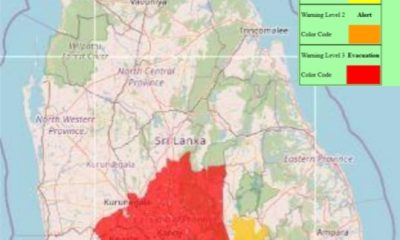
Level III landslide early warning continue to be in force in the districts of Kandy, Kegalle, Kurunegala and Matale
-
 Latest News7 days ago
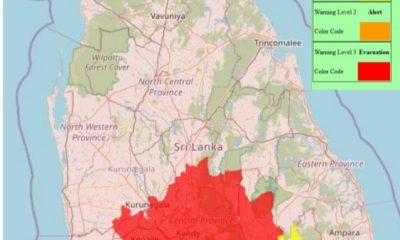
Level III landslide early warnings issued to the districts of Badulla, Kandy, Kegalle, Kurunegala, Matale and Nuwara-Eliya
-
 Features7 days ago
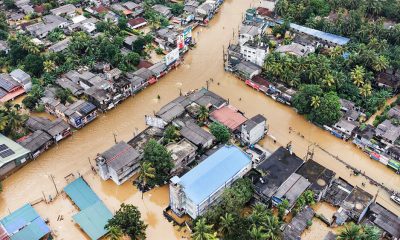
Ditwah: An unusual cyclone
-

 Business3 days ago
LOLC Finance Factoring powers business growth
-

 News3 days ago
CPC delegation meets JVP for talks on disaster response
-
 News3 days ago
A 6th Year Accolade: The Eternal Opulence of My Fair Lady