
News
Japan-Sri Lanka defence ties expand in line with Tokyo’s Free and Open Indo-Pacific strategy


Japan has decided to provide advanced Japanese UAVs (Unmanned Aerial Vehicles) for enhancing Sri Lanka’s maritime surveillance and disaster relief capabilities. This was announced in a joint communique issued by Japan and Sri Lanka following Japanese PM Ishiba Shigeru’s meeting with President Anua Kumara Dissanyake during the latter’s visit to Tokyo (27-30 September).
The Yahapalana government signed a Comprehensive Partnership agreement with Japan in 2015.
According to the joint statement issued yesterday, Japan and Sri Lanka confirmed the importance of deepening defence and security cooperation between the two countries and enhancing the security and deterrence capabilities of Sri Lanka to ensure the peace and stability of the Indian Ocean Region. From this perspective, both sides welcomed the provision of advanced Japanese UAVs (Unmanned Aerial Vehicles) for enhancing maritime surveillance and disaster relief capabilities, through the first Official Security Assistance (OSA) project, vis-à-vis Sri Lanka, decided during the visit.
Both sides also welcomed the steady progress in defence cooperation between the two countries, through port calls by Japan Maritime Self-Defence Force (JMSDF) vessels and joint exercises between the JMSDF and the Sri Lankan Navy. Both sides confirmed that the visit of the Minister of Defence of Japan NAKATANI Gen to Sri Lanka in May this year, where a decision was taken on the convening of the second Japan-Sri Lanka Defence Dialogue, underscored the commitment to further promoting cooperation in this area between the two countries.
Recalling the long-standing friendly relations between Japan and Sri Lanka, both sides reaffirmed their intention to further deepen and expand cooperation, including inter alia in the areas of security, economy, investment, and development cooperation, under the framework of the deepened and expanded Comprehensive Partnership established between the two countries.
Both sides had an exchange of views on regional and international issues of mutual interest. Reiterating the importance of greater engagement by Japan in the region through Japan’s vision of a Free and Open Indo-Pacific, both sides reaffirmed the need for continued cooperation on issues of mutual interest, including on the rules based international order. Both sides also reiterated support for multilateralism and democracy.
As maritime nations, both sides reaffirmed the importance of maintaining peace, stability, security, and freedom of navigation and overflight, and underscored the significance of respect and adherence to international law, as reflected in the 1982 United Nations Convention on the Law of the Sea (UNCLOS) for maintaining a stable and peaceful international maritime order.





Harsha rejects what he called frivolous accusations
Chairman of Committee on Public Finance (CoPF) Dr. Harsha de Silva dismissed Free Lawyers’ claim that his Committee had helped delay a proper investigation into the theft of USD 2.5 mn (nearly Rs 1 bn) from the Treasury.
The Colombo District SJB MP said that he wouldn’t comment on frivolous accusations against his Committee. “We conduct ourselves in keeping with the highest standards of professionalism and responsibility.”
Dr. de Silva said so when The Island raised the Free Lawyers’ allegation that the Treasury and the Central Bank were using the CoPF as a tool to prolong investigations into the unprecedented theft of funds. Free Lawyers targeted the CoPF in a statement issued by Maithri Gunaratne, PC, and civil society activist Rajith Keerthi Tennakoon.
The other members of the CoPF are Harshana Rajakaruna (SJB), Ravi Karunanayake (NDF), Nimal Palihena (NPP), Wijesiri Basnayake (NPP), Thilina Samarakoon (NPP), Lakmali Hemachandra (NPP), Chathuranga Abeysinghe (NPP), Kaushalya Ariyaratne (NPP), Akram Ilyas (NPP), Shanakiyan Rajaputhiran Rasamanikkyam (ITAK), Champika Hettiarachchi (NPP), Sunil Rajapaksha (NPP),
M. K. M. Aslam (NPP), Ajith Agalakada (NPP), Rauff Hakeem (SLMC), Chitral Fernando (SJB) and Nishantha Jayaweera (NPP).
Tennakoon said the theft of funds happened over eight months ago and the Parliament owed the country a clear explanation regarding the disappearance of USD 2.5 mn. The CoPF, instead of expediting the process, has conveniently granted time for those responsible for the loss to cover up their tracks. “Free Lawyers pursue the issue at hand vigorously as we were the first to reveal the loss of USD 2.5 mn. Those who knew it remained silent until our disclosure,” he said, alleging that Speaker Dr. Jagath Wickremaratne was yet to respond to their letter regarding the USD 2.5 theft.
Responding to queries, Tennakoon said that political parties represented in the CoPF should be held responsible for the developing situation. “The Committee on Public Accounts Committee (CoPA) headed by SJB MP Kabir Hashim too, should explain its failure to deal with the USD 2.5 mn theft. Both CoPF and CoPA led by two SJB MPs should act now. Dr. de Silva and Hashim are answerable to the public, particularly because they represent the main Opposition.”
The CoPA consists of Kabir Hashim, Maj. Gen. Aruna Jayasekera (NPP), Sugath Thilakaratne (NPP), Anton Jayakody (NPP), Chandana Sooriyaarachchi (NPP), Ruwanthilaka Jayakody (NPP), Nalin Hewage (NPP), Oshani Umanga (NPP), Manjula Suraweera (NPP), Sagarika Athauda (NPP), Janaka Senarathna (NPP), K.Illankumaran (NPP), Dinidu Saman Henanayake (NPP), Susantha Kumara Navaratna (NPP), Lal Premanath (NPP), Aravinda Senarath (NPP), Thushari Jayasinghe (NPP), T. K. Jayasundera, Ajantha Gammeddage (NPP), Sundaralingam Pradeep (NPP), Kavinda Jayawardena (SJB), J.C. Alawathuwala (SJB),Hector Appuhamy (SJB), Kaveenthiran Kodeeswaran (ITAK), Chamara Sampath Dassanayake (NDF), Rohitha Abeygunawardena (NDF), M.L.A.M. Hisbullah (SLMC), M.A.M. Thahir (ACMC), Chanaka Madugoda (SLPP) and Sunil Ratnasiri (NPP).
Tennakoon said that both CoPF and CoPA were dominated by the NPP though the SJBers headed them. However, as heads of the two parliamentary committees, Dr. de Silva and Hashim, should be held responsible for lapses on the part of the committees or any deliberate omissions, Tennakoon said, questioning the rationale behind giving the Treasury and the CBSL six weeks to submit their findings to the CoPF.
Free Lawyers alleged that USD 2.5 had been released in spite of JP Morgan Chase and the Federal Reserve in the United States warning Sri Lanka about the suspicious nature of those foreign transactions via SWIFT messages. Tennakoon emphasized investigators should closely inquire into the decision taken to release funds regardless of such high-profile warnings.
Tennakoon said that the integrity of two key parliamentary committees is at stake. The civil society activist said that the country was in a highly critical phase of debt restructuring following a severe economic crisis. Tennakoon pointed out in terms of a condition of the International Monetary Fund (IMF) loan programme, the government’s debt management functions, previously carried out by the CBSL, were recently transferred to a new institution established under the General Treasury—the Public Debt Management Office (PDMO).
by Shamindra Ferdinando
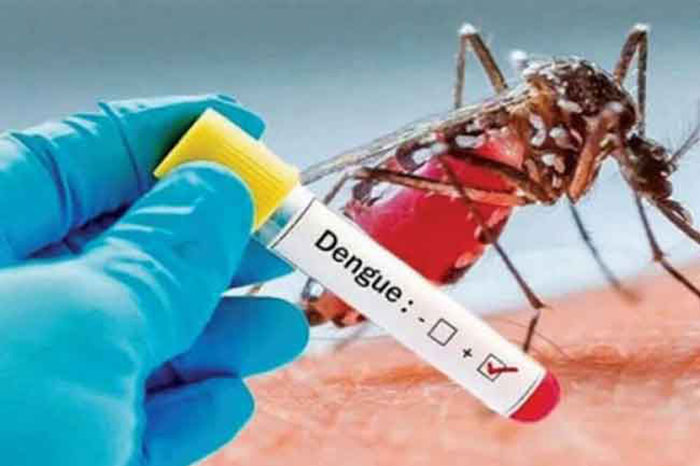
The number of patients hospitalised due to viral illnesses, including dengue fever, had increased significantly, health officials said yesterday, adding that there had been a rise in daily dengue-related admissions.
Acting Director of the National Dengue Control Unit Dr. Kapila Kannangara said Sri Lanka had recorded 41,144 dengue cases as of Saturday (13).
He said more than half of the reported cases—around 51 percent—were from the Western Province.
According to Dr. Kannangara, the number of dengue patients admitted to hospital daily had reached 750, but it had declined to around 630. However, he cautioned that infection levels remained “very high,” despite the slight drop in hospital admissions.
The dengue death toll has risen to 24, prompting several hospitals to issue red alerts amid continued pressure on wards treating incoming patients.
Health officials warned that the situation could worsen if case numbers continued to rise. Dr. Kannangara noted that the growing burden on healthcare facilities could eventually exceed system capacity.
The public has been urged to take preventive measures to eliminate mosquito breeding sites and to seek prompt medical attention if dengue symptoms develop.
by Chaminda Silva

Former President and UNP leader Ranil Wickremesinghe has warned that Sri Lanka is heading towards a severe economic crisis, alleging that the current administration is steering the country towards “total collapse.”
Addressing a meeting of the UNP Working Committee at the party headquarters on Flower Road on Thursday, Wickremesinghe claimed that the government was facing mounting difficulties on multiple fronts, with the economy continuing to deteriorate.
He also accused the administration of pursuing policies that, he said, marginalised war heroes and Buddhist monks.
Wickremesinghe expressed concern over what he described as an erosion of fundamental and legal rights, citing the arrest and alleged ill-treatment of former State Intelligence Service Chief Suresh Sallay as an example. He said the rising cost of living had emerged as one of the main concerns of the public.
Commenting on the political situation, the former President said the Opposition had not been able to forge unity among the anti-government forces and called for greater coordination among Opposition parties and groups. He advocated a phased mobilisation strategy, beginning at village and electorate level, instead of attempting to address all issues simultaneously.
Wickremesinghe also announced a series of political campaigns and rallies aimed at strengthening the Opposition movement. The programme is scheduled to commence in Kandy this weekend, with subsequent events planned in Kurunegala and Kalutara.
He said the UNP was engaged in discussions with several political parties and organisations, including those led by Minister Jeevan Thondaman, with a view to forming a broader political alliance.Wickremesinghe urged party members to expedite discussions and arrive at a collective decision on the way forward to address the country’s challenges.

Mandhana, Deepti, Ghosh star as India breeze past Pakistan

Showers will occur in the Western, Sabaragamuwa and North-western provinces and in Galle, Matara, Kandy and Nuwara-Eliya districts

Theft of USD 2.5 mn from Treasury: CoPF accused of complicity in NPP cover-up

Viral diseases on the rise

Ranil warns of another economic crisis, calls for Opposition unity

Govt. eyes multi-billion dollar green hydrogen future

‘Dates have the highest sugar content to fight Coronavirus’

Sunday Island 27 December – Headlines

#SundayIsland 17th December – Headlines

Sunday Island – 28th March

Sunday Island Headlines – 21 March

Sunday Island – 21st February – Headlines
-
 News3 days ago
CIABOC summons Yoshitha over his participation in British Navy training programme
-
 News5 days ago
Local firms move millions of dollars overseas for phantom imports: Govt.
-
 Midweek Review5 days ago
July 09: An inexcusable overall security failure and exceptional contingency plan
-

 Opinion6 days ago
Could Sri Lanka once again face an economic crisis similar to 2022?
-

 News5 days ago
AI raises concerns over arrest of Sallay and rapper under PTA
-
 News6 days ago
Sallay refuses to end hunger strike unless probe is taken out of CID led by Shani
-

 News2 days ago
Commonwealth lawyers urge Lanka to uphold rule of law
-
 Latest News6 days ago
Iran and Israel say they will pause strikes but warn of retaliation if ceasefire breached again