
Business
The need for investor education about risk-taking and Unit Trusts


Interview with Jeevan Sukumaran, Secretary, Unit Trust Association, Sri Lanka
What does “risk” really mean in investing, and why should the public not be afraid of it?
At the mention of the word risk in terms of investing, especially in a Sri Lankan context, there can be a significant level of fear or stigma attached to it. To some degree, this is fair given the country’s history of civil war, investment company scams (such as Golden Key/Ceylinco and Sakvithi and in more recent times, the Easter Attacks, Covid and the Economic crisis. This has led to a large majority of potential investors being afraid to venture very far beyond commercial banking products and, therefore, losing out on the earnings potential of other asset classes.
In investing, risk means the possibility that the value of your investment might go up or down and not a guarantee of loss, but more a chance of fluctuation. For example, share prices rise and fall all the time. While those movements may look worrying in the short term, history shows that markets generally grow in the long run. As such, investors shouldn’t necessarily fear risk, but should instead understand the different types of risk (both in general and based on the asset class) as well as risk’s relationship to return.
What are the main types of risks (market, credit, liquidity) that investors should understand?
Several different types of risks affect investors in terms of capital markets (and unit trusts); however these can be classified into direct and indirect risks. The three most direct risk types that can affect investors are;
Market Risk – The broadest form of risk, which can be further subclassified into systematic and unsystematic risks. Systematic risks are high (macro) level risks that tend to affect the entire economy as a whole and are harder to diversify if all investments are within the country. Examples in Sri Lanka would be the Economic Crisis of 2022 with high inflation, currency depreciation, and political instability. Entire markets were affected, with even well-run and profitable companies seeing downturns. Unsystematic risks are connected to specific sectors/industries/companies that are affected by an industry/sector/company-specific issue and can be reduced through diversification. Examples of this could be the export sector being negatively impacted by tariffs.
Credit Risks – Credit risk is the risk that arises due to a counterparty being unable to meet their obligations on time or at a lower than agreed yield or not being able to settle at all (default risk). To a large extent, reports from rating agencies such as Fitch and Lanka Ratings will enable potential investors to gauge the level of credit risk they could potentially face by investing in a specific company/instrument. This, coupled with investing in companies with strong corporate governance, clear transparency and strong regulatory oversight, will enable investors to reduce their exposure to credit risk.
Liquidity Risk – deal with how easily investments can be turned into cash. Market liquidity risk appears when assets cannot be sold quickly at a fair price, which often happens in stressed or thinly traded markets. Funding liquidity risk is slightly different: it is the danger that an investor or institution cannot meet short-term payment or redemption obligations, even if they hold valuable assets. Both forms of liquidity risk can amplify market shocks, making them especially important to watch during times of financial stress.
Secondary or indirect risks may not be visible daily, but can amplify core risks. Operational risks include failures in systems, processes, or people, as well as fraud, compliance breaches, or cyberattacks. Event and external risks stem from political changes, regulatory shifts, wars, sanctions, natural disasters, or climate events. Behavioural risks arise from investor psychology, such as overreaction, herd behaviour, speculative bubbles, or reliance on flawed models. Instrument-specific risks relate to specific products, including reinvestment or prepayment risk for bonds, concentration risk from overexposure to one asset or sector, leverage and derivatives risk that magnifies gains and losses, and custody risk where assets held by a custodian could be lost.
How do Unit Trusts help reduce or balance these risks through diversification, and what safeguards are in place to help protect investors?
There are three main ways in which Unit Trust Investments help reduce/balance risk.
Diversification – Unit trusts enable investors to diversify their investments across various assets, reducing the risk associated with putting all their eggs in one basket. This can be particularly beneficial for smaller investors who may not have the capital to build a diversified portfolio on their own. By spreading investments across different sectors, companies, and asset classes, unit trusts can help mitigate the impact of poor performance in any single investment.
Regulatory Protection – Capital market regulators set rules on how Unit Trusts must operate. These include requirements for transparency, reporting, and fair treatment of investors. Unit Trusts are heavily regulated by the Securities & Exchange Commission of Sri Lanka with strict rules and regulations (CIS Code) governing investments and fund operations. In addition, all assets of the fund are held by and invested through an independently appointed Trustee whose responsibility is to safeguard the unitholders’ funds and prevent misappropriation.
Professional Fund Management – Managed by experienced (and SEC-approved) fund management professionals and backed by dedicated research/financial analysts. Advantageous to investors who may not have the time, resources or expertise to monitor global, macro and micro conditions regularly.
How can investors identify their personal risk appetite before choosing a fund?
Investors first need to understand the different risks applicable to different asset classes clearly. As such, knowledge of the various asset classes and the risks that can affect those assets is the most crucial step for an investor. After this point, the investor should identify their own risk appetite and how much of a risk taker they are (from conservative to aggressive). This should also be coupled with their investment horizon and both short- and long-term liquidity requirements.
What types of Unit Trusts are best suited for conservative, balanced, or aggressive investors?
Conservative investors – Money market funds or government security-based funds. These fund types are generally low risk and offer high liquidity whilst offering steady, regular returns.
Balanced – Longer-term Income/Bond/Corporate Funds as well as Balanced funds (Equity and Fixed Income). These funds offer better returns whilst attempting to reduce significant volatility and capital erosion.
Aggressive investors: Growth/ Equity funds/Sector Funds, which invest mainly in listed equities. Given the nature of the stock market, higher volatility is to be expected; however, significantly higher returns can also be obtained.
6. Why is investor education about risk essential for building long-term confidence in Unit Trusts?
Investor education about risk is essential because it transforms fear into informed decision-making. Many people avoid investing simply because they don’t understand how risk works, or they overreact to short-term market fluctuations. By learning about different types of risk, investors can gain a realistic view of what to expect and/or how to respond.
Education also helps investors understand how Unit Trusts mitigate risk through diversification, professional management, and regulatory safeguards. Knowing that their money is being managed according to clear rules and spread across multiple assets gives investors confidence that short-term volatility is normal and manageable.
Finally, educated investors are more likely to stick to their long-term investment plan instead of making impulsive decisions during market swings. This discipline is key to benefiting from the compounding effect of investments over time and achieving financial goals. In short, risk education builds trust, reduces anxiety, and empowers investors to make smarter, more confident investment choices in Unit Trusts.


Sri Lanka’s Renewable Energy Project Development Plan, branded GREAT 2025–2030 (Green Energy Acceleration Targets), reads like a confident pivot toward a cleaner, cheaper power system. With more than 2,600 MW of new renewable capacity planned—dominated by solar and wind—and a strong push on storage and grid stabilisation, the strategy signals intent. Yet beneath the headline numbers lies a harder business truth: generation is racing ahead of the grid, and unless infrastructure and control catch up fast, value will leak from an otherwise compelling transition.
At the core of GREAT is scale. Solar leads with 1,571 MW across multiple zones, while wind contributes 1,004 MW, primarily from Mannar, Kilinochchi and the North-Western belt.
Smaller but steady additions are planned in mini-hydro (51 MW) and biomass (38 MW). On paper, the mix lowers marginal costs, cuts imports, and insulates the economy from fuel price shocks—outcomes financiers and policymakers both welcome.
But a senior retired electrical engineer, who spent decades inside Sri Lanka’s power system, cautions that capacity alone doesn’t create reliability—or returns.
“We are adding megawatts faster than we are adding visibility and control,” he said. “Rooftop solar has already exceeded 1,350 MW, much of it invisible to operators. From a grid perspective, that is unmanaged generation, and unmanaged generation is risk.”
The business implications are immediate. Transmission bottlenecks, particularly delays in 220 kV and 400 kV lines, are constraining renewable evacuation. Projects commissioned on time can still face curtailment, eroding project IRRs and shaking investor confidence.
At the same time, electricity demand has softened amid economic pressures, compressing the system’s ability to absorb intermittent power—especially on Sundays and holidays, when demand dips but solar output peaks.
“Low demand days are now the stress test,” the engineer noted. “Without storage and grid-forming assets, you’re forced to back down renewables or keep thermal units running for stability. Both options cost money.”
GREAT attempts to address this with 650 MW / 2,250 MWh of Battery Energy Storage Systems (BESS) and 600 MW of pumped storage at Maha Oya by 2034, alongside synchronous condensers to maintain inertia. These are not optional add-ons; they are value enablers. Storage smooths volatility, captures excess midday solar, and shifts energy to peak hours—turning stranded electrons into bankable revenue.
Yet timing matters. Storage, controls, and transmission must arrive before or with new generation. Otherwise, developers face curtailment risk, lenders price in uncertainty, and tariffs fail to fall as promised.
The plan’s institutional fixes are equally commercial. A Renewable Energy Control Desk (from 2026), Distribution Control Centers in high rooftop solar areas, smart meter mandates, and grid digitalisation are designed to restore operational visibility. Time-of-use tariffs, paired with daytime EV charging and industrial load-shifting, aim to reshape demand—turning a system problem into a market opportunity.
“Tariffs are signals,” the engineer said. “If you want power used at noon, price it right. If EVs and factories move load to the day, solar becomes an asset, not a headache.”
For investors, the message is nuanced but clear. Sri Lanka’s renewable pipeline is real and sizeable.
The policy direction favours clean energy, and the cost curve is attractive. However, project bankability will increasingly hinge on grid-readiness—access to storage, firm evacuation paths, and participation in smart, controllable networks.
For policymakers, GREAT’s success will be measured not by megawatts announced, but by megawatt-hours delivered reliably and profitably. Accelerating transmission approvals, fast-tracking BESS procurement, and enforcing smart metering for distributed generation are the difference between a virtuous transition and a congested one.
“The transition is inevitable,” the engineer concluded.
“The question is whether we do it cheaply and safely, or pay twice—once for generation, and again for the fixes we delayed.”
GREAT 2025–2030 sets Sri Lanka on the right path. The business case now depends on execution—where grids, markets, and management must move at the same speed as ambition, he added.
By Ifham Nizam
Business
Zone24x7 enters 2026 with strong momentum, reinforcing its role as an enterprise AI and automation partner


Zone24x7 concluded 2025 with significant industry recognition, securing seven awards across three leading technology competitions—marking one of the strongest years in the company’s 22-year journey. The awards recognized the Industrial Vending Machine solution developed for a client in Australia. It earned both national and regional honors, including Second Runner-up at the Asia Pacific ICT Alliance (APICTA) Awards 2025.
More than accolades, the recognition showcases Zone24x7’s ability to deliver practical, enterprise-ready solutions that create measurable business impact. Competing against leading technology companies across the Asia Pacific region, the wins highlight the company’s growing global footprint and its focus on translating innovation into operational value for customers.
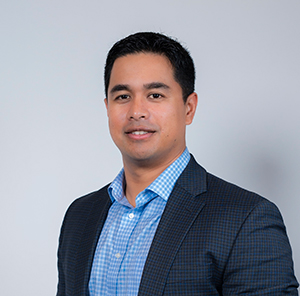
Neschae Fernando, CEO of Zone24x7
Zone24x7’s award run began at the SLASSCOM National Ingenuity Awards 2025, where the company secured National Winner for Best Innovative Product in Manufacturing, National 1st Runner-up for Best Innovative Product (General), and two Provincial Winner titles in the Western Province. This success continued at the National ICT Awards (NBQSA 2025), with Gold in Manufacturing, Engineering & Construction, and the IoT Technology of the Year Award.
“2025 validated our approach of building technology around real business needs,” said Neschae Fernando, CEO of Zone24x7. “As we move into 2026, our focus is on helping enterprises improve productivity, visibility, and decision-making by applying AI, automation, and connected systems in ways that go far beyond standalone tools or chat-based solutions.”
Headquartered in the United States with a world-class technology hub in Sri Lanka, Zone24x7 serves over 50 enterprise customers across multiple industries. The company specializes in integrating artificial intelligence, IoT, and enterprise platforms to solve complex operational challenges at scale.
Its portfolio includes Generative AI capabilities that enhance workflows, system intelligence, and human productivity; AI-powered automation platforms that connect digital and physical data sources; and a Cognitive Vision Analytics Platform that delivers real-time insights from video and image data. In addition, Zone24x7 provides RFID-enabled solutions and Warehouse Management Systems that improve inventory accuracy, asset visibility, and supply chain performance.
“The value we bring lies in how we combine hardware, software, and AI into cohesive solutions that fit seamlessly into existing enterprise environments,” said Vipula Liyanaarachchi, General Manager at Zone24x7. “As organisations look ahead to 2026, we are focused on helping them scale efficiently, modernise operations, and unlock greater value from their data without disruption.”
The award-winning Industrial Vending Machine reflects this approach, integrating IoT hardware, intelligent software, and analytics to automate inventory control and enhance efficiency in manufacturing and industrial settings. Rather than being a standalone product, it demonstrates how Zone24x7 partners with clients to design solutions aligned to specific operational goals.
With more than two decades of experience and a strong research and development foundation, Zone24x7 is now investing further in advanced AI-driven automation, intelligent analytics, and system-agnostic architectures. As businesses navigate rapid technological change, the company is positioning itself as a long-term partner—helping enterprises adopt AI responsibly, enhance workforce productivity, and build resilient operations into 2026 and beyond.
Business
India’s Mazagon Dock Shipbuilders makes mandatory offer to buy remaining shares of Colombo Dockyard

India’s Mazagon Dock Shipbuilders Limited has made a mandatory offer to buy the remaining shares of Colombo Dockyard at Rs 40 each, following a 41.73 percent stake acquisition last month.The mandatory offer targets 58.27 percent of the company.
At the recent rights issue, Mazagon Dock Shipbuilders bought 164,916,229 ordinary shares of Colombo Dockyard from the unsubscribed rights entitlement of previous stakeholder Onomichi Dockyard Company.
Mazagon paid Rs 40 per share amounting to a total Rs 6,596,649,160 .
Both indices moved upwards. The All Share Price Index went up by 67.5 points, while the S and P SL20 rose by 23.57 points. Turnover stood at Rs 9.1 billion with 16 crossings.
Top seven crossings were reported as follows: Commercial Bank 9.7 million shares crossed to the tune of Rs 1.2 billion and its shares traded at Rs 224.50, TJ Lanka 14.3 million shares crossed to the tune of Rs 549.7 million; its shares sold at Rs 38.50, Renuka Hotels one million shares crossed to the tune of Rs 250 million; its shares sold at Rs 250, Melstacorp one million shares crossed to the tune of Rs 178 million; its shares fetched Rs 179, Sampath Bank 930,000 shares crossed for Rs 145 million and its shares traded at Rs 150, Sierra Cables two million shares crossed for Rs 74 million; its shares sold at Rs 37 and Lanka Milk Food one million shares crossed for Rs 71 million; its shares fetched Rs 71.
In the retail market companies that mainly contributed to the turnover were; Colombo Dockyard Rs 514 million (3.3 million shares traded), Ceylon Land Equity Rs 349 million (15.6 million shares traded), Sierra Cables Rs 339 million (1.4 million shares traded), Commercial Bank Rs 307 million (1.4 million shares traded), TJ Lanka Rs 247 million (6.5 million shares traded), Luminex Rs 232 million (19.6 million shares traded) and Renuka Foods Rs 180 million (11 million shares traded). During the day 311 million share volumes changed hands in 50661 transactions.
It is said that the market showed mixed reactions. The banking sector actively participated, especially Commercial Bank. The manufacturing sector also performed well.
Yesterday the rupee was quoted at Rs 309.30/40 to the US dollar in the spot market, stronger from Rs 309.45/50 the previous day, while bond yields continued to edge lower on the the mid- to long end of the yield curve, dealers said.
A bond maturing on 15.06.2029 was quoted at 9.45/50 percent.
A bond maturing on 15.09.2029 was quoted at 9.50/55 percent.
A bond maturing on 15.12.2029 was quoted at 9.52/58 percent, down from 9.55/60 percent.
A bond maturing on 01.07.2030 was quoted at 9.68/71 percent.
A bond maturing on 01.10.2032 was quoted at 10.21/24 percent, down from 10.23/25 percent.
A bond maturing on 01.06.2033 was quoted at 10.55/60 percent, down from 10.57/60 percent.
A bond maturing on 15.06.2034 was quoted at 10.77/80 percent.
A bond maturing on 15.06.2035 was quoted at 10.80/86 percent, down from 10.82/87 percent
By Hiran H Senewiratne

US wants Russia and Ukraine to end war by June, says Zelensky
Hetmyer heroics, Shepherd hat-trick headline West Indies’ opening day win over Scotland

USA bowl, India pick Siraj with Bumrah out unwell

Colorado funeral home director sentenced to 40 years for corpse abuse

Scotland opt to field against West Indies

Faheem Ashraf drags unconvincing Pakistan over the line after big scare

‘Dates have the highest sugar content to fight Coronavirus’

Sunday Island 27 December – Headlines

#SundayIsland 17th December – Headlines

Sunday Island – 28th March

Sunday Island Headlines – 21 March

Sunday Island – 21st February – Headlines
-

 Business5 days ago
SLIM-Kantar People’s Awards 2026 to recognise Sri Lanka’s most trusted brands and personalities
-

 Business7 days ago
Altair issues over 100+ title deeds post ownership change
-

 Business7 days ago
Sri Lanka opens first country pavilion at London exhibition
-

 Business6 days ago
All set for Global Synergy Awards 2026 at Waters Edge
-

 Business17 hours ago
Zone24x7 enters 2026 with strong momentum, reinforcing its role as an enterprise AI and automation partner
-

 Business5 days ago
API-first card issuing and processing platform for Pan Asia Bank
-
 Business7 days ago
ESOFT UNI Kandy leads the charge in promoting rugby among private universities
-

 Editorial3 days ago
All’s not well that ends well?