
Latest News
Australia seal series after epic Mandhana ton

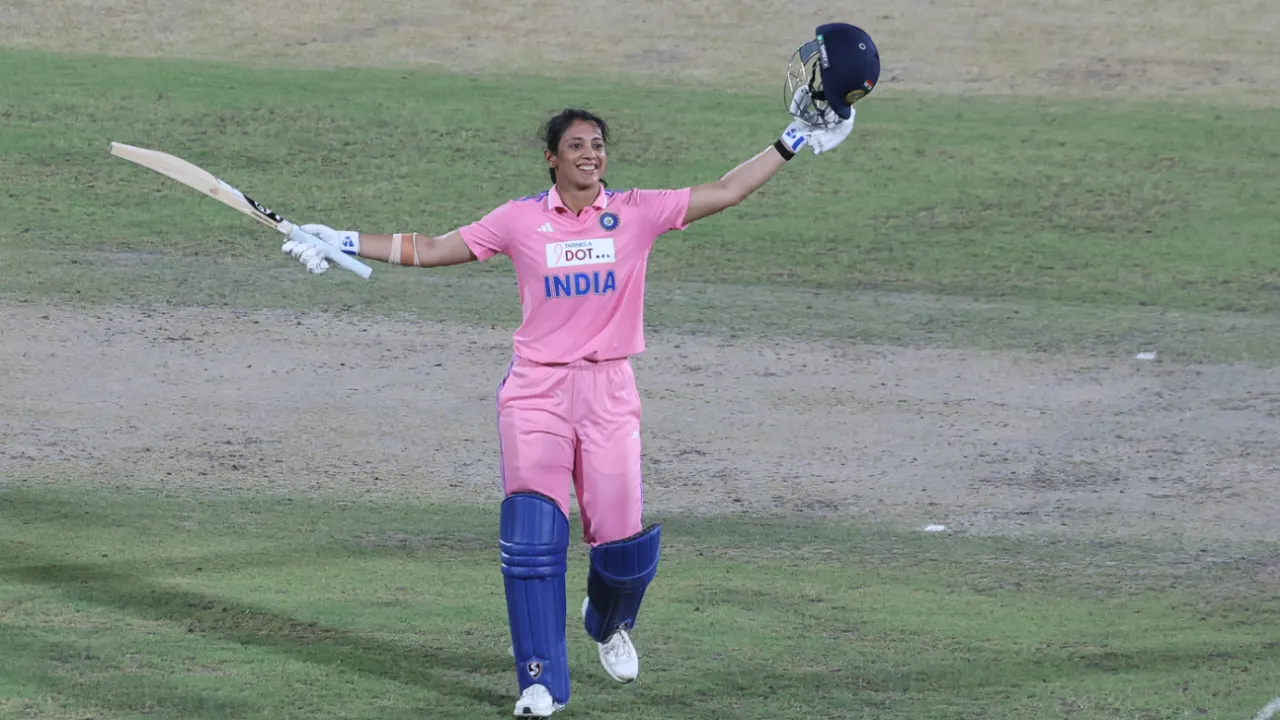
Cricket was played at a breakneck speed in Delhi on Saturday, with Australia maintaining their record of not losing a women’s bilateral ODI series to India. Close to 800 runs were scored at a rate of over eight per over, with only 43 runs separating the two teams.
With just ten days to go for the Women’s World Cup 2025, a world record chase was attempted for a second day in a row after Pakistan almost chased down 313 in Lahore on Friday. Faced with a mountainous 413 to win in Delhi, India galloped at a high speed to be placed 204 for 2 in just 20 overs. But Australia gave a reminder of why they are the defending world champions by keeping at it, and striking regularly, to win the three-ODI series 2-1 on Saturday.
Riding on a 57-ball century from Beth Mooney and aided with misfields aplenty from India, Australia equalled their highest total, 412. Strange as it may sound, the final total seemed a few runs lesser than what they were likely to score before a late collapse of 6 for 34.
India’s turbo-charged response was led by vice-captain Smriti Mandhana, who scored the second-fastest century in women’s ODIs. She added 121 with captain Harmanpreet Kaur, as Australia searched for ways to plug the flow of runs. It inadvertently came through Harmanpreet’s knee injury break, after which India lost three wickets in 19 balls.
Deepti Sharma, batting at No. 5 in Jemimah Rodrigues’ absence, continued to keep India’s dim hopes alive with a counter-attacking half-century. She made a 58-ball 72, and her strike rate of 124.13 was her quickest for a knock above 20 runs. She added 65 off just 54 balls for the eighth wicket with Sneh Rana. But with 59 needed off 46 balls, she holed out to deep midwicket to dash India’s hopes of a miracle.
Mandhana started from where she left off in New Chandigarh, hitting Megan Schutt for three successive fours in the third over. She also greeted her nemesis Ashleigh Gardner with a six and four, before smashing Kim Garth for two fours and a six in the space of five balls. Earlier in the evening, Australia had scored 77 for 1 at the end of the first powerplay – a score India easily surpassed in seven overs. They were 96 for 2 in ten overs, which is the second-highest total in the first powerplay in all ODIs.
Mandhana showed no signs of slowing down, getting to her half-century in 23 balls, before reaching her hundred in just 50 balls. She bettered her own mark of 77 balls from a few days ago, and also relegated Mooney’s 57-ball effort from earlier in the game to joint third-fastest. At the other end, Harmanpreet showed her silken touch as well as brute force on her way to a 32-ball fifty. But once Harmanpreet and Mandhana fell in consecutive overs, India’s challenge fizzled out.
But for India’s fielding missteps earlier in the afternoon, which cost them 26 off 11 balls as per ESPNcricinfo logs, the result could have been much different. Fielding has been one of the focal points under head coach Amol Muzumdar’s regime, and India looked to have turned a page with a clinical show in England. However, after dropping four catches in the first ODI, India grassed three chances on Saturday.
Georgia Voll was the beneficiary of two of those chances – first, when Richa Ghosh was wrong-footed and couldn’t hang on to the outside edge in the seventh over, and then, dropped twice by Radha Yadav. Radha only got her fingertips to a powerful swipe at square leg, before misjudging the pace of Voll’s flick and being late on the jump at midwicket. Voll scored 81 before top-edging a sweep to substitute Uma Chetry at short fine leg.
The tone was set early by captain Alyssa Healey, who wanted India to “run around in the heat”, and opted to bat. She attacked India’s new ball bowlers and Australia managed to hit two fours in each of the first five overs. Kranti Goud then dismissed her for the third time in three games but Voll then kept attacking, with Perry offering stability during a fluent innings of her own.
After Voll’s fall in the 22nd over, Mooney came in and never let the momentum shift. She found gaps at will, used the crease well to access empty parts of the field, and got to her fourth ODI century. The highlight of her innings was how she kept going in the hot and humid conditions, and scoring at a high rate while taking minimum risks. She added 106 from 72 balls with Perry, and then 82 off 46 with Gardner, to set the platform for Australia to post the highest team total in women’s ODIs against India.
It was only the seventh time a team crossed the 400-mark in women’s ODIs. That India responded with a strong challenge and posted the highest total in a chase in this format will give them solace with a World Cup on the horizon.
Brief scores:
Australia Women 412 in 47.5 overs (Alyssa Healey 30, Georgia Voll 81, Ellyse Perry 68, Beth Mooney 138, Ashleigh Gardner 39; Renuka Singh 2-39, Arundhati Reddy 3-86, Deepti Sharma 2-75) beat India Women 369 in 47 overs (Smriti Mandhana 125, Harmanpreet Kaur 52, Deepti Sharma 72,Sneh Rana 35; Megan Schutt 2-53, Kim Garth 3-69) by 43 runs
[Cricinfo]

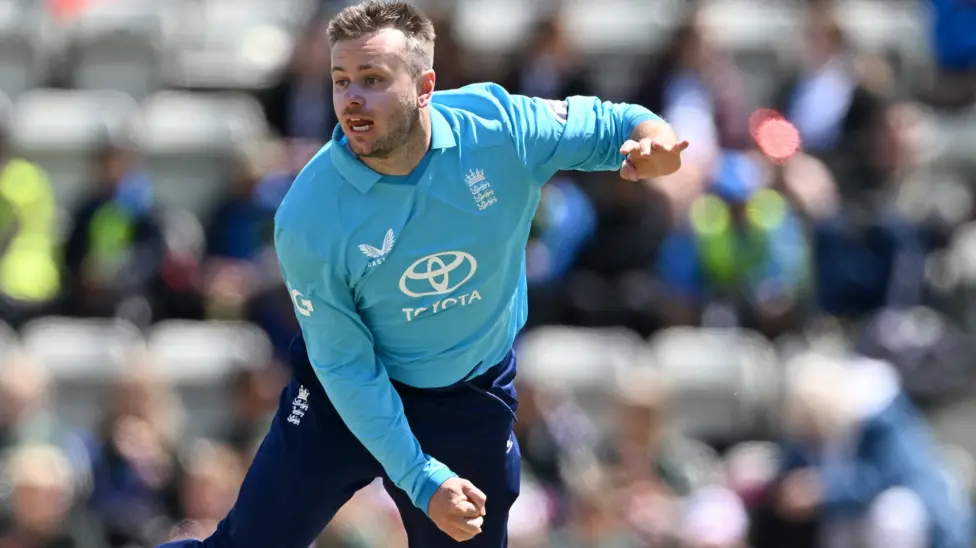
Leg-spinner Mason Crane could play for England for the first time in eight years after being recalled for the one-day international tri-series in Pakistan.
The 29-year-old won his only Test cap against Australia in Sydney in 2018 and is now given an opportunity in the series which also involves Sri Lanka next month.
Crane, who also played two T20 internationals in 2017, could also push his case in the fight to be England’s number one spinner in Test cricket.
Sam Curran and Adil Rashid both return after injuries, and uncapped pair James Coles and Henry Crocombe are included.
Jos Buttler is out with the hamstring injury he sustained last week, while Jacob Bethell is continuing his recovery from knee surgery.
Brydon Carse, who is under an investigation from the Cricket Regulator following an incident outside a nightclub in Derby in August, remains absent.
England are on a diet of white-ball cricket until three Tests in South Africa in December as they build up to the 50-over World Cup in southern Africa next year.
The tri-series in Pakistan involves the three teams taking part playing each other twice, with the top two advancing to the final. Following the trip to Pakistan, England play three one-day internationals and five T20s in Australia in November.
As England continue to shape their backroom staff following the arrival of Stephen Fleming as Test coach, Jeetan Patel, Mike Yardy, David Saker and Carl Hopkinson will assist white-ball head coach Brendon McCullum in Pakistan.
That means Marcus Trescothick, who took temporary charge of the Test team for the series against Pakistan in the home summer, misses the trip.
It is understood the make-up of the coaching staff is part of a plan to rotate the coaches – fielding coach Sarah Taylor and fast-bowling coach Tim Southee are also not going to Pakistan.
All of Trescothick, Taylor and Southee are likely to be part of England’s coaching team for other tours this winter.
England squad for tri-series in Pakistan:
Harry Brook (Yorkshire – captain), Gus Atkinson (Surrey), Sonny Baker (Hampshire), Tom Banton (Somerset), James Coles (Sussex), Jordan Cox (Essex), Mason Crane (Glamorgan), Henry Crocombe (Sussex), Sam Curran (Surrey), Liam Dawson (Hampshire), Ben Duckett (Nottinghamshire), Will Jacks (Surrey), Jamie Overton (Surrey), Adil Rashid (Yorkshire), Joe Root (Yorkshire), Josh Tongue (Nottinghamshire).
(BBC)

Latest News
I extend my heartfelt wishes to all the sons and daughters of our country for a Happy World Children’s Day – President

Children’s Day Message from President Anura Kumara Dissanayake:
“Children are the most valuable asset of a nation. Ensuring their physical and mental well-being and creating an environment conducive to their proper development is a primary responsibility of any government. Children’s imagination, aspirations and creativity will determine the shape and colour of the country tomorrow. The country we build for children must not merely be a country prepared to be handed over to them in the future; it must be a country that gives space to their dreams today, listens to their voices and provides opportunities for them to realise their potential.
For the best interests of children, we are taking the necessary steps to ensure equal access to education, guidance, social protection, opportunities for sport, leisure and recreation, proper nutrition and access to healthcare, while protecting children from all forms of violence and discrimination and safeguarding their rights.
Race, religion, economic status, geographical background or any other circumstance should not be a barrier to any child’s education or proper development. Every child should have equal and fair opportunities to realise their potential, pursue their dreams and create the future they wish for themselves. To this end, we have already begun the process of reforming the education system in Sri Lanka, transforming it towards a skills-based system suited to the new world, one that does not place a burden on parents or cause distress to children.
Our aim is to ensure that no child is left behind in the new Sri Lanka we are building, and to provide every child with opportunities for development in a safe environment. It should be emphasised that the fundamental objective of all the programmes being implemented, from expanding educational scholarships to securing the future of children growing up in child development centres and those in need of care, is to create a dignified and secure tomorrow for every child in the country.
It is the aspiration of every parent to give their children a better life than the one they themselves experienced. We are currently steering the country’s economy towards a correct and stable direction in order to provide children with a safe and happy childhood, free from the shadows of an unstable economy. At the same time, we have launched the national operation “A Nation United” (Ratama Ekata), bringing everyone together to free the younger generation from the menace of illicit drugs.
At a time when we are working towards the goal of building a safe and better country for children, I greatly appreciate the initiative of the Ministry of Women and Child Affairs in organising this year’s World Children’s Day celebrations under the theme “Strong Minds – Enriched Children”, declaring a National Children’s Day Week and conducting a range of meaningful programmes aimed at strengthening children’s rights, well-being, protection, education and freedom.
I extend my heartfelt wishes to all the sons and daughters of our country for a Happy World Children’s Day”.

England call up Crane and rest Archer for Pakistan series

ICC introduces pink-ball daytime Test trial, new time-wasting penalties

Discussion on Anuradhapura Sacred City Development Plan

India enter Asian Games final after Kishan and Bumrah ride roughshod over Sri Lanka

I extend my heartfelt wishes to all the sons and daughters of our country for a Happy World Children’s Day – President

Sri Lanka bowl first in semi final clash against India

‘Dates have the highest sugar content to fight Coronavirus’

Sunday Island 27 December – Headlines

#SundayIsland 17th December – Headlines

Sunday Island – 28th March

Sunday Island Headlines – 21 March

Sunday Island – 21st February – Headlines
-

 Editorial6 days ago
Birth of a bad law
-

 News4 days ago
Police remove Thileepan statue in Jaffna
-

 Features7 days ago
Beyond traditional jobs: Why Sri Lanka needs to facilitate the gig economy
-

 News6 days ago
TIN mandatory for key transactions from Nov. 1
-
 Latest News7 days ago
Kusal, Wellalage star as Sri Lanka defend 322 in Headingley thriller
-

 Features4 days ago
The 22nd Amendment, constitutional recovery and illiberal slippage
-

 Features4 days ago
Of foreigners as CEOs of Lankan ventures
-

 News4 days ago
Sajith rejects Jt. Opp. protest sabotage claim; SJB TU chief demands remedial action