
Features
The Foreign Policy of the United States

(A talk given at The Bandaranaike International Training Institute on 09 September, 2025)
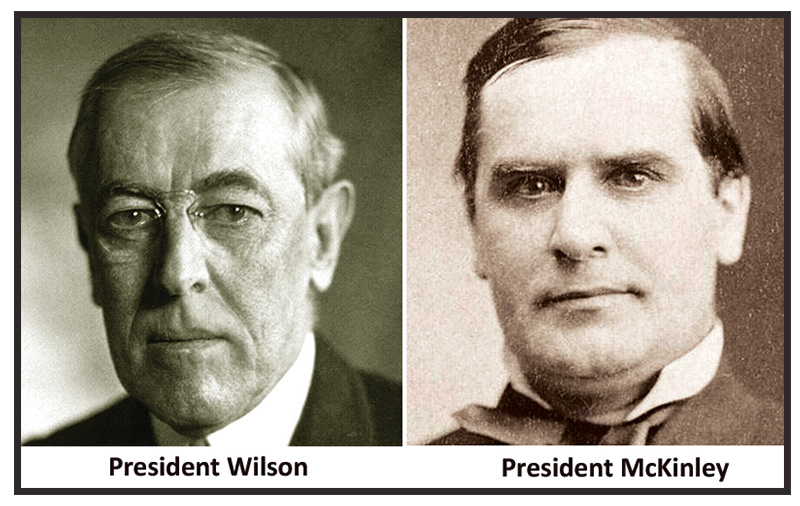
The topic I was invited to speak on today is the foreign policy of the United States. This is a very broad theme and to give you a detailed account of it, in the time at our disposal today, would be impossible. So, what I shall attempt to do is to give you a summary or a thumbnail sketch of the foreign policy of the United States from 1776 to the 1930s focusing in particular on two presidents who took charge of the foreign policy of the US during their terms of office: William McKinley and Woodrow Wilson. And thereafter reflect more closely on the period from 1941 to the present. It is believed that the farewell address of President George Washington outlined the foreign policy goals of the United States which included, among others, the cultivation of peace and harmony with all nations. It recommended the avoidance of permanent alliances with “any portion of the foreign world” and advocated trade with all nations. In the early years of the existence of the United States, the most important goal of its foreign policy was to balance the relations with Great Britain and France. Of the two major political parties at that time, the Federalist Party sought close ties with Britain but the Democratic-Republican Party favoured France.
Broadly stated, the striking feature of the history of US foreign policy since the American Revolution is the shift from isolationism before and after World War 1 to interventionism post-World War 11, especially during the Cold War period which lasted for about four decades and a half from 1947 to 1990/91 during which the United States played a hegemonic role in the world.
Isolationism usually describes a policy of non-interventionism: avoiding foreign alliances and conflicts and waging war only if attacked by an adversary. A characteristic feature noticeable in the history of US foreign policy has been a tension between the desire to withdraw from messy foreign problems and the belief that America should be the dominant force in world affairs- – “the indispensable nation”, as former Secretary of State, Madeleine Albright put it.
Generally, it has been the Republicans who have preached withdrawal, though it was the Democrats who did so during the Vietnam War and its aftermath. US foreign policy over the years, has alternated between isolationism and interventionism. It should be noted that despite the election campaign rhetoric of then candidate Donald Trump, one cannot see the likelihood of an imminent US withdrawal from the world.
America’s Founders saw America’s geographical isolation from Europe as an ideal opportunity to develop the new nation in solitude. “Our detached and distant situation invites and enables us to pursue a different course”, Washington said in his farewell address in 1796 (referred to above). Thomas Jefferson too, warned against “entangling alliances”. With the exception of the successful 1846-1848 Mexican War, which expanded US borders to include California and much of the American west, the US was disinclined to get involved in military adventures in other parts of the world. America does not go “abroad in search of monsters to destroy”, Secretary of State John Quincy Adams had declared in 1821.
A turning point, however, was the Spanish-American War. During Cuba’s revolt against Spain in 1898, President William McKinley sent the battleship Maine on a goodwill visit to Havana where it blew up in the harbour, killing around 250 US sailors. Certain American historians of today, are of the view that an internal explosion destroyed the ship, but at the time, Americans led by the American press took a position of extreme patriotism blaming Spain for the explosion and the US declared war. It ended with the surrender of Spain and the war made Theodore (Teddy) Roosevelt, who led the volunteer Rough Riders regiment, a national hero. When Roosevelt succeeded to the presidency after McKinley’s assassination in 1901, he pursued a robust and aggressive foreign policy. It was Roosevelt’s view that the US must “Speak softly and carry a big stick”. To promote US interests abroad- – commercial interests in particular – Roosevelt ordered the construction of the Panama Canal which connects the Pacific and Atlantic oceans and benefits the United States both economically and national security-wise, and negotiated the end of the war between Russia and Japan. It was Roosevelt, according to the historian Richard Abrams, who asked the Americans to assume the responsibility “to use their power for good internationally”.
In the 1890s, one notices a historic turn in US foreign policy. After emerging victorious in its war with Spain in 1898, the United States gained new territory in the Caribbean and the western Pacific. The then Assistant Secretary of State, John Bassett Moore observed that the nation has moved,
. . . from a position of comparative freedom from entanglements into the position of what is commonly called a world power . . . .
Moore’s boss, President William McKinley, presided over these changes. McKinley won the 1896 elections over the highly popular Democrat, William Jennings Bryan. According to Walter LaFeber (1989), “The affection Americans felt for McKinley ranked with the feelings they later had toward the popular Theodore Roosevelt, Franklin D. Roosevelt and Dwight D. Eisenhower”. On becoming president in 1896, McKinley himself took control of formulating US foreign policy. Controlling foreign policy in the manner he did, McKinley became not only the first 20th century president, but the first modern chief executive. He is known to have been adept at controlling the US Congress while he kept control of foreign policy in his own hands. McKinley expanded the Constitution’s Commander-in-Chief powers and was thus able to dispatch US troops to fight in China. Historians note that McKinley’s actions paved the way for the “imperial presidency” of the 1960s and 1970s.
McKinley won the presidency and moved to the White House in 1896, thanks largely to the splendid campaign organized by Marcus Hanna, fellow Ohioan and millionaire steel industrialist. McKinley rewarded Hanna by having him appointed to the Senate seat vacated by John Sherman who was named Secretary of State. In Hanna, McKinley had a trusted power broker in the Senate who was both loyal and obedient to the President. These two men built such a powerful political coalition so much so that only one Democrat presidential nominee would be elected president between 1896 and 1932. In 1900, McKinley defeated the Democratic nominee, Bryan more decisively than four years before. And McKinley is credited with having led the United States into the small select circle of great world powers. Yet, like Abraham Lincoln who did much for the United States before him, McKinley was assassinated in September 1901, a mere six months after his second inauguration.
The next to make a significant contribution to US foreign policy was Woodrow Wilson the 28th president of the United States, who was the sole Democrat to be elected president between 1896 and 1932, as referred to above. He was also the first native Southerner to reach the White House since 1849. He is also the only US president to hold a doctorate which he obtained from Johns Hopkins University in 1886. He served as president of Princeton University from 1902 -1910. He was awarded the Nobel Peace Prize in 1920 for his contribution to ending World War 1 and for creating the League of Nations. Many later presidents including Lyndon Johnson, Richard Nixon and Jimmy Carter, looked back to Wilson as the Chief Executive whose vision of the nation’s future was far-seeing, and one who had confronted challenges which have continued to worry the United States.
Wilson’s contribution as president from 1913 to 1921, both in terms of domestic and foreign policy, was impressive. What revived US isolationism during the second term of Woodrow Wilson was America’s horrified response to World War 1. The US entered the “war to end all wars” in 1917 with intense patriotic fervour, influenced perhaps by Wilson’s desire, “to make the world safe for democracy”, a phrase Wilson used in a speech to Congress. But the carnage in Europe- – 17 million dead and another 20 million wounded, according to available statistics, sparked another withdrawal into isolationism.
And the Americans then withdrew into the pursuit of material wealth and fun during the 1920s (described as the ‘Roaring Twenties’) and continued to be a world power, indeed the greatest economic power at that time. By 1933, however, the dollar had collapsed. The delicate treaty structure the US had built, fell on top of it (LaFeber, 1994). In the words of the historian, John M. Carroll, “The foundations of economic and political stability” laid during the 1920s were simply “swept away during the economic crisis of the 1930s” consequent to the Great Depression that began in 1929. Washington’s response now came from the newly elected president, Franklin D. Roosevelt, who entered the White House in 1933. The banking system had collapsed, unemployment was rife and there was political chaos internationally with Hitler and the Japanese expansionists beginning to shape world politics. And if these challenges were not enough, Roosevelt was confronted at home by an “isolationist Congress”. US isolationism, however, was challenged by the outbreak of World War 11. Roosevelt was strongly supportive of the allies from 1932 to 1938, and the United States began to provide military equipment to them without entering the war. Things changed dramatically in 1941 when Japan attacked Pearl Harbour in December of that year.
The attack by the Empire of Japan on Pearl Harbour was totally unexpected. It targeted the United States’ Pacific fleet at its naval base in Hawaii on 7 December, 1941. The provocation for this surprise Japanese attack is believed to be due to what Japan perceived to be US interference in Japan’s affairs. Japan declared war on the US and the British on 8 December, and on the same day, both the United Kingdom and the United States declared war on Japan. Although there were no formal obligations for them to do so, both Germany and Italy declared war on the United States, at which point the United Kingdom and the United States retaliated by declaring war on Germany and Italy.
The year 2025 may be looked back upon by future historians, as the end of the Atlanticist era, according to Robert Lyman, the British military historian in his article, The end of the Atlanticist era. This era, begun in 1941, was one in which the United States took on from the United Kingdom, the “White Man’s burden” of keeping the world safe for democracy. Unlike the previous era, which began after World War 1 in 1918, when the United States was steadfastly isolationist, post 1941, the US embarked on being the global guarantor of the Atlantic Charter. This was a signed agreement which committed the two countries to a new set of global security imperatives that would eventually make the United States a super power once Hitler and German fascism had been defeated. But we need to bear in mind that what really motivated the United States to come out of its self-imposed isolationism was the Japanese attack on Pearl Harbour.
Pearl Harbour not only led the United States to formally enter World War 11, but it encouraged President Roosevelt to expedite the construction of the atomic bomb which was code-named the Manhattan Project. The Bomb altered the subsequent history of the United States as Gary Wills notes in his Bomb Power The Modern Presidency and The National Security State (2010). Wills also observes that the Manhattan Project which was carried out in secret and was secretly funded at the behest of President Roosevelt, was “a model for the covert activities and covert authority” of the government of the United States since 1942. The US Congress was unaware of the Manhattan Project and even Vice President Harry Truman was kept in the dark. It was only when he succeeded Roosevelt as President that he came to know of it. The executive power in the United States since World War 11 has basically been “Bomb Power”, according to Gary Wills.
The United States became a leading economic, political and military power at the end of World War 11 in September, 1945. It considered itself to be the leader of the free world. Soon however, there began a period of geopolitical rivalry between the United States and the Soviet Union and their respective allies. Begun in 1947, the Cold War, ended in December, 1989, when President Bush and Soviet General Secretary Gorbachev declared so at the Malta Summit. Some others considered the end of the Cold War to be two years later in December, 1991, with the dissolution of the Soviet Union.
Let us now look at the United States and its performance on the foreign policy front after 1945. In August of 1945, the United States dropped atomic bombs on Hiroshima and Nagasaki. These bombings reportedly killed between 150,000 and 246,000 civilians with many others suffering long- term effects of radiation. This event marked the beginning of the nuclear age. Some historians claim that Japan was on the verge of surrender at this time and thus the decision of the Truman administration to go ahead with the bombings remains a historical and moral debate to-date.
The Cold War led the United States into a number of overt conflicts and covert operations. Among the former are the Korean War (1950-1953) which was armed conflict between North Korea and South Korea. The former was supported by China and the Soviet Union, while the latter, by the United Nations Command (UNC) led by the United States. This was really one of the first proxy wars during the Cold War because, although the it was ostensibly the UNC which went to the defense of South Korea, it was the United States which provided around 90% of the military personnel. Then came the overthrow of Mohammad Mossadegh, the democratically elected Prime Minister of Iran, after he nationalized the oil industry in 1953. The CIA under the orders of the Eisenhower administration, with the backing of Britain’s MI6, accomplished this task. The goal was to restore the pro-Western Shah’s dictatorial rule and thereby maintain Western control over Iranian oil. This fact was exposed in a film titled, ‘Coup ‘53’ directed by the Iranian Taghi Amirani. For the record, let me note that the British government has never admitted its role in the Mossdegh affaire.
The Vietnam War lasted from 1955-1975. North Vietnam, a communist state, and the southern-based Viet Cong (or the National Liberation Front) fought alongside North Vietnam and their stated goal was to unify Vietnam. And South Vietnam, a non-communist state, was supported by the United States. Australia, South Korea, Thailand and New Zealand joined the United States in support of South Vietnam while the Soviet Union and China backed North Vietnam. In the 1950s, the US provided military and economic aid to South Vietnam. The US viewed the Vietnam War, as with the Korean War earlier, from the perspective of the Cold War and the “domino theory”. Successive presidents of the United States and innumerable pundits created the “domino theory”. As goes Vietnam so goes the whole of Asia, like a cascade of dominoes falling into the communist camp. Public debate was structured around the ‘fear factor’, the epic struggle with the “evil empire” or the global communist conspiracy. No US president actually believed in this scare story. The greatest problem of presidents from Eisenhower to Johnson and beyond was contending with their own national security bureaucracy who, in concert with the public and political mood, planned and sought to operate as if the scare story were fact.
There are allegations that the United States and its allies sponsored and facilitated state terrorism and mass killings on a significant scale during the Cold War. The justification given by some for this was that it was to contain Communism, but others say, it was also a strategy by which to buttress the interests of the business elites of the United States and to promote the expansion of capitalism and liberalisation. This reminds us of the immortal words of President Eisenhower, who in his farewell address of 1961 warned his fellow Americans of the Military- Industrial Complex. The most notorious of the post- Cold War conflicts was the US-led coalition’s attack on Iraq in March 2003, that centred around false claims that Iraq possessed weapons of mass destruction (WMDs) and that Sadam Hussein was supporting Al- Queda. The UK, Australia and Poland were members that joined the US in forming that coalition. Of the present conflicts, the Ukraine war and the Israel-Palestine war are conflicts in which the US is on the side of Ukraine and Israel.
The American interventions were not confined to Asia alone. Patricia McSherry, a professor of political science at Long Island University, states that, ‘hundreds of thousands of Latin Americans were tortured, abducted or killed by right-wing military regimes as part of the US-led anti-communist crusade’, which included support for ‘Operation Condor’ and the Guatemalan military during the Guatemalan civil war. We could add to this list, the US covert interventions in Nicaragua, Chile, Bolivia, Uruguay and Argentina.
Contemporary research and declassified documents demonstrate that the United States and some of its western allies directly facilitated and encouraged the mass murder of a large number of suspected communists in Indonesia during the mid -1960s. According to the American journalist and author, Glenn Greenwald, the strategic rationale of the US support for brutal and genocidal dictatorships around the globe has been consistent since the end of World War 11. This is in keeping with American threats to impose sanctions on officials at the International Criminal Court (ICC) because it issued arrest warrants for Israeli prime minister Benjamin Netanyahu and his former defense minister Yoav Gallant over suspected war crimes in Gaza. Some defenders of the post- 1945 US foreign policy argue that a policy of rhetoric, while doing things counter to that rhetoric was necessary in the sense of realpolitik. According to these defenders, such a policy helped secure victory against the dangers of tyranny and totalitarianism, even though such justification runs counter to the ideology of the rules-based liberal order that the US and its allies in Western Europe introduced after the end of World War 11.
Godfrey Hodgson, a shrewd and highly-respected British commentator, in a fine if provocative book titled, The Myth of American Exceptionalism (2009), offers a bracing critique of America’s view that it has an obligation to redeem other nations. He argues that the idea that the United States is destined to spread its unique gifts of democracy and capitalism to other countries, is dangerous for Americans and for the rest of the world. Furthermore, he asserts that America is not as exceptional as it would like to think; its blindness to its own history has bred a complacent nationalism and a disastrous foreign policy that has alienated it from the global community.
Ziauddin Sardar and Merryl Wyn Davies posed the following apt questions in their book, Will America Change? (2008): Is what’s good for America, good for the world? Or does the world long for America to participate in collective decision-making based on listening to and learning from others, acknowledging thereby the equal validity of different interests and opinions? They go on to say that America’s problem with the world is inseparable from defining and understanding the world’s problems with America. Unless one knows the problem, there can be no effective solution. And the problem lies in how the United States comes to terms with the realities of an increasingly inter-connected and inter-dependent world.
The world today is very different from what it was in 1945. As a former prime minister and foreign minister of Sweden, Carl Bildt, in a recent essay titled, Farewell America: Trump’s isolationism leaves a widening void in world order (2025) writes,
To be sure, America’s power and influence have already waned. For decades after World War 11, the United States could shape the global system to serve its own purposes; and during the brief ‘unipolar’ moment that followed the collapse of the Soviet Union, its status was unrivaled. But other powers have since grown in stature and are pursuing global ambitions. While China is the most obvious example, Europe too, is seeking the unity required to assert itself as a serious global player, and many middle powers want to raise their profiles as well
.Following up on Carl Bildt’s above observations, I’d like to believe that we are on the verge of a more inclusive new world order, in which the voices and interests of the Asian and African states are accommodated. Common challenges facing the world today like climate change, disease, poverty, nuclear proliferation, wars and inequality between peoples and nations require cooperation and coexistence. China and India are at the forefront of a battle to seek a more balanced international system and the likelihood of them combining their resources to seek that balance seems to be in the offing. In this likely new world order, it is envisaged that the hegemony of any one power will be challenged. In this context, the recent meeting of minds at the Shanghai Corporation Organisation (SC0) Summit held in Tianjin, China, the largest summit in SCO’s history, is an encouraging sign. The enlarged BRICS group, so the economists tell us, are already catching up with the G-7 in terms of purchasing of power parity (PPP). The SCO’s areas of action include internal security, counter-terrorism, economic cooperation and military cooperation. In combination with the association of Southeast Nations (ASEAN), the BRICS group and the SCO should form a formidable bloc. And if the members of the Euro-Mediterranean Partnership (also known as the Barcelona Process), a Union of EU member states and 16 southern Mediterranean countries built for economic integration were to join this bloc, then we are closer to a new international order based on multilateralism where the United States, given its greater military strength may have primacy but not hegemony as it has had in the post-1945 world to date.
References
Understanding Power The Indispensable Chomsky,
edited by Peter R. Mitchell and John Schoeffel (2003).
The American Age US Foreign Policy At Home and Abroad Volume 2-since 1896
, Walter LaFeber (1994).
American Foreign Policy Since World War 11,
John Spanier (1989).
The Myth of American Exceptionalism
, Godfrey Hodgson, (2009).
The Fire This Time U.S. War Crimes in the Gulf
, Ramsey Clark, (1992).
Bomb Power The Modern Presidency And The National Security State
, Gary Wills, (2010).
Will America Change?,
Ziauddin Sardar and Merryl Wyn Davies, (2008).
The Disuniting of America Reflections on a Multicultural Society
, Arthur Schlesinger Jr., (1992).
Perilous Power The Middle East & U.S. Foreign Policy Dialogues on Terror, Democracy, War and Justice,
Noam Chomsky and Gilbert Achcar, (2007).
The Unfinished Nation A Concise History of the American People
, Alan Brinkley, (1997).
The Unfinished Journey America Since World War 11
, William H. Chafe, (1996).
Democracy in America
, Alexis de Tocqueville, (translated by George Lawrence and edited by J.P. Mayer), 1988.
by Tissa Jayatilaka ✍️


 It was a few years back that a former President of Sri Lanka took it on himself to pronounce SAARC ‘dead’. Since then there have been other sections of Sri Lankan opinion that have joined the critics of SAARC and taken the solemn stance that SAARC has indeed died what may be called a natural death.
Their fatalism is understandable. SAARC has failed to meet at heads of government or state level for the past several years to take the SAARC process notably forward. Regional cooperation has more or less been only an appealing idea. No substantive concrete projects have taken off to make the idea a hard reality. ‘Inner paralysis’ seems to be SAARC’s lot. Hence the fatalism in these circles.
However, being one of the worst cash-strapped regions of the world and a teemingly populated one with people virtually left to their devices, what choices do the ‘SAARC Eight’ have other than to try their best to band together and continue with their cooperation efforts, however small they may be?
There is no escaping the mounting debt trap for many of these countries and bankrupt Sri Lanka is a glaring example, but ‘throwing in the towel’ and abandoning themselves entirely to the diktats of the strongest economies and their agencies will prove a ‘living death’ for many countries in the SAARC fold.
The gains may be meagre but giving-up on SAARC cooperation in full would prove self-defeating for the organization and South Asia. Right now, the collective intention ought to be to salvage what the region could from the tenuous cooperative efforts. Moreover, such initiatives could go some distance to generate a degree of goodwill among the Eight and help in sustaining a dialogue process.
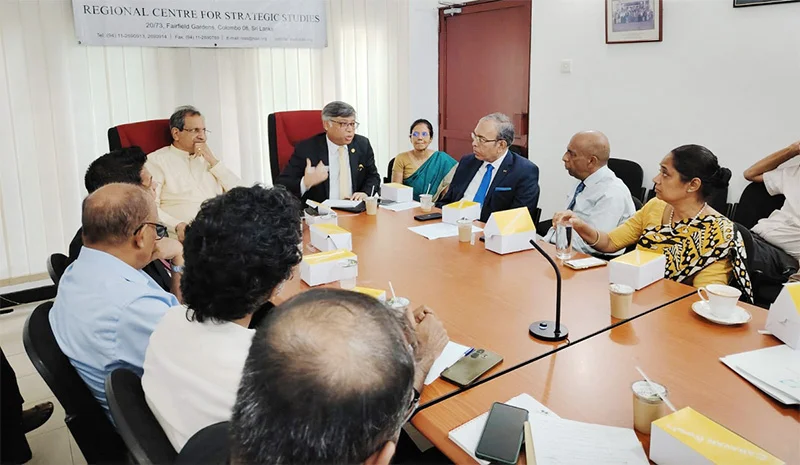
Given this backdrop it proved ‘a stich in time’ for the Regional Centre for Strategic Studies (RCSS), Colombo, to recently host the SAARC Secretary General Ambassador Md. Golam Sarwar to a round table discussion on the unifying potential of SAARC and its future possibilities, besides other related issue areas.
Held on June 24th and moderated by RCSS Executive Director and former ambassador Ravinatha Aryasinha, the forum brought together a vibrant, wide ranging audience comprising academicians, diplomats, senior public servants, civil society activists and many others. Following the presentation by Ambassador Golam Sarwar titled, ‘Reigniting SAARC: Achievements, Challenges and the Way Ahead’, a lively Q&A followed.
The above forum could be described as an act of lighting the proverbial ‘candle’ rather than ‘cursing the darkness.’ It surely is a ‘darkness’ that could be seen as daunting considering that the region’s pivotal powers, India and Pakistan, are failing to act in a spirit of accord but are engaged in bitter finger-pointing on a number of questions of vital importance to SAARC.
On the other hand, what is the rest of the region doing to bring the above sides together? It is disappointing that to date the rest of SAARC has failed to launch a major diplomatic drive to bring peace between the feuding regional heavyweights. It needs to act without delay and establish its earnestness and this effort would need to prove SAARC’s staying power in the unfolding months and even years.
In assessing SAARC’s seeming failure local opinion in particular has failed to factor in what could be described as weak leadership. Since Sheikh Mujibur Rahman of Bangladesh, the founding father of SAARC, the region has failed to produce a visionary leader who could advance the SAARC cause with charisma and drive.
Among other reasons, weak leadership accounts considerably for the faltering and stuttering status, as it were, of SAARC. Badly needed are leaders who could go the extra mile, think less of narrow national interests and work diligently towards the collective well being of the region but SAARC’s millions of ordinary people have been made to wait in vain for leaders of such stature. Instead, they have been burdened with politicians who seem to be relishing the apparently moribund state of SAARC.
Looking back, it could be said that it was the dynamic leadership factor that led to the launching of the Non-Aligned Movement and for its sustenance for a few decades. True, it could be seen in some quarters that NAM is no more, but as in the case of SAARC, the former too has been unfortunate to be burdened over the years with politicians who lack the vision and drive to unflaggingly advance the fortunes of the South. NAM and SAARC lack the dynamism and vision of leaders of the stature of Jawaharlal Nehru, for example, to give them the required guidance and intellectual depth.
The reasons are complex for there not being among us currently political leaders with the vision and the steadfast commitment to advance the legitimate interests of the South. However, it could be stated with conviction that the majority of Southern leaders have too easily caved in to the demands of the global North and its financial agencies.
These leaders have failed to see, for instance, that the largely market economy oriented Northern governments would not view with favour a centrist economic model that attaches priority to the interests of the dis-empowered publics of the South. This realization ought to have dawned on the current government in Sri Lanka, for instance, some while ago but it has no choice but to abide by IMF dictates since economic survival at present is unthinkable without the latter’s succour.
Accordingly for SAARC this should be the time for some soul-searching. Priority needs to be attached to ending the feuding between India and Pakistan since at present the material fortunes of the region hinge largely on these regional giants giving peaceful relations among them a try. This is no easy challenge to meet but some daring, visionary diplomacy needs to take hold among the rest of SAARC.
There is some sense in SAARC bringing the peoples of the region together through programs that address their best collective interests. A meeting of minds among SAARC nations could enable SAARC and its agencies to build a region-wide people’s movement for progressive political and economic change that could in turn lead to the region’s political leaders sensitizing themselves more to the neglected needs of their publics.
However, the time is ‘now’ for the initiation of these progressive changes and the voice of SAARC well wishers would need to drown out those of their critics.
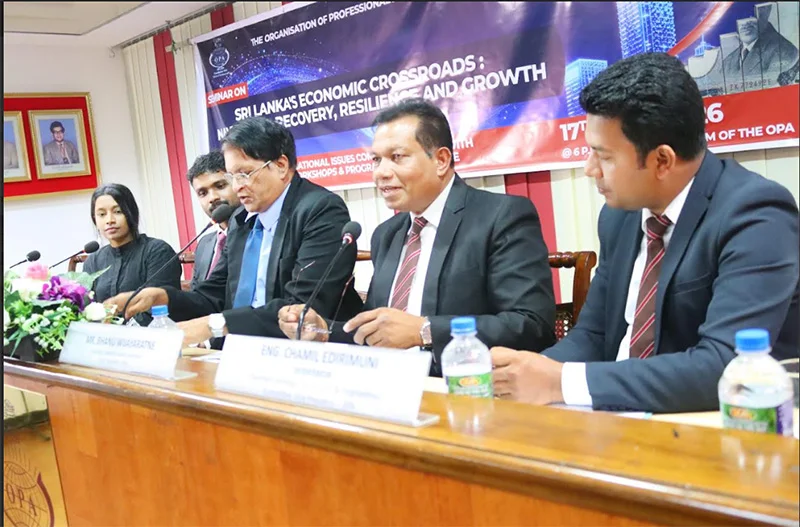
A seminar, “Sri Lanka’s Economic Crossroads: Navigating Recovery, Resilience and Growth” was recently held by the Organisation of Professional Associations of Sri Lanka (OPA) at the OPA Auditorium, bringing together economists, OPA members, and professionals from diverse fields for an insightful discussion on Sri Lanka’s economic recovery and future growth prospects.
The event was held under the patronage of Jayantha Gallehewa, President of the OPA, and was jointly organised by the National Issues Committee (NIC) and the Seminars, Workshops and Programmes Committee of the OPA. The event reaffirmed the organisation’s commitment to advancing professional excellence, fostering insightful intellectual engagement, facilitating interdisciplinary knowledge exchange and creating a constructive platform for informed dialogue on issues of national importance.
The panel of speakers comprised Dr. Harsha Aturupane, Lead Economist and Programme Leader for Human Development at the World Bank for Sri Lanka and the Maldives; Dr. Achinthya Koswatta, Senior Lecturer in Economics at the Open University of Sri Lanka, and Anushan Kapilan, Lead Economist at Verité Research.
In his welcome address, the President of the OPA emphasised that Sri Lanka was at a critical juncture in its economic recovery journey where sustained reforms, effective implementation, and collective national commitment are essential to achieving long-term stability, resilience and inclusive growth. He noted that the country had experienced one of the most severe economic crises in its history with the economy contracting by 7.8 percent in 2022 and a further 11.5 percent in 2023, resulting in significant economic and social challenges.
Delivering his introductory remarks Bhanu Wijeyaratne, Vice President of the OPA and Chairman of the National Issues Committee, underscored the need to move beyond short-term economic stabilisation towards a comprehensive agenda of structural transformation. He observed that the economic crisis had revealed deep-rooted weaknesses within the economy, including persistent fiscal pressures, rising public debt, foreign exchange limitations, and insufficient diversification of the export base. He stressed that addressing these challenges through strategic reforms, institutional strengthening and long-term economic planning would be essential to establishing a more resilient and competitive economy.
While acknowledging recent positive developments, including improved inflation management, tourism recovery and signs of economic stabilisation, Wijeyaratne stressed the need to advance reforms aimed at strengthening fiscal discipline, enhancing productivity, improving competitiveness, developing human capital and reinforcing governance and institutional effectiveness.
He further highlighted the important role of professionals, businesses, academia and other stakeholders in contributing to evidence-based dialogue and supporting Sri Lanka’s journey towards a resilient, inclusive and sustainable economic future.
Delivering the keynote presentation, Dr. Harsha Aturupane provided a comprehensive assessment of Sri Lanka’s economic prospects within the broader context of global economic transformation. He argued that Sri Lanka functioned as a small open economy whose performance is significantly influenced by developments in the global marketplace. External factors could not be controlled, and the country must strengthen its domestic capacity and resilience to respond effectively to international economic shifts, he noted.
Tracing the evolution of global economic systems, Dr. Aturupane highlighted the transition from ideological divisions between state-controlled and market-oriented economies towards increasingly pragmatic approaches focused on growth, competitiveness and development. He noted that Sri Lanka’s own economic journey reflects a similar evolution, with contemporary policy debates now centred on practical solutions for sustainable economic progress.
The presentation also examined the transformative impact of globalisation. Dr. Aturupane observed that global economic integration had enabled several East Asian economies, including South Korea, Singapore, Taiwan and Hong Kong, to achieve remarkable economic advancement through export-led growth strategies. Sri Lanka similarly benefited from this process through the expansion of its apparel industry and increased integration into global value chains.
Turning to Sri Lanka’s recovery programme, Dr. Aturupane emphasised that the ongoing stabilisation process should be viewed as a national programme supported by the International Monetary Fund rather than solely as an IMF initiative. He observed that strong worker remittances, improved tourism earnings, enhanced government revenue mobilisation and prudent import management have contributed significantly to economic stabilisation.
Despite this progress, he cautioned that rebuilding foreign exchange reserves and meeting future debt obligations remain major challenges. He underscored the need to strengthen export performance, attract investment and generate sustainable foreign exchange earnings to ensure long-term economic resilience.
The discussion also focused on monetary stability, inflation management and exchange-rate policy. Dr. Aturupane stressed that maintaining price stability was fundamental to sustainable growth and household welfare, while sound monetary policy remains essential for preserving economic confidence.
Looking beyond stabilisation, he argued that Sri Lanka must transition towards a broader economic transformation agenda. Sustainable growth, he noted, will depend on expanding productive capacity through investment, technological advancement, innovation, skills development and structural reforms.
Among the key constraints identified was the high cost of energy, which continues to affect competitiveness and investment attractiveness. Dr. Aturupane emphasised the importance of improving efficiency and affordability within the energy sector to enhance Sri Lanka’s business environment.
He further highlighted the social dimensions of the crisis, noting the rise in poverty and economic vulnerability among households. Strengthening social protection systems and ensuring inclusive growth, he argued, must remain central components of the national development agenda.
Another critical challenge identified was Sri Lanka’s demographic transition. With an ageing population, outward migration and evolving labour market dynamics, the country is increasingly confronting labour shortages in several sectors. Dr. Aturupane suggested that greater automation, increased labour-force participation and strategic workforce planning would be necessary to address these emerging realities.
Concluding his presentation, he emphasised the need to improve governance, strengthen institutions, enhance competitiveness and create an enabling environment for private sector investment. Sri Lanka’s future success, he noted, will depend on its ability to move decisively beyond crisis management towards a development model founded on resilience, innovation, productivity and inclusive growth.
Dr. Achinthya Koswatta reiterated the importance of policy consistency and predictability in fostering investment and industrial development. She observed that frequent policy changes create uncertainty and discourage long-term investment decisions, whereas stable and coherent policy frameworks build confidence and support sustainable economic transformation.
Meanwhile, Anushan Kapilan highlighted the substantial progress achieved in restoring macroeconomic stability following the recent crisis. He noted significant improvements in fiscal performance, including increased government revenue, reduced reliance on debt financing and a historically low fiscal deficit.
He further observed that public debt levels are declining faster than anticipated, economic growth has exceeded expectations and inflation has been brought under control more rapidly than forecast. Nevertheless, he cautioned that the recovery remains uneven, particularly within the industrial sector and that many households have yet to experience a meaningful improvement in living standards.
The seminar was expertly coordinated by Eng. Chamil Edirimuni, Vice President of the OPA and Chairman of the Seminars, Workshops and Programmes Committee, while the technical moderation and interactive discussion session were facilitated by Bhanu Wijeyaratne, Vice President of the OPA and Chairman of the National Issues Committee.
The event was attended by Tisara De Silva, President-Elect of the OPA, Eng. Ravi Rupasinghe, General Secretary, Past Presidents, members of the Executive Council, representatives of the General Forum and professionals representing a wide range of disciplines.
The seminar concluded with a vibrant exchange of ideas and perspectives, reaffirming the importance of evidence-based policy dialogue, institutional collaboration and collective national commitment in advancing Sri Lanka’s economic recovery, resilience and sustainable growth.

 Yes, for UK-based presenter and artiste Samantha Kay, home is where the heart – and the roots – are. And her roots run deep in Sri Lanka.
In an exclusive interview with The Island, Samantha says “I’m proud to be Sri Lankan. My mum is from Kandy and my dad is from Colombo, so Sri Lanka has always held a very special place in my heart.
“Whenever I visit Sri Lanka, I love spending time on the beautiful south coast, especially Hikkaduwa and Mirissa. It’s somewhere I always feel connected to my roots and completely at peace.”
Now living in Bournemouth, on the south coast of England, where, she says, she is lucky to be close to some of the UK’s most beautiful beaches, including the iconic Sandbanks, Samantha has built a career that refuses to fit into one box.
She is a radio presenter, podcast host, singer-songwriter, personal trainer and life coach.
“I genuinely love the variety because every role allows me to connect with people and, hopefully, make a positive difference in someone’s day.”
Of course, music has taken her far.
One of her proudest achievements, she says, was releasing a song with 90s music icon Angie Brown, which reached No. 9 in the UK Club Charts.
She also reached the final stages of The X Factor and performed at Wembley Stadium in front of thousands.
Beyond music, Samantha competed in bikini bodybuilding across the UK, winning several titles. “It taught me discipline, resilience and self-belief,” she recalls.
Today, her focus is on radio, podcasting and coaching women. Her podcast encourages people to live life on their own terms rather than feeling pressured to follow society’s expectations.
Says Samantha: “Whether someone is single, changing careers, travelling solo or simply trying to find their purpose, I want them to know that it’s never too late to create a life that feels authentic. If you’ve ever felt like you don’t fit into the box, maybe you were never meant to.”
Samantha Kay also spent a year in Dubai, performing at five-star hotels, including FIVE, and coaching at the iconic outdoor gym on Palm Jumeirah.
“I taught strength and conditioning classes, and hosted wellness retreats, combining my passion for music, health and inspiring others.”
However, with family matters calling her back to the UK, she made the choice to return. “Family comes first,” she says.
Looking ahead, Samantha plans to grow her radio and podcast work, release more music, and expand her wellness retreats.
“My biggest passion is helping people, especially women, build confidence and believe in themselves,” she says.
“Wherever my career takes me, I hope to continue inspiring others to live with courage, kindness and authenticity, while never forgetting my Sri Lankan roots.”

Current El Niño Status in Sri Lanka

A few showers may occur in the Western, Sabaragamuwa and North-western provinces and in Kandy, Nuwara-Eliya, Galle and Matara districts.

Argentina face fine for Falklands banner in semi-final win

US launches fresh strikes on Iran as Trump warns Tehran it ‘better behave’

Govt. move to extend retirement ages of top judges: Opp. complains to UN

Dengue surge pushes hospitals to the brink as cases near 70,000

‘Dates have the highest sugar content to fight Coronavirus’

Sunday Island 27 December – Headlines

#SundayIsland 17th December – Headlines

Sunday Island – 28th March

Sunday Island Headlines – 21 March

Sunday Island – 21st February – Headlines
-
 News6 days ago
Herath warns prospective migrant workers not to get fleeced by racketeers
-
 Features4 days ago
Prison riots and politics: NPP’s biggest challenge and Sri Lanka’s biggest opportunity
-

 Editorial5 days ago
What’s the world coming to?
-
 Foreign News6 days ago
Tensions erupt in Indian state after 11-year-old raped and murdered
-
 Features6 days ago
Devanesan Annan – in Memoriam
-
Editorial6 days ago
Punishment in hellholes
-
 Features1 day ago
Dirty Money
-
 News7 days ago
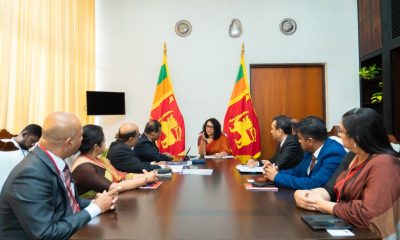
Representatives of the Organization of Professional Associations (OPA) of Sri Lanka meet the Prime Minister