
Latest News
Asia Cup 2025: Kuldeep bags four as India demolish UAE in 17.4 overs


It took just 106 balls for India to begin their defence of the Asia Cup with the most comprehensive of wins. It took them just 79 balls to bowl UAE out, and just 27 to chase down their target.
UAE’s 57 was the lowest total any team had achieved against India in T20Is. India’s 4.3-over chase was their quickest in T20Is.
UAE came into this match on the back of encouraging displays against Pakistan and Afghanistan in the tri-series they recently hosted, but all that promise came to nothing against the relentless quality of India’s bowling, with Kuldeep Yadav taking four wickets in no time to celebrate his return to action after a long tour of England spent entirely on the bench.
Thereafter, it was just a question of how quickly India would get to their target, and the answer – mostly delivered by their new opening combination of old buddies Abhishek Sharma and Shubman Gill – was a one-worder: very.
A lot of interest surrounded India’s selection for this game, with particularly intense debate surrounding their wicketkeeper, bowling-attack composition, and No. 8. These were India’s choices:
Gill displaced Sanju Samson from the opening position as expected, but Samson kept the keeping gloves ahead of Jitesh Sharma. India picked both their wristspinners, Kuldeep and Varun Chakravarthy, and picked the batting allrounder Shivam Dube to give them genuine depth until No. 8, but this meant they only had one specialist quick in Jasprit Bumrah.
Some of these choices were surprises. The bigger surprise, perhaps, was that India won the toss – after 15 straight toss losses across formats.
For the first time since 2019, Bumrah bowled three overs inside the powerplay in a T20I. He took one wicket, crashing through Alishan Sharafu’s defences with a searing yorker, but also conceded four fours, three in one over to UAE captain Muhammad Waseem.
With Sharafu and Waseem hitting six fours and a six between them, UAE began well enough, scoring 41 for 2 in their powerplay. But they fell apart thereafter, losing their last eight wickets for the addition of just ten runs.
To their credit, UAE did not let the loss of two powerplay wickets curb their intent, but on this day they kept losing wickets to low-percentage shots. And they kept losing wickets to Kuldeep in the ninth over – three of them, to be precise.
First, Rahul Chopra took on the large outfield at the Dubai International Stadium and the protected long-on boundary and holed out. Three balls later, Waseem was lbw, missing a sweep against a bowler whose stock ball, straightening into the right-hander from left-arm over, is stump-to-stump by design.
Kuldeep finished the over with a trademark wrong’un to bowl the left-handed Harshit Kaushik through the gate, and UAE were already five down.
India used six bowlers, and five of them ended up on the wickets column, with Bumrah – who bowled three overs in the powerplay, a rarity for him – Varun and Axar Patel taking one each.
Dube, playing ahead of a second frontline quick to give India batting depth until No. 8, bagged three with his medium-pace, which meant he had taken 5 for 15 in four overs in his last two T20Is. His first two T20Is, it has to be mentioned, since his bowling quality came under severe scrutiny following India’s use of Harshit Rana as his concussion substitute against England in Pune.
Here, Dube couldn’t help but pick up wickets even when India didn’t want them. In his second over, a direct hit from Samson caught Junaid Siddique wandering out of his crease – a la Jonny Bairstow – after swinging at and missing a short ball. Siddique was given out stumped but India captain Suryakumar Yadav withdrew the appeal. Next ball, Siddique swung at and miscued a slower ball high in the air, and walked back, c Suryakumar b Dube.
They’ve been fast friends since the Under-14 level and might have been forgiven for wanting to take a bit of time savouring the feeling of opening together for India, but that was the last thing on the minds of Abhishek and Gill. They clattered 48 runs in just 3.4 overs before Abhishek fell, miscuing a hard-length ball from Siddique, and in that time they played a number of outrageous shots. The pick of them, perhaps, were a dancing flick for six by Gill off Mohammad Rohid, and a falling-away slap over long-off by Abhishek, off a short-of-length dart from the offspinner Kaushik.
India were ten away from victory when Abhishek fell, and Suryakumar – whipping his first ball off his hip for six – and Gill took just four balls to finish the job.
Brief scores:
India 60 for 1 in 4.3 overs (Abhishek Sharma 30, Shubman Gill 20*; Junnaid Siddique 1-16) beat UAE 57 in 13.1 overs (Alishan Sharafu 22, Muhammad Waseem 19; Jasprit Bumrah 1-19, Axar Patel 1-13, Varun Chakravarthy 1-04, Kuldeep Yadav 4-07, Shivam Dube 3-04) by nine wickets
[Cricinfo]

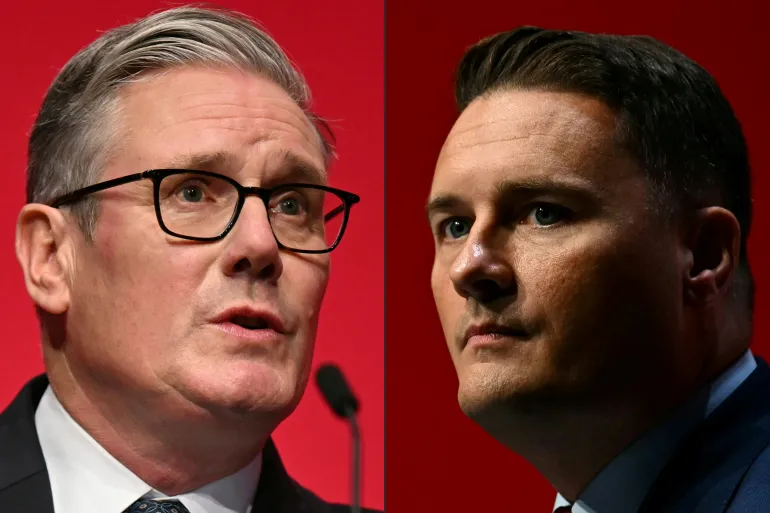
Britain’s Health Secretary Wes Streeting has resigned from the ruling Labour government, deepening a crisis that threatens to topple Prime Minister Keir Starmer after less than two years in office.
Hours after Streeting’s announcement on Thursday, Labour lawmaker Josh Simons said he would resign from his seat in parliament in a move designed to give Greater Manchester Mayor Andy Burnham a chance to return to parliament and challenge Starmer.
The prime minister is under growing pressure to step down following disastrous results in last week’s local elections.
Streeting posted on X on Thursday that he no longer had “confidence” in Starmer’s leadership, and there was “no doubt” that the party’s unpopularity was a “major and common factor in our defeat across England, Scotland and Wales”.
“It is now clear that you will not lead the Labour Party into the next general election, and that Labour MPs and Labour unions want the debate about what comes next to be a battle of ideas, not of personalities or petty factionalism,” the 43-year-old said.
“It needs to be broad, and it needs the best possible field of candidates. I support that approach and I hope that you will facilitate this.”
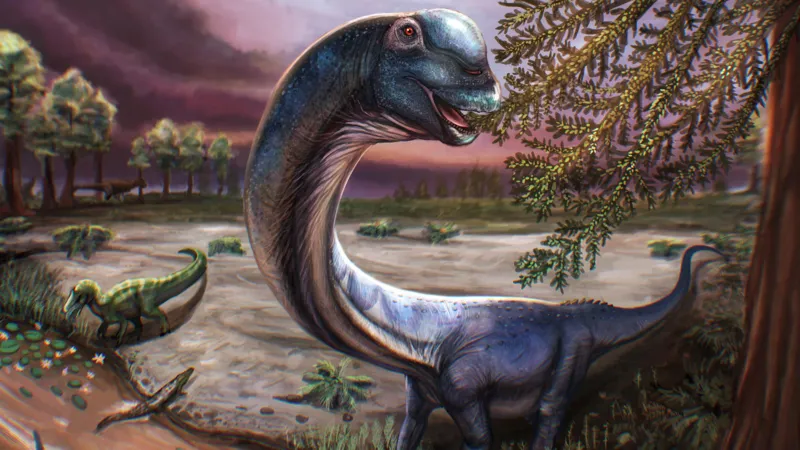
A new type of giant long-necked dinosaur has been identified by scientists from remains dug up in Thailand.
The nagatitan, the largest-ever dinosaur found in South-East Asia, weighed 27 tonnes – as much as nine adult Asian elephants – and measured 27m (88ft) in length, longer than a diplodocus. Like that dinosaur, it belonged to the sauropod family of long-necked herbivores.
A team of researchers from the UK and Thailand identified the species from fossils found beside a pond in north-eastern Thailand a decade ago.
They say the discovery sheds light on how changes in ancient climatic conditions allowed gigantic dinosaurs to develop.
The dinosaur’s full name is Nagatitan chaiyaphumensis, with “naga” referring to a serpent in South-East Asian folklore, “titan” referring to the gods in Greek mythology, and chaiyaphumensis meaning “from Chaiyaphum”, the province where the fossils were discovered.
It lived between 100 and 120 million years ago – around 40 million years earlier than the tyrannosaurus rex – and is about twice the size of that creature.
Thitiwoot Sethapanichsakul, a Thai doctoral student at University College London (UCL), was the lead author of the study which was published in the Scientific Reports journal.
He said the researchers referred to the nagatitan as “the last titan” of Thailand, because the fossils were found in the country’s youngest dinosaur-bearing rock formation.
“Younger rocks laid down towards the end of the time of the dinosaurs are unlikely to contain dinosaur remains because the region by then had become a shallow sea. So this may be the last or most recent large sauropod we will find in South-East Asia,” he said.
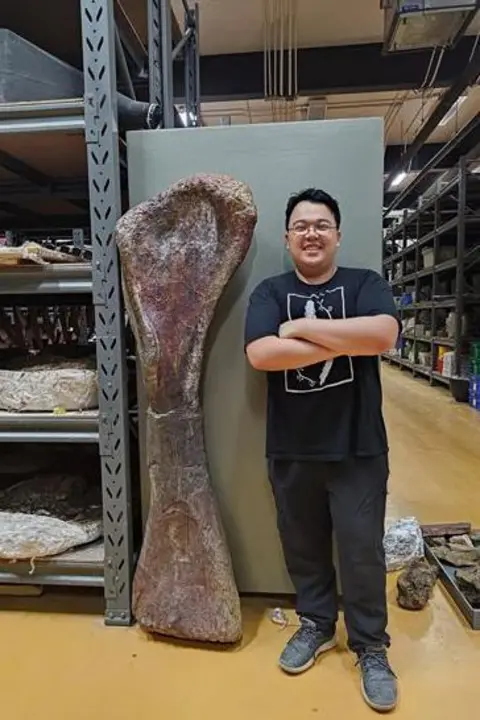
Sethapanichsakul, a self-confessed “dinosaur kid”, said in a UCL press release that the study also “fulfils a childhood promise of naming a dinosaur”.
The nagatitan is the 14th dinosaur to be named in Thailand. Palaeontologist Dr Sita Manitkoon, from Mahasarakham University, said that the country has a high diversity in dinosaur fossils and is “possibly the third most abundant in Asia in terms of dinosaur remains”.
The nagatitan roamed Earth when the planet’s atmospheric carbon dioxide levels were rising in line with high global temperatures.
The study’s co-author, UCL’s Prof Paul Upchurch, said the sauropod family of dinosaurs had become quite large at this time, telling National Geographic: “It seems a little odd that sauropods were able to cope with higher temperature conditions”, as large bodies retain heat and are harder to cool down.
He told the Reuters news agency that it was “likely that the high temperatures had an impact on the plant fodder that was important to sauropods, which were very large-bodied herbivores”.
[BBC]
[BBC]
The Cuban government said CIA director John Ratcliffe met his Cuban counterpart at the interior ministry in Havana, after the US renewed an offer of $100m (£74m) of aid to ease the effects of its oil blockade.
A Cuban statement said the meeting was an attempt to improve dialogue and American officials were told Havana was not a threat to US national security.
A CIA official told BBC’s US partner, CBS News, that the US is “prepared to seriously engage on economic and security issues, but only if Cuba makes fundamental changes”.
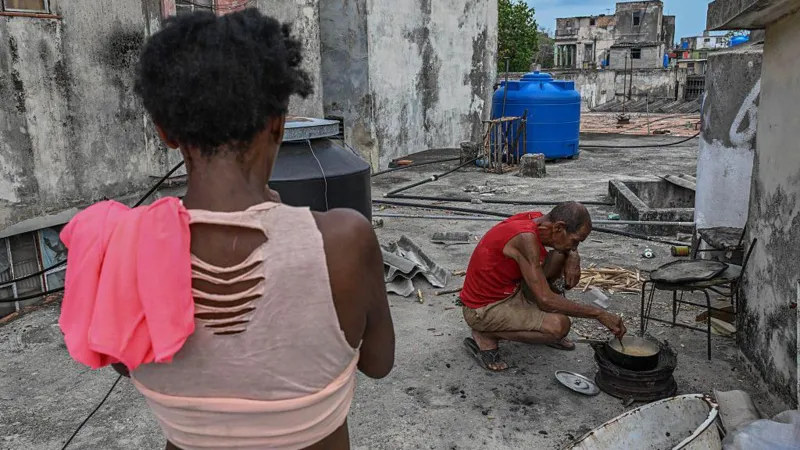
Fuel shortages exacerbated by the US oil blockade on the country have left hospitals unable to function normally and forced schools and government offices to close.
Separately, Cuban president Miguel Diaz-Canel said that instead of offering aid, conditions could be eased faster if the US lifted its blockade.
Attending the meeting was Raúl Rodríguez Castro, the grandson of former President Raúl Castro, Interior Minister Lázaro Álvarez Casas, and the head of Cuba’s intelligence services, the CIA official told CBS News.
The delegation met “to personally deliver President Trump’s message”, the CIA official said.
“During the meeting, Director Ratcliffe and Cuban officials discussed intelligence cooperation, economic stability, and security issues, all against the backdrop that Cuba can no longer be a safe haven for adversaries in the Western Hemisphere,” the official added.
The Cuban statement said: “Both sides also underscored their interest in developing bilateral cooperation between law enforcement agencies in the interest of the security of both countries, as well as regional and international security.”
Havana’s confirmation of the meeting comes after a US government plane was seen taking off from Havana’s José Martí international airport on Thursday afternoon, according to a Reuters witness.
Cuba and the US acknowledged earlier this year they were in talks, but negotiations appeared to stall as the oil blockade wore on.
Cuba has in the past relied on Venezuela and Mexico to supply oil to its refinery system. However, the two countries have largely cut off supplies since US President Donald Trump threatened tariffs on countries that send fuel to Cuba.
Earlier on Thursday, Foreign Minister Bruno Rodríguez said Cuba was “ready to hear the details of the US aid proposal and how it would be implemented”.
On Wednesday, the US state department said it was renewing an offer to “provide generous assistance to the Cuban people”.
Last week, US Secretary of State Marco Rubio had said that Havana had rejected a previous US offer of humanitarian aid worth $100m (£74m), a claim Cuba denied.
In its statement, the US state department repeated its offer but made it clear that the aid would have to be distributed “in coordination with the Catholic Church and other reliable independent humanitarian organisations”, bypassing the Cuban government.
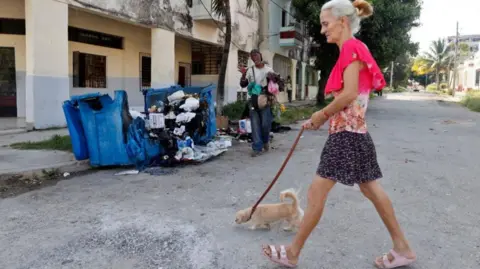
It added that the decision now rested with the Cuban regime “to accept our offer of assistance or deny critical life-saving aid and ultimately be accountable to the Cuban people for standing in the way of critical assistance”.
In his response, Cuban Foreign Minister Rodríguez said it was unclear whether the US aid offer would be in cash or in-kind assistance.
He added that “the Cuban government does not, as a matter of practice, reject foreign aid offered in good faith and with genuine aims of cooperation, whether bilateral or multilateral”.
He added that the best way the US could help Cuba would be to “de-escalate energy, economic, commercial, and financial blockade measures, which have intensified as never before in recent months”.

Thursday’s comments by Rodríguez follow a warning from the country’s Energy Minister Vicente de la O Levy that Cuba had completely run out of diesel and fuel oil.
[BBC]

Britain’s Health Secretary Streeting resigns as pressure on Starmer grows

National SME Strategy Framework 2026 is critical because it brings policy consistency and stability to the sector – PM

Giant new dinosaur identified from fossils in Thailand

Cuba says CIA chief visited Havana as energy crisis worsens

Showers about 150mm are likely at some places in the Western, Sabaragamuwa and North-western provinces and showers above 100mm are likely at some places in Galle and Matara districts

Tilak Varma, Shardul Thakur hand Punjab Kings fifth successive defeat

‘Dates have the highest sugar content to fight Coronavirus’

Sunday Island 27 December – Headlines

#SundayIsland 17th December – Headlines

Sunday Island – 28th March

Sunday Island Headlines – 21 March

Sunday Island – 21st February – Headlines
-

 News5 days ago
Lanka Port City officials to meet investors in Dubai
-
 News2 days ago
Ex-SriLankan CEO’s death: Controversy surrounds execution of bail bond
-
 News6 days ago
SLPP expresses concern over death of former SriLankan CEO
-
 News6 days ago
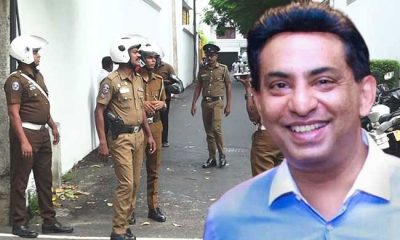
Police inform Fort Magistrate’s Court of finding ex-CEO of SriLankan dead under suspicious circumstances
-
 Features3 days ago
When University systems fail:Supreme Court’s landmark intervention in sexual harassment case
-
Features3 days ago
High Stakes in Pursuing corruption cases
-
 Midweek Review2 days ago
A victory that can never be forgotten
-

 News6 days ago
President of Vietnam and delegation departs Sri Lanka