
Business
Shaping the future of Sri Lanka’s insurance industry


Sri Lanka’s insurance industry today stands at a decisive and promising crossroads. We are a country with a commendably high general literacy rate, a strong foundation on which to build. While our financial literacy, particularly in the area of insurance, has room to grow, this also presents us with an exciting opportunity. By addressing this gap, we can identify new avenues for industry growth and strengthen national resilience. As the Insurance Association of Sri Lanka (IASL), we see this moment as an opportunity to drive impactful change. Our vision, as a collective, is to expand penetration, embrace technology and build lasting trust through greater financial awareness.
The future of Sri Lanka’s insurance industry
At present, Sri Lanka’s insurance penetration is just over one per cent of GDP, a figure that compares poorly even with many of our regional peers. India and Indonesia, for example, have already surpassed us despite their larger and more complex markets. Over the next three years, we aim to double this penetration in Sri Lanka.
To achieve this, we are working on developing new products and channels that can reach segments of the population which have remained underserved. From micro-insurance and telco-driven products that appeal to lower and middle-income households, to tailor-made solutions for high-net-worth individuals, our approach must be inclusive and adaptive. Ultimately, our goal is to increase GDP contribution while ensuring that every Sri Lankan has access to the protection and peace of mind that insurance provides.
Our vision also extends beyond numbers. Inspired by India’s commitment to insuring its population, we aspire to “insure the nation.” I believe that more than half of Sri Lanka’s working population is already touched by insurance in some form, whether through micro products, corporate schemes or motor coverage. But vast gaps remain, especially in areas such as household property insurance, where coverage is low unless tied to mortgages. These are the areas where the industry must redouble its efforts.
Innovation, technology and digitalisation
Technology will be at the heart of this transformation. The global insurance industry is racing towards digitisation, data analytics, and automation and Sri Lanka must keep pace. Digital platforms enable faster processes, more accurate risk assessments and a seamless customer experience.
Within IASL, we are prioritising digitalisation initiatives that will streamline operations across the industry and align our practices with global standards. A key part of this effort is ensuring that the entire industry is ready to comply with the new IFRS 17 guidelines by January next year. While some companies are well on their way to readiness, others are still preparing.
Artificial intelligence, in particular, presents both opportunities and challenges. If used effectively, AI can improve underwriting, enhance claims management and help insurers understand risks more precisely, allowing for fairer and more accurate pricing. This benefits both the customer, who pays a premium that reflects their real risk and the insurer, who is protected against unsustainable losses.
Yet Sri Lanka still faces
hurdles in harnessing the full potential of AI. Much of our health and property data remains in paper-based formats, making it challenging to analyze. Hospitals, for instance, are only slowly adopting digital records, and there is little standardisation across institutions. To truly reap the benefits of AI, we must invest in digitizing critical infrastructure and data systems, ensuring that information can be collected, shared and analyzed responsibly.
Building consumer trust and financial literacy in insurance
Equally important to our growth agenda is the task of strengthening financial literacy and consumer trust. While awareness of insurance has improved in recent years, particularly in the wake of the pandemic and the economic downturn, many Sri Lankans still view insurance with scepticism. Some see it as a luxury, others doubt whether claims will be honoured. Additionally, a worrying number of policies lapse after the first year due to poor need-based assessments at the point of sale. These issues erode confidence in the industry as a whole.
To change this narrative, IASL has launched awareness programs aimed at educating both young people and adults on the importance of financial planning and protection both online and on ground. Furthermore, earlier this year, the Insurance Regulatory Commission of Sri Lanka initiated a series of regional awareness sessions, which we as the IASL were very pleased to join in as we jointly conducted the first awareness session in Matara and a second program is planned for Jaffna later this year. Our goal is to hold such sessions every quarter, reaching schools, universities and community groups. By starting with the younger generation, we can help instill a culture of financial discipline and ensure that future decision-makers recognize the role of insurance in securing their lives and families.
The insurance industry cannot achieve its objectives in isolation. We are actively working to build stronger partnerships with reinsurers, brokers, banks, telecommunications providers, healthcare institutions and IT companies. Through bancassurance models, digital hospital networks and cross-sector CEO forums, we are aiming for a more connected ecosystem that can expand access to insurance while improving service delivery.
At the same time, we must recognize the importance of discipline and ethical conduct within our industry. Regulators are stepping in with stricter frameworks, such as mandatory welcome calls, customer satisfaction tracking and more rigorous need-based analysis, to prevent mis-selling and enhance customer confidence. IASL fully supports these reforms and has gone a step further by maintaining an industry-wide database to prevent unethical advisors from moving unchecked between companies. By tightening standards and raising accountability, we are determined to ensure that every customer receives the value and protection they are promised.
The essence of this vision is a call to every Sri Lankan, which is not to view insurance as a luxury, but as a vital necessity for a secure future; an indispensable financial safety net which helps one surmount untold hardships if life were to throw a curveball. It is the peace of mind that allows you to face an uncertain future with confidence. It relieves the burden on government services, protects families from financial ruin and ensures that hard-earned assets are preserved. Whether it is life, health, retirement or property coverage, adequate insurance is one of the most responsible decisions an individual can make.
Sri Lanka has much to learn from developed markets, where insurance penetration is far higher and the benefits are widely understood. By combining innovation, technology, financial literacy and strong governance, we too can build an industry that secures the well-being of our nation. The journey ahead will not be easy, but with determination and collaboration, we can ensure that every Sri Lankan enjoys the protection and peace of mind that insurance provides.
(The writer is the President of the Insurance Association of Sri Lanka)
By Lasitha Wimalaratne ✍️


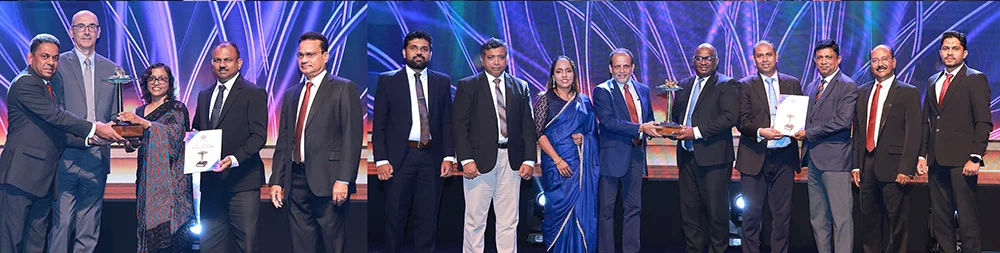
Corporate accolades underscore the alignment between its operational excellence and national development
In an era where national competitiveness is intrinsically tied to digital connectivity, strengthening the country’s digital backbone has become an urgent priority. Within this context, the evolving role of Sri Lanka’s leading telecommunications provider, SLT-MOBITEL, offers valuable insight into how technological infrastructure can underpin broader economic resilience.
Telecommunications and digital networks are foundational to economic transformation. By expanding high-speed broadband access, upgrading enterprise cloud capabilities, and bridging the urban-rural connectivity divide, SLT-MOBITEL helps reduce business transaction costs, streamline supply chains, and enable micro, small, and medium enterprises to reach global markets.
Recent corporate accolades further underscore this alignment between operational excellence and national development. SLT-MOBITEL’s triple triumph at the National Business Excellence Awards 2026 – winning in the Infrastructure and Utilities sector, Performance Management, and ICT Services categories – highlights its growing impact. Notably, the recognition of eChannelling’s contributions to digital healthcare reflects a broader strategic pivot toward integrated technology solutions.
“Institutional efficiency of this nature is critical for attracting foreign direct investment, as global partners increasingly assess a country’s digital maturity and systemic stability before committing capital,” noted industry observers.
Moreover, the company’s transition from a conventional telecom utility to a comprehensive digital solutions provider aligns seamlessly with Sri Lanka’s national digitalisation agenda. As the country pursues public sector modernisation, enhanced e-governance, and a competitive knowledge economy, the private sector must step up to deliver secure, scalable, and future-ready networks. Investments in data centres, cybersecurity frameworks, and advanced ICT infrastructure act as strategic buffers, ensuring that Sri Lanka’s economic apparatus remains agile and resilient amid future global uncertainties.
However, industry experts caution that while these achievements are commendable, SLT-MOBITEL still has a considerable distance to cover in fully enabling a truly digital economy.
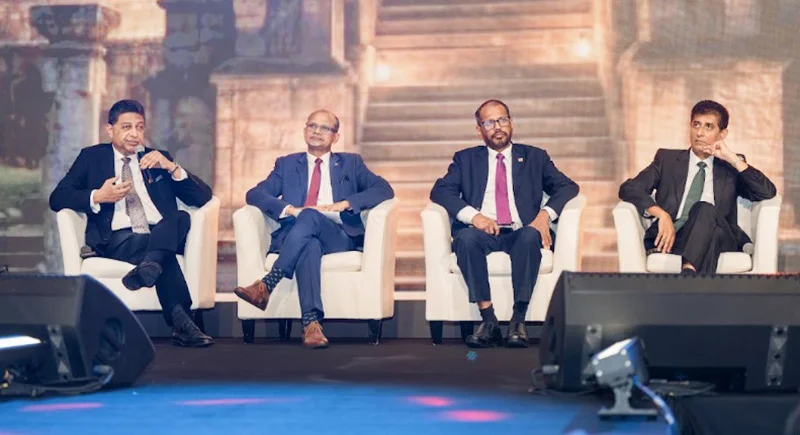
Port City Colombo (PCC) took a prominent role as Platinum Sponsor at the second edition of Sri Lanka Beyond Your Dreams, a high-level diplomatic and investment engagement hosted by the Consulate General of Sri Lanka in Dubai and the Northern Emirates. The event, held on 2nd September 2026 at the Hilton Dubai Al Habtoor City, brought together over 400 senior UAE-based business leaders, investors, diplomats, and institutional stakeholders, alongside Sri Lanka’s most senior government representatives.
The gathering was graced by Dr. Thani bin Ahmed Al Zeyoudi, UAE Minister of Foreign Trade, as Guest of Honour, and Vijitha Herath, Sri Lanka’s Minister of Foreign Affairs, Foreign Employment and Tourism. A high-level Sri Lankan delegation – including the Secretary to the Prime Minister, the Chairman of the Board of Investment, the Chairman of the Export Development Board, and the Director General of Commerce – underscored the government’s strong commitment to deepening economic diplomacy with the UAE.
In his keynote address, Minister Herath reaffirmed the centuries-old ties between Sri Lanka and the Arab region, emphasising the UAE’s vital role as a key economic partner. He stressed the urgency of finalising a Comprehensive Economic Partnership Agreement (CEPA) with the UAE, which would establish a robust framework to elevate trade, investment, and bilateral cooperation. Declaring Sri Lanka “open and ready for business,” he positioned Port City Colombo as the physical embodiment of this economic mission – a modern Special Economic Zone (SEZ) with a dedicated legal framework and competitive incentives, offering UAE investors a natural gateway to South Asia while maintaining strong Gulf connectivity.
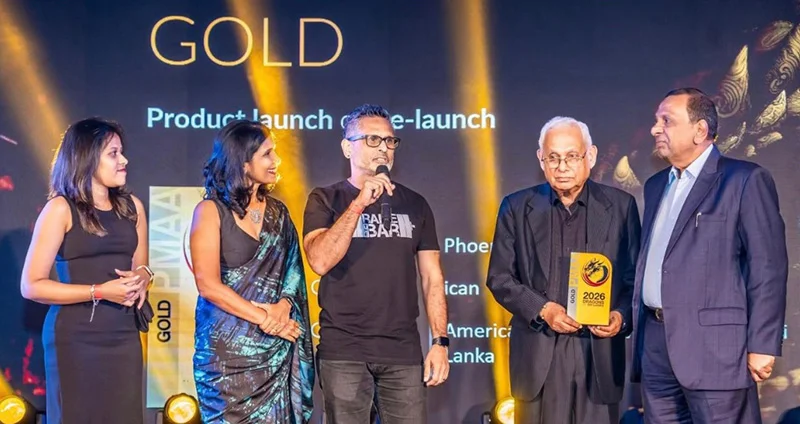
American Premium Water has secured four wins at Dragons of Sri Lanka Awards 2026, including three Gold Dragons and one Black Dragon, marking a significant milestone for the brand following its relaunch last year.
Part of the prestigious Dragons of Asia awards, Dragons of Sri Lanka brings the program’s regional platform to the local market, celebrating creative and effective marketing communications, with entries evaluated on strategic thinking, creativity, execution and impact. Established in 2000, Dragons of Asia is one of Asia’s premier results-driven marketing awards programs.
For American Premium Water, the achievements are particularly significant given that the company’s debut at the Dragons awards has resulted in four Dragons across four categories. In the distinction of Gold Dragons, American Premium Water was recognized across three categories including Product Launch or Re Launch, Cause, Environment or Sustainability and Creative Excellence while the Black Dragon was awarded in recognition of Small Budget.
Competing alongside leading brands and agencies in Sri Lanka, American Premium Water’s four wins demonstrate the strength and effectiveness of its recent work. Winning three Gold Dragons across three distinct categories highlights the breadth of the brand’s achievements, while the Black Dragon for Small Budget further emphasizes its ability to create meaningful impact through focused and efficient investment.

Showers will occur in the Western and Sabaragamuwa provinces and in Kandy, Nuwara-Eliya, Galle and Matara districts.


Sri Lanka reiterates its territory won’t be used against India

UK-led Core Group calls Jaffna mass graves a ‘stark reminder’ but stops short of calling for international accountability

India underscores security and defence in overall partnership with SL

If Sri Lanka wants ‘real’ stability, only one way to achieve it, in a short time

‘Dates have the highest sugar content to fight Coronavirus’

Sunday Island 27 December – Headlines

#SundayIsland 17th December – Headlines

Sunday Island – 28th March

Sunday Island Headlines – 21 March

Sunday Island – 21st February – Headlines
-

 News5 days ago
Namal remanded until Sept. 18 over Airbus deal investigation
-

 Latest News4 days ago
Tharanga creates history with Diamond League crown in Brussels
-

 News4 days ago
Dispute which triggered listed company director being detained at BIA resolved
-

 Features3 days ago
After the parade: What a traffic OIC’s walk-out tells us
-
 Opinion6 days ago
In Memory of Dr Upatissa Pethiyagoda
-

 Editorial5 days ago
Power vs Equality
-

 Latest News6 days ago
SLPP MP Namal Rajapaksa arrested by CIABOC
-
Editorial3 days ago
Arrests as theatre