
Business
From Saver to Investor: A Sri Lankan perspective


Christine Dias Bandaranaike, CFA Charterholder since 1999, brings over 15 years of experience in both locally and internationally. As the current President of UTASL, she has been at the forefront of a remarkable transformation in Sri Lanka’s unit trust industry.
In the early 1990, my mother, then a young widow, took a bold step. She sent me, her only child, to university overseas. When questioned about how she funded my undergraduate education, she revealed that she had done so without taking bank loans.
Instead, with remarkable foresight, through a combination of prioritizing shrewd saving and compounding interest, she was able to use her main source of income (rental income) to cover the full cost of tuition and living expenses. By the end of the period, her savings were depleted entirely. However, given the high levels of interest rates in Sri Lanka during the 1990s, together with resets of rent, she was, with time, able to restore her savings to a comfortable level, enabling her to face retirement cheerfully. I admire my mother’s financial acumen, which perhaps influenced my career choice and desire to help others succeed financially.
However, we now live in a different era of interest rates. Widows of the 2020s would struggle to replicate this path. The early 2020s saw skyrocketing inflation and severe erosion of purchasing power, in addition to currency depreciation. Those on a fixed income, such as pensioners, were the hardest hit.
However, since the implementation of the 2023 Central Bank Act, we have seen inflation in Sri Lanka become more stable and predictable. The byproduct of this change is that Sri Lanka, traditionally a nation of savers, will instead transition into a nation of investors and spenders. The booming stock market of late 2024 and 2025, fueled by lower interest rates, is evidence of this shift. Today, young investors are no longer content to only look at fixed deposits and are actively looking to educate themselves on alternative investment opportunities. Sri Lankans are becoming more conscious of the after-tax return of fixed deposits, a realisation they didn’t need to have ten years ago.
The Role of Unit Trusts
The unit trust industry is witnessing the start of this shift. Over the past five years, the number of unit trust investors in Sri Lanka has more than doubled. Assets under management have grown by 172% from 2020 to the end of 2024. The public is gradually coming to realise that the old model of being rewarded for being a passive earner of interest income is no longer working. It is essential to move forward from being a saver to being an investor. To do so, prudent savings habits and education on the financial risks of capital market products are critical.
Why unit trusts?
Today, the demands of life are such that most people put off investing simply because it seems complicated and they don’t feel they have sufficient time to understand properly. Hesitation to act is a normal human instinct. However, the real risk is if the investment decision is never made.
Unit trusts allow savers and investors to simplify. Unit trust investing is accessible to all.
1. Many unit trusts allow starting with as little as Rs. 10,000.
2. Investments within the trust are spread across different investments, providing diversification and reducing the risk of any single loss or default.
3. Licensed professionals make decisions on behalf of investors, using research and market expertise.
4. Many unit trusts are liquid, allowing withdrawal without penalty within a few days.
5. All unit trusts are regulated by the Securities and Exchange Commission of Sri Lanka (the SEC) and are operated through a trustee who monitors day-to-day investment activities against the trust deed.
6. A custodian receives all inflows from unit holders and holds them in the name of the unit trust, separate from the management company.
In short, low barriers to entry, high flexibility, and professional management are some of the best reasons to use unit trusts to start your journey into investing.
How to choose the right fund.
The Unit Trust Association recommends looking at five things:
Your risk tolerance – how much ups (or downs) can you accept?
Your time horizon – when will you need to access this money?
Past performance – look at trends over the past five years, not just the latest returns.
Cost structure – know the fees you will pay on a unit trust.
Credibility – learn a little bit about the background and strategy of the management company
Time to act
If you are already a disciplined saver, you have already done the most challenging part. Now, take the next step.
Start small. Start now. Let your money work for you.
Investing isn’t speculation. It’s a plan – a way to turn the same rupees you have been protecting into something bigger.
In today’s Sri Lanka, saving alone will keep you safe.
Investing will help you move forward.

Business
Earth Day warning: Environmental neglect risks undermining Sri Lanka’s economic stability — CEJ

By Ifham Nizam
Today, April 22, as the world marks Earth Day, the Centre for Environmental Justice (CEJ) warned that Sri Lanka’s fragile economic recovery could face serious setbacks if environmental degradation and climate vulnerabilities are not urgently addressed—framing sustainability as a core economic priority rather than a peripheral concern.
CEJ stressed that the country’s exposure to climate shocks—ranging from floods and droughts to coastal erosion—poses direct and escalating risks to key economic sectors including agriculture, water resources, fisheries, and infrastructure.
CEJ chairperson Hemantha Withanage stressed that Sri Lanka’s development trajectory remains dangerously disconnected from environmental realities.
He told The Island Financial Review:”Sri Lanka is highly vulnerable to climate change. Increasingly erratic weather patterns are already disrupting livelihoods, damaging crops, and straining water systems. If these risks are not integrated into economic planning, the cost to the national economy will be severe.”
The warning comes at a time when Sri Lanka is attempting to rebuild fiscal stability, attract investment, and strengthen export sectors. However, CEJ argues that environmental mismanagement—from unchecked pollution to poor land-use planning—continues to erode long-term economic resilience.
The organisation pointed out that climate-induced disasters not only incur immediate financial losses but also create cascading impacts across industries. Agricultural output declines, supply chains are disrupted, and public expenditure rises due to disaster response and infrastructure repairs—placing further pressure on an already constrained national budget.
CEJ also highlighted that unsustainable practices, including excessive plastic use and chemical pollution, carry hidden economic costs—ranging from healthcare burdens to ecosystem damage and loss of tourism appeal.
However, the group noted that policy interventions can yield measurable gains. It cited the government’s move to ban the distribution of polythene bags in supermarkets from November 2025, following a court ruling, as a step that has already contributed to a significant reduction in plastic usage.
“Policy consistency and enforcement are key. When strong environmental regulations are implemented, the benefits are not only ecological but also economic,” Withanage said.
Framing this year’s Earth Day theme, “Our Power, Our Planet,” CEJ called for a shift towards sustainable consumption patterns, green investment, and climate-resilient infrastructure.
“Environmental protection is no longer optional—it is central to economic survival and growth,” CEJ emphasised.

Sampath Bank PLC reported a solid financial performance for 2025, with earnings surpassing market expectations and reinforcing investor confidence in its medium-term growth trajectory, according to a recent equity research update by First Capital Holdings PLC.
The bank recorded a net profit of LKR 32.6 billion for the full year 2025, marking a 13.5% year-on-year increase. Fourth-quarter profit came in at LKR 9.4 billion, marginally down 2% from a year earlier, largely due to base effects stemming from a one-off impairment reversal in the corresponding period of 2024.
Core banking operations remained robust. Net interest income rose 8.1% year-on-year in the final quarter, supported by strong credit expansion, while fee and commission income grew 23.2%. Total other income surged 130%, aided by improved treasury performance, including a turnaround to a trading gain compared to a loss a year earlier.
A key highlight for investors was the sharp expansion in the loan book, which grew 32.6% year-on-year to reach LKR 1.2 trillion by end-2025. Growth was driven by import financing, leasing, and long-term lending. Deposit growth, while more moderate at 11.8%, was led by gains in savings accounts.
Asset quality also improved during the year, with the Stage 3 loan ratio declining to 3.31% from 4.69% a year earlier, reflecting stronger recoveries and improved repayment capacity among borrowers. The reinstatement of parate execution laws further supported recoveries.
Capital and liquidity positions remained well above regulatory thresholds, with total capital adequacy at 17.65% and liquidity coverage at nearly 240%, providing ample buffers to sustain lending growth.
Looking ahead, First Capital forecasts earnings to grow at a more moderate pace, projecting net profits of LKR 34.7 billion in 2026 and LKR 39.9 billion in 2027, as macroeconomic momentum is expected to ease.
Reflecting broader market re-rating trends, the bank’s estimated fair value for 2026 has been revised down to LKR 165 per share, though the stock still offers an expected total return of around 18%. A 2027 fair value of LKR 180 implies a potential return of 30%.
Despite near-term headwinds, the First Capital report maintains a “buy” recommendation on Sampath Bank, citing strong fundamentals, improving asset quality, and sustained credit growth as key drivers of long-term value.
By Sanath Nanayakkare
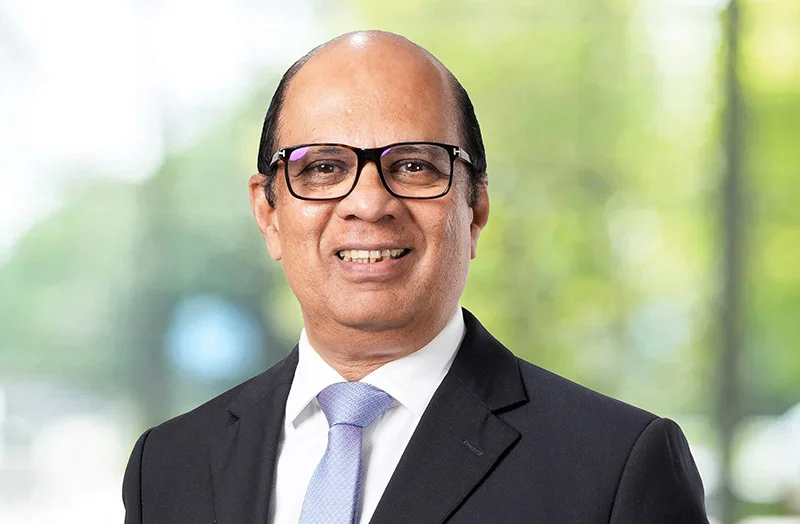
Dialog Axiata PLC, Sri Lanka’s #1 connectivity provider, announced the appointment of Mr. Arjuna Herath as an Independent Non-Executive Director, effective 1 May 2026. Herath brings extensive experience across consulting, corporate finance, investments, and regulatory governance.
“Arjuna brings a unique blend of private sector experience and public sector leadership, with deep exposure to regulatory and institutional environments. His insights will add meaningful value to the Board as we continue to strengthen governance and navigate an increasingly dynamic digital landscape,” said David Lau, Chairman of Dialog Axiata PLC.
Herath most recently served as Chairman of the Board of Investment of Sri Lanka, contributing to national investment promotion strategy. He was also the inaugural Chair of the Sri Lanka Data Protection Authority, where he led early regulatory efforts in digital privacy. Earlier, he served as Senior Partner and Head of Consulting at Ernst & Young (EY) Sri Lanka and Maldives, and held roles in corporate development at Ceylon Tobacco Company and Merchant Bank of Sri Lanka.
He has held several key regulatory roles, including as Commissioner of the Securities and Exchange Commission of Sri Lanka, Board Member of the Sri Lanka Accounting and Auditing Standards Monitoring Board, and Member of the Company Law Advisory Commission. He currently serves as a Director of the Colombo Stock Exchange.
Herath is a Fellow Member and a Past President of The Institute of Chartered Accountants of Sri Lanka and has contributed extensively to the global accountancy profession. He is the first Sri Lankan to chair a committee of the International Federation of Accountants (IFAC), where he led the Professional Accountancy Organisation Development Committee.

Abhishek’s 135 not out blows Delhi Capitals away

Trump announces Iran ceasefire extension but says blockade remains

Showers above 75 mm are likely at some places in the Western, Sabaragamuwa, Central, Uva and Southern provinces and in Ampara and Kurunegala districts

Cardinal: Presidents, IGPs and AG sabotaged Easter carnage probes before 2024 regime change

CIABOC asks Parliament not to transfer witness in case against Deputy Secy General

UN wants Sri Lanka to deliver concrete results in Easter Sunday bombing probe

‘Dates have the highest sugar content to fight Coronavirus’

Sunday Island 27 December – Headlines

#SundayIsland 17th December – Headlines

Sunday Island – 28th March

Sunday Island Headlines – 21 March

Sunday Island – 21st February – Headlines
-

 News1 day ago
Rs 13 bn NDB fraud: Int’l forensic audit ordered
-

 Business4 days ago
Harnessing nature’s wisdom: Experts highlight “Resist–Align” path to resilience
-

 News7 days ago
PNS TAIMUR & ASLAT set sail from Colombo
-

 News4 days ago
Gratiaen Trust announces longlist for the 33rd Annual Gratiaen Prize
-

 News3 days ago
From Nuwara Eliya to Dubai: Isha Holdings markets Agri products abroad
-

 Opinion2 days ago
Shutting roof top solar panels – a crime
-

 News4 days ago
Heroin haul transported on 50-million-rupee contract
-

 Latest News6 days ago
Singapore Zoo’s first Sri Lankan leopard cubs make their public debut