
Features
Donald Trump gears for war with his own party!


WHILE COCOONED IN MAR-A-LARGO . .
by Selvam Canagaratna
“There’s no longer a chief of staff to screen his calls and he keeps no predictable working hours. So an unspoken rule has governed Donald Trump’s calendar since he left Washington last month: To sit down with the former President, you must belong to his posh Palm Beach club or know how to contact him directly,” wrote Gabby Orr and Meredith McGraw in Politico magazine.
But even that won’t always do it. For weeks now, Trump has rejected meetings with everyone from former South Carolina Governor and 2024 hopeful Nikki Haley to House and Senate GOP candidates vying for his ear — preferring to spend his days leisurely calling friends, binging cable news, golfing with a rotating cast of partners and basking in standing ovations whenever he arrives for dinner on Mar-a-Lago’s outdoor patio. One person close to the ex-President said he’s become “unreachable” to anyone outside his limited circle of loyal aides, longtime friends and die-hard political allies.
That’s about to change, of course.
According to three people familiar with the planning, Trump will soon begin vetting candidates at Mar-a-Lago who are eager to fulfill his promise to exact vengeance upon incumbent Republicans who’ve scorned him, and to ensure every open GOP seat in the 2022 midterms has a MAGA-approved contender vying for it.
Trump already has received dozens of requests from prospective candidates seeking to introduce themselves and nab his endorsement, and formal meetings with them could begin as early as March. Now that Trump has survived his second Senate impeachment trial, he has shifted his focus to post-presidential activism — a venture mostly bankrolled by his new leadership PAC, Save America, which had $31 million in its coffers at the start of this month.
Earlier this week, Trump met with his former campaign manager Brad Parscale to discuss online fundraising components to support his efforts and how he can utilize social media despite his ban from popular websites like Twitter. Trump also met with House Minority Whip Steve Scalise (R-La.), and his eldest son Don Jr. earlier this week.
“We are in the process of putting together a more formal schedule for candidates who want to come get his endorsement,” said senior Trump adviser Jason Miller, noting that Trump’s meetings so far have been limited to golf friends, Mar-a-Lago members and “folks with the ability to contact him themselves.”
The planning for Trump’s coming ‘revenge tour’ comes as other top Republicans try to cajole him into working with the party’s apparatus ahead of next year’s midterm elections, rather than recruiting rival candidates whose bids could complicate primaries and cost the GOP critical seats. Sen. Lindsey Graham (R-S.C.) is expected to meet with Trump over the weekend to discuss his upcoming plans, including the former President’s desire to push for voter reforms at a time when the topic of election integrity has created a major split among elected Republicans.
Others in Trump’s orbit have encouraged him to wait and see if Republicans who’ve crossed him and are up for re-election next fall, such as Govs. Mike DeWine of Ohio and Brian Kemp of Georgia, attempt a peace offering before he launches a serious search for possible primary challengers.
“I’m more worried about 2022 than I’ve ever been. I don’t want to eat our own,” Graham told Fox News on the heels of a blistering statement Trump released this week accusing Senate Minority Leader Mitch McConnell (R-Ky.) of jeopardizing GOP candidates with his “lack of political insight, wisdom, skill, and personality.”
In the statement, Trump vowed to recruit insurgent candidates “who espouse Making America Great Again and our policy of America first” wherever he feels such challenges are necessary. The former President has already set his sights on ousting Reps. Liz Cheney of Wyoming, the No. 3 House Republican, and Fred Upton of Michigan, if he forgoes retirement. Both Cheney and Upton voted to impeach Trump following the January 6 riot at the US Capitol. Rep. Peter Meijer, a second Michigan congressman who voted for impeachment, already faces a primary challenger from an Afghanistan veteran and self-declared Trump supporter.
Whether Graham can make a team player of the bitter ex-President largely depends on who else Trump is in contact with, and how often. He still speaks weekly with his former chief of staff Mark Meadows and continues to seek counsel from a host of former aides and political confidantes whose appetites for revenge and disdain for the political establishment mirror his own. Recently, Trump hosted former Florida Attorney General Pam Bondi, and ex-campaign advisers Corey Lewandowski and Dave Bossie for dinner, all of whom remain influential fixtures within the MAGA movement.
“If you’re Trump, you don’t gotta play nice with these people anymore. You don’t have to do the whole fake political thing where you pretend to like people you don’t actually like,” said a person close to Trump, suggesting that he is unlikely to seek feedback from Republicans who disagree with his approach.
Some rank-and-file Republicans have encouraged the party’s leaders to tread carefully as they attempt to distance the party from Trump while he remains exceedingly popular among GOP voters. A POLITICO/Morning Consult poll conducted after Trump’s acquital in the Senate found that nearly six in 10 Republican voters want him to maintain a powerful role in the party moving forward.
“A Republican Party that seeks to erase President Trump and fails to understand his appeal to working class voters is destined to lose elections in 2022, 2024 and beyond,” Rep. Jim Banks (R-Ind.), chair of the conservative Republican Study Committee, .
So far, Trump’s backing has gone to two of his most loyal allies, Arizona Republican Party Chair Kelli Ward, who received a recorded endorsement for her re-election bid, and former White House press secretary Sarah Huckabee Sanders, a candidate for Arkansas governor who was given a glowing stamp of approval via his Save America PAC. Since then, he has used the political arm to bash McConnell, share a polling memo touting his popularity, and provide a readout of his recent meeting with House Minority Leader Kevin McCarthy.
He has refrained from endorsing other Trumpian candidates who have already entered races, waiting instead to roll out a series of endorsements later this spring and summer, according to a person familiar with the timeline.
In the meantime, Trump has appeared to enjoy transitioning into his post-presidency life. He has revelled in the news splash his rare statements have made, according to aides, but is otherwise spending his days like many of his wealthy Palm Beach peers: catching up on the news, making calls, taking leisurely meals and hitting the golf course with friends.
“He’s really doing what all the other guys his age with that kind of net worth do,” said one Florida Republican operative close to the Trump family. But then, the person noted, Trump was spotted on his golf course Wednesday with Kid Rock.



by Prof. M.W. Amarasiri de Silva
The evolution of Sri Lanka’s social policy framework represents one of the most compelling, paradoxical, and debated case studies in the global political economy of development. Often celebrated as an exceptional model among developing nations, Sri Lanka achieved human development indicators, such as high adult literacy, elevated life expectancy, and low infant mortality, that rivaled those of industrialised Western societies, despite maintaining a low-to-middle per capita income. This distinct trajectory was fundamentally sculpted by the establishment of an extensive welfare state, characterised by universal healthcare, free education, and pervasive food subsidies.
However, the long-term impact of this historical welfarism on present-day Sri Lanka presents a complex matrix of social triumph, economic vulnerability, and systemic crisis. To fully comprehend how the historical welfare state has shaped contemporary Sri Lanka, one must trace the institutional genesis of these policies through the critical frameworks provided by eminent social theorists, notably Ralph Peiris in his analysis of Asian development styles and Laksiri Jayasuriya in his landmark work on Sri Lanka’s experience of social development directed toward equity and justice.
Foundation of welfare state
The structural foundation of Sri Lanka’s welfare state was not a post-colonial luxury, but rather a late-colonial construct deeply interwoven with the dynamics of democratization and constitutional reform. As Laksiri Jayasuriya meticulously argues in his historical and theoretical explorations of Sri Lankan social policy, the trajectory of the country’s social development was rooted in the state-building exercises of the late British colonial era. The introduction of universal adult suffrage under the Donoughmore Constitution of 1931 served as a pivotal catalyst. By enfranchising the local population decades before formal independence in 1948, the colonial state altered the political elite’s incentives.
Politicians were suddenly forced to seek electoral legitimacy from a vast, rural, and economically disadvantaged populace. This constitutional shift institutionalised what Jayasuriya terms a culture of ‘welfare politics,’ where competitive electoral democracy became intrinsically linked to the provision of social goods.
During the period spanning from the 1930s to the 1950s, the state laid down the three pillars of its social safety net: free state-provided healthcare, free universal education from primary to university levels (championed by C.W.W. Kannangara), and a heavily subsidised food rationing scheme, most notably the rice ‘polu’ (haal polla) system. In the popular Sri Lankan vernacular and historical memory, these restrictive barriers and checkpoints became closely associated with the rationing culture surrounding the rice distribution and cooperatives where state-allocated rice rations were obtained via coupon books.
Jayasuriya highlights that these measures were conceived not merely as safety nets for the destitute, but as fundamental rights of social citizenship modeled partly on the egalitarian principles of the British post-war welfare state yet adapted to a post-colonial environment seeking equity and social justice. This social democratic commitment was maintained across alternating political regimes, creating a broad cross-party consensus that state-funded welfare was an untouchable social contract between the state and its citizens.
Policy trajectory in perspective
To place this unique policy trajectory in a broader comparative perspective, Ralph Peiris’s conceptualisation of ‘Asian Development Styles’ offers a critical lens. Peiris examined how different Asian nations navigated the tensions between Western models of modernisation, economic growth, and indigenous social structures. Many East Asian economies—such as South Korea, Taiwan, and Singapore—adopted a development style centered on ‘growth-first’ imperatives, state-directed capitalism, and the deferral of widespread social expenditure until after rapid industrialisation was achieved. In contrast, Sri Lanka pioneered a distinct ‘social-led’ development style within South Asia. Peiris observed that Sri Lanka’s development style prioritized human capability, social redistribution, and basic needs over raw capital accumulation. This style reflected a socio-cultural ethos that viewed social harmony, equity, and state paternalism as integral to governance, resisting the purely utilitarian or market-driven metrics of economic progress.
The immediate consequences of Sri Lanka’s socio-centric development style were undeniably positive in terms of human wellbeing. By the late 20th century, Sri Lanka had achieved a physical quality of life index that far surpassed its South Asian neighbors. Maternal and infant mortality rates dropped precipitously due to widespread access to free public health facilities and midwife networks. Universal education fostered a highly literate electorate, dramatically closed the gender gap in basic and secondary education, and enabled significant upward social mobility for marginalized caste and rural communities. Jayasuriya emphasizes that this commitment to equity and justice transformed the social fabric, democratising access to public life and cultivating a politically conscious citizenry that viewed education and healthcare as non-negotiable entitlements.
However, the enduring legacy of this historical welfare state is dual-edged, carrying deep-seated economic contradictions that directly contributed to present-day Sri Lanka’s socio-economic landscape. The central paradox of the Sri Lankan welfare state lay in the disconnect between social expansion and economic productivity. While the state committed huge fractions of its national budget to social consumption, it failed to build a resilient, diversified industrial export base capable of generating the revenue necessary to sustain these expenditures over generations. The primary revenue source funding the early welfare state was the taxation of the colonial-era plantation export economy—primarily tea, rubber, and coconut. As global commodity prices fluctuated and deteriorating terms of trade eroded plantation revenues in the post-independence decades, the state faced severe fiscal deficits.
Macroeconomic imbalances
The fiscal strain of maintaining universal subsidies led to severe macroeconomic imbalances by the 1970s. The state attempted to manage these pressures through import-substitution policies, strict price controls, and state monopolies, culminating in the closed economy of 1970–1977. While this period sought to preserve the egalitarian principles articulated in Jayasuriya’s analysis of social justice, it resulted in severe shortages of essential goods, economic stagnation, and rising unemployment among the newly educated youth. The inability of the economy to absorb the expanding class of literate, ambitious young citizens created a structural mismatch between educational output and employment opportunities.
This socio-economic disjunction erupted into violent political crises. The educated yet economically disenfranchised rural youth became the primary base for insurgencies, such as the Janatha Vimukthi Peramuna (JVP) uprisings in 1971 and 1987–1989. Concurrently, the failure to extend equitable socio-economic and political opportunities to the Tamil minority—compounded by language policies that prioritized the Sinhala majority in public sector employment—fueled ethnic marginalization, eventually escalating into a devastating nearly three-decade-long civil war. Thus, as both Jayasuriya and Peiris observe in their respective analyses, while the welfare state was designed to promote social cohesion and equity, its economic unviability and politicization contributed to social frustration and structural conflicts when the economy failed to fulfill the aspirations created by universal social programs.
Janasaviya, Samurdhi and Aswesuma
A profound structural turning point occurred in 1977, when Sri Lanka became the first country in South Asia to abandon import-substitution and embrace neoliberal market-oriented economic reforms. The advent of the ‘Open Economy’ signaled a major shift in the state’s social policy regime. As Jayasuriya notes in his critique of the post-1977 retreat from the welfare state, universal welfare policies were systematically dismantled or reconfigured into targeted, means-tested poverty alleviation programs. The universal food subsidy was replaced by food stamp programs and later by targeted cash transfer schemes such as Janasaviya and Samurdhi, and eventually Aswesuma.
This transition from universal social citizenship to targeted safety nets marked a fundamental redefinition of the social contract. While the 1977 open market policies stimulated economic growth, foreign investment, and infrastructure development, they also led to rising income inequality, regional disparities, and the commercialization of public goods. The state’s fiscal commitment to public education and health gradually eroded as a percentage of GDP, leading to a dual-track system.
Underfunded state healthcare and education systems remained free but suffered from resource constraints, overcrowding, and quality decline, while a burgeoning private sector in health and tuition-based education emerged to cater to the affluent. Jayasuriya argues that this marketization of social services undermined the egalitarian ideals of social justice that had historically anchored the nation’s social policy.
The contemporary manifestation of this historical trajectory became starkly apparent during the unprecedented economic crisis that engulfed Sri Lanka in 2022 and its continuing aftermath. The crisis—characterized by sovereign debt default, hyperinflation, severe foreign exchange shortages, and acute shortages of fuel, medicines, and food—exposed the fragile structural foundations of the country’s political economy. The roots of this crisis are inextricably linked to the unresolved tension between public expectations built by historical welfarism and modern neoliberal fiscal mismanagement.
Welfare and populism
Over recent decades, successive governments continued to rely on populism to secure electoral victory, promising subsidies, tax cuts, and public sector employment without building a sustainable tax base or correcting structural economic deficits. When the state faced catastrophic revenue declines following ill-advised tax cuts in 2019, combined with the shock of the COVID-19 pandemic and debt-driven infrastructure spending, the fiscal apparatus collapsed. The resulting austerity measures, mandated under International Monetary Fund (IMF) stabilization programs, forced sharp reductions in energy subsidies, increased indirect taxation, and deep spending cuts that severely hit vulnerable populations.
In present-day Sri Lanka, the legacy of the welfare state manifests as both a vital buffer and a site of intense political contestation. On one hand, the historical infrastructure of universal health and basic education has prevented an even more catastrophic loss of human life during the peak of the recent economic collapse. The enduring social capital, public health institutions, and high literacy rates provided a baseline of societal resilience that assisted communities in coping with immense economic shock. The persistent popular memory of social entitlement has also fueled widespread civic mobilization, as demonstrated by the Aragalaya mass protest movement in 2022, which demanded accountability, social justice, and an end to political corruption—echoing the deeply ingrained political culture of democratic accountability that Jayasuriya identified as a byproduct of early welfarism.
Challenge of restructuring social policy
Contemporary Sri Lanka faces the immense challenge of restructuring its social policy framework in an era of stringent fiscal constraint. The rollback of state subsidies and the rising cost of living have pushed millions of citizens below the poverty line, threatening to reverse decades of hard-won human development gains. Malnutrition rates among children have spiked, access to essential imported life-saving medicines has been compromised, and the real value of state pensions and social assistance has been severely eroded by inflation. The targeted social safety nets, such as the Aswesuma welfare scheme introduced to replace Samurdhi, have faced significant administrative challenges, exclusion errors, and public resistance, reflecting the ongoing difficulty of transitioning from universal rights-based social protection to targeted relief mechanisms in a deeply distressed economy.
Furthermore, the contemporary economic crisis has intensified a major ‘brain drain,’ as highly educated medical professionals, engineers, university lecturers, and skilled workers migrate abroad in large numbers. This mass emigration directly exposes the present-day crisis of Sri Lanka’s historical social model: the state continues to invest significant public resources into providing free secondary and tertiary education, but the domestic economy fails to offer economic stability and professional opportunities to retain this human capital. Consequently, the social returns on the state’s educational investment are increasingly captured by developed nations, leaving domestic public institutions further depleted.
In evaluating the contemporary impact of Sri Lanka’s social policy through the theoretical insights of Ralph Peiris and Laksiri Jayasuriya, it becomes evident that Sri Lanka’s history is neither a pure success story nor an absolute policy failure. Ralph Peiris’s emphasis on Asian development styles reminds us that development cannot be reduced merely to economic output metrics; the deliberate choice to prioritize human capabilities and social equity established an enduring standard for human welfare in the global South. However, as Jayasuriya’s critical analysis reveals, a welfare state cannot exist in an economic vacuum. The failure to integrate social policy with a productive, sustainable, and equitable economic strategy created structural vulnerabilities that ultimately undermined the very social justice the state sought to achieve.
Socio-economic contradiction
This socio-economic contradiction has entered a critical new phase under the administration of President Anura Kumara Dissanayake and the National People’s Power (NPP) government, which assumed office with an explicit mandate focused on systemic corruption reform and equitable development. Facing the stringent structural constraints of post-default economic management, the administration has adopted a pragmatic, hybrid economic framework designed to reconcile Sri Lanka’s historic social protection legacy with strict international fiscal discipline. Rather than abandoning structural reforms, the government maintains continuity with the Extended Fund Facility agreement managed alongside the International Monetary Fund (IMF), adhering to primary budget surplus targets and progressive revenue-mobilisation goals. However, it attempts to reorient macroeconomic priorities away from elite-driven financialization toward a state-regulated, productive market economy centered on public sector transparency, digitalization, anti-corruption legislation, and the revitalisation of local agriculture and manufacturing.
Policy of rebalancing
This policy rebalancing directly reflects the enduring relevance of Peiris’s ‘Asian development style’ framework, as the state seeks to build export competitiveness while retaining public oversight of basic social safeguards. Yet, as Jayasuriya cautioned in his critiques of targeted safety nets, managing fiscal austerity within a political culture historically accustomed to universal state entitlement poses severe domestic challenges. High living costs, continuous pressure on public sector wages, structural poverty, and the persistent outflow of skilled human capital leave narrow margins for error. Contemporary Sri Lanka’s economic policy thus represents an ongoing attempt to construct a viable, modern economic model—one that generates sustained productivity and debt sustainability while preserving the foundational democratic imperative of equity and social justice that has defined the nation’s post-colonial identity.

by Dr Upul Wijayawardhana
In my medical practice of just under 57 years, divided almost equally between Sri Lanka and the UK, I have been fortunate enough to meet some remarkable patients who demonstrated indomitable fortitude. Not that there were no nasties, but, fortunately, they were extremely rare. Now well into my retirement, I can still vividly remember some remarkable cases as if they happened yesterday. One of them well illustrates what happens when prescription warnings are ignored; that can result in drug interactions producing nasty, sometimes lethal, side effects.
A man in his sixties was admitted under my care to Grantham Hospital with progressively increasing muscle pain and weakness, being almost bedbound by the time of admission. It was pretty obvious that there was extensive damage to muscles which was confirmed by huge elevation of markers of muscle damage. A careful history, one of the vital steps needed for diagnosis, revealed that he was on long-term statin therapy following a heart attack and his GP has recently prescribed an antifungal agent for an infection in the groin. This was before the computerised prescription era and is not likely to have happened now, as a red-alert would be displayed as antifungals are known to produce severe interactions with statins. Both drugs were stopped, and with supportive therapy, he recovered fast and walked out of the ward two weeks later. He was started on a different statin later with no problems.
Would this experience make me join the vast numbers of YouTubers who are harping on the dangers of statins? Definitely not. I say so because the benefits of statins far outweigh the rare side-effects. All drugs have side effects and, in some trials, placebos producing more side effects than the active drug itself! Drugs need to be prescribed by those with education and experience whilst prescribers need to be updated regularly. Statins, perhaps, are the most widely used class of drugs and the scope for use is widening with the reporting of new clinical trials, two significant trials being presented at the European Society of Cardiology Congress held last month in Munich.
It was known for a long time that elevated levels of cholesterol in blood leads to damage of arterial walls (atherosclerosis) which manifests as cardiovascular disease including heart attacks, cerebrovascular disease including strokes and peripheral vascular disease. Various attempts at lowering cholesterol effectively by diets, drugs and surgery were largely unsuccessful till statins were discovered and it was soon realised that cholesterol synthesis by the body is more important than ingestion of cholesterol rich foods and saturated fats. Statins inhibit cholesterol synthesis in the body and the first statin released for therapeutic use was Lovastatin in 1987, but wide use of statins started only after the release of results of the landmark 4S trial in 1994.
The Scandinavian Simvastatin Survival Study (4S) was a multicentre, randomised, double blind, placebo controlled clinical trial which used Simvastatin, the second statin released for use a year later in 1988. 4444 patients, who previously had a heart attack or were having angina with moderately elevated levels of cholesterol, in spite of rigorous dieting, were recruited from 94 centres in Scandinavia. After follow-up of 5.4 years, compared to the placebo group, it was shown that the group treated with Simvastatin showed lowering of LDL cholesterol (Bad Cholesterol whereas HDL cholesterol is protective) by 35% and, more importantly, lowering of death rate by 30%. A follow-up study of 10 years showed continuing benefits. More trials and more statins followed.
Though Simvastatin had widespread use initially, the more powerful Atorvastatin, launched in 1997, overtook producing more dramatic results in subsequent clinical trials. Till the introduction of monoclonal antibodies (mAbs), laboratory produced proteins that mimic the immune system and capable of targeting antigens in cells or pathogens (which can be identified as the drug names end with ‘mab’) Atorvastatin was the highest grossing drug of all time, in spite of prices dropping sharply. There had been a proliferation on mAbs as many are used in a number of cancers and auto-immune diseases, earning more money as they continue to be expensive.
I remember a meeting I attended, just after the results of the 4S trial was released, where fears were expressed whether the NHS would go bankrupt if all eligible patients were prescribed Simvastatin. Widespread use has brough prices tumbling down, a tablet of Atorvastatin now costing in UK only 3p!
Though the initial trials were for secondary prevention, reduce recurrence after the disease has manifested, subsequent trial were aimed at primary prevention, preventing or delaying disease occurrence in those with high risk factors. These too showed significant benefits and the scope for use of statins continue to expand. Two significant trials were presented at the ESC congress.
The first was the STAREE study, which enrolled 5000 persons, over the age of 70 in Australia, with no history of cardiovascular disease, diabetes or dementia and half got Atorvastatin 40mg daily, the other half getting a placebo. Results showed a significant 30% reduction of a composite end point of death from cardiovascular causes, nonfatal myocardial infarction, stroke or coronary revascularization. Interestingly, incidence of serious adverse effects was similar in both groups being 2.6%. There was no significant reduction of death rate by itself. Perhaps, this is explained by most deaths being due to non-cardiac causes in this age group.
The second was a Danish observational study, where researchers assessed whether early initiation of statins after the diagnosis of type 2 diabetes was associated with a lower risk of dementia. Over 10 years, early statin initiation was associated with a 15% lower relative risk of dementia than no statin treatment, while late initiation was associated with a 10% lower risk. Though they studied the records of 132,585 patients, as this is an observational study, not a double blinded clinical trial, results are not as convincing and may have to be reaffirmed by further studies.
How will the results of these two trials affect clinical practice?
To act on the results of these trials is not difficult in the UK. Those over 80 years are already offered a statin and it would not be difficult for GPs to extend use to those over 70. Most diabetics, unless relatively young, are likely to be on a statin already, as they are categorised as high risk. There are no cost implications to patients as diabetics and those over 65 years get all their drugs free from NHS.
Unfortunately, things are likely to be very different in Sri Lanka. Diabetes is rampant and dementia is on the rise. As life expectancy is increasing and those over 70 being an ever-increasing group. Diabetics may be able to get a statin from government hospitals. However, there is no provision for free supply of statins for over 70 group, as this is for primary prevention. With exponentially increasing cost of living, retirees may find it difficult to afford a statin.
Ideally, Atorvastatin 40mg daily, the dose used in the trials, should be taken though one can argue that other statins may be effective as benefits are likely to be a group effect. As many trials used the 40mg dose, Pfizer decided to price 10mg, 20mg and 40mg Atorvastatin tablets the same, but this is unlikely in Sri Lanka, what is available being generics; Atorvastatin went out of patent protection in 2011. If 40mg tablets are significantly more expensive, perhaps, a lower dose could be considered as the average body size of Sri Lankans is smaller than that of Australians.
It can be argued that even a small dose is better than taking no statin at all. Maybe there is a good opportunity for our scientists, perhaps together with their Indian counterparts to do clinical trials to establish appropriate doses of statins and other drugs, rather than follow Western guidelines. Until then, it may be sensible to give anyone over 70 years an affordable dose, with some patient education on adverse effects could be minimized.
Statins are a valuable tool for the prevention of vascular disease. They not only reduce deaths but also improve quality of life by preventing debilitating illnesses. Like any drug they too have adverse effects and should be used under proper medical supervision. Worst thing to do is to listen to fear-mongers!
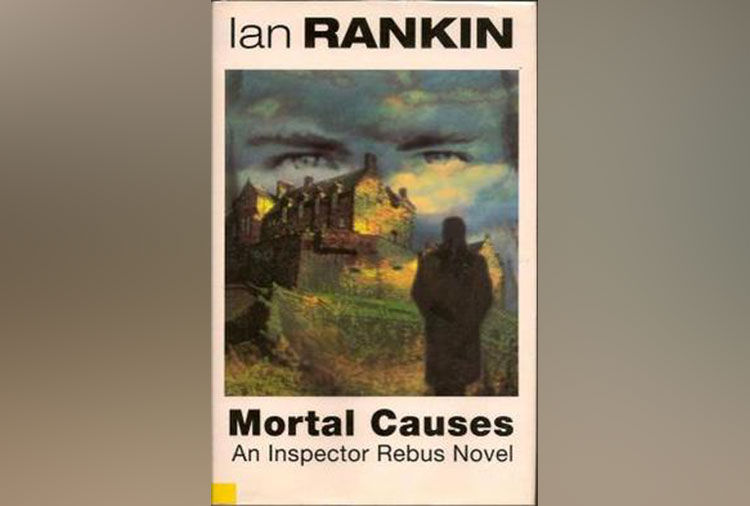
Tales of Mystery and Suspense 20
by Prof. Rajiva Wijesinha
After the elegance of Agatha Christie and Hercule Poirot, I revert to one of the least elegant detectives I have looked at. The first John Rebus novel by Ian Rankin I discussed here was Set in Darkness, though I think I failed to mention the title. That does not really matter for Rankin’s titles seem a bit interchangeable. Certainly, the title of the book I will explore today, Mortal Causes, could apply to most Rebus adventures.
But this too was a gripping tale, and also dealt with what used to be a disturbing social issue in the last quarter of the last century, namely violent clashes between Catholics and Protestants, which had their roots in the age-old question of Northern Ireland and its place in the United Kingdom. The root problem there was the influx, when Ireland was comprehensively taken over by the English, of Protestants from Scotland, who were so entrenched in the north of Ireland, the area known as Ulster, that they stopped Britain from granting independence to the whole of Ireland.
Ulster remained a part of the United Kingdom, but over the years the Catholics there, supported by the Irish Republican Army, the IRA, agitated for union with the Republic of Ireland. This was bitterly resented by the Protestants, and emotions ran high, as I found when I tried to bring together Catholic and Protestant friends when I was at Oxford.

Ian Rankin
The sixties saw the overthrow of three Prime Ministers of Northern Ireland, each succeeding one being more committed to the Protestants than his predecessor, for there was a preponderance of Protestant constituencies. But the Catholic numbers were proportionately increasing, and the IRA of course got support from the Irish Republic, with the border being porous and impossible to patrol. This led to vicious reprisals by British troops, and it was their failure to address excesses over the years that made clear their infinite hypocrisy in criticizing Sri Lanka for excesses during the civil war, demanding inquiries while signally failing to address the massacres of Catholics in Northern Ireland.
Mortal Causes
deals with the repercussions of this rivalry in Scotland, where the latent animosity between Catholics and Protestants was exacerbated by events in Ulster. Obviously Scottish groups were keen to help their fellow religionists, and the book is based on how money was collected and guns smuggled in to Ulster. But typically, Rankin also looks at how the proliferation of guns led to the strengthening of gangs, who engaged in extortion, with on occasion Catholic and Protestant guns maintaining a truce so that they could each exploit their own catchment areas.
A microcosm of what went on was seen in a youth club in a seedy housing estate in Edinburgh, to which a Catholic priest Rebus was friendly with sent a youngster who was supposed to bring the communities together. Though this resulted in a truce, it was in essence an arrangement that allowed both Catholics and Protestants to deal in intimidation of their different communities in the area. And the club was dominated by the protestants, led by a youth called David Soutar, who is endemically violent, and takes against Rebus on his very first visit, after he had promised Father Leary to look into the situation.
The youth club turned out of course to be connected with the murder that set off the investigation, though this only became clear because of Rebus’ painstaking investigation of that crime. It was a brutal killing, in an underground section of the city, usually only to be seen by arrangement with the city council. The bodies were discovered by some youngsters, one of whom had purloined a key from his great uncle who was one of the custodians, who provides important information in the course of the investigation to make up for that lapse.
Before that Rebus had realized something bigger was behind the gruesome murder, for while part of the team at his own station he was asked by a Chief Inspector with the Scottish Crime Squad, Kilpatrick, to work also with his team. He had come to the site of the crime with an Inspector from London, Abernethy, who went back almost immediately to London. And though Abernethy mentioned the possibility of the killing being because of drugs, Rebus stuck to his view that it was terrorism related.
The body was soon enough identified, that of a youngster who lived with a couple called Murdock and Millie, and had Protestant insignia on his walls. And painstakingly Rebus established connections with diehard Protestants, one of whom, called Bothwell now which was his parental name, had edited a magazine while stationed in the Orkneys but now ran a dance club in Edinburgh. And he also deduced that SaS tattooed on the arm of the dead body stood for Sword and Shield, an extreme Protestant organization to which it transpired that David Soutar also belonged.
Alarmingly, it turned out that the dead Billy was the illegitimate son of Rebus’ old antagonist Ger Cafferty, who was now serving time in prison. But when he hears that his son had been murdered, he escapes, and makes it clear, through several contacts with Rebus, that he expects the killers to be found, and that he will take revenge on them.
Rebus and Inspector Smylie from the Crime Squad have to fly to Ulster to collect information which the police there refuse to transmit, and find nothing special though they confirm the existence of an extreme group called Sword and Shield, and that it has branches in America. And it seems that one of its leaders in Ulster has just gone to Scotland, while the Americans confirm that another leader will be flying to England and then to Edinburgh. Rebus asked Kilbride to tail the latter, and he says he will set two of his officers, who have no affection for Rebus, on to him.
When Rebus and Smylie get back from Ulster, Rebus is taken aside by one of these officers who says that Smylie’s brother Calumn, who was also part of the Crime Squad, and had been working undercover on arms shipments, has been murdered. This makes it clear that the arms smuggling is the key to the deaths, and also that there has been a leak from the Crime Squad.
And then Millie, who had taken a disk which Billie had hidden in his wall and fled, is also found killed. She had sought shelter with a friend who worked at Bothwell’s club, and the friend had told Bothwell about this, which was doubtless why she had been killed.
When the American organizer of Sword and Shield comes to Edinburgh Rebus manoeuvers a meeting with him, though not without rousing his suspicions. But the reports he receives from Kilpatrick of the surveillance say that he has just been doing touristy things.
The book is set during the Edinburgh Festival, and the police have been getting several calls to say a bomb will go off at its height. And Rebus now realized that this is precisely what Soutar is planning to do, having creamed off some of the weaponry, including explosives, that he had been collecting for transmission to Ulster.
These were stored in a facility provided for him by a friend whose father ran the group, but knew nothing about what Soutar was planning. The son, terrified by what he had been involved in and what the police knew, took Rebus to the warehouse which was where, DNA tests of the floor revealed, Calumn had been killed. And when Rebus and Abernethy, whom he had called up from London, confront Bothwell, it seems he too did not know of Soutar’s little sideshow, though it was also clear that he had known of Millie’s death, as well as Billy’s.
Her murderers had got the compact disk but her flatmate, though he had destroyed the backup, had looked at it before and that was how Rebus found out about the warehouse that Soutar had used. But then he goes with Abernethy to the warehouse in which the Crime Office had kept the weapons they had found, and they both confront Kilbride there and tell him that they know he too had been a member of SaS – the granduncle having shared his research with Rebus – and had passed on parts of what was confiscated to Soutar, since he was in a position to change the invoices.
But he too evidently did not know what Soutar was planning, and when Rebus goes to the youth club it is to find that Soutar had nearly killed him, and had then set off for the festival. There is great drama then as Rebus tries to stop him setting off whatever bomb he has and, though he is nearly killed, as happens in so many Rankin books at the end, Abernethy shoots Soutar dead.
Then however, when Rebus goes to the dance club for what he thinks of as final business, he finds it on fire. Bothwell has been killed. But he finds the American inside and pulls him out. When he goes further and finds the man from Ulster in a chair, tied up so he would burn, he tries to free him and then is again nearly killed, though this time he is rescued by Cafferty – who tells him it was not to save him that he had come in but to make sure he did not save the other man, the American having slunk away after Rebus had taken him outside the burning building.
The American is apprehended when he was trying to leave the country. But Kilbride is smothered in his hospital bed when he was recovering, so Cafferty’s vengeance for his son was almost complete.

Charani, Shafali power India past Japan and into Asian Games semi-finals

Athapaththu and Dilhari muscle Sri Lanka past Malaysia in mismatch

Abhishek Sharma hits record T20 ton as India beat Afghanistan by 127 runs

Trump administration approves sale of F-35 jets to Saudi Arabia

Banton steers England into unassailable 2-0 series lead

Showers expected in the Western, Norrh-western and Sabaragamuwa provinces and in Galle, Matara, Kandy and Nuwara-Eliya Districts.

‘Dates have the highest sugar content to fight Coronavirus’

Sunday Island 27 December – Headlines

#SundayIsland 17th December – Headlines

Sunday Island – 28th March

Sunday Island Headlines – 21 March

Sunday Island – 21st February – Headlines
-

 Latest News6 days ago
Sri Lanka thwart Fatima Sana challenge to secure Asia Cup final spot
-

 News5 days ago
Gnanasara Thero absconding after SC ruling
-

 News6 days ago
Ammunition cache found in old Kandy bungalow
-

 News6 days ago
Green Climate Fund (GCF) Regional Dialogue for East and South Asia will be held from 14 to 17 September 2026 at Cinnamon Life at City of Dreams Hotel, Colombo
-

 News6 days ago
Prof. Pieris says Buddha Dhamma recognised as source of law under Constitution
-

 Opinion4 days ago
From Galkissa (Mount Lavinia) to Tambuttegama
-

 News7 days ago
Bambalapitiya Railway Station renovated under the “Dream Destination” project opened to the public
-

 Latest News6 days ago
ITS Giuseppe Garibaldi’ departs Colombo