
News
US must understand, a rising India is not a threat to Washington. It is an asset

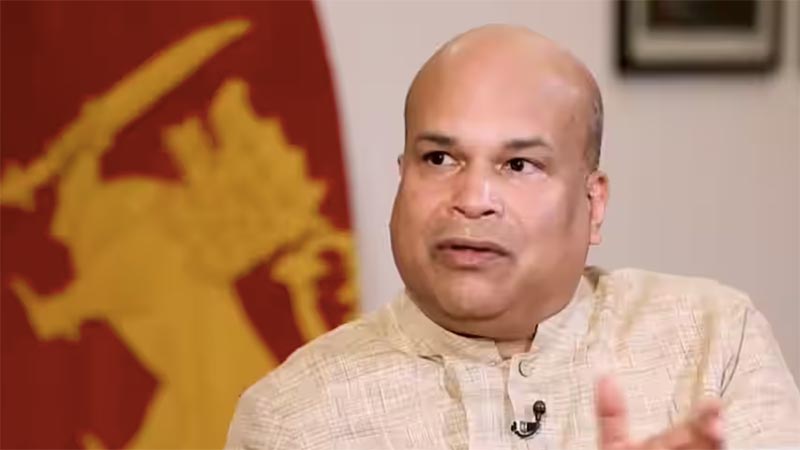
The belief that the US can pressure India into unconditional alignment is short-sighted and self-defeating
Former cabinet minister, High Commissioner to India, and founder of the Pathfinder Foundation Milinda Moragoda has questioned the US actions vis a vis India, in an article carried in The Indian Express, in its August 19th edition.
With US–India relations entering a more fragile phase, Washington’s pressure-first approach risks alienating a partner whose rise could be one of America’s greatest strategic assets in the 21st century. George Washington, in his farewell address of 1796, urged Americans to “observe good faith and justice toward all nations” and to “cultivate peace and harmony with all.” More than two centuries later, those words resonate in a very different but equally critical context.
For years, the US-India relationship has been described as a “defining partnership of the 21st century” — a rare convergence of two large democracies, diverse in their societies but united in their commitment to pluralism, innovation, and open markets. Yet in recent years, there has been a troubling shift in tone. Trust, once the hallmark of this partnership, is being replaced by suspicion.
At the heart of this erosion is a dangerous miscalculation by some in Washington: The belief that the US can pressure or “manage” India into unconditional alignment. This approach is short-sighted and self-defeating. It risks undermining one of America’s most natural, complementary partnerships at a time when the global order is becoming more multipolar and less predictable.
India is not just any large emerging economy. It is the world’s most populous democracy, a USD 4 trillion economy in the making, a leader in space exploration and digital public infrastructure, and a trusted voice in the Global South. Few countries offer such a unique blend of economic potential, democratic resilience, and geopolitical reach. From defence cooperation and technology partnerships to counterterrorism and climate action, the areas of overlap between India and the US are vast and expanding.
Despite this, US foreign policy has now taken a transactional turn. The escalation of trade disputes, the threat of secondary sanctions over energy purchases, and restrictive technology-transfer regimes all signal a willingness to apply pressure rather than build consensus. While disagreements between partners are natural, the manner in which they are pursued matters. Coercive tactics not only erode goodwill — they invite pushback.
India’s commitment to strategic autonomy is not a bargaining chip; it is a national consensus rooted in history. This is not about rejecting partnerships — it is about ensuring that they are built on equality and mutual respect. Attempts to “bully” India into alignment are destined to fail. Equally troubling is the view — still held in some quarters — that India’s rise must be tempered because it could one day compete with US interests. That mindset belongs to an era of zero-sum geopolitics and ignores the strategic reality of the 21st century.
A rising India is not a threat to the US. It is an asset. In the Indo-Pacific, where both countries share concerns about maritime security, supply-chain resilience, and the rules-based order, India’s role is indispensable. In global governance, India’s voice strengthens calls for reform of multilateral institutions — an agenda the US itself claims to support. In technology and innovation, Indian and American companies are increasingly intertwined, from Silicon Valley to Bengaluru.
If the US continues down its current, pressure-driven path, it risks alienating a partner with the best possible long-term strategic synergy. In a multipolar world, where trust is the most valuable currency, such alienation will have lasting consequences. India has options deepening engagement with Europe, expanding ties with ASEAN strengthening South–South cooperation and will use them if it feels constrained or disrespected.
This is not to say the relationship is beyond repair. Far from it. But Washington must change course before it is too late: Recognising India as an indispensable ally, one with shared democratic values, overlapping strategic objectives, and the capacity to work alongside the US in shaping a stable global order. It means replacing the mindset of managing India with one of empowering the partnership. For America, the choice is stark: Continue with mistrust and coercion, and risk losing one of its most consequential allies in Asia; or embrace India’s rise and, in doing so, strengthen its own strategic position.
George Washington also warned that “the nation which indulges toward another an habitual hatred or an habitual fondness is in some degree a slave.” In today’s world, that means rejecting fear and domination as the foundation of foreign policy and replacing them with balance, respect, and mutual purpose.

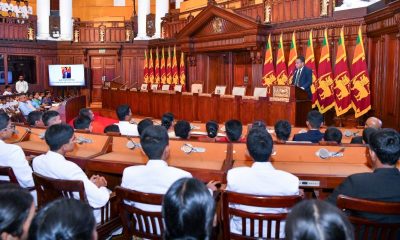



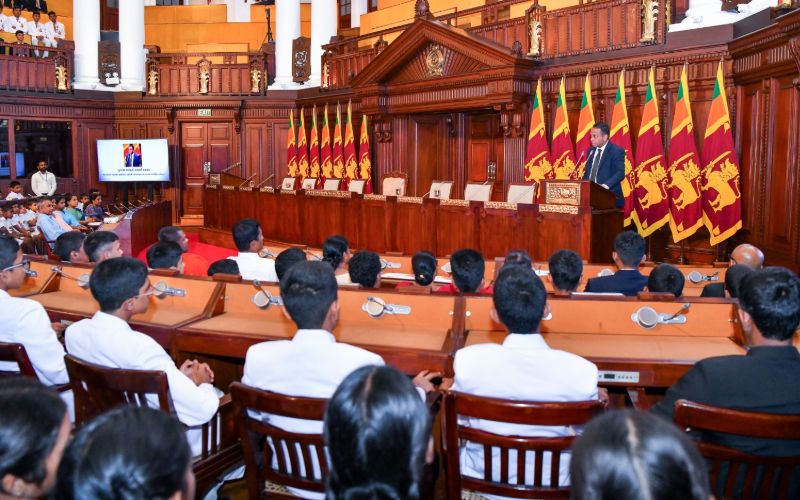
Marking the completion of two years of the ‘Vision’ Programme, students from Pinnawala Central College and Matale Siri Seevali College were given an opportunity on Thursday (24) to visit the Presidential Secretariat.
The ‘Vision’ Programme was launched for schoolchildren jointly by the Presidential Secretariat, the Ministry of Education and the Department of Communication of the Parliament of Sri Lanka.
Following a visit to the former Parliament building at the Presidential Secretariat, the students were also briefed on the history of Parliament.
The role of the President’s Fund and its importance to schoolchildren were explained by Senior Additional Secretary to the President Roshan Gamage.
The ‘Vision’ commemorative book, featuring the two-year journey of the ‘Vision’ Programme and its special activities, was also presented to the participating schools.
As part of the programme, valuable plants were also presented to the schools as a symbolic gesture underscoring the importance of environmental conservation.
Director General of Public Relations Dharmasiri Gamage, the Director and Assistant Director of the Tri-Services Security Coordination Unit, the principals and teaching staff of Pinnawala Central College and Matale Siri Seevali College, and students were among those present on the occasion.
President’s Media Division (PMD)

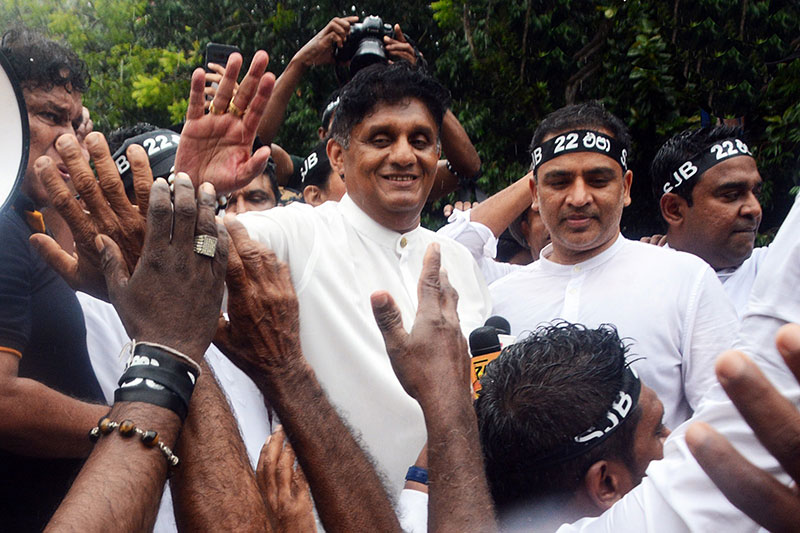
Opposition and SJB Leader Sajith Premadasa yesterday vowed that an SJB government would repeal the 22nd Amendment (22A) to the Constitution.Premadasa made the pledge while addressing thousands of SJB supporters who gathered near Parliament to protest against 22A.
Addressing the rally at Polduwa Junction, Battaramulla, Premadasa said the proposed constitutional amendment would undermine democracy and judicial independence and enable the concentration of political power in the Executive.
“Even if they pass it, under an SJB government we will scrap it,” Premadasa told the gathering, claiming that 22A was aimed at paving the way for a one-party state and placing the State under the control of a single political party.
Braving the rain, Premadasa said they had gathered there peacefully and had no intention of resorting to violence.
“We have gathered here to protect democracy,” he said, challenging the government to hold Provincial Council elections if it was confident of facing the people.
Premadasa said the SJB was prepared to work with any democratic and clean political force committed to the country’s progress and public welfare, amid ongoing discussions on cooperation among Opposition parties, including the United National Party.
Premadasa also accused groups aligned with the government of attempting to discourage people from attending the protest through statements and other measures.
SJB General Secretary Ranjith Madduma Bandara said the protest had been organised against the proposed amendment, which the party had opposed on the grounds that it could pave the way for authoritarianism.
The demonstration began around 9 a.m. at Polduwa Junction and coincided with Parliament taking up the proposed 22nd Amendment for debate. Proceedings on the Bill are scheduled to continue today (25).
The Supreme Court has determined that the proposed amendment does not require approval at a referendum and could be passed with a special majority in Parliament.
Meanwhile, traffic congestion was reported on roads surrounding Parliament and Polduwa Junction following the demonstration.
Security was also tightened in and around the Parliamentary complex, with a heavy police presence observed at Polduwa Junction and near the main entrance to Parliament.

Two retired female Navy petty officers were ordered to be remanded until October 5 over their alleged involvement in the abduction and disappearance of two women in Trincomalee during the war.
Trincomalee Chief Magistrate M.S.M. Samsudeen yesterday ordered that the two suspects be remanded and directed that they be produced for an identification parade on October 5.
The suspects, residents of Chilaw and Haputale, were arrested after appearing before the CID in connection with another court case. They were subsequently produced before the Trincomalee Magistrate’s Court.
The court was informed that the investigation concerned the alleged abduction of Sasikumar Thenmoli and Mary Delsia, residents of Paalaiyootru, Trincomalee, on or around May 13, 2008.
The CID told court that information uncovered during its investigations indicated that the two women had allegedly been detained at an underground location known as the “Gun Site” at the Trincomalee Naval Base while the two suspects were serving in the Navy. The women were subsequently reported missing.
Further investigations into the alleged abduction and disappearance of the two women are continuing.

Lalit Rajbanshi, Kushal Bhurtel set up Nepal’s opening win

‘Vision’ Programme Marks Two Years

Costa Rica minister fired for unapproved meeting with Trump in US

At least 41 die as boat capsizes in DRC’s Lake Tanganyika

Showers will occur at times in the Western, Sabaragamuwa, Southern, Central and North-western provinces

Sajith vows to scrap 22A under future govt.

‘Dates have the highest sugar content to fight Coronavirus’

Sunday Island 27 December – Headlines

#SundayIsland 17th December – Headlines

Sunday Island – 28th March

Sunday Island Headlines – 21 March

Sunday Island – 21st February – Headlines
-

 News7 days ago
Shanakiyan urges urgent action over reported death sentence for Lankan in Saudi Arabia
-

 News6 days ago
Namal Rajapaksa Buddhist gambit fails, bail denied
-

 Features6 days ago
Why the spelling Sri Lankan names in English vary
-

 Features6 days ago
Three bands, a new identity: Sri Lankan wolf snake recognised as distinct species
-
 Business6 days ago
SLIIT holds largest-ever convocation
-

 News6 days ago
Vehicle prices drop by up to Rs. 1 mn, says importers’ body
-

 News6 days ago
Govt monitors reported Saudi death sentence – Foreign Ministry
-

 Business6 days ago
All-new Bolero MaXX Pik-Up unveiled in Lanka