
Sports
Ranuk Jayasuriya follows in father’s footsteps with maiden ton for SSC


The name “Jayasuriya” still rings loud in Sri Lankan cricketing circles and now it’s the next generation making headlines. Ranuk Jayasuriya, the youngest child of former Sri Lanka captain and 1996 World Cup hero Sanath Jayasuriya, struck his maiden century for SSC in the Under-23 tournament this week.
Educated at a boarding school in England, the 18-year-old southpaw has already caught the eye of cricket watchers in both London and Colombo. But unlike his swashbuckling father, who made a habit of taking bowlers to the cleaners from ball one, Ranuk prefers to get his eye in, playing with a straight bat and building his innings brick by brick.
Batting against Kurunegala Youth at the CCC grounds, SSC found themselves in early strife at 46 for four in reply to 273. Ranuk, cool as you like, joined forces with Kenul de Zoysa for a 179-run rescue act that turned the tide. The teenager’s knock of 116 came off 159 deliveries, peppered with 16 fours and two sixes, while Kenul went on to a majestic 152. SSC eventually posted 362 for seven.
It has been a season of disappointments for SSC, the country’s most storied club losing its First Class status, but the Under-23 side has provided something to cheer, topping Group D.
Ranuk’s cricketing journey is already studded with memorable moments. He debuted for SSC last season with a half-century against Colts and earlier this year batted alongside the great Kumar Sangakkara in English club cricket — a meeting of generations, with Sanga at 48 and Ranuk still at school.
With a famous surname on his back and a measured head on his shoulders, the young left-hander may yet script his own chapter in Sri Lanka’s cricketing story. After all, the apple doesn’t fall far from the tree — but this one looks set to ripen in its own way.




All Island Schools Games Athletics Championships
by Reemus Fernando
The Under 18 boys’ shot put meet record will be under severe threat today, when the most talked-about thrower of the last All Island Schools Games Athletics Championships takes to the field on the opening day at Diyagama.
Mayon Rajasinghe, now competing for his third school in four years, has shown steady progress this season and appears to be peaking at the right time to attempt another record-breaking performance on the junior circuit.
Having recently set a new meet record of 17.31m at the Western Province Schools Games, Mayon will now try to surpass the All Island Schools Games Under 18 record of 17.15m.
The first two age-category records in the Games’ shot put event already bear his name. He set the current Under 14 record of 15.13m while representing Prince of Wales College, Moratuwa. Last year, while attending St. Joseph’s College, Darley Road, he shattered the Under 16 meet record with a throw of 18.57m using the 4kg shot. It is the furthest any Sri Lankan has thrown in the Under 16 category at any meet, from the Junior National Championships to the Sir John Tarbat Senior Championships to the Schools Games.
Yet the outstanding performance did not receive the recognition it deserved. His father, who also trains him, was adamant that the then 16-year-old deserved the meet’s Best Athlete title. The organisers disagreed, citing the differing weights of implements across age categories as their reason for setting the performance aside. No clear criteria had been announced before the meet, which made such disappointment all but inevitable. Senior Rajasinghe’s outburst after the presentation ceremony, and the social media backlash that followed, have had an effect: the Ministry of Education has now published criteria for selecting the meet’s best athlete. However, it remains doubtful whether the criteria in the competition manual can offer athletes in different age categories and disciplines an equal opportunity to have their performances assessed fairly.
This year Mayon represents Holy Cross College, Kalutara. He has picked up where he left off last year, breaking record after record, and is poised to make an impact once again.
The championship begins with a card of eight finals. Around 5,000 athletes in the Under 14, 16, 18 and 20 age categories, representing all nine provinces, will take part in the five-day event after qualifying through house, divisional, zonal and provincial competitions.

The much-anticipated 57th Annual Saints’ Quadrangular Tournament which brings together four of Sri Lanka’s leading Catholic schools, St. Anthony’s College, Kandy, St. Benedict’s College, Colombo 13, St.Joseph’s College, Colombo 10, and St. Peter’s College, Colombo 04, for a weekend of spirited competition, camaraderie and nostalgia is scheduled to take place this weekend (weather permitting).
This year’s tournament is being hosted by the St. Peter’s College Old Boys’ Union (SPCOBU) during its Centenary year, marking 100 years since the Union was founded in 1927. The Centenary celebrates a century of service to the College and the Peterite community, under the theme “Honouring the Past, Strengthening the Present, Inspiring the Peterite of Tomorrow.”
The origins of the ‘Saints Quadrangular Tournament’ trace back to 1963, during the Diamond Jubilee celebrations of St. Benedict’s College. An open invitation was extended to schools across the country for a cricket tournament, and coincidentally, only the above three premier Catholic institutions joined
What began as a two-day cricket encounter has evolved into a multi-sport carnival that continues to embody the true spirit of sportsmanship and fraternity.
In 2002, the organizers introduced a 25-over Cricket Tournament for players aged 40 and above, allowing past cricketers to once again represent their beloved alma mater. Two years later, in 2004, Basketball was added to the lineup, enriching the event further given the strong basketball heritage of the four schools.
Continuing its evolution, 7-a-side Rugby was introduced in 2014, transforming the Saints’ Quadrangular into a vibrant sports carnival that now features three major sports across four tournaments namely Cricket, over 40 Cricket, Basketball, and Rugby.

by Rex Clementine
Sri Lanka have suffered a major setback ahead of the ODI tri-series in Pakistan, with prolific opening batsman Pathum Nissanka ruled out of the tournament, which gets underway on Sunday. England are the third team in the competition, with Sri Lanka taking on hosts Pakistan in the curtain raiser.
Nissanka, who missed the T20I series with a hamstring injury, had been expected to recover in time for the ODI leg of the tour. However, his rehabilitation has taken longer than anticipated. The selectors initially remained hopeful that he could feature towards the business end of the tournament, but yesterday confirmed that the opening batsman would play no part in the competition.
The focus now shifts to getting him fit for the two match Test series against Pakistan next month.
Nissanka’s NCC team mate Lahiru Udara has been drafted in as his replacement for the ODI series.
A source close to the team said Nissanka would now target the warm up fixture ahead of the Test series to prove his fitness and stake his claim for a return to the longer format.
Since making his international debut in 2021, Nissanka has established himself as Sri Lanka’s most prolific batsman across formats, playing a starring role in several memorable victories.
A mountain of runs in domestic cricket paved the way for his international breakthrough and he announced his arrival in style with a century on Test debut in the Caribbean. He subsequently etched his name into the record books by becoming the first Sri Lankan to score a double hundred in One Day Internationals.
If there were lingering doubts about his pedigree in Test cricket, Nissanka put them to bed at The Oval in 2024. Against a formidable England pace attack in testing conditions, he produced a masterclass in batting, helping Sri Lanka pull off a famous victory on English soil.
Earlier this year, he delivered another telling blow, this time against Australia in the T20 World Cup. His magnificent century sent one of the pre tournament favourites packing and underlined his ability to rise to the occasion on the biggest stage.
His remarkable consistency and versatility across all three formats earned him the prestigious Player of the Year honour at the Annual Cricket Awards, where he was the cynosure of all eyes.
However, injuries have increasingly become a stumbling block in what has otherwise been a flourishing career.
Nissanka was forced to return home midway through the tour of the West Indies to undergo wrist surgery in the United Kingdom. He was expected to recover in time for the two match home Test series against India, but that target proved beyond his reach.
Although he returned to action for the white ball series in England, he struggled to make an impact. Now, another injury setback has put him out of the ODI tri-series in Pakistan, leaving Sri Lanka without their premier opening batsman at a time when the team can ill afford to lose its most dependable run scorer.

Physical development must be matched by the enrichment of people’s inner lives through aesthetics and culture – PM

Review of the operations of the 1818 Hotline introduced to report drug-related information

Showers in the Western, Southern, Central, Sabaragamuwa, North-Western and Northern provinces and in the Anuradhapura District

SJB: Govt. trying to reappoint Jayakody, who resigned from Cabinet amidst coal scam

India busts Pakistani salt smuggling via Sri Lanka

Monks brave heavy rains to press for Gnanasara Thera’s release

‘Dates have the highest sugar content to fight Coronavirus’

Sunday Island 27 December – Headlines

#SundayIsland 17th December – Headlines

Sunday Island – 28th March

Sunday Island Headlines – 21 March

Sunday Island – 21st February – Headlines
-

 News5 days ago
Sri Lanka escalates anti-graft drive with Shiranthi’s jailing
-

 News6 days ago
NPP govt. reminded of its responsibilities as US warship leaves Colombo
-

 Latest News6 days ago
Farhan, Sadaqat help Pakistan ace 183 chase to go 1-0 up
-

 Latest News4 days ago
Farhan and Sadaqat help Pakistan seal series in style
-

 News5 days ago
Iranian ships stranded, Lanka fears US sanctions
-

 Latest News3 days ago
Nissanka’s return headlines Sri Lanka’s Test squad against Pakistan
-
 News6 days ago
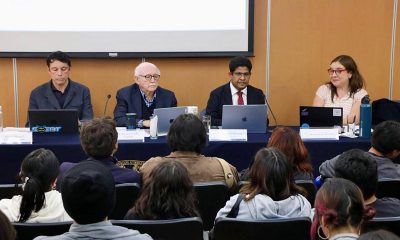
Interdicted top House official Kularatne receives special recognition in Mexican Parliament
-

 Features4 days ago
Intake 16: 45 years of duty and honour