
Latest News
Shai Hope, Jayden Seales flatten Pakistan to end West Indies’ 34-year drought


Knowing when it’s time to go is a valuable trait, and if Pakistan were in any doubt their time in the Caribbean was up, West Indies quashed them and sent the visitors out of town with a comprehensive trouncing.
Jayden Seales’; six-wicket haul – the joint second best figures by a West Indian in men’s ODI cricket – and an unbeaten hundred from Shai Hope put Pakistan to the sword in each innings. It was more than enough to secure West Indies’ first ODI series win over Pakistan in 34 years with their biggest ever win over Pakistan, scything through them for 92 having set them 295 to win.
It was a 15.2-over passage of play straddling both innings which lay at the heart of West Indies’ dominance, a stunning inversion of a script Pakistan thought they had been writing all along. West Indies struggled to get going on what looked a tricky pitch to negotiate against the slower bowlers, with Mohammad Rizwan greedily getting through as many of their part-time fifth bowling options as possible.
West Indies appeared to have sacrificed an ambitious innings total in exchange for conservatism that at least preserved their wickets, but as a result, they hadn’t yet crossed 200 by the start of the 44th over. It took one ball to change that, a smeared six from Hope off the first ball from Mohammad Nawaz bringing up that milestone. A second six off the next delivery emphasised his intent, and Pakistan watched frozen as West Indies shuffled themselves off the canvas and began landing body blows Pakistan one after the other.
Rizwan immediately turned to Abrar Ahmed, so effective through the middle of the innings that he’d conceded just five off his first six overs. But West Indies captain had redlined his game, turbocharging to a gear Pakistan believed he wasn’t capable of achieving on this surface. He would bleed a further 18 off the mystery spinner, with Greaves bursting into life from the other end, flaying Hasan Ali for as many. Naseem Shah, trying his best to land the kind of reverse swinging yorkers that had put paid to Roston Chase earlier, could not escape Hope’s wrath as he bore down on three figures, getting there with a crunching cover drive that put him third on the all time ODI West Indies century list.
That was just the start of a 21-run over, and by the time he caressed Hasan Ali over backward point off the final ball of the innings, 100 had come off the final seven. As Pakistan walked off dejected muttering amongst themselves, it was hard to escape the feeling this was about as poor a passage of play as they could endure.
And yet, Seales spent the next 8.2 overs disabusing them of that notion. For the third time in the series, the right-arm quick exploited the angle moving away to Saim Ayub, who nicked off in the first over. His fellow opener, Abdullah Shafique, would also leave without troubling the scorers, trying to whack Seales over mid-on, but couldn’t take into account the heavy ball he was bowling, ballooning it to Gudakesh Motie stationed perfectly in position.
But it was the third of his sixes which will serve as the jewel in the crown. Mohammad Rizwan can be tricky to settle on a length to for all his fidgetiness, and as he took a step out, he determined the fourth-stump line on a hard length was safe to leave on both counts. As he shouldered arms, he would have heard the mildest clink behind him, like ice-cubes tinkling in a glass. The ball had seamed back in and kissed the off bail without even touching the stumps; it could not have been dislodged more clinically if someone picked it up and set it on the ground.
A punch-drunk Pakistan were already dreaming up wild scenarios for how this match could turn, and it’s safe to say they all involved Babar Azam. Babar, though, was a mere plot-point to Seales’ perfect day as he trapped him in front with the batter still in single figures to leave Pakistan reeling at 23 for 4.
It was those 92 balls that defined the game. Pakistan may have started well, but it barely feels like it matters now. The cracks and weaknesses were apparent even then, when Rizwan turned to Hussain Talat for his first deliveries in international cricket after the Powerplay saw them constrict West Indies, only for Evin Lewis to pick him up for two sixes and break the shackles. Abrar was so accurate and menacing he often appeared on the verge of running through West Indies early, and the hosts spent much of the innings batting at a glacial pace well under four runs per over. It does not matter now.
Neither does whatever happened after that fourth Pakistan wicket fell. Salman Ali Agha and Hasan Nawaz had little ambition beyond stealing a few singles each over, even if that made the ultimately Herculean task even more insurmountable as the asking rate spiked. That Pakistan had stripped their side of full-time bowlers for superficial batting depth hardly seemed to matter. They knew they were never getting there anyway, and when the spin of Motie and Chase accounted for them in quick succession, West Indies could see the finish line.
To do the honours, they handed that baton to none other than Seales, who blew past Naseem and Hasan Ali before Abrar jogged through for a single that was never on. Chase effected a direct hit, that sharpness depriving Seales the opportunity to bag the best ever bowling figures in men’s ODIs by a West Indian. For all of the young speedster’s brilliance, the fact Pakistan ensured they had a final say in their own downfall felt somewhat apt.
Brief scores:
West Indies 294 for 6 in 50 overs (Evin Lewis 37, Shai Hope 120*, Roston Chase 36, Justin Greaves 43*; Naseem Shah 2-72, Abrar Ahmed 2-34) beat Pakistan 92 in 29.2 overs (Salman Agha 30, Mohannad Nawaz 23*; Jayden Seales 6-18, Gudakesh Motie 2-37) by 202 runs
[Cricinfo]

Latest News
Heat Index likely to increase up to ‘Caution level’ at some places in the Western, Sabaragamuwa, Southern, North-western, Northern and North- central provinces and in Monaragala district
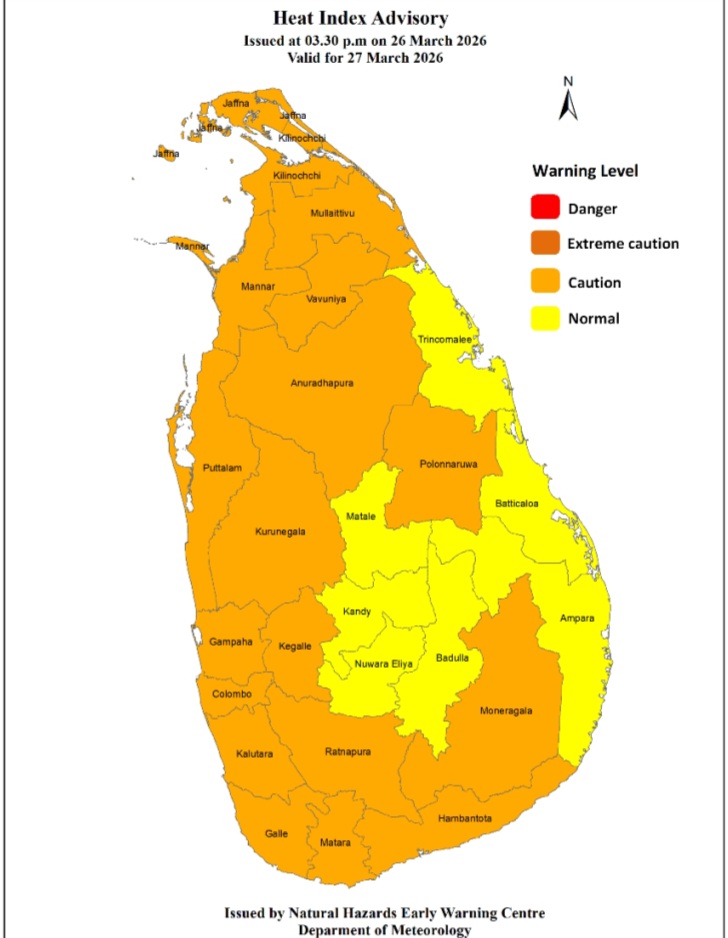
Warm Weather Advisory
Issued by the Natural Hazards Early Warning Centre of the Department of Meteorology
Issued at 3.30 p.m. on 26 March 2026, valid for 27 March 2026.
Thw Heat index, the temperature felt on human body is likely to increase up to ‘Caution level’ at some places in the Western, Sabaragamuwa, Southern, North-western, Northern and North-
central provinces and in Monaragala district.
The Heat Index Forecast is calculated by using relative humidity and maximum temperature and this is the condition that is felt on your body. This is not the forecast of maximum
temperature. It is generated by the Department of Meteorology for the next day period and prepared by using global numerical weather prediction model data.

Effect of the heat index on human body is mentioned in the above table and it is prepared on the advice of the Ministry of Health and Indigenous Medical Services.
ACTION REQUIRED
Job sites: Stay hydrated and takes breaks in the shade as often as possible.
Indoors: Check up on the elderly and the sick.
Vehicles: Never leave children unattended.
Outdoors: Limit strenuous outdoor activities, find shade and stay hydrated.
Dress: Wear lightweight and white or light-colored clothing.
Note:
In addition, please refer to advisories issued by the Disaster Preparedness & Response Division, Ministry of Health in this regard as well. For further clarifications please contact 011-7446491
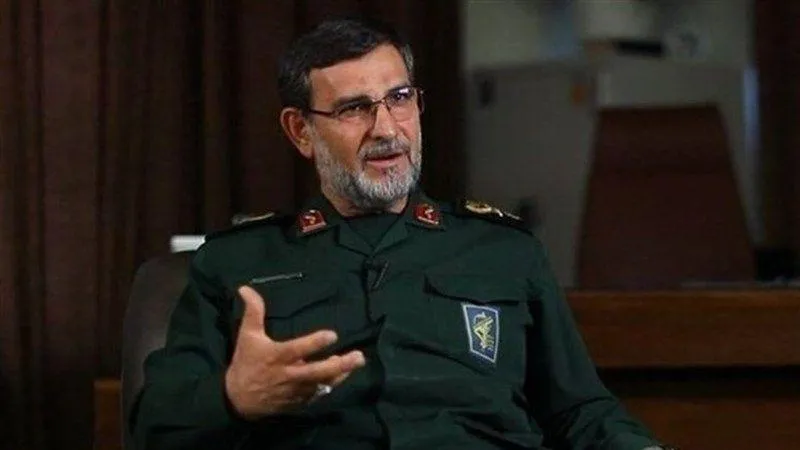
Israel says it has killed the Iranian navy chief overseeing what is a near-total blockade of the Strait of Hormuz.
Alireza Tangsiri, head of the Islamic Revolutionary Guards Corps (IRGC) navy, was “directly responsible for the terrorist act of bombing and blocking the Strait of Hormuz”, and has been “blown up”, according to Israel’s defence minister Israel Katz.
He added that a number of other “senior Navy command officials” have also been killed. Iran has not yet commented.
Since the start of the war on 28 February, Israel has assassinated several top Iranian officials, including Supreme Leader Ayatollah Ali Khamenei and security chief Ali Larijani.
Effectively blockading the Strait of Hormuz – the thin waterway between Iran, the United Arab Emirates (UAE) and Oman, through which around 20% of the world’s oil and liquefied natural gas normally passes – has been a key pillar of Iran’s strategy in the war.
Oil prices have consequently shot up, placing a direct price of the war on consumers in not only the US and Israel but across the world.
In recent weeks, an X account attributed to Tangsiri and cited by Iranian media has posted frequently about the Hormuz blockade, writing that “no vessel associated with the aggressors against Iran has the right to pass through”.
Tangsiri was appointed as the commander of the Navy in 2018, having previously served as deputy commander since 2010. In 2019, he was sanctioned by the US Treasury along with other IRGC commanders after Iran shot down a US surveillance drone near the strait.
Israeli Prime Minister Benjamin Netanyahu described Tangsiri as an individual with “a great deal of blood on his hands” and said his assassination was “yet another example of the co-operation between us and our friend, the United States, toward the common goal of achieving the objectives of the war”.
US Central Command said in a statement Tangsiri’s death “makes the region safer” and that the IRGC’s navy “is on an irreversible decline”. It also called on serving members of the IRGC to abandon their posts and return home “to avoid further risk of unnecessary injury or death”.
Israel’s military said in a statement posted on X that the head of the IRGC Navy’s intelligence directorate, Behnam Rezaei, was also “eliminated”.
(BBC)
Latest News
A strong Technical and Vocational Education and Training (TVET) system equips individuals with practical, relevant, and future-oriented skills helping to innovate responsibly towards a greener and sustainable future – PM
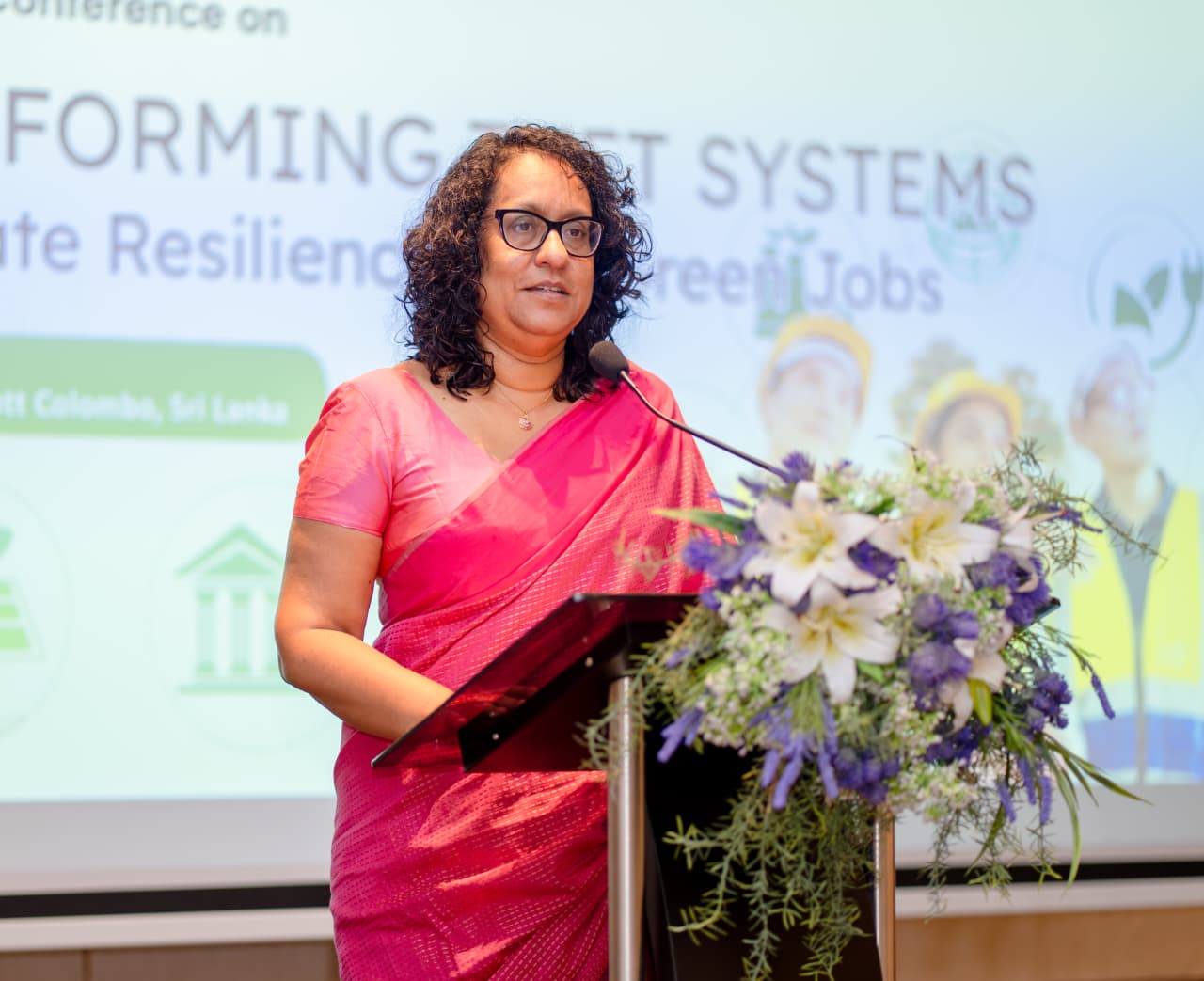
The Prime Minister, Minister of Education, Higher Education and Vocational Education Dr. Harini Amarasuriya participated as the Chief Guest in the international conference on ’Transforming TVET Systems for climate resilience and green jobs’ organized by Colombo Plan Staff College, Philippines together with the Ministry of Education, Higher Education and Vocational Education Sri Lanka on 24 th of March at Courtyard by Marriott Colombo, Sri Lanka.
The Conference serves as the flagship event of the five-day Regional Programme on “Transforming TVET for a Digital, Green, and Inclusive Economy” (23-27 March 2026), which continues throughout the week, bringing together representatives from CPSC member countries including Bhutan, Fiji, Malaysia, Maldives, Myanmar, Nepal, Philippines, Thailand, Pakistan, and Sri Lanka, fostering high-level dialogue and knowledge sharing on climate-resilient and green skills development.
The Conference features technical and plenary sessions on climate-responsive TVET systems, green skills development, national policy frameworks, and emerging technologies shaping industry transformation.
Addressing at the event, the Prime Minister emphasized the role of Technical and Vocational Education and Training (TVET) that equips individuals with practical, relevant, and future-oriented skills in addressing climate change and shaping a sustainable future.
The Prime Minister reaffirmed that this transformation remains a national priority for Sri Lanka. She stressed that education must go beyond knowledge dissemination to empower individuals with opportunities, dignity, and the capacity to contribute meaningfully to society.
She further emphasized the need to integrate environmental sustainability into education and training systems by embedding green skills in curricula, investing in modern training facilities, promoting innovation, and fostering collaboration between training institutions and emerging green industries.
Highlighting the importance of ensuring equity the Prime Minister further stated, that opportunities arising from the green transition must be accessible to all, including youth, young women, people with special needs, and marginalized communities.
Reaffirming Sri Lanka’s commitment to working closely with regional and international partnerships, the Prime Minister emphasized the importance of transforming them to actual benefits and partnerships.
The occasion was attended by the Secretary to the Ministry of Education, Higher Education and Vocational Education Nalaka Kaluwewa, Additional Secretary (Vocational Training) Ms. Samanthi Senanayake Director General Colombo Plan Staff College Prof. Dr. Suresh K. Dhameja , TVET administrators, institutional leaders, policymakers, instructors, industry representatives, and international delegates from across the region and seniors officials and officials from Ministries.
(Prime Minister’s Media division)

Showers may occur at a few places in the Sabaragamuwa province and in Galle, Matara, Kalutara and Nuwara-Eliya districts in the evening

Energy Minister indicted on corruption charges ahead of no-faith motion against him

Over 1000 complaints of misuse of QR quotas

Fuel bowser operators demand 25% hike in haulage charges

Charge sheet issued against former NIE Director for contempt of court

Sallay sent back to CID after being discharged from National Hospital

‘Dates have the highest sugar content to fight Coronavirus’

Sunday Island 27 December – Headlines

#SundayIsland 17th December – Headlines

Sunday Island – 28th March

Sunday Island Headlines – 21 March

Sunday Island – 21st February – Headlines
-

 News2 days ago
Senior citizens above 70 years to receive March allowances on Thursday (26)
-

 Features4 days ago
Trincomalee oil tank farm: An engineering marvel
-

 Business1 day ago
Dialog Unveils Dialog Play Mini with Netflix and Apple TV
-

 Features4 days ago
The scientist who was finally heard
-

 News1 day ago
US dodges question on AKD’s claim SL denied permission for military aircraft to land
-

 News2 days ago
CEB Engineers warn public to be prepared for power cuts after New Year
-
 News2 days ago
Japanese boost to Sri J’pura Hospital, an outright gift from Tokyo during JRJ rule
-

 News6 days ago
Colombo, Oslo steps up efforts to strengthen bilateral cooperation in key environmental priority areas