
Business
‘Union Bank remains resolute amid challenging environment’


In 2020, Union Bank crossed the significant milestone of completing 25 years of service to the nation. The year tested the grit and foundations of the bank in many ways and the bank emerged strong amidst challenges. While operational performance was impacted amid the slowdown of economic activity, the bank continued to focus on cost optimisations, effective resource and productivity management as well as prudent portfolio management to overcome these tough conditions , a Union Bank press release said.
The release adds, ‘Despite the challenging backdrop, Union Bank increased its liquidity buffers prudently and was able to maintain a strong excess liquidity position. Fitch ratings in its 2020 ratings release affirmed the Bank’s current rating, which was backed by the strong liquidity and capital. Union bank stands confident with an industry leading capital position alongside significant financial flexibility that effectively help mitigate the pandemic induced economic impacts. The Bank maintained a robust Capital Adequacy Ratio throughout the year reporting 16.95% total capital ratio as at year end – which was well above regulatory requirement levels.
‘Union Bank swiftly re-aligned its operations, prioritising its focus on the new market dynamics and customer inclinations that resulted from the pandemic. The bank executed an inclusive business strategy that ensured smooth continuity of its services while safeguarding the health and well-being of its customers and staff as top priorities. Significant investments were made in ensuring the health and safety of staff by providing alternate work solutions, work from home facilities as well as setting up additional infrastructure to facilitate a smooth work environment for critical staff that attended work despite lockdowns.
‘An imperative focus was placed on rolling out a cohesive plan across all customer segments to provide support to re-build their businesses and lifestyles with the implementation of the CBSL recommended relief schemes for COVID-19 impacted customers. In line with the CBSL directives and policy rate cuts administered to enable economic growth, Union bank implemented a downward revision of interest rates on its lending products including credit cards. Moratoriums of capital and interest were extended to affected borrowers in-line with the CBSL’s financial relief package while a significant number of affected customers were granted debt relief outside the CBSL criteria, as per the Bank’s internal credit policy guidelines. Among the schemes that were considered for moratoria were loans, leases, overdrafts, pawning and trade finance facilities. Non-performing borrowers eligible for relief schemes were also provided customised re-schedulements, inclusive of waivers on accrued interest while withholding further recovery action.
‘The bank’s loans and advances stood at Rs 67,518 Mn. The deposits base of the bank stood at Rs. 82,384 Mn as at year-end and recorded a growth of 7.6% despite the low interest environment. The bank’s strategic focus for low-cost deposits continued to bear results, supported by focused initiatives for CASA growth by the business units. The bank’s CASA portfolio reflected an excellent growth of 26.8% as at December 2020, increasing the CASA Mix of the Bank to 30% in 2020 from 25% in 2019.’
As a result of the numerous reliefs extended to affected customers and due to the low interest rate environment, the Bank recorded a Net interest Margin (NIM) of 3.2 % in comparison to 3.6% in 2019. The Bank’s NII was further impacted with the latest CBSL directive issued in November 2020, that mandated 60 days’ loan extension for moratoriums given in March 2020 at subsidised interest rates up to a maximum of 7%; thus, leading to a reduction of interest earned on all such credit facilities repaid on Equal Monthly Instalments (EMI) basis.
The fee income was impacted by adverse market drivers and declined by 18.4% over the comparative year. This was an outcome of the cumulative effect of fee waivers extended as part of COVID-19 reliefs, a slowdown in trade income due to import restrictions and a drop in loan related fees due to slower credit growth that prevailed during the year.
The Treasury performed exceptionally well, recording impressive capital gains that grew significantly by 84.2% YoY. Other Operating Income of the Bank grew notably by Rs.162 Mn led by Foreign Exchange income and backed by a growth in customer transactions, depreciation of the currency and the reduction of swaps in 2020.
The Bank had no trading equities and has not invested in any equity fund as at reporting date.
The total operating income for the year was Rs. 5,890 Mn and recorded only a marginal drop despite the challenging market dynamics.
The gross NPL ratio stood at 6.05% by year-end. The absolute NPL increase however was only Rs. 230 Mn, while an overall reduction in the loan portfolio caused the ratio to reflect an increase. The Bank’s prudent approaches towards managing portfolio quality proved favourable in containing NPLs amidst market volatilities.
The impairment charge recorded an 88.5% increase YoY. While its actual credit losses were low, the Bank recorded significant provisions through management overlays to account for the deteriorating environment. Three sectors were identified as risk elevated industries and accordingly additional provisions were made for these by shifting stages. Further on the Economic Factor Adjustments (EFA), weightages assigned to the worst-case scenario increased with the transferring of weightages from best-case to worst-case on 31 December 2020 to account for the deteriorating environment. This had a significant impact on the increase in impairments, while the Treasury impairment figures also inflated due to investments denominated in foreign currencies – based on the country risk downgrade. The entire modification loss on account of COVID-19 moratorium scheme was recorded under the impairment charge as per the non-substantial modification method which is in line with the Sri Lanka Accounting Standard–9(SLFRS 9).
The Total Operating Expenses were prudently managed through bank-wide cost management initiatives and were reported as Rs. 3,772 Mn, with an YoY decrease of 1.5%.
The operating margin was Rs. 2,118 Mn and recorded a decline of 3.3% YoY as an effect of a 2.2% decrease of revenue against the 1.5% drop in costs. Excluding the 60-day moratorium impact of reducing the interest earnings to 7%, the operating margin would have improved by 3.4%.
Share of loss of equity accounted investees was Rs. 29 Mn for the year ended 31 December 2020. In the previous year, a one-off gain was reported from UB Finance amounting to Rs. 127 Mn due to tax reversals. The subsidiary profits were also impacted due to the macro-economic challenges of the year under review. Total taxes for the year was Rs. 777 Mn and was a drop of Rs. 417 Mn in comparison to the previous year.
The ‘Bank-only’ profit for 2020 was Rs. 605 Mn and was on par with the previous year. Profit of the Bank including its share of ownership in subsidiaries was Rs. 577 Mn in 2020 and was a decline of 18.8% over the previous year- mainly because of the one-off income recorded at UB Finance in 2019. Other comprehensive income for the year was Rs. 183 Mn, while the total comprehensive income of the Bank was Rs. 759 Mn.
The Group consisting of the Bank and its two subsidiaries – UB Finance Company Limited and National Asset Management Limited reported Rs. 623 Mn in profits after taxes, a decline of 22.6% over the previous year. Total assets of the group were reported as Rs. 129.6 Mn. The Bank accounts for 95% of the Total assets of the Group and hence the Group’s performance is mainly propelled by the Bank.
Operations and Business Continuity amidst challenges
Considering the impact of the pandemic on its customer bases, the Bank’s key focus for the year was shifted to extending COVID-19 related financial relief to customers across corporate, SME and retail banking segments since March 2020, so as to not compromise on its premise to serve customers with the best suited financial solutions and tools.
Under the CBSL recommend scheme, self-employed personnel, foreign currency earners, SMEs and Corporates in identified sectors were eligible for loan repayment moratoria from Union Bank. A gamut of relief measures was channeled towards SMEs including fee waivers on cheque returns and stop payments among others. As part of the relief efforts, around 58% of the Bank’s SME portfolio was accommodated under moratorium schemes by year-end. The Bank granted around Rs 1.3 Billion worth of working capital loans under Central Bank’s ‘Saubhagya’ Covid-19 Renaissance’ credit scheme to SMEs aiding their rebuilding efforts. For impacted retail borrowers, the Bank announced immediate extensions of credit card dues along with a two-month extension for all personal borrowings such as loans and leases. Retail banking relief measures included debt moratoria for all loans upon eligibility and credit cards related relief including minimum payment concessions and fee waivers. Following the second outbreak in October 2020, moratoria of affected customers across all segments were further extended to ensure resilience amidst continuous contraction of business activity in identified sectors.
Union Bank’s digital cash management solution BizDirect continued to offer its Corporate and SME customers much-needed liquidity management efficiency while facilitating CASA and fee-based revenue for the Bank during the year. Due to a growing inclination for digital solutions, many new Corporate and SME Banking customers were on-boarded to the product during 2020. In recognition of its success in Transaction Banking excellence, Union Bank BizDirect was awarded the prestigious ‘Best Cash Management Bank in Sri Lanka’ title at the Asian Banker Transaction Finance Awards 2020. Retail banking business was led by CASA acquisition, deposit mobilisation and Credit Cards portfolio growth. The Bank continued to offer value to its card holders through focused lifestyle savings that included discounts on shopping, dining, and e-commerce platforms along with 0% interest instalment plans.
Despite lockdowns, curfews and regional isolation procedures imposed from time to time to curtail the spread of the virus, the Bank provided uninterrupted banking services via its strategic business continuity plan that was executed through its branches, ATMs and other touch points. Union Bank’s Online Banking portal and Mobile Banking app were further enhanced in 2020, to facilitate a wider range of banking conveniences to users enabling contactless banking from the safety of their homes.
Commenting on the 2020 performance, Director/CEO of Union Bank Indrajit Wickramasinghe said, “Our agility and apt business continuity execution have allowed Union Bank to weather the macroeconomic storm in good shape. the Bank has safeguarded the interests of its stakeholders amidst challenges and maintained healthy liquidity levels, and stands strongly capitalised to withstand the adverse environment in which we operate in. We will continue on a path of cost optimisation and enhanced operational efficiency in the year 2021 in which we have re-strategised for stronger growth and will continue to leverage on our key strengths – while ensuring the health and safety of our customers and staff as a priority when navigating in the new normal.”








Asian Development Bank (ADB) President Masato Kanda met with Sri Lanka Prime Minister Harini Amarasuriya at ADB’s Manila headquarters recently. The meeting reaffirmed the strong development partnership between ADB and Sri Lanka, with both leaders underscoring their commitment to post-cyclone recovery, inclusive growth, and advancing women’s equality.
“Sri Lanka’s resilience in the face of crises has been remarkable,” said Kanda. “We are committed to helping Sri Lanka rebuild after Cyclone Ditwah, while also investing in the country’s future by empowering women entrepreneurs and strengthening education and essential skills.”
Looking ahead, ADB is ready to provide more than $1 billion annually to Sri Lanka from 2026 to 2029. This financing will target macroeconomic stability, private sector-led growth, education and skills development, and resilient infrastructure. Key initiatives include a major digital transformation program to help unlock Sri Lanka’s digital economy, alongside support for its accession to the Regional Comprehensive Economic Partnership to deepen its integration into regional trade and investment networks.
During their discussion, Kanda emphasized ADB’s response to the devastation caused by Cyclone Ditwah. Building on emergency financing already mobilized, ADB is fast-tracking an emergency assistance loan to restore damaged infrastructure and support affected livelihoods.
With Dr. Amarasuriya serving as the keynote speaker for ADB’s International Women’s Day event, the leaders highlighted women’s equality as a cornerstone of inclusive development. Kanda noted ADB’s long-standing work as an implementing partner of the Women Entrepreneurs Finance Initiative, which expands access to finance, business skills training, and policy reform for women-owned enterprises. This partnership has helped drive lasting change, with Sri Lanka becoming one of the first countries to adopt the Women Entrepreneurs Finance Code at the national level in March 2025.
Dr. Amarasuriya also engaged in dialogue facilitated by ADB to advance Sri Lanka’s skills agenda, including discussions on referencing skills and qualifications with the Association of Southeast Asian Nations and on mutual areas of interest with the Philippines related to technical and vocational education and training.

The Unit Trust Association of Sri Lanka (UTASL) announced its new Board of Directors, appointing Jeevan Sukumaran of SENFIN Asset Management as President. The Board assumes leadership at a time of significant growth and resilience in Sri Lanka’s Unit Trust industry. Over the past five years, the number of unit holders has more than doubled, while assets under management have grown substantially, reflecting a clear shift in investor behaviour amid evolving economic conditions.
The 2026–2027 Board includes Vice President Kavin Karunamoorthy (First Capital Wealth Management), Secretary Asanka Herath (Lynear Wealth Management), Assistant Secretary Gayan De Silva (Capital Alliance), and Treasurer Wishan Perera (Softlogic Invest).
President Jeevan Sukumaran highlighted the importance of expanding the industry’s reach and increasing retail participation nationwide. “Whilst the Unit Trust industry has grown significantly in recent years, the next phase must focus on broadening retail investor participation across Sri Lanka’s different geographic/demographic sectors, with the key priority being strengthening investor education and awareness, particularly outside major urban centres. Improving financial literacy and expanding access to professionally managed investment solutions are essential to building long-term confidence and encouraging more Sri Lankans to invest in unit trusts.”
The new Board intends to build on the industry’s recent momentum by prioritising investor education, digital accessibility, and product innovation. Over the coming years, enhanced digital platforms are expected to make Unit Trust products more accessible, enabling investors across the country to participate in capital markets in a convenient and transparent manner.
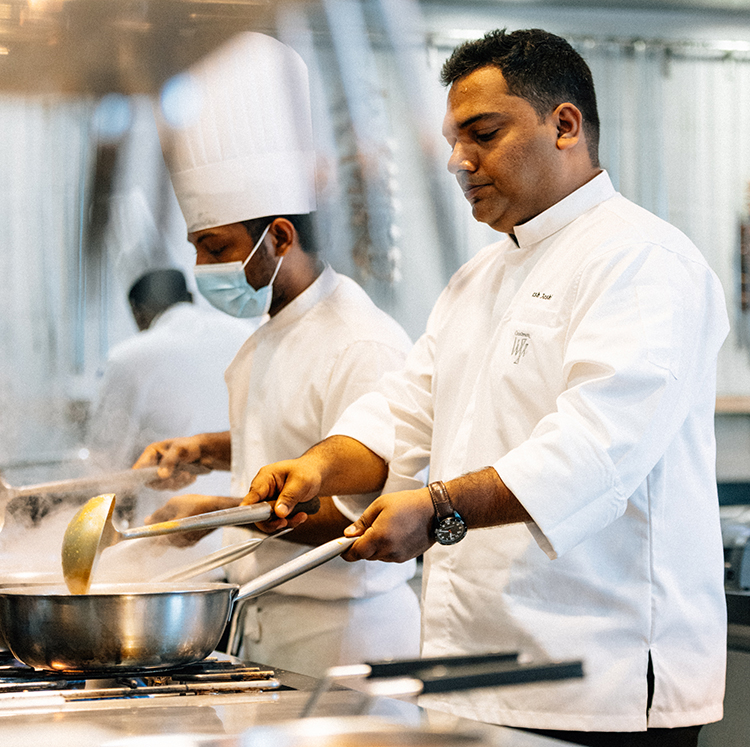
Colombo’s vibrant dining landscape has received a fresh infusion of flavour with the renewed culinary direction of Indiya, the signature Indian restaurant perched high above the city at Cinnamon Life at City of Dreams. With celebrated Indian chef Mukesh Joshi now steering the kitchen, the restaurant is presenting a menu that celebrates the depth, diversity and soul of Indian cuisine while subtly weaving in Sri Lankan influences.
Located on the spectacular Level 23 of the sprawling Cinnamon Life complex, Indiya’s setting itself feels like a prelude to the culinary journey that unfolds at the table.
The restaurant’s sweeping views of Colombo’s skyline provide a dramatic backdrop to a menu designed to take diners across India’s many culinary regions — from the fragrant biryani traditions of Awadh to the bold spice profiles of coastal kitchens.
At the heart of this new chapter is Chef Mukesh Joshi, a culinary craftsman whose career spans some of India’s most renowned hospitality institutions as well as prominent dining establishments in the Middle East.
Having honed his skills at luxury hotels such as The Westin and St. Regis Mumbai before leading kitchens in Dubai’s thriving Indian dining scene, Joshi is known for his ability to balance traditional flavours with contemporary finesse.
At Indiya, his philosophy is simple yet compelling: celebrate the authenticity of Indian cooking while creating dishes that encourage sharing and conversation.
The experience begins with a vibrant array of small plates that capture the playful spirit of India’s street food traditions. The crisp Sev Papdi Chaat offers bursts of sweet, tangy and spicy notes, while a generous Pakora Platter brings together an assortment of golden-fried fritters that evoke the comforting flavours of roadside tea stalls across the subcontinent.
From there, the menu moves naturally into the world of the tandoor — the clay oven that lies at the heart of many Indian kitchens. Among the highlights is the Hariyali Tandoori Gobi, where cauliflower is marinated in a fragrant blend of herbs before being charred to smoky perfection. Equally intriguing is the Rajma Galouti, a vegetarian reinterpretation of the famed Lucknowi kebab, delivering a melt-in-the-mouth texture that surprises and delights.
Seafood lovers will find much to savour as well. Jhinga Koliwada, a coastal delicacy of spiced prawns fried to a crisp exterior, offers a lively contrast to the delicately seasoned Rawa Fried Surmai. These dishes reflect Chef Mukesh’s confident handling of spice and texture — two essential pillars of Indian cooking.
No Indian dining experience would be complete without the ritual of sharing freshly baked breads, and Indiya’s basket arrives warm and inviting. Chilli Cheese Naan brings a playful modern twist to a classic favourite, while flaky parathas and stuffed Aloo Kulcha provide comforting companions to the restaurant’s richly spiced curries.
By Ifham Nizam

Navy seizes an Indian fishing boat poaching in Mannar seas

Bodies of 84 Iranian sailors killed in US torpedo strike to be repatriated

Four crew members killed after US refuelling plane crashes in Iraq

Safeguarding linguistic heritage is not only a cultural responsibility, but also a shared commitment to preserving the diversity of our world – PM

This is not an ordinary scholarship programme. It defines the future vision of our country – PM

West Indies name unchanged squad for home T20Is against Australia

‘Dates have the highest sugar content to fight Coronavirus’

Sunday Island 27 December – Headlines

#SundayIsland 17th December – Headlines

Sunday Island – 28th March

Sunday Island Headlines – 21 March

Sunday Island – 21st February – Headlines
-

 News7 days ago
Peradeniya Uni issues alert over leopards in its premises
-

 News5 days ago
Repatriation of Iranian naval personnel Sri Lanka’s call: Washington
-

 News7 days ago
Wife raises alarm over Sallay’s detention under PTA
-
 Features5 days ago
Winds of Change:Geopolitics at the crossroads of South and Southeast Asia
-

 News4 days ago
Prof. Dunusinghe warns Lanka at serious risk due to ME war
-

 Sports3 days ago
Royal start favourites in historic Battle of the Blues
-

 Latest News7 days ago
Heat Index at ‘Caution Level’ in the Sabaragamuwa province and, Colombo, Gampaha, Kurunegala, Anuradhapura, Vavuniya, Hambanthota and Monaragala districts
-

 Features7 days ago
The final voyage of the Iranian warship sunk by the US