
Latest News
Karun Nair fifty resists England on rain-hit day


After four Tests on flat pitches that took bowlers from both teams to the brink and counted among its casualties – Ben Stokes, Jofra Archer and Jasprit Bumrah – The Oval which has been profoundly seam-friendly in recent times provided a margin of error. England played like they needed it; there were 30 extras but also six wickets and just 204 runs.
India came to the ground facing humongous odds. But they beat them. The probability of losing a 15th toss in a row was 32728 to 1. There’s a chance unicorns are easier to find than a coin that will fall the way Shubman Gill wants it to.
England got first use of a pitch with 8mm of grass on it and their fast bowlers benefited from the weather in more than one way. Rain through most of the afternoon helped keep their legs fresh and the threat of it, hanging over the entire day, created overhead conditions that were perfect for swing and seam. Only 64 overs were possible but there was enough help to bowl a team out. England’s lack of discipline is the reason why India are still standing. That and Karun Nair scoring a Test fifty after 3149 days dreaming of it. His hopes of becoming a permanent fixture in this batting line-up are still alive, with his opponents lending him a helping hand.
Josh Tongue could only create 13 false shots in 13 overs. Watching him bowl raised the suspicion that the stumps aren’t inanimate; that they can get up and move wherever they please. Otherwise why would a Test match bowler stray so far and so often. His first over produced 11 runs in wides. And yet this was the same man who eventually made England feel comfortable about their decision to bowl first when he found his radar – briefly – to dismiss B Sai Sudharsan and Ravindra Jadeja in the space of four overs. India went from a respectable 101 for 3 to 123 for 5 and it was because Tongue wasn’t bowling line and length. He was bowling filth and jaffas.
Gill will take a portion of the blame as well. He was looking good in testing conditions, rendering England’s most experienced bowler – Chris Woakes – toothless by batting a foot and a half in front of his crease and exploiting the mistakes from the rest of the attack – who have 18 caps between them – by cutting and pulling handsomely. In doing so, he went past Sunil Gavaskar’s tally of 732, against West Indies in 1978-79, to become the Indian captain with the most runs in a Test series.
No batter who reaps such a big bounty does so without something special about him. In Gill’s case, it is the sound of bat hitting ball. Often times, it is deafening, a sign of shots well-chosen and perfectly executed. Ironically though, his dismissal here was the result of a ball he middled. He thought he could get a run off a front-foot block but he hadn’t placed it wide enough of the bowler. Gus Atkinson had a head start thanks to his followthrough, he picked the ball up comfortably, took aim at the keeper’s end and broke the stumps. Gill wasn’t even in the frame. Five minutes later, rain swept the players off the field. It was as untimely as a wicket could be.
Sai Sudharsan enhanced his reputation while he was out there on the ground he calls home in county cricket. He didn’t look quite so susceptible to being caught down the leg side, even though England kept targeting him there. There was a moment where a pigeon flew right across the pitch just as Atkinson let go of the ball. It was an inswinger. Nicely pitched up. Searching for lbw and bowled. But Sai Sudharsan, on instinct, prevented his front leg from going too far across and was able to bring down a lovely straight bat. That was the kind of delivery that was taking him out early on in the series. It raised the question that maybe this is the real him and that in Leeds and Manchester, he was just a mess of nerves because he was playing his first few Tests. It took an unplayable delivery from an unlikely source – Tongue – to dislodge him for 38 off 108.
Nair took over from there, playing some gorgeous drives, particularly through cover. He still appears vulnerable to the ball in the channel because his bat comes down in an angle and his front foot doesn’t move too far but England didn’t test him there enough. Atkinson was their most reliable bowler. He only had a second XIs game to prove his readiness for Test cricket again after a hamstring injury and apparently that’s enough of a testing ground. His first spell was pristine 6-1-7-1, where he took down Yashasvi Jaiswal early and caused problems throughout. But the rest of the attack only got their act together in the final session.
Tongue and Jamie Overton did point to some extenuating circumstances for their rhythm being awry. They kept slipping as they powered their weight through their bowling action because the landing spot for their front foot kept giving away. Saw dust came to the rescue but it still wasn’t ideal. When you’re running in worried you could twist your leg, you run in less hard.
Nair and Washington Sundar saw India through to the close of a strange day’s play. Neither team will be disappointed with their efforts, though England will be mulling the injury that Woakes sustained. His efforts to stop a boundary late in the day might have led to a dislocated left shoulder.
Brief scores [Day 1 stumps]
India 204 for 6 in 64 overs (Sai Sudharsan 38, Karun Nair 52*, Washington Sundar 19*; Gus Atkinson 2-31, Josh Tongue 2-47) vs England
[Cricinfo]

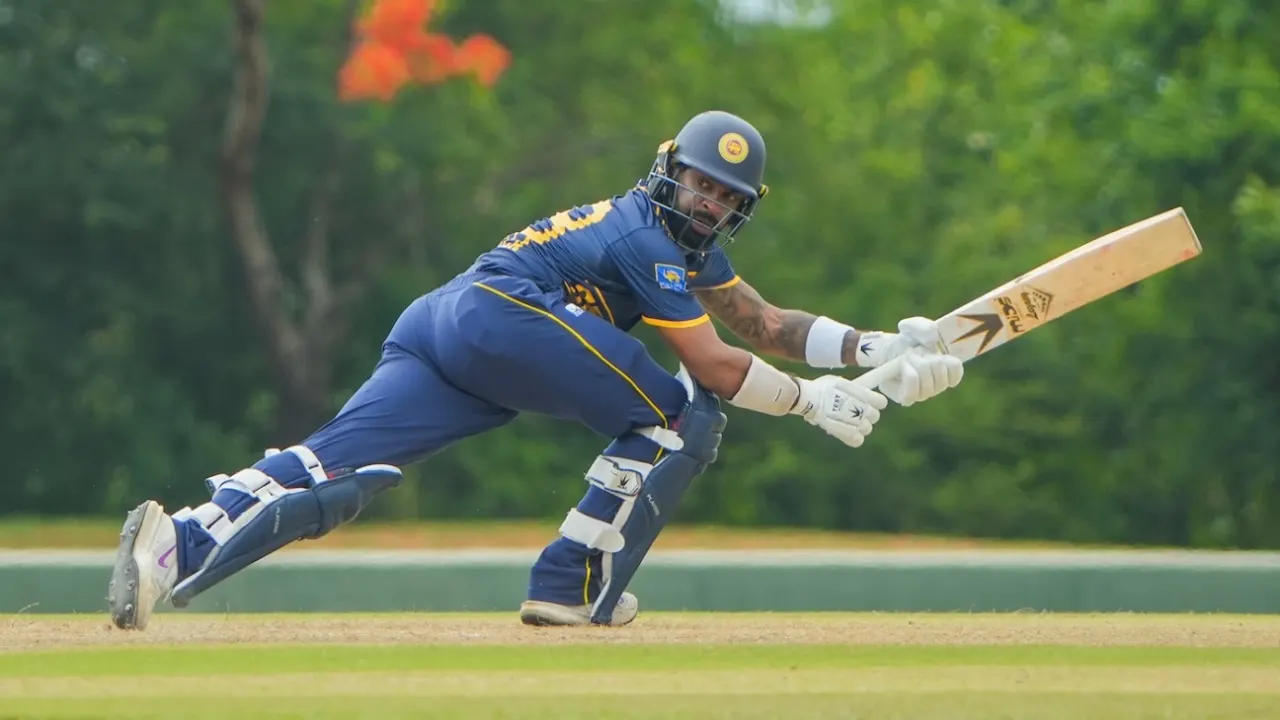
Ashen Bandara and Niroshan Dickwella have earned recalls to Sri Lanka’s T20I squad for the Asian Games men’s cricket competition. Bandara last played an international in 2023 while Dickwella’s previous T20I came in 2021.
Sineth Jayawardena, Sohan de Livera, Wnuja Sahan and Garuka Sanketh received maiden T20I call-ups to the 15-member contingent to be captained by Sahan Arachchige.
Lanka opted to leave out most of their first-choice T20I players, and selected Bandara and Dickwella for their experience, even though they had an underwhelming LPL 2026. Bandara played only three matches for Colombo Kaps for 28 runs while Dickwella scored only 110 runs at a strike rate of 142.85 for Dambulla Sixers.
Left-arm spinning-allrounder Sahan picked up nine wickets in ten LPL outings this year at an economy rate of 6.30, including a Player-of-the-Match spell of 2 for 8 in the Eliminator, for Colombo. He also contributed with a 15 ball 34 not out earlier in the tournament. Fast bowler Sanketh impressed with his pace in the LPL though he did not take any wickets in his four outings this year. In the Major ClubsT20 Tournament that followed, he picked up 11 wickets at an economy rate of 8.87 while playing for Moors Sports Club.
Jayawardena and de Livera, both top-order left-hand batters, led the batting charts in the Major Clubs T20 Tournament with the former scoring 372 runs at a strike rate of 167.56 while the latter made 307 at 156.63. Jayawardena, who captained Sri Lanka at the Under-19 World Cup in 2024, smashed a 32-ball 82 to help Tamil Union Cricket and Athletic Club beat Sinhalese Sports Club in the final.
Legspinner Vijayakanth Viyaskanth found a spot after narrowly missing out on the England T20Is, his chart-topping 17 wickets in the domestic tournament only enhancing his credentials. Allrounder Chamika Karunaratne, who struck 253 runs at 157.14 and was a key part of Galle Gallant’s charge to the LPL title, was also brought back.
Ambidextrous spinner Tharindu Ratnayake and legspinner Dushan Hemantha completed the spin options while slinger Nuwan Thushara and left-arm quick Binura Fernando added experience to the pace department.
Sri Lanka have earned a direct qualification to the quarter-final of the Asian Games, and play their first game on September 29 in Nisshin. Arachchige had captained Sri Lanka in the previous edition, too, where they lost to Afghanistan in their only outing and crashed out.
Sri Lanka’s Asian Games squad
Sahan Arachchige (capt), Niroshan Dickwella (wk), Lasith Croospulle, Sineth Jayawardena, Nuwanidu Fernando, Sohan de Livera, Ashen Bandara, Chamika Karunaratne, Tharindu Ratnayake, Wanuja Sahan, Vijayakanth Viyaskanth, Dushan Hemantha, Nuwan Thushara, Binura Fernando, Garuka Sanketh
[Cricinfo]
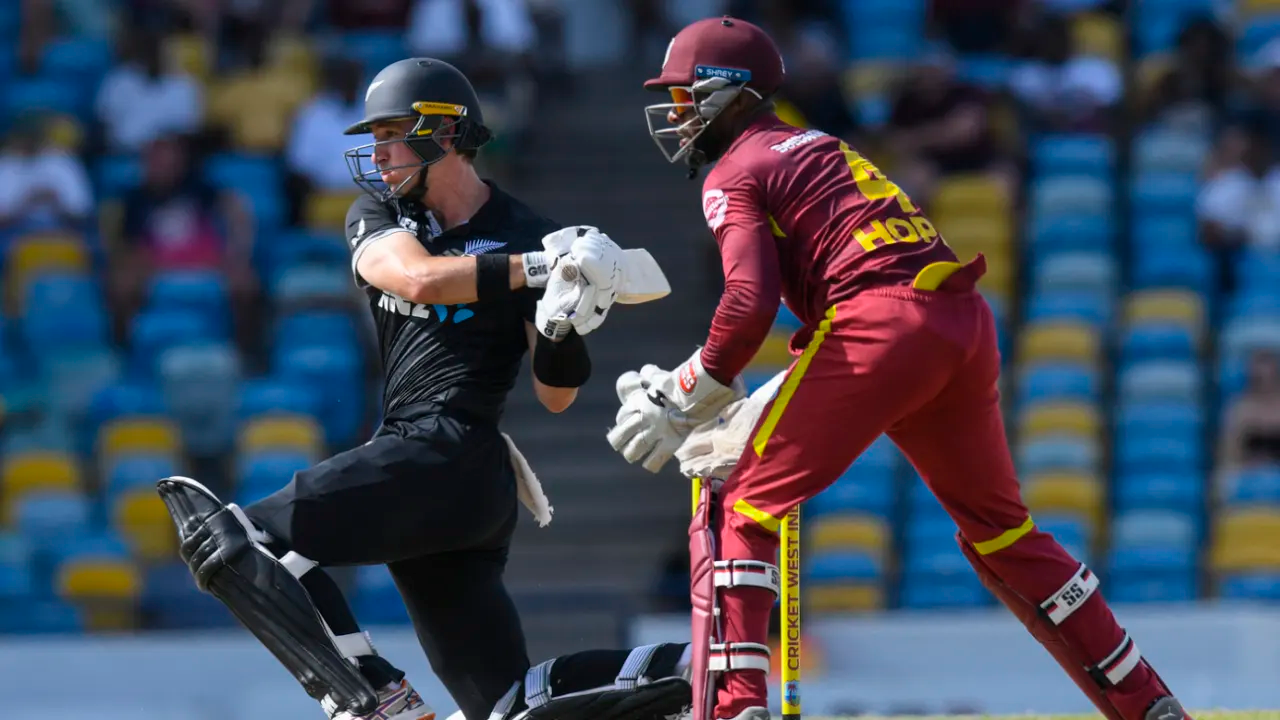
The ICC will get together in Dubai this week for a workshop in which the next Future Tours Programme (FTP) looms large, with members trying to put a shape to the next international cricket calendar cycle from 2027 to 2031.
Starting on Tuesday, the ICC will conduct a cricket operations workshop, which will feature discussions on the FTP, the current cycle of which ends in March 2027. Though lots of progress has been made in recent months, these meetings will not produce a final and comprehensive FTP yet because, as one official put it, there are still “so many moving parts”. Plenty of each member’s main commitments should be finalised, though, with the final FTP likely to be presented at the ICC quarterly meeting in November, scheduled to be held in Bali.
Increase T20Is, reduce bilateral ODIs
There is likely to be more T20Is between Full Members in the next cycle, and that would come at the cost of bilateral ODIs, as cricket struggles to fit everything it wants into a calendar year. T20Is are the ICC’s growth vehicle to expand the game, and its World Cup is also played every two years, as opposed to the four years for the 50-over version. Rudi van Vuuren, the Namibia Cricket chair and newly inducted ICC Board director, recntly said that he saw more opportunities for Associates in the T20 world.
That, though, doesn’t mean the ODI is dead. The World Cup remains the game’s showpiece event. But there has been talk among members of making ODIs more meaningful – not by bringing back the ODI Super League but by going retro with some 1990s staples like tri-series and quadrilaterals.
Big 3 commitments all but set
While the FTP is far from finalised, Cricinfo understands that Australia, England and India’s main commitments with each other have been set for some time. The Ashes will continue its usual pattern, with series in 2027 (in England), 2029-30 (in Australia) and 2031 (in England), while England will travel to India for a Test series in early 2028 before hosting them in 2029.
The 2027-31 cycle also throws up the challenge of the Los Angeles Olympics in the summer of 2028, where cricket marks its first appearance at the Olympics since 1900. The games will take place in July, midway through the English summer, and the week-long men’s T20 cricket event is expected to clash with England’s home Test series against West Indies.
The challenge for most of the other Full Members, as ever, will be to bake commitments first with India and then with Australia or England into their calendars. South Arica, for instance, are expected to host India immediately after the 2027 ODI World Cup, which they are co-hosting with Zimbabwe and Namibia in October-November.
The PCB, for whom bilateral cricket with India is not an option, have pushed for increased commitments with England and Australia. They have already announced a five-match ODI series against England next summer, although that began as discussions for a one-off Test if Pakistan would have been in the running for the World Test Championship (WTC) 2025-27 final. Pakistan also have a three-Test tour of Australia set for 2027-28.
WTC to remain nine teams?
The shape and format of the WTC, currently in its fourth cycle, has been the subject of much discussion over the last year, including talk of a two-tier league which was soon dismissed. In April this year, a presentation by an ICC working committee recommended the inclusion of Zimbabwe, Afghanistan and Ireland in addition to the nine teams in the tournament, as well as including one Test series in the league.
Zimbabwe are believed to be keen to be on the WTC, though it isn’t certain whether Afghanistan and Ireland are. As things stand, it still isn’t clear whether the WTC will expand, at least for its next cycle from 2027-29, although we can expect some direction later this week.
New DRS vendors
A session on the second day of the meetings this week will discuss the ICC’s DRS accreditation programme, with the governing body looking to expand the base of review technology suppliers. At the moment, Hawk-Eye and Virtual Eye are the ICC’s approved suppliers for DRS technology in all international cricket.
[Cricinfo]

The Cabinet of Ministers approved the resolution furnished by the Minister of Agriculture, Livestock, Lands and Irrigation to appoint Ms. P. M. Jayadeera (Engineer) in the Special Grade of Sri Lanka Engineering Service serving at present as the Additional Secretary (Water Resources Development) of the Ministry of Agriculture, Livestock, Lands and Irrigation to the post of Director General which will be vacant from 06.10.2026.

Niroshan Dickwella in Sri Lanka’s T20I squad for the first time since 2021

ICC’s agenda for 2027-31: more T20Is, fewer bilateral ODIs

CIF, the world’s favorite multi-surface cleaning brand, arrives in Sri Lanka

A Joint Regional Initiative to Ensure the Digital Safety of Children

PM meets with IMF delegation

Ms. P. M. Jayadeera (Engineer) appointed Director General of Irrigation

‘Dates have the highest sugar content to fight Coronavirus’

Sunday Island 27 December – Headlines

#SundayIsland 17th December – Headlines

Sunday Island – 28th March

Sunday Island Headlines – 21 March

Sunday Island – 21st February – Headlines
-

 News7 days ago
US embassy won’t comment on IGP’s probe into joint drug raid
-

 News5 days ago
Shanakiyan urges urgent action over reported death sentence for Lankan in Saudi Arabia
-

 News6 days ago
Bid for Basil’s extradition nears final stage: Police
-

 News4 days ago
Namal Rajapaksa Buddhist gambit fails, bail denied
-

 Business7 days ago
All-new Bolero MaXX unveiled in Sri Lanka
-
 Opinion7 days ago
A journalist who wrote across the divide
-

 Features4 days ago
Why the spelling Sri Lankan names in English vary
-

 Features4 days ago
Three bands, a new identity: Sri Lankan wolf snake recognised as distinct species