
News
Surge in cybercrime shadows SL’s tech leap


As Sri Lanka advances its digital transformation agenda, the nation is confronting a rapidly escalating wave of cyber threats, said a release. The latest cybersecurity data from Kaspersky reveals a concerning surge in malware infections and phishing attacks, putting individuals, businesses, and public sector entities at significant risk.
Globally, Kaspersky blocked over 302 million malware attacks in 2024 alone, while unique malicious web objects detected rose to more than 72 million. Phishing attacks, which trick users into disclosing sensitive information, increased by 26% compared to the previous year. Alarmingly, phishing attacks exploiting financial services and cryptocurrency themes surged by 83.4%.
Sam Yan, Head of Sales for Asia Emerging Countries at Kaspersky, notes, “The trends we see globally are increasingly reflected in Sri Lanka’s digital environment. Phishing attacks have evolved beyond simple email scams to sophisticated social engineering tactics that prey on users’ trust and lack of cybersecurity awareness. Many Sri Lankan organisations and everyday users remain vulnerable due to limited security education and outdated defence systems.”
The surge in cybercrime comes as Sri Lanka embraces digital payments, e-commerce, and cryptocurrency investments. With mobile banking adoption growing rapidly, attackers now target smartphones with malware disguised as legitimate applications, such as fake VPNs or parcel tracking services.
According to Sam, “Sri Lanka’s expanding digital footprint is a double-edged sword. While digital services bring convenience, they also expose users to risks like credential theft and financial fraud. Cybercriminals adapt quickly, exploiting new vulnerabilities and trends such as remote work and digital wallets.”
Experts emphasise that mitigating these risks requires a multi-layered approach: implementing strong technical defenses such as endpoint protection and web filtering; fostering public cybersecurity awareness campaigns; and enforcing stricter regulations around data privacy and online transactions.
Sri Lankan businesses, especially SMEs, must prioritise cybersecurity as a core element of their operational strategy. Sam adds, “Investment in cybersecurity is no longer optional but a necessity. This includes adopting multi-factor authentication, conducting regular staff training, and collaborating with cybersecurity providers for threat intelligence.”
Public institutions also play a critical role. As digital government initiatives expand, safeguarding citizen data and online services from phishing and malware attacks is vital to maintaining public trust.
Kaspersky’s report highlights that financial phishing, particularly in the business-to-business (B2B) sector, is on the rise. Sri Lanka ranks among the countries with the highest number of phishing attacks aimed at B2B financial notifications, with 9,218 incidents detected in 2024.
To counteract this growing threat, Kaspersky recommends that businesses and financial institutions in Sri Lanka implement a series of proactive security measures: Deploy anti-phishing technologies to detect and block malicious communications in real-time. Invest in employee training to raise awareness about phishing tactics and how to spot suspicious activities. And implement multi-factor authentication (MFA) to add an extra layer of protection to sensitive financial transactions.
Sri Lanka’s position as a growing target for financial phishing attacks is not unique. According to Kaspersky’s global statistics, countries such as Belarus, Moldova, and the Philippines top the list for the highest percentage of users attacked by web-borne threats. However, Sri Lanka remains vulnerable, with a significant number of businesses still at risk of falling victim to these cybercrimes.


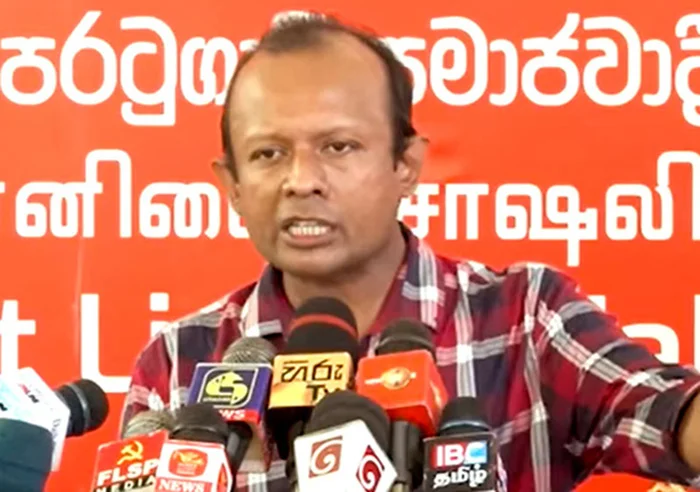
The Frontline Socialist Party (FSP) yesterday accused the government of seeking to use the proposed Protection of the State from Terrorism Act (PSTA) to suppress popular political activity, claiming that some of its provisions were more repressive than those of the Prevention of Terrorism Act (PTA).
FSP Education Secretary Pubudu Jayagoda told a media briefing, in Nugegoda, that the definition of terrorism in the Bill was so broad that it could be used to label almost any form of popular political activity as terrorism.
He said the Bill’s approach to defining terrorism was based largely on attempts to compel a government, or an international organisation, to do, or refrain from doing something, rather than on internationally recognised criteria, such as killings, causing serious bodily harm, kidnapping or acts intended to spread terror among the public.
Jayagoda also alleged that the Bill transferred substantial powers from the judiciary to the executive, while extending powers of arrest, investigation and detention to the armed forces, in addition to the police.
He claimed that the government had sought to portray the Bill as a replacement for the PTA while retaining or introducing provisions that could facilitate political victimisation and repression.
The FSP also questioned the government’s decision to proceed with the Bill, despite having previously sought public views on an earlier draft.
Jayagoda said a draft had been published earlier this year, with the period for public submissions ending on February 28, but the Bill subsequently gazetted was essentially the same draft with some provisions rearranged.
Jayagoda also referred to a letter reportedly sent by Attorney-at-Law Saliya Peiris, a member of a Committee, chaired by President’s Counsel Rienzie Arsecularatne, that had been appointed to draft the legislation. He said Peiris had stated, in the October 06 letter, that changes had been made to the draft prepared by the Committee.
“This means that even the Committee, appointed to prepare the Bill, was a deception,” Jayagoda alleged.
He said that the PSTA was fundamentally similar to the Anti-Terrorism Bill introduced by the previous government, in 2023, which the National People’s Power (NPP) opposed and challenged in court.
“If the NPP opposed that Bill then and is now bringing the same legislation before Parliament, the government must explain its position,” he said.
Jayagoda called on NPP MPs to oppose the PSTA in Parliament and urged trade unions and other groups to build a broad public movement against the legislation.
He challenged the government to an open debate on the Bill.

Former First Lady Shiranthi Rajapaksa was yesterday remanded until 13 October after being produced before the Colombo Magistrate’s Court following her arrest by the Commission to Investigate Allegations of Bribery or Corruption (CIABOC).
Shiranthi, wife of former President Mahinda Rajapaksa, was arrested at her residence on Poorwarama Road, Kirulapone, after CIABOC officers recorded a statement from her for nearly two hours.
According to the CIABOC, the arrest was made over allegations that Rs. 10 million obtained from the National Savings Bank through the Siriliya Saviya organisation was misappropriated.
The money was allegedly obtained to provide a Computed Tomography (CT) scanner to the children’s hospital. Investigators allege that the scanner was not provided and that the funds were instead unlawfully used.
CIABOC is investigating alleged offences under the Public Property Act and corruption-related provisions in connection with the transaction and other financial activities involving Siriliya Saviya, which was headed by Rajapaksa.
Rajapaksa returned to Sri Lanka on Monday night on a flight from Malaysia after travelling overseas for medical treatment. She left for Singapore on 16 September after being admitted to a private hospital in Colombo on 15 September following an illness.
She had been due to appear before the Financial Crimes Investigation Division (FCID) on 13 October in connection with its investigation into the financial affairs of Siriliya Saviya.
Meanwhile, her lawyers filed an anticipatory bail application before the Maligakanda Magistrate’s Court on Monday, seeking an order preventing her arrest in connection with the FCID investigation.
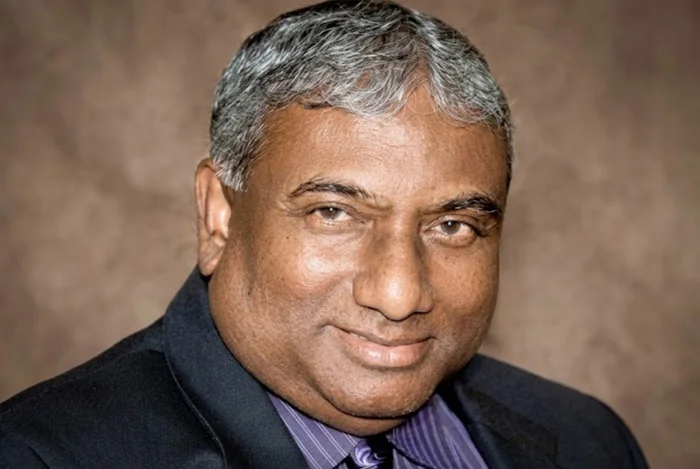
Former National Savings Bank (NSB) Chairman Pradeep Kariyawasam was yesterday granted bail by the Colombo Magistrate’s Court following his arrest by the Commission to Investigate Allegations of Bribery or Corruption (CIABOC).
Kariyawasam, husband of former Chief Justice Shirani Bandaranayake, was arrested in connection with the Bribery Commission’s investigation into the ‘Siriliya Saviya’ account linked to former First Lady Shiranthi Rajapaksa.
The investigation concerns financial activities involving the Siriliya Saviya initiative, which was headed by Rajapaksa, wife of former President Mahinda Rajapaksa.
CIABOC is continuing investigations into the alleged financial irregularities relating to the account.

Showers above 100 mm are likely at some places in the Western, Sabaragamuwa, Central, Uva and Southern provinces and in Anuradhapura district

PSTA worse than PTA: FSP

Shiranthi R remanded until 13 Oct.

Former NSB Chairman Kariyawasam granted bail

Katchatheevu row: India SC urges fishermen to avoid Sri Lankan waters

Remembering Juvenal, Coke, Acton and Machiavelli

‘Dates have the highest sugar content to fight Coronavirus’

Sunday Island 27 December – Headlines

#SundayIsland 17th December – Headlines

Sunday Island – 28th March

Sunday Island Headlines – 21 March

Sunday Island – 21st February – Headlines
-

 Editorial6 days ago
Colombo Port drug bust: The plot thickens
-

 Features4 days ago
The first woman in the foreign service or Ceylon Overseas Service it was then called
-

 Editorial5 days ago
Fuelling discontent and protest
-

 News3 days ago
Geneva takes up Sallay’s case and govt. ignores opportunity to answer accusations
-

 Latest News5 days ago
Tharindu Rathnayake, bowlers secure Asian Games Bronze for Sri Lanka
-

 Foreign News5 days ago
Ten injured after car crashes into rugby supporters in Australia
-

 Features3 days ago
Sri Lanka Cricket Bill: Governance reform is not yet a cricket strategy
-

 News4 days ago
Nearly 20 Iranian tankers stranded off Lanka amid US sanctions