
News
President orders bureaucrats with decision-making powers to attend meetings without fail


President Gotabaya Rajapaksa on Saturday ordered officials with decision-making powers to attend District and Regional Development Committee meetings without fail.
Rajapaksa said this during a “Discussion with the Village” programme at the Nelumwewa Community Hall in the Paligama Grama Niladhari Division of the Karuwalagaswewa Divisional Secretariat, Puttalam District.
The President said he had realised that the lack of involvement of senior officials was the main reason for the delay in implementing useful projects and the delay of benefits to the people.
The people were suffering due to the endless tug of war among officials, respective institutions and the people’s representatives, the President said. The President reiterated the need for the responsible officials of all key institutions including wildlife, forest conservation, environment and road development to make collective decisions in the implementation of projects.
“Absence of proper land use planning is not the fault of the people. It is important that officials go to the grassroots to witness the real situation, before implementing projects that impact people for many years. Some people misinterpret policy decisions that were taken for the benefit of the people. I will never allow the real issues of the people to be swept under the carpet by using misinterpretations as an excuse,” he said.
The poorest and most off the grid villages were selected as the venue for the “Discussion with the Village” programme, the President said. The people living in those villages had been suffering from numerous unresolved issues for a long period of time. Those problems could not be solved by looking at them from an official’s or any other party’s perspective alone, he said.
“Therefore, the officials and the villagers can make the right decisions by meeting each other,” the President said addressing the gathering.
The “Discussion with the Village” programme commenced on September 25, 2020 from Badulla district. Thereafter programmes were organized covering Matale, Ratnapura, Anuradhapura, Ampara, Polonnaruwa, Kalutara, Moneragala, Kegalle and Kandy districts.

Latest News
“May this sacred Poson Festival illuminate every heart with compassion, loving-kindness and wisdom”- President

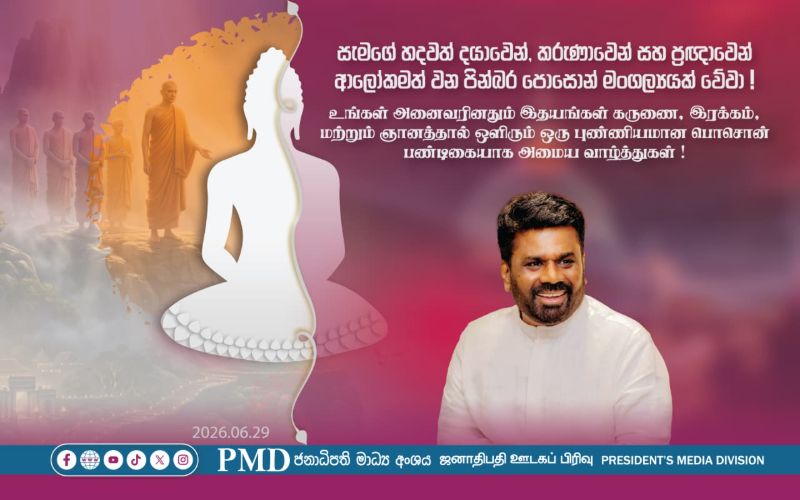
Presiden Anura Kumara Dissnayake in his Poson Day message wished that this sacred festival illuminate every heart with compassion, loving-kindness and wisdom
The President’s Poson Day message:
“The arrival of Arahat Mahinda Thera marked the beginning of Sri Lanka’s emergence as a centre of Theravada Buddhist philosophy and tradition. That momentous event, which gave rise to both a spiritual awakening and a far-reaching social transformation, extended far beyond its religious significance and laid the foundation for a more advanced cultural, social and political order throughout the country.
Buddhism not only established a strong foundation for the nation to flourish but also brought about a transformation in education. By turning temples into centres of learning and monastic education, it fulfilled a vital social role as a hub of knowledge, fostering a profound spiritual renaissance among the people. Moreover, it inspired remarkable developments in architecture, painting, irrigation engineering, building design, wood carving and other artistic traditions, elevating our nation to a position of distinction and pride before the world.
As the present-day heirs to such a glorious and noble heritage, we all bear an inescapable responsibility to revive the values and moral principles that are gradually fading from society and to work together towards building a civilised State. In this endeavour, we are already engaged in the struggle to restore civility across all spheres of public life, including Parliament and State institutions.
No nation can achieve genuine progress without an ethical foundation. The Cūḷa Hatthi Padôpama Sutta, expounded by Arahat Mahinda Thera, underscores the importance of gradual training and disciplined development. By re-establishing on Sri Lankan soil the proud legacy of the civilised society that came with Buddhism, let us join hands with unwavering determination to build a modern and enlightened State founded upon the ethical, social and environmental values that our nation so urgently requires.
I therefore invite all citizens to unite in this noble endeavour with strength and conviction.
May this sacred Poson Festival illuminate every heart with compassion, loving-kindness and wisdom”.

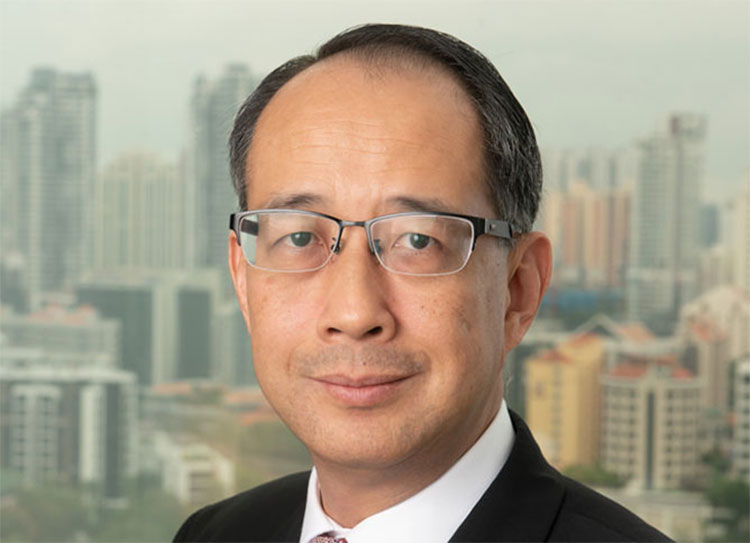
The Law Association for Asia and the Pacific (LAWASIA) has backed the campaign by the Bar Association of Sri Lanka against the government’s effort’s to extend the retirement ages of judges of the Superior Courts.
T.L Yap, President of LAWASIA, in a statement dated 26 June, has expressed concern over the NPP government’s move in the wake of President Anura Kumara Dissanayake’s recent statement in Parliament on the delay in making the appointments.
The text of the statement: “LAWASIA shares the concern expressed by the Bar Association of Sri Lanka (BASL) on 25th May 2026 in a letter to His Excellency the President of Sri Lanka regarding the prospect of the Government of Sri Lanka introducing an amendment to the Constitution which would increase the retirement age of the Judges of the Court of Appeal and the Supreme Court.
LAWASIA supports the sentiments expressed by BASL in its letter of 25 May, namely: “Extending the retirement age of the sitting Judges of these Courts at this point of time is likely to be viewed by the public as a blatant attempt to interfere with the judiciary… The independence of the Judiciary and the public confidence reposed in it, are indispensable pillars of the rule of law and the democratic framework of (Sri Lanka).
In that regard it is of paramount importance that the Judiciary must not only remain independent in fact but also must be seen by the public to be wholly independent, impartial, and free from even the slightest perception of influence, favour, accommodation, or impropriety”
The Constitution of Sri Lanka recognizes the independence of the judiciary and its importance in preserving and maintaining the rule of law. The retirement age of senior judges is presently fixed by Article 107(5) of the Constitution. Constitutional amendment in any jurisdiction is a serious matter which must not be undertaken lightly. LAWASIA’s principal concern is that the proposed constitutional amendment has the appearance of an ad hoc initiative without adequate public consultation. This in turn has the potential to undermine public confidence in the judiciary.
An independent, competent and respected judiciary is the cornerstone of any democracy. LAWASIA has long advocated the fundamental importance of this principle.
The essence of LAWASIA’s formal position in relation to the independence of the judiciary lies in the Beijing Statement of Principles on the Independence of the Judiciary in the LAWASIA Region, adopted at the Conference of Chief Justices held in Beijing in 1997 and subsequently signed by 32 Chief Justices from across the Asia-Pacific.
The Beijing Statement in essence emphasizes the fundamental importance of the independence of the judiciary, and comments on a range of related issues including the objectives of the judiciary, the appointment of judges, the tenure of judges, judicial conditions and the relationship between the judiciary and the executive.
Endorsing the concerns raised by another international organization, the Commonwealth Lawyers Association, LAWASIA accordingly calls upon the authorities in Sri Lanka to:
• refrain from proceeding with the proposed constitutional amendments seeking to increase the
retirement age of members of the Judiciary;
• resist piecemeal and ad hoc amendments to the Constitution of Sri Lanka.
• adhere to due process of consultation and stakeholder engagement in constitutional reform;
• desist from taking any steps which would undermine confidence in the Judiciary and
irreparably diminish the independence of the judiciary; and
• ensure adherence to the rule of law and respect for the independence of the judiciary.
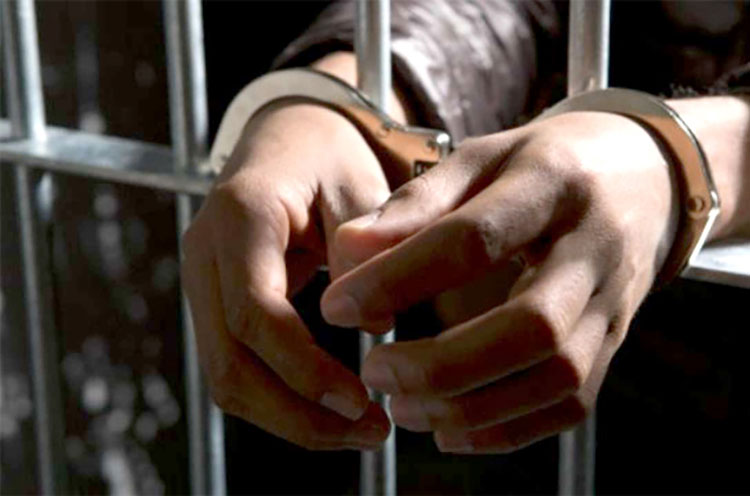
A total of 7,300 young people, below the age of 21, had been arrested on suspicion since the launch of the nationwide ‘Ratama Ekata’ anti-drug operation, DIG in charge of the Police Narcotics Bureau, Ashoka Dharmasena, told The Island yesterday.
DIG Dharmasena said the suspects included about 150 females under the age of 21. He added that more than 214,000 suspects had been taken into custody since the commencement of the national anti-narcotics operation.
The operation was launched with the primary objectives of disrupting the supply of narcotics across the country, reducing the demand for illegal drugs and rehabilitating those addicted to narcotic substances, he said.
DIG Dharmasena said law enforcement authorities had so far seized more than 15,000 kilogrammes of narcotics, including cannabis, during the ongoing operation.
He also noted that police had achieved considerable success in intercepting narcotics smuggled into the country by sea, contributing significantly to efforts to curb the illicit drug trade.
The Police Narcotics Bureau said the nationwide operation would continue as part of the government’s broader strategy to dismantle drug trafficking networks and minimise the social impact of narcotics.
by Norman Palihawadane ✍️

Europe’s heatwave linked to 1,300 deaths, WHO says, as Germany hits record 41.7C

Padikkal fifty, Sudeera five-for before India A, Sri Lanka A settle for draw

“May this sacred Poson Festival illuminate every heart with compassion, loving-kindness and wisdom”- President

Canada score late to beat South Africa and reach last 16 at World Cup 2026

Tector and Moondra headline Ireland’s historic series sweep against India

Roach’s 300th wicket headlines West Indies’ innings win over Sri Lanka

‘Dates have the highest sugar content to fight Coronavirus’

Sunday Island 27 December – Headlines

#SundayIsland 17th December – Headlines

Sunday Island – 28th March

Sunday Island Headlines – 21 March

Sunday Island – 21st February – Headlines
-
 Opinion6 days ago
Ranasinghe Premadasa: The man who would not take ‘No’ for an answer
-
 News2 days ago
Another 1,132 Sri Lankan Personnel to be deployed for United Nations Peacekeeping Missions
-

 Opinion5 days ago
Sri Lanka’s national security: Justice, reconciliation, and forward-looking vigilance
-

 News6 days ago
US Assistant Secretary of State for South and Central Asian Affairs meets President
-
 News8 hours ago
LAWASIA warns against ad hoc initiative to increase judges’ retirement ages
-

 News3 days ago
Kelaniya emerges as highest ranked Lankan uni in Times Higher Education Sustainability Impact Ratings
-
 Opinion4 days ago
A triumph for Pakistan’s skilled diplomacy at Iran-US talks
-

 Editorial6 days ago
FCID’s big catch