
Business
Can we stop university ragging?


Following the tragic demise of a Sabaragamuwa University undergraduate, more than fifty articles have appeared in the media expressing views on various aspects of the barbaric tradition of ragging in Sri Lankan universities. However, this discussion is taken into an unprecedented height by the landmark decision by the Supreme Court (SC/FR/216/2020 on 2025-Jul-09) pertaining to a grievous act of ragging that took place in 2020, twenty-two years after ragging was made illegal by the Prohibition of Ragging and Other Forms of Violence in Educational Institutions Act No. 20 of 1998.
One needs not be a constitutional scholar to understand the responsibilities of the three branches of the government; the Supreme Court has fulfilled the responsibility of the judiciary. Now, the other two branches will have to step up. Anyone reading the 48-page judgement or the recent opinion pieces referred to earlier, will clearly see that the core issue is the failure to implement the 1998 law. Those responsible for the failure, as listed in the judgement, include everyone in the University Grants Commission’s payroll, the Head of Police, and the Attorney General. Anything new here?
No, there is no mystery about not being able to stop ragging, it is another clear and loud statement about our broken system: complete disregard for law and order for decades. Generations of elected officials, bureaucrats, and most public using their services broke the law with impunity, while others abated it or put up with it for survival, leading to the current socioeconomic bankruptcy of the country. Let us have no doubt, what is happening in universities and other institutions is not any different from what happened in the country since independence: callous disregard for law and order with complete impunity. This national habit of normalisation of criminal behaviour must be stopped, universities are no exception.
The supreme Court has read the riot act, but that is of limited utility. This is where the legislative and executive branches need to act. If we are to eradicate this menace, there must be a zero-tolerance policy, and the penalties must be swift, substantial, and well publicised to be a deterrent. A slap of the wrist as often happens, or negotiated settlements between the student union and academics sympathetic or connected to the student union are not any worse than ignoring the wrongdoing. The current law must be amended to include a mandatory, minimum one-year suspension for any violation. That is in addition to any criminal and civil penalties.
There will be those who cry foul; such severe punishments will impact on the whole life of a student, they may say. There are several responses to that misguided reasoning. Do we want to eliminate ragging or maintain it in a different form or level? What about the victims – aren’t their lives permanently affected? Other important questions are, was the violation an unintended result of performing a vital function, or was it the result of a provocation, loss of property, dignity, or some other harm to the perpetrator? All such questions can be addressed with a clear negative response, as ragging is a deliberate act that yields no constructive results. Ragging is a well-organised, premeditated activity. The element of planning and prior intent is considered an aggravating factor, meaning it increases the severity of the crime and harsher penalties can be justified.
It must be made compulsory for university students to read and understand the Prohibition of Ragging Act in its entirety. After assessing their comprehension of the law, they should be made to give their consent to abide by such laws by signing a legally binding document, in which the minimum one-year suspension is clearly spelled out, at the beginning of each academic year as a constant reminder of the severity of the consequences. A copy must be sent to their parents or guardians, so that they can do their part in bringing up responsible citizens. This practice must be extended to other affected institutions as well.
The Supreme Court judgement implicated the university and law enforcement communities for failing to implement the law. While the court did not give reasons, the fifty plus writers pointed out the reasons why the university community did or could not perform their duty. With my apologies to those few caring souls who had done their best and were treated as outcasts by their peers, a few of those reasons are worth repeating here.
Most academics have been subjected to mental conditioning of ragging during their own student days, and as a result they have developed sympathy and apathy towards ragging. According to one report, one vice chancellor has asked the perpetrators to limit ragging to two hours, when caught in the act! Is that the right mentality? Another issue is the politicisation of the academic and administrative appointments, which manifests in their perceptions of their roles, their interactions with the university system, and their engagement with social justice issues. Their loyalty is to their political handlers, and they are not answerable to the community.
Politicisation goes into ragging itself. This writer was there to witness how JVP systemised ragging into the sophisticated system found today, including dress codes, cards and so forth, as a recruiting and fundraising machine. It is not the intention to hold the present NPP responsible for past actions as they have clearly changed their ways, but to appeal to their desire and the potential for bringing forth change at grassroots level to do some good. The public, on the other hand, must force the political parties to make it a policy issue to put a stop to the ruinous practice of ragging. They should know that its effects are not limited to the minority that enters the universities, but they permeate through the economy and the culture at large.
The argument can continue, but it is too much for the university community to handle all three aspects of implementation of law, investigation, and prosecution of incidents, and delivering penalties as the first option. Entire university community, everyone in the UGC pay roll for that matter, must be held responsible for the enforcement of the law. They must be trained and held accountable as part of their job description. Unfortunately, due to many decades of conditioning, the university community has become insensitive to this issue. Changing the attitude of the entire university community, from vice chancellors to grounds keepers, and getting all of them involved must be given priority. The student unions, trade unions, and alumni associations can play a leading role in this endeavour.
As for investigation, apprehension, and prosecution of offenders, a separate independent entity must be created. This entity, preferably under the purview of the Attorney General, may be comprised of resources drawn from existing judiciary functions, but it must be a dedicated one so that cases can be concluded swiftly for maximum impact, preferably within weeks, not months. This could be limited to the initial determination of the violation, and the imposition of the compulsory one-year suspension if found guilty.
The criminal and civil cases arising from such offences can continue separately. This may sound like an expensive preposition, but if implemented properly, its services will not be needed after three to four years. We are dealing with the best and brightest of the nation, and they will learn fast, especially when they risk thirteen years of effort, parents’ investments and hopes, and the entire future.
The general sentiment expressed by most writers is that ragging cannot be stopped. As it is so deeply entrenched, only compromises can be made, some of them reasoned. This writer disagrees; if there is a collective will, there are ways for a civilised society to stop barbarism. The Prime Minister has appointed a task force to investigate it, but its scope is a much broader one: review and overhaul the education system.
There is no doubt that the entire education system must be modernised to meet the needs of the 21st century, but this ruinous practice must be stopped immediately as it is a major contributor to the degradation of society. Let us not forget that ragging is the plague that mentally cripple the generation destined to lead the country into prosperity. Without irradicating it, we will be wasting our sparce resources to further degrade our already dysfunctional society, not to mention the economy, and continue to feed an utterly unnecessary cyclical process.
Now that the country has committed to breaking away from the past, this is an ideal opportunity to grab the proverbial bull by the horns and do away with it. The task force appointed by the Prime Minister can facilitate it. This is a problem that can be easily solved, since it is of limited scope compared to irradicating corruption, even though both have common origins. We are focusing on the problem of the nation’s young adults who are fed, sheltered, and supported by the hardworking citizenry to the tune of half a million rupees per student in 2020 money, not to mention the blood, sweat, and heartache of parents.
The question here is whether society should give in to the juvenile whims of a small minority of young adults, whose only qualification thus far is box checking to get through an archaic examination system, or show them the right path. Young minds can be trained; their attitudes can be adjusted. Enlighten them that they are dependent on society, answerable to it, and that they are subjected to the country’s laws. Let them know in no uncertain terms that the times are changing and this behaviour is not acceptable. This goes for those who aid and abate or ignore this behaviour, the academics, administrators, law makers, enforcers, parents, and most importantly the student unions and their behind-the-scenes handlers.
For an administration intent on establishing a just society, stopping a minority that is misguided by a baseless ‘ideology’ of ‘university subculture’ that gives an inviolable right to rag since we were ragged, is undoubtedly within their capabilities. The Prime Minister’s task force must recommend the following: strengthening the Prohibition of Ragging act to make all relevant parties accountable. Establish a dedicated prosecutorial body independent of the university system.
Empower university martials to turn all university employees into a cohesive movement against ragging. Ensure that university students understand the law and that they are not above it, and the repercussions of violations are severe. The systematic brainwashing of the first-year students, even before they enter the university, by politically motivated entities must be stopped. Above all, the executive branch of the government must make sure that the laws are implemented without exception and make everyone accountable with a zero-tolerance policy. Provided they have the political will, which they have demonstrated so far, this curse can be eliminated before their current term ends. At the same time, the public should give their full support to the administration as if they do not do so, their dream of a happy and prosperous society will be just that, a pipe dream.
by Geewananda Gunawardana, Ph.D. ✍️



At its 2026 Social Sustainability Programme Kick-Off, the UN Global Compact Network Sri Lanka convened business leaders to advance the translation of global ambition into practical corporate action on inclusion, integrity and human rights.
On 24 February 2026, the UN Global Compact Network Sri Lanka (Network Sri Lanka) convened business leaders at Barefoot Garden Café for its 2026 Social Sustainability Programme Kick-Off, delivered in collaboration with Good Life X.
The gathering did more than introduce a calendar of events. It positioned Sri Lanka’s corporate community within the broader direction of the UN Global Compact’s 2026–2030 global strategy — a strategy anchored in three imperatives: equipping companies to act, catalyzing collective action, and advancing the business case for responsible leadership.
At its core, the 2026 Social Sustainability agenda is designed to move companies from commitment to capability.
Within the Diversity & Inclusion Working Group, this means building practical pathways toward equal pay for equal work and strengthening male allyship as a governance issue rather than a cultural afterthought. It means examining sexual and reproductive health, disability inclusion, and mental health not as employee benefits, but as structural determinants of productivity and retention. It means sharpening strategic communications so inclusion is embedded in brand integrity. It also means applying science-based behavioural change approaches to shift organizational culture in measurable ways.
Across the Business & Human Rights Working Group, equipping companies takes the form of deepened engagement on decent work and living wage implementation, strengthening human rights due diligence processes, and addressing emerging risk areas such as AI and digital rights. It extends to reinforcing business integrity and anti-corruption frameworks, understanding the social dimensions of a just transition, and recognizing the link between child rights, nutrition, and workforce productivity.
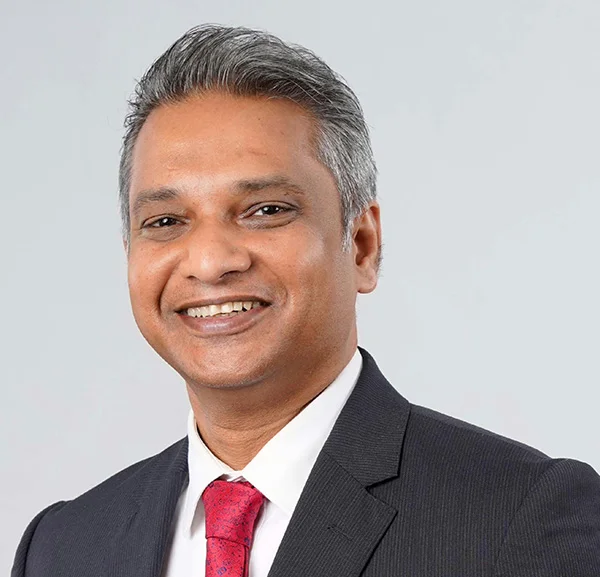
Union Bank of Colombo PLC announced its proposed Debenture Issue 2026, a strategic move aimed at raising up to LKR 3 billion. This issue is designed to bolster the Bank’s Tier II capital base and provide a robust financial foundation for its upcoming growth initiatives.
The offering consists of Basel III compliant, listed, rated, unsecured, subordinated, redeemable high-yield debentures with Non-Viability Conversion. The instrument has been assigned a rating of BB (lka) by Fitch Ratings (Lanka) Ltd, reflecting the bank’s creditworthiness and the structured nature of the subordinated debt.
Investors can choose from three distinct interest structures starting from a high-yield 13% fixed rate per annum (Type A). This option is paid annually, while Type B offers a 12.5% fixed rate paid semi-annually (12.89% AER). For those seeking market-linked returns, Type C provides a floating rate of the 182-days Treasury Bill rate plus a 400-basis point margin, also paid semi-annually.
The debentures are priced at LKR 100 per unit with a 5-year tenure (2026–2031). The initial issue size is set at 20,000,000 debentures with an option to raise 10,000,000 at the discretion of the Bank and is scheduled to open on 10 March 2026.
Shanka Abeywardene, Chief Financial Officer of Union Bank stated “This debenture issue marks a significant step in the Bank’s journey towards enhanced financial stability. By strengthening its capital adequacy, Union Bank is well-positioned to navigate evolving market conditions while fuelling its long-term strategic objectives for sustainable growth”
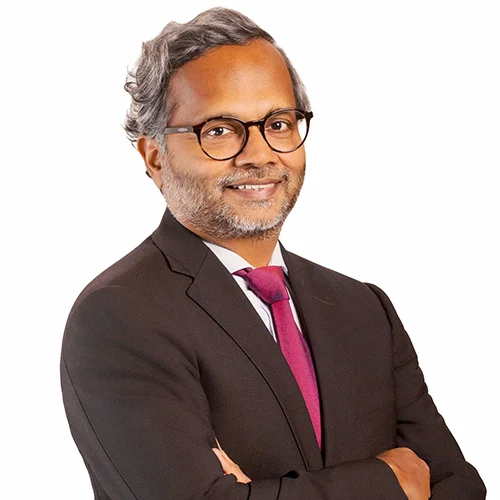
WindForce PLC announced the appointment of Sanjay Kulatunga as an Independent, Non-Executive Director to its Board with effect from 03rd March 2026, following the resignation of Dilshan Hettiaratchi. The appointment further strengthens the Company’s governance framework, strategic oversight, and long-term decision-making capabilities.
Kulatunga brings an established track record as a founder, entrepreneur, and senior executive across financial services and export-oriented industries. He is the Chief Executive Officer and Co-Founder of LYNEAR Wealth Management, a boutique investment firm established in 2013, which has since grown to become one of Sri Lanka’s largest private wealth management institutions, serving high-net-worth individuals as well as local and international institutional clients.
Prior to founding LYNEAR, Kulatunga played a pivotal role in the establishment of Amba Research, an investment research offshoring firm rooted in Sri Lanka and now operating as part of Acuity Analytics.
Over the years, he has contributed extensively to several key national institutions. His previous appointments include serving on the Financial Sector Stability Consultative Committee of the Central Bank of Sri Lanka, as well as the Board of Investment of Sri Lanka and the Securities and Exchange Commission of Sri Lanka.

England elect to field first at Wankhede

Iran denies its drones hit airport in Azerbaijan’s exclave as war widens

Daren Sammy issues plea as West Indies remain stuck in Kolkata hotel

Nepal election 2026: When will we get the results?

‘It’s so good to be home’ – passengers on Dubai-Dublin flight

India’s momentum meets Wankhede’s memory in big semifinal bout

‘Dates have the highest sugar content to fight Coronavirus’

Sunday Island 27 December – Headlines

#SundayIsland 17th December – Headlines

Sunday Island – 28th March

Sunday Island Headlines – 21 March

Sunday Island – 21st February – Headlines
-

 Features4 days ago
Brilliant Navy officer no more
-

 Opinion7 days ago
Jamming and re-setting the world: What is the role of Donald Trump?
-

 Features7 days ago
An innocent bystander or a passive onlooker?
-

 Opinion4 days ago
Sri Lanka – world’s worst facilities for cricket fans
-

 Business7 days ago
An efficacious strategy to boost exports of Sri Lanka in medium term
-

 Business1 day ago
Cabinet nod for the removal of Cess tax imposed on imported good
-

 Features5 days ago
Overseas visits to drum up foreign assistance for Sri Lanka
-

 Features4 days ago
A life in colour and song: Rajika Gamage’s new bird guide captures Sri Lanka’s avian soul