
News
In West Asia, India could be the impartial arbitrator

The renewed escalation in the Israeli-Palestinian conflict since October 7 has dominated global headlines, but beneath this crisis lies a significant diplomatic opportunity for New Delhi. Amid heightened global tensions and complex regional rivalries, India is uniquely positioned to facilitate dialogue among Iran, Israel, and the US. Strategically located at the new geopolitical crossroads, India holds distinctive eco-nomic and political leverage.
India enjoys historical and civilisational ties with Israel, Iran, and the Gulf States, rein-forced recently by a strategic partnership with the US. Crucially, India’s diplomatic posture is not viewed as partisan, granting it a rare legitimacy and trust in this scenario.
Under Prime Minister (PM) Narendra Modi, India has redefined and strengthened its international role, increasing its global reputation, particularly as a leading voice for the Global South. Leveraging longstanding civilisational connections across Asia, West Asia, and Africa, India has revitalised partnerships in the Gulf region. Its growing soft power, amplified by a talented global diaspora, further enhances India’s regional standing and insights.
Historically, India’s relations with Iran have encompassed trade, economic collaboration, and cultural exchanges. For centuries, Persian was a lingua franca across the region, reflecting deep civilisational bonds. Concurrently, India’s relationship with Israel has expanded significantly, encompassing defence collaboration, technology exchanges, agricultural innovation, and strategic investments in ports like Haifa in Israel and Chabahar in Iran. India’s robust partnership with the US, built upon shared democratic values, strong trade ties, and aligned security interests, further solidifies its potential role as a mediator.
From personal experience, I have seen how effective diplomatic facilitation is achievable even amid deep-seated tensions. My late father, MCW Pinto, served for nearly three decades as the founding secretary-general of the Iran—US Claims Tribunal in The Hague, established after the 1979 Iranian Revolution and hostage crisis. For many years, this was one of the few forums where the US and Iran governments met face to face. This tribunal provided a rare venue for structured dialogue, illustrating how impartial arbitration could bridge entrenched divides.
In my capacity as a cabinet minister of Sri Lanka, I engaged with Iranian leaders, business communities, and civil society, encountering a nation driven by pride, cultural depth, and a genuine desire for constructive global engagement Likewise, my interactions in Israel revealed a resilient society committed to safeguarding its sovereignty through innovation. I believe these nations can find common ground with respectful and balanced diplomatic engagement.
The current ceasefire presents a narrow but critical window for diplomatic action, which India should seize. A meaningful initial step would be for PM Modi to appoint a senior Indian diplomat as special envoy tasked with discreet outreach to Tehran and Tel Aviv. The immediate objective would not be to resolve deep-rooted issues but to open reliable channels, reduce risks of miscalculation, and sustain diplomacy.
Current tensions between Tehran, Tel Aviv, and Washington threaten regional stability, energy security, and international peace. A phased diplomatic initiative led by India could first establish confidential dialogue channels, evolving gradually into more structured and transparent interactions. India’s established credibility across relevant capitals uniquely positions it to help mitigate tensions before they escalate.
Stability in West Asia directly impacts mil-lions of Indian expatriates and underpins India’s energy and economic security, making this diplomatic initiative a strategic imperative. PM Modi’s diplomatic engagements, from India’s leadership roles in the G20, Brim, and soon Quad, as well as participation in forums such as I2U2 and IMEC, highlight India’s willingness to undertake bold international out-reach. The time is ripe to translate India’s growing global stature into tangible diplomatic influence.
Traditionally cautious, India’s diplomatic establishment now has an opportunity to embrace a more proactive stance. By stepping forward as a facilitator, India could redefine engagement with West Asia, enhance its inter-national standing, and miningfully contribute to global peace. (Hindustan Times)
Milinda Moragoda
(Milinda Moragoda is a former Cabinet Minister and diplomat from Sri Lanka and founder of the Pathfinder Foundation, a strategic affairs think tank. He can contact via email@milinda.org)


President Anura Kumara Dissanayake has appointed Air Chief Marshal Kolitha A. Gunathilake (Retd.) as the new Chancellor of General Sir John Kotelawala Defence University.
The letter of appointment was presented to Air Chief Marshal Kolitha A. Gunathilake (Retd.) by Secretary to the President Dr Nandika Sanath Kumanayake at the Presidential Secretariat on Monday (05) afternoon.
Air Chief Marshal Kolitha A. Gunathilake(Retd.) has served as Commander of the Sri Lanka Air Force and as Chief of Defence Staff.
(PMD)

By Shamindra Ferdinando
The government is coming under pressure from civil society organisations to formulate a clear ‘mechanism’ to deal with requests for presidential pardons.
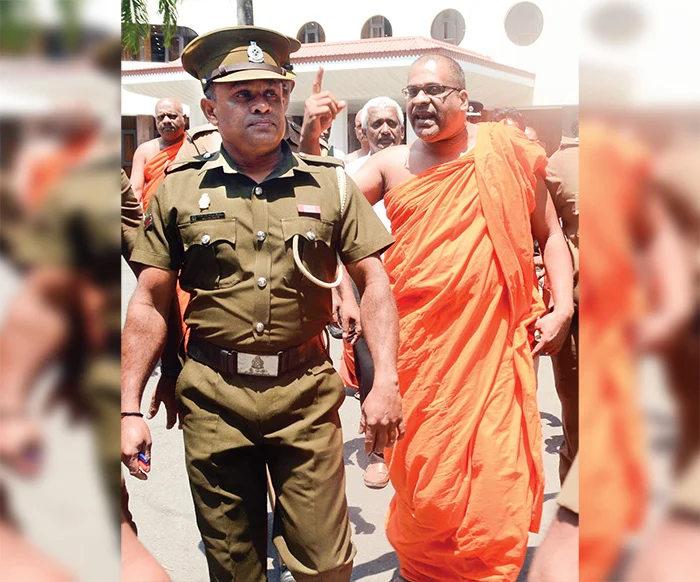
Representing civil society organisations, Gamini Viyangoda yesterday flayed the NPP government for the delay in taking action against Ven. Galagoda Aththe Gnanasara Thera, after the Supreme Court declared the 2019 presidential pardon granted to him by President Maithripala Sirisena null and void. He said successive Presidents had abused their executive power to release convicted persons from prison.
Purawesi Balaya activist Viyangoda pointed out that the Supreme Court ruled that President Sirisena had acted arbitrarily and failed to independently consider the relevant materials before exercising his executive power.
The Court of Appeal, in August 2018, sentenced Gnanasara Thera, General Secretary of the Bodu Bala Sena (BBS), to six years rigorous imprisonment for contempt of court over his conduct during proceedings concerning missing journalist Prageeth Ekneligoda. Viyangoda said that those who had been affected by the monk’s conduct have the right to know on what basis the President released him, in May 2019.
The Court of Appeal yesterday (05) ordered the relevant authorities to enforce the remaining period of imprisonment imposed on the Thera.
Gnanasara Thera, who had been subject to an open warrant for his arrest, was produced before the Court of Appeal, today, by prison officials.
Having considered the submissions made before it, the Court of Appeal directed the Commissioner General of Prisons to take the necessary steps to enforce the remaining period of the sentence imposed on Gnanasara Thera. Police on Saturday (03) apprehended the monk at a forest monastery in Kalutara. The Colombo Magistrate’s Court on Sunday (04) ordered the Thera to be remanded in custody till Monday.
Appearing for Gnanasara Thera, Attorney-at-Law Iresh Seneviratne, together with Attorney-at-Law Pasan Karunaratne, told the court yesterday that his client had been experiencing severe mental distress and had therefore gone to an ‘Aranya Senasanaya’, where he had been staying.
Viyangoda said that examination of presidential pardons, executed over the years, would reveal how successive leaders exploited the executive power to appease their own. Responding to The Island queries, Viyangoda said that Sirisena, in Sept. 2019, just two months before the presidential election, granted Jude Shramantha Jayamaha a Presidential pardon.
Jude Shramantha Jayamaha was sentenced to 12 years by the High Court, but the Court of Appeal revised that sentence to death, in July 2012, which the Supreme Court later upheld. Viyangoda said that though the Supreme Court, in June 2024, declared that the particular Presidential action was illegal and arbitrary, law enoforcement authorities were yet to take tangible measures to enforce the court directive.
Viyangoda stressed that no President should exercise the right to pardon a convicted on his or her own without following laid out procedures. According to him, Sirisena appeared to have simply ordered the monk, and the convicted murderer, released in response to appeals received by him. A comprehensive investigation could identify those who had been involved in these wrongdoings.
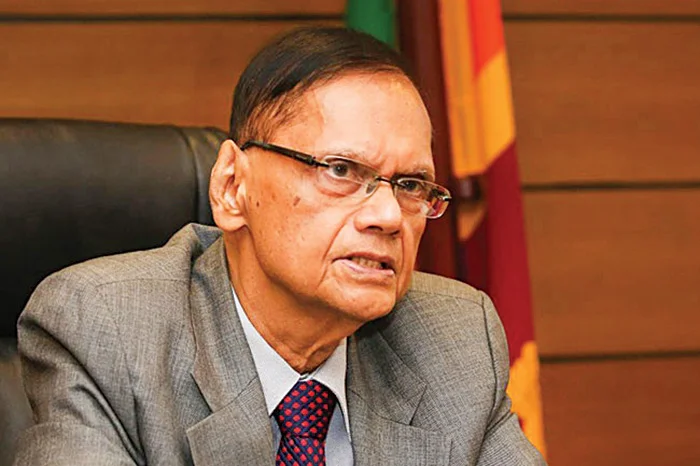
Convenor of Janathawadi Joint Opposition, Prof. G. L. Peiris, yesterday (05) emphasised the responsibility on the part of the government and others to act cautiously when making representations in respect of Sivarasa Anojan facing death sentence in Saudi Arabia over a controversial social media post.
Addressing the media at former President Ranil Wickremesinghe’s Flower Road Office, Prof. Peiris emphasised that whatever representations should be made through the Foreign Ministry.
The one-time External Affairs Minister warned of dire consequences of political party leaders, members of Parliament and civil society making direct representations and trying to get in touch with various Saudi authorities over the phone.
Prof. Peiris said that those who intervened on behalf of Anojan should keep in mind that Sri Lanka should be mindful of the Saudi way of governance and sensitivities.
The former Minister questioned the circumstances Sri Lanka was left out of the recent BRICS summit held in New Delhi. He recalled how former President Wickremesinghe discussed Sri Lanka’s entry into BRICS with Russian President Putin and received an invitation for the Summit there but as a result of the change of government, in Sept. 2024, Sri Lanka ignored that invitation.
That resulted in Sri Lanka being left out from the New Delhi summit, Prof. Peris said.
Prof. Peiris pointed out the absurdity in sending the Foreign Secretary to the BRICS Summit in Russia instead of the President, PM or the Foreign Minister to represent the country.
Referring to the forthcoming conclusion of the current IMF programme, initiated during Wickremesinghe’s time, Prof. Peiris said that Sri Lanka lost a great opportunity to benefit from BRICS by failing to represent the country at a higher level at the Russian summit.
The BRICS nations established the New Development Bank (NDB), originally called the BRICS Development Bank, Prof. Peiris said.
Dismissing NPP government’s explanation regarding Iranian ships awaiting necessary supplies but deprived by US imposed restrictions, the former Minister strongly criticised the administration’s response. According to him, this government responded in a similar manner when the US sank an unarmed Iranian frigate just outside Sri Lankan territorial waters in March this year.
Prof. Peiris declared that the government’s assertion that the US restrictions weren’t only directed at Sri Lanka but all Iranian vessels in other regions as well was not acceptable (SF)

Harmanpreet Kaur steps down as India captain

Turkiye, Pakistan agree Saudi Arabia military deployment under Mecca pact

Rumesh Tharanga among nominees announced for World Athlete of the Year 2026
New Chancellor appointed to General Sir John Kotelawala Defence University

Yemen government forces claim recapturing Mocha from Houthis

Showers above 75 mm are likely at some places in the Western, Sabaragamuwa, Central, and Southern provinces after 1.00 pm

‘Dates have the highest sugar content to fight Coronavirus’

Sunday Island 27 December – Headlines

#SundayIsland 17th December – Headlines

Sunday Island – 28th March

Sunday Island Headlines – 21 March

Sunday Island – 21st February – Headlines
-

 Latest News6 days ago
Gold winner Tharanga gets brand-new Honda Vezel from SLAAJ
-

 News6 days ago
US-assisted ‘Ice’ detection: NPC to examine IGP’s move to transfer drug-busting team
-

 Features7 days ago
Why Sri Lanka needs an Inclusive Civic Nationalism – urgently
-

 Editorial5 days ago
Colombo Port drug bust: The plot thickens
-

 News7 days ago
Civil society activist accuses govt. of favouring Ven. Gnanasara
-
 Midweek Review7 days ago
Dappula’s Easter Sunday ‘grand conspiracy’ claim demolished
-

 Editorial7 days ago
When crime bosses rise above law and shrines
-
Editorial6 days ago
Drug busting, transfers and trust deficit