
News
ITAK demands immediate release of all findings related to Chemmani mass grave probe


The Ilankai Tamil Arasu Katchi (ITAK) yesterday demanded the immediate public release of all forensic reports, and DNA findings, related to the Chemmani mass grave investigation, warning that symbolic gestures of reconciliation will remain hollow without legal accountability.
In a strongly worded three-page letter to President Anura Kumara Dissanayake, the party urged urgent action to ensure truth, justice, and international collaboration in the ongoing exhumation process in Jaffna.
The letter, signed by senior party leaders C.V.K. Sivagnanam and M.A. Sumanthiran, raised concerns over the transparency of the current procedures and emphasised the need for independent international forensic oversight. The ITAK also called for the consolidation of legal cases filed in 1999 and 2025 and the return of remains held in Glasgow for further forensic analysis.
ITAK said that more than 65 skeletons, including those of infants, have already been recovered—pointing to the scale of atrocities allegedly committed in the area.
The party stressed that forensic transparency, proper victim identification, and prosecution of perpetrators are essential for genuine national healing and justice.
Full text of the ITAK letter: “We write on behalf of Ilankai Thamil Arasu Katchi to express profound concern regarding the ongoing exhumation at Chemmani. We urge urgent and decisive action to uncover the truth, ensure forensic protocols meet internationally recognised standards, and bring the perpetrators to justice.
“Chemmani has come to represent Sri Lanka’s unresolved legacy of enforced disappearances and extrajudicial killings extending into the mid-1990s. In 1998, Lance Corporal Somaratne Rajapakse convicted for the rape and murder of Tamil schoolgirl, Krishanthi Kumaraswarny, and family members, revealed at his sentencing hearing that between 300 and 400 Tamil civilians had been buried there. This disclosure prompted excavations in 1999 that yielded fifteen skeletons, two of which were identified as disappearances from 1996. Despite forensic confirmation of assault and execution prosecutions stagnated and no meaningful justice was delivered to the day.
“In early 2025, during redevelopment work at the Chemmani Ariyalai Siththuppaaththi Hindu crematorium in northern Jaffna human skeletal remains were uncovered, prompting the Jaffna Magistrate’s Court to formally declare the site a mass grave and order a court-supervised excavation under judicial supervision. As of today, approximately 65 skeletons including infants and children had been exhumed in two phases, accompanied by personal artefacts such as a school bag, toy, bangles, sandals and fragments of clothing. All remains are held at the University of Jaffna for forensic examination.
“These excavations, along with several other mass graves in the Tamil areas of the North and East, constitute clear evidence of war crimes and a genocidal campaign against the Tamil population in this country, a grave history that must be acknowledged in full.
“Truth seeking must serve as the foundation of any transitional justice process. Hundreds of families continue to seek answers, more than sixteen years after the war ended in 2009. These families are asking an imperative question about the fate of their missing loved ones
“The silence of successive regime is not merely a political failure but a grave moral one. Every year without truth undermines the possibility of national healing and closure. The fifteen bodies removed in 1999 are connected to the same criminal context as the current discoveries. However, the pending case in the Colombo Magistrate’s Court relating to that excavation has not been formally integrated with the present investigation. These must now be treated as part of a single criminal transaction. Only consolidation of both investigations can enable meaningful account ability,
Sri Lanka’s limited domestic forensic capacity and the history of opaque handling of mass graves make transparent protocols and credible international oversight indispensable Chain of custody must be documented meticulously
“Independent forensic experts of recognised international standing should be engaged to oversee excavation, identification and analysis. Interim and final reports must be publicly disclosed to victims’ families, civil society, international observers and the wider public.
“It has come to light that the fifteen bodies exhumed in 1999 were reportedly transferred to the University of Glasgow for analysis. To date, successive Sri Lankan governments have taken no meaningful steps to repatriate those remains, identify the victims or facilitate their proper last rites. Those remains must be urgently returned to Sri Lanka so they may be re-investigated under the same internationally monitored protocols applied to the current Chemmani excavation contributing but unified and coherent truth-seeking process.
“The earth at Chemmani is speaking again. Over forty skeletons, including infants, have emerged with personal artefacts that painfully affirm their civilian status and innocence. Yet many perpetrators remain at liberty. Symbolic gestures of reconciliation ring hollow without real legal action.
“We therefore respectfully but firmly urge Your Excellency to implement the following without delay:
1. Consolidate the legal cases related to the 1999 and 2025 exhumations into a single judicial and forensic inquiry under the Colombo and Jaffna Magistrate’s Courts.
2. Engage independent, internationally respected forensic experts to oversee all stages of the investigation, ensuring forensic integrity and public trust.
3. Publicize all interim and final forensic reports, DNA profiles and identification results, and facilitate access for victims’ families, civil society and international observers.
4. Repatriate the remains excavated in 1999, currently believed to be held in Glasgow, to they may be examined under the same protocols and returned to their families with dignity.
5. Allocate significantly enhanced financial and logistical resources to ensure that the current excavation is completed under international standards; hundreds of families continue searching for missing loved ones, and without truth and accountability, reconciliation remains a facade. Concurrently take steps to prosecute those responsible for these heinous crimes, which is essential for national healing.
These actions are essential to uphold Sri Lanka’s moral and legal obligations and to chart a credible path toward truth and justice.We remain ready to support constructively in facilitating these measures and ensuring their timely implementation.”

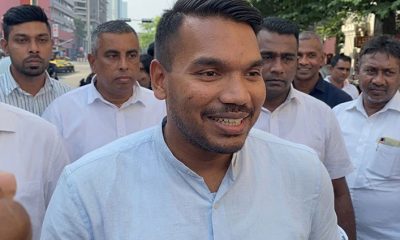

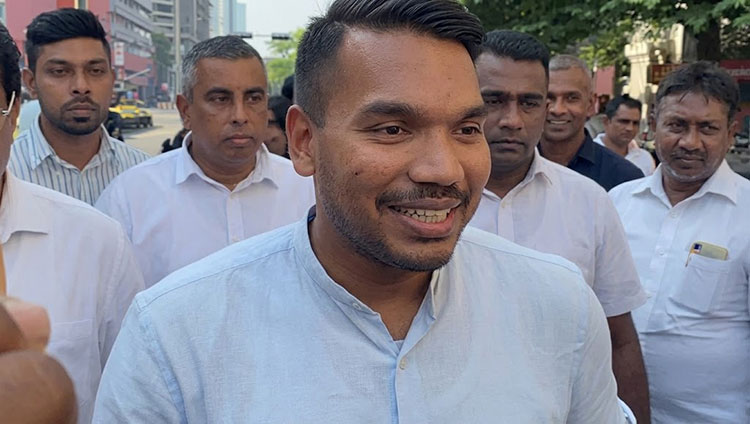
Sri Lanka Podujana Peramuna (SLPP) Member of Parliament Namal Rajapaksa has been arrested by the Commission to Investigate Allegations of Bribery or Corruption (CIABOC).
Namal Rajapaksa had been summoned by CIABOC to provide a statement in connection with investigations into the controversial Airbus deal. He was subsequently arrested by CIABOC after recording his statement for over 5 hours.
Latest News
Sun directly overhead Nittambuwa, Algama, Malwana, Aranayake, Meegahakiula and Panamkadu about 12.09 noon today (04)


The sun is going to be directly over the latitudes of Sri Lanka from 28th of August to 07th of September due to its apparent southward relative motion.
The nearest places of Sri Lanka over which the sun is overhead today (04) are Nittambuwa, Algama, Malwana, Aranayake, Meegahakiula and Panamkadu about 12.09 noon.
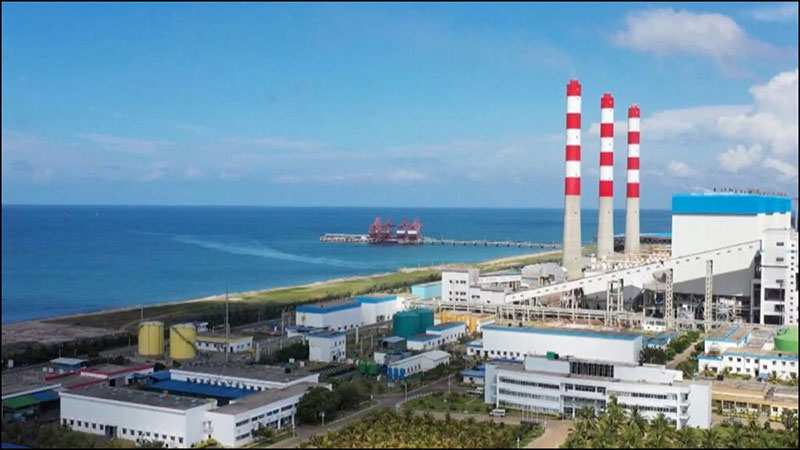
Plant’s output cut from 270 MW to 140 MW amidst dwindling stocks; energy analysts warn system remains “at a razor’s edge”
By Ifham Nizam
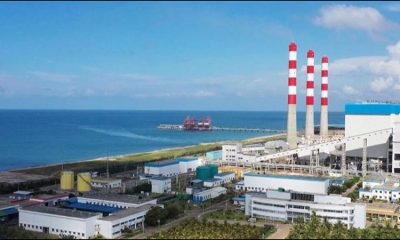
The Norochcholai coal-fired power plant is now digging into the last dredges of its coal stock, with two operational units forced to slash generation from around 270 MW to just 140 MW on Sunday as the plant ran critically short of fuel, according to independent energy analysts and sources familiar with the National System Operator (NSO).
The sudden reduction of approximately 130 MW in coal generation has once again exposed the fragile state of the country’s power supply arrangements, with the plant understood to have coal stocks sufficient only until Friday night.
“This is not how a coal plant is expected to operate. They are digging up the last dredges of coal from the plant,” an independent energy analyst told The Island.
The analyst questioned why the units had been allowed to reach this stage without earlier intervention, arguing that at least one unit should have been deloaded around 10 days ago to conserve the remaining coal.
Had that been done, the analyst said, the country could also have reduced its dependence on more expensive diesel-fired generation during the period when
coal stocks were being conserved.
The latest NSO generation figures highlight the continuing pressure on the system.
Around 7 p.m. on Sunday, when the night peak was reached, total demand stood at 2,552.7 MW. Coal contributed only 282 MW, while major hydro accounted for 1,215.8 MW and thermal-oil generation for 791.9 MW.
The night peak of 2,552.7 MW was substantially higher than the daytime peak of 2,246 MW, according to the NSO Generation Summary for August 30.
The most immediate concern is the remaining coal stock at Norochcholai.
Sources said the plant has coal only to Friday night, making the timing of the next shipment critical.
The first shipment under the emergency arrangement is expected to arrive on Friday, September 4, but the coal unloading will have to begin on the same day if
the power plant is to continue operating without further significant deloading.
That creates another potential vulnerability, with rough sea conditions posing an additional challenge to unloading operations.
Energy sector sources said that even the arrival of the September 4 shipment would not completely eliminate the danger.
The next shipment under the new coal tender would need to commence unloading around September 15. Any significant delay beyond that could again force the Norochcholai units to operate at reduced output.
“We are still at a razor’s edge”
The independent energy analyst said the situation should not be viewed merely as a question of whether a particular vessel arrives on time.
The situation also means that any further reduction in coal generation could have a direct impact on the use of oil-fired power generation, potentially increasing the cost of electricity generation.
The latest NSO figures already show the important role being played by thermal-oil generation during the evening peak, when demand rises sharply.
The analyst questioned the rationale behind allowing the coal units to continue operating at higher loading until stocks reached critically low levels instead of taking measures earlier to stretch the available inventory.

SLPP MP Namal Rajapaksa arrested by CIABOC

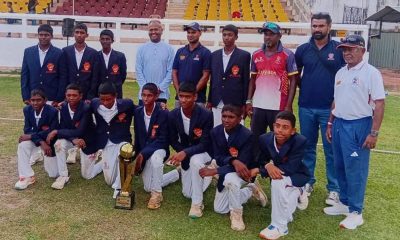
Devapathiraja clinch U15 Division I title with 33-run win over Royal

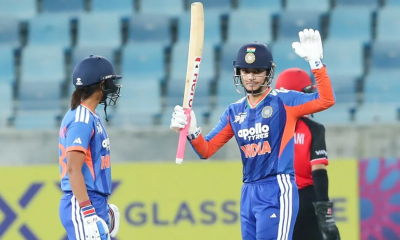
Mandhana’s record ton powers India into semi-finals

Sun directly overhead Nittambuwa, Algama, Malwana, Aranayake, Meegahakiula and Panamkadu about 12.09 noon today (04)

Showers expected in the Uva, Central and Eastern provinces and in Polonnaruwa and Mullaittivu districts after 2.00 p.m

Norochcholai digs into dwindling coal stocks, two units slash generation

‘Dates have the highest sugar content to fight Coronavirus’

Sunday Island 27 December – Headlines

#SundayIsland 17th December – Headlines

Sunday Island – 28th March

Sunday Island Headlines – 21 March

Sunday Island – 21st February – Headlines
-

 Features6 days ago
“Wrap Me Up in My Blazer”— A Gentlemanly Bradby Reminiscence
-

 Features5 days ago
When Sri Lankan stories find their own voice
-
 Features6 days ago
JVP/NPP government as seen from outside by Lionel Bopage now domiciled in Australia
-
 News5 days ago
BASL takes exception to Justice Ganepola being denied a place in SC
-

 Editorial7 days ago
Govt. trying to dupe UN Rapporteur?
-
 Features6 days ago
Prof. Savitri Goonesekere: What has she done?
-

 Features6 days ago
World Trade Politics: Canada rebuffs Trump’s tariff blackmail
-

 News2 days ago
Denied of promotion to SC despite vacancies, justice Gurusinghe retires