
Business
In an era of unprecedented change, HR leaders call for a radically agile workforce


In a world grappling with what many now call a “polycrisis”—a convergence of economic instability, geopolitical tension, and relentless technological disruption—the old paradigms of workforce management are no longer simply outdated; they are liabilities. For businesses in Sri Lanka and across the globe, survival and growth now depend on a new, more dynamic asset: a workforce that can pivot, adapt, and innovate on the fly.
This urgent imperative was the central theme at the National HR Conference 2025, hosted by CIPM Sri Lanka on June 3rd at the Monarch Imperial. The event convened a panel of distinguished industry leaders, academics, and HR practitioners to grapple with a critical question: How do we build a workforce that is not just prepared for the future, but can actively shape it? The discussion that unfolded was not one of incremental adjustments, but a call for a fundamental reimagining of how we hire, train, manage, and lead people.
The panel, expertly moderated by Janaka Kumarasinghe, featured insights from Mayura Malagala, Chetana Liyanage, Pavithra Kailasapathy, and Rajitha Kariyawasam. Together, they mapped out the profound challenges and actionable strategies for cultivating the future-ready, agile workforce essential for navigating the complex, uncertain decades ahead.
Defining the ‘Future-Ready’ Workforce in an Age of Uncertainty
Moderator Janaka Kumarasinghe initiated the dialogue by posing a question that cuts to the heart of modern strategy: in a future that is largely unknowable, what does “readiness” truly mean?
Pavithra Kailasapathy of the University of Kalam’s Department of Human Resources offered a foundational definition, urging a move away from static planning. “When we talk about a future-ready workforce, we must first humbly accept that we cannot predict what the future holds,” she stated. “The only certainty is uncertainty itself. Crises and disruptions are no longer black swan events; they are becoming the regular rhythm of the global landscape. Therefore, organizations—and indeed, the nation—need a workforce that is inherently adaptable, flexible, and psychologically equipped for swift decision-making amidst constant change.”
She delved deeper, stressing that this capability goes far beyond a simple list of technical proficiencies. “It’s not just about skills; it’s about possessing a growth mindset—the core belief that abilities and intelligence can be developed through dedication and hard work. This contrasts sharply with a fixed mindset, which assumes talent is innate and unchangeable.”
In practice, an employee with a growth mindset sees a challenge as an opportunity to learn, whereas one with a fixed mindset sees it as a threat that might expose their limitations.
“Agility,” Kailasapathy concluded, “is the fusion of this learning ability with the adaptability to apply that knowledge in novel, often high-pressure, situations. It’s about learning, unlearning, and relearning as a continuous cycle.”
Navigating Exponential Change and Geopolitical Shockwaves
The conversation then shifted to the powerful external forces compelling this evolution. Rajitha Kariyawasam, a multidisciplinary executive with deep experience in global manufacturing and business, painted a stark picture of the operating environment.
“This isn’t ordinary, linear change; it’s dramatic, exponential transformation,” he warned. “The rate of change is vast and accelerating, primarily driven by a new wave of technology. We are seeing robotics, AI, and automation not just augmenting human work, but fundamentally redefining entire job categories.” He explained that this isn’t a distant future; AI is already handling complex analytics and diagnostics, while automation is reshaping supply chains. “The agility we have today, which might feel advanced, could very well be obsolete by tomorrow.”
Beyond technology, Kariyawasam highlighted the immense impact of geopolitical volatility. “Strategic plans can be shattered overnight by a single policy decision made thousands of miles away,” he noted. “When a major economic power, like the US, suddenly announces a 44% tariff, it can decimate a company’s core export market in an instant. A company’s ability to survive such a shock depends entirely on its agility.”
How can an organization respond? “It requires a collaborative, ecosystem-wide approach,” he argued. “You need to rapidly explore new markets, reskill your sales and logistics teams, re-engineer products to meet new price points, and potentially adopt new technologies to reduce costs. This is not a challenge for one department; it involves the entire workforce, suppliers, industry bodies, and even government support.”
He pointed to China’s remarkable economic transformation as a powerful, large-scale precedent. “Look at how Chinese companies and institutions fostered a national culture of agility. They invested massively in upskilling their workforce, from factory floors to research labs. They embraced cutting-edge technologies fearlessly and built an infrastructure that could pivot to meet global demand. They turned potential weaknesses into the very drivers of change, a lesson for any company looking to build a forward-thinking, adaptable organization.”
From Theory to Practice: Cultivating an Agile Culture
Understanding the need for agility is one thing; building it is another. Chetana Liyanage provided a practical framework, arguing that all HR practices must be intentionally re-engineered around three core pillars:
Instilling a Growth Mindset: This must be the cultural bedrock. It means leaders must actively model learning, celebrate “intelligent failures” as learning opportunities, and create an environment of psychological safety where employees feel secure enough to voice new ideas and experiment without fear of blame.
Developing Essential Skills and Competencies: The focus must be twofold. While technical skills remain vital, so-called “power skills”—critical thinking, creative problem-solving, communication, and collaboration—are what enable agility. These are the skills that allow technical knowledge to be applied effectively in new contexts.
Strengthening Enabling Systems: An agile culture cannot survive in a rigid, bureaucratic structure. “We cannot foster agility within traditional hierarchies,” Liyanage asserted. “We need to move toward a skills-based approach, empowering cross-functional teams to swarm on problems and opportunities. It’s about creating a ‘gig economy’ within our companies, where talent is deployed fluidly based on project needs, not static job descriptions.”
This requires a radical overhaul of legacy systems. Annual performance reviews become obsolete, replaced by continuous, real-time feedback conversations. Training evolves from monolithic, top-down programs to personalized “micro-learning.”


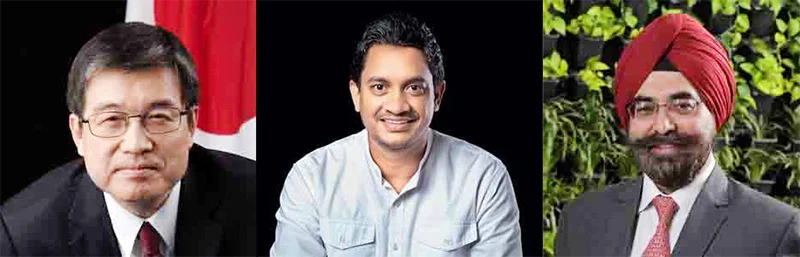
As Asia continues to account for a growing share of global economic activity, Sri Lanka faces an important opportunity to strengthen its links with regional trade networks, supply chains and economic corridors. How the country can make better use of these connections to attract investment, expand trade and strengthen its position in regional value chains will be among the key questions at the Sri Lanka Economic & Investment Summit 2026, organised by The Ceylon Chamber of Commerce on 12-13 October 2026.
Titled “Linking Sri Lanka to Asia’s Growth Networks: Trade, Corridors, and Value Chains,” the session will examine the opportunities for Sri Lanka to deepen its integration with the wider Asian economy and build stronger connections with regional and global markets.
The session keynote will be delivered by P.D Singh – Chief Executive Officer, India and South Asia, Standard Chartered Bank. He will be joined for a panel discussion by Chathuranga Abeysinghe – Deputy Minister of Industry and Entrepreneurship Development, Akio ISOMATA – Ambassador of Japan to Sri Lanka, MASAAKI Kawabata – Chairman – Toyota Lanka (Private) Limited, and Ravi Jayawardena – Group Chief Executive Officer-Maliban Biscuits (Private) Limited. The session will be moderated by Ms. Subhashini Abeysinghe – Research Director- Verité Research.
For Sri Lanka, stronger regional integration can open opportunities beyond traditional export markets. Greater participation in regional supply chains, improved trade connectivity and closer links to economic corridors can support investment in areas such as logistics, manufacturing, export services and other sectors connected to international production networks.
The discussion will consider what Sri Lanka needs to do to strengthen its position within these networks, including improving trade connectivity, attracting investment and creating a business environment that enables companies to participate more effectively in regional and global value chains.
It will also look at the experience of businesses and international institutions operating across the region, providing perspectives on how companies assess markets, build supply chains and identify locations for investment. With supply chains and investment flows increasingly shaped by regional connectivity, the session will also consider the partnerships and strategies needed to position Sri Lanka as a more competitive participant in Asia’s growth networks, while creating opportunities for trade, investment, innovation and economic growth.
The session will form part of the second day of SLEIS 2026, held under the theme “Positioning Sri Lanka in a Changing Global Economy: Resilience, Reform, and the Future of Economic Policy.”
The Sri Lanka Economic & Investment Summit 2026 is supported by its valued sponsors and partners. Platinum Sponsor – Standard Chartered Bank Sri Lanka, Gold Sponsor – VISA Worldwide (Pvt) Ltd., Bronze Sponsor – South Asia Gateway Terminals (Pvt) Ltd., Strategic Development Partner – Asian Development Bank, Telecommunication Partner – Dialog Telecommunication, Television Partner – Dialog Television, Session Sponsors – David Pieris Motor Company (Pvt) Ltd., Hemas Holdings PLC, Sunshine Holdings PLC, International Construction Consortium (Pvt) Ltd., Official Logistics Partner – Hayleys Advantis Limited, Official Airline – SriLankan Airlines Ltd., Official Hospitality Partner – Shangri-La Colombo, Airline Partner – China Eastern Air Holding Co. Ltd.
Registrations are now open at https://sleis.chamber.lk/. For more information, contact Alikie on 011 558 8805 (alikie@chamber.lk) or Shanuka on 0701082541 (events.division@chamber.lk).
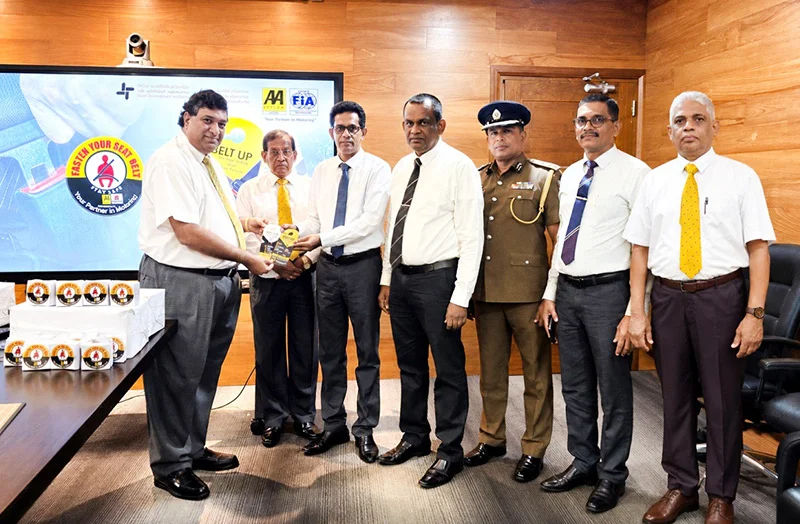
The Automobile Association of Ceylon (AAC), in collaboration with the Road Development Authority (RDA) and Police – Traffic Division, will conduct a special Road Safety Awareness Programme to promote the importance of wearing seat belts in vehicles specially on the express highways in order to reduce road fatalities and serious injuries.
The official handing-over ceremony took place at the Chairman’s Office of the Road Development Authority on 14th September 2026, where specially designed Seat Belt Safety Hanging Tags & Stickers prepared by the Automobile Association of Ceylon were handed over to the RDA for distribution to motorists at entry points to the expressways.
The initiative is being conducted in connection with the seat belt law coming into effect on 19th September 2026 and is intended to create greater public awareness of the importance of wearing seat belts in both the front and rear seats of vehicles.
Representing the Automobile Association of Ceylon at the ceremony Dhammika Attygalle, President; Prasanna De Zoysa, Sectional Chairman – Road Safety; and Devapriya Hettiarachchi, Secretary, Senior Superintendent of Police -Traffic Sisira Peththrathanthri, participated in the programme.
The Automobile Association of Ceylon has consistently maintained that road safety is one of its foremost priorities. Through awareness campaigns, educational programmes and collaboration with government authorities and other stakeholders, the Association continues to encourage responsible driving and safer behaviour among all road users.
AAC believes that the proper use of seat belts, including by rear-seat passengers, is a simple but vital safety measure that can help reduce serious injuries and save lives in the event of a road crash.
The programme further strengthens the cooperation between the Automobile Association of Ceylon, the Road Development Authority and the Police in their shared commitment towards safer roads and saving lives in Sri Lanka.
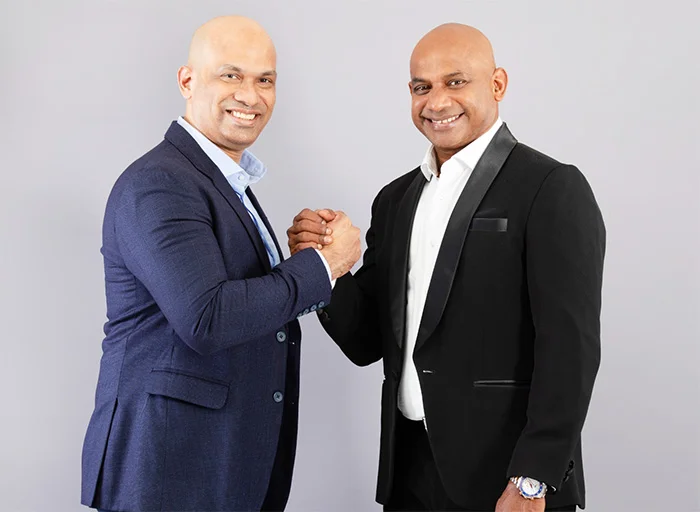
Global Housing & Real Estate (Pvt) Ltd (GHR) has announced a landmark partnership with Sri Lankan cricket legend Sanath Jayasuriya, as its Brand Ambassador as GHR enters a new chapter in its journey within Sri Lanka’s luxury real estate sector.
The partnership was officially unveiled at a press conference held at Cinnamon Life, Colombo, on 14 September 2026, bringing together industry leaders, investors and members of the media under the theme “Two Gamechangers, A New Beginning.”
The collaboration brings together two names associated with challenging convention in their respective fields: Sanath Jayasuriya, whose fearless approach transformed the dynamics of international cricket, and GHR, which has sought to introduce new approaches to property investment and luxury living in Sri Lanka.
Over the past two decades, GHR has built its presence in Sri Lanka’s real estate sector with a focus on quality, structural integrity and long-term investment value.
A significant milestone in the company’s journey came in 2016, when GHR introduced the hotel residency concept to the Sri Lankan market. The model brought together luxury hospitality and real estate investment, creating opportunities for property ownership with the potential to generate investment returns while contributing to the growth of the country’s high-end tourism offering. GHR has since continued to expand its portfolio across key destinations in Sri Lanka.
Speaking at the announcement, Dasun Wickramarathna, Chairman of Global Housing & Real Estate (Pvt) Ltd, said, “For over twenty years, Global Housing & Real Estate has strived to push the boundaries of what property development can achieve in Sri Lanka. As pioneers who introduced the hotel residency concept back in 2016, our mission has always been clear: to provide high-yield investment opportunities for our clients while taking Sri Lanka’s condominium industry into a new frontier.”
Commenting on the decision to partner with Sanath Jayasuriya, he added, “When looking for a voice to represent GHR’s ethos, Sanath Jayasuriya was the natural choice. Just as Sanath disrupted traditional international cricket and redefined how the world viewed the opening overs, GHR challenged traditional approaches to real estate and established a new benchmark in luxury living. This partnership represents a true convergence; Two Gamechangers, A New Beginning.”

Showers about 75 mm are likely at some places in the Western, Sabaragamuwa, Central and Southern provinces

Brook, Buttler, Baker star as Sri Lanka slump to 119-run rout

Where is Gnanasara Thera?Police pass buck to court

Russian citizens in Lanka to vote in State Duma elections

Euro 110,000 research drive to tackle plastic waste in food sector

New SAU-RCSS pact to boost South Asian dialogue

‘Dates have the highest sugar content to fight Coronavirus’

Sunday Island 27 December – Headlines

#SundayIsland 17th December – Headlines

Sunday Island – 28th March

Sunday Island Headlines – 21 March

Sunday Island – 21st February – Headlines
-

 Sports5 days ago
DDS set to lose Test captaincy
-

 News5 days ago
Sri Lanka faces new grid challenge as rooftop solar surges: former CEB GM
-

 Latest News5 days ago
Shafali, Deepti power India into sixth T20 Asia Cup final
-

 Latest News4 days ago
Sri Lanka thwart Fatima Sana challenge to secure Asia Cup final spot
-

 News3 days ago
Gnanasara Thero absconding after SC ruling
-

 Features6 days ago
Lost for 90 years: Rare Goby resurfaces in Jaffna
-

 News4 days ago
Ammunition cache found in old Kandy bungalow
-

 Latest News6 days ago
Italian Naval Vessel ‘ITS Giuseppe Garibaldi’ arrives in Colombo