
Opinion
Centenary of Sri Lanka Medical Council: To evolve or to revolve?

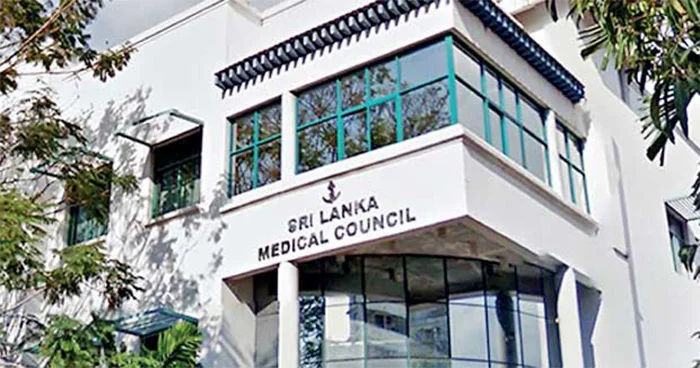
The Sri Lanka Medical Council, as the sole regulator of medical professionals in Sri Lanka, has played a vital role in shaping the nature, quality, and character of medical professionals and the medical profession for a century.
The speech made by Justice Yasantha Kodagoda on 5 July 2025 at the Centenary Celebrations of the SLMC, deserves praise and our sincere thanks for its forthrightness. The speech presents to the medical community at large, an invitation and opportunity to look more inwards than outward in its regulatory role for the future. His Lordship’s speech was aptly titled “Strategies for Addressing Malpractices in Healthcare Systems”. This is also the very point that was reiterated by the current registrar of the SLMC who stated, “With a vision for continuous improvements and adaptation, the SLMC is poised to navigate the future of healthcare with the same dedication that has defined its first century.”
We have been told for at least the past decade that there is a new Medical Bill which is with the Ministry of Health which will address the issues raised by the medical professions and health professionals which will enable the dedicated men and women of future SLMCs to perform the duty of the SLMC. In summary, it is to protect the citizens of Sri Lanka from the medical professionals (‘The SLMC is a statutory body established for the purpose of protecting health care seekers by ensuring the maintenance of academic and professional standards, discipline and ethical practice by health professionals who are registered with it’)
As pointed out by Justice Kodagoda, issues pertaining to medical ethics by practicing medical professionals, and the manner in which the SLMC has handled such issues in the recent past in particular, has led to increasing public concern about the SLMC. His Lordship went further and even proposed a mechanism/s to overcome such public concern with a particular reference to ethical issues resulting from the practice of medicine. He quite correctly used words such as ‘neutrality’ and ‘representation’ to a ‘Complaints Secretariat’, which he proposed to be instituted to handle issues on complaints against medical professionals. He even suggested that non-medical professionals should be allowed to serve on such disciplinary panels.
As of now the composition of SLMC Council is exclusively limited to doctors as far as the medical profession is concerned. Thus, whatever process is suggested within this fundamental framework, it will, as of now, ultimately result in Self-regulation of Doctors by Doctors. This is the real question which needs addressing and one hopes that the new Medical Bill, decades in the making, will address the fundamental question of ‘Can the medical profession self-regulate itself or does the composition of the SLMC need fundamental reform to include non-medical personnel on its council to unbiasedly perform its statutory duty of protecting the Sri Lankan citizen from the Sri Lankan medical profession?
The institution on which the SLMC was modeled on, over a century ago is the General Medical Council (GMC) of the United Kingdom which was established in the year1858. Initially its members were elected by the members of the profession and enjoyed widespread confidence from the profession. The 167-year-old GMC has undergone many reforms to serve the public and profession in a more transparent, accountable and responsible manner over the years. With regards to public concern that the GMC was self-regulating itself to the detriment of public trust in it, was addressed in 2013. The General Medical Council (GMC) in the UK was reduced to 12 members from 24 members on January 1, 2013. The Council has 12 members, include 6 medical professionals (registrant members) and 6 non-medical individuals (lay members). The GMC also has an Executive Board that handles daily operations and over 1,000 associates who support its work.
An interesting article appeared in the comments section of the British Medical Journal of 12th November 2022. That opinion piece was titled The GMC (General Medical Council) has been failing for 30 years. The opinion of the authors, Martin Mckee and Scott L. Greer, dealt with matters of transparency pertaining to the regulatory role of the GMC within the profession in the United Kingdom. This opinion piece was brought to the notice of the SLMC by way of an e-mail and regular post on 17th November 2022. The point of discussion which was requested from the SLMC was ‘is the current composition of the Council of the SLMC unbiasedly capable of ‘self-regulation’ of the profession at large?’ and ‘Has/Is the Sri Lanka Medical Council acted/acting in the best interest of the citizens of Sri Lanka or Is it acting in the self-interest of the profession, or more specifically the self-interest of an elected/selected segment of the medical profession?’
With regards to the composition of the SLMC Council, and the Medical Bill of a wider outlook which has been proposed, the SLMC called for submission of proposals by way of a newspaper advertisement on 5th October 2018. The Sri Lanka Medical Association (SLMA) Council at the time submitted a set of proposal to be included in the new Medical Bill to the SLMC on 22nd October 2018 (the deadline for submission was 28th October 2018).
As the SLMC is celebrating its Centenary and has stated its desire ‘for continuous improvements and adaptation, to navigate the future of healthcare with the same dedication that has defined its first century’ we reproduce below a few submissions made for the consideration of the SLMC back in 2018 with a particular reference to the Council of the SLMC and the process of appointment to the Council of the SLMC
(A). The composition and the term of office of the SLMC
1. The SLMC shall consist of a total of fifteen (15) members appointed by the Constitutional Council of Sri Lanka.
i. Ten (10) members shall be reputed medical/dental practitioners, who have been registered with the SLMC for a minimum period of 20 years.
ii. Two (02) members shall be Deans from the Faculties of Medicine, who have been registered with the SLMC for a minimum period of 20 years.
iii. Three (03) shall be leading professionals of high repute from education, law, finance or management professions, from the private or public sector, with a minimum period of service of 20 years after obtaining the first professional qualification or degree.
2. The President of the SLMC should be elected by the members of the SLMC at its first meeting.
3. The term of office of the Council shall be three (03) years.
4. Any person can serve in the Council only for a maximum of six years in toto.
(B). The process of appointment to the Council of the SLMC
1. The Registrar of the SLMC shall call for applications from eligible members of the Medical/Dental profession and members of the education, legal, finance or management professions, at least three (03) months before the expiry of the term of office of the SLMC.
2. All applications received shall be forwarded to the Constitutional Council through the Executive President of Democratic Socialist Republic of Sri Lanka.
3. The Constitutional Council shall appoint the members within a period of six (06) weeks from the date of submission of the names to the Constitutional Council by His Excellency the President of Sri Lanka.
4. The Constitutional Council shall ensure that the appointees can discharge their duties free from the influence of politicians and trade unions and can perform their functions without fear or favour.
These are a set of submissions among many the SLMC would have received during the period it sought public opinion for the new Medical Bill. We hope that the SLMC in its centenary year will revisit these proposals carefully and seriously address the issue of self-regulation of the doctors by doctors, and introduce more transparency in guiding the medical profession in Sri Lanka in to the future, keeping in mind its statuary role of ‘protecting health care seekers by ensuring the maintenance of academic and professional standards, discipline and ethical practice by health professionals who are registered with it’
As the SLMC enters its 2nd century, the powers that be at the SLMC and medical profession itself, must reflect objectively on the core statutory function of the SLMC. The outcome of this reflection ought to be finding the most suitable answer to the question (perhaps not the ideal answer) How can the SLMC as a statutory body protect the health seekers by ensuring the maintenance of academic and professional
standards, discipline and ethical practice by health professionals who are registered with it?
In doing so the SLMC must not revolve around what it thinks it is doing well but revolve around selected core issues and evolve in manner to serve the interest of the Sri Lankan public which is it’s statutory bound to do.
By Dr Ruvaiz Haniffa
Past President, Sri Lanka Medical Association (2018)


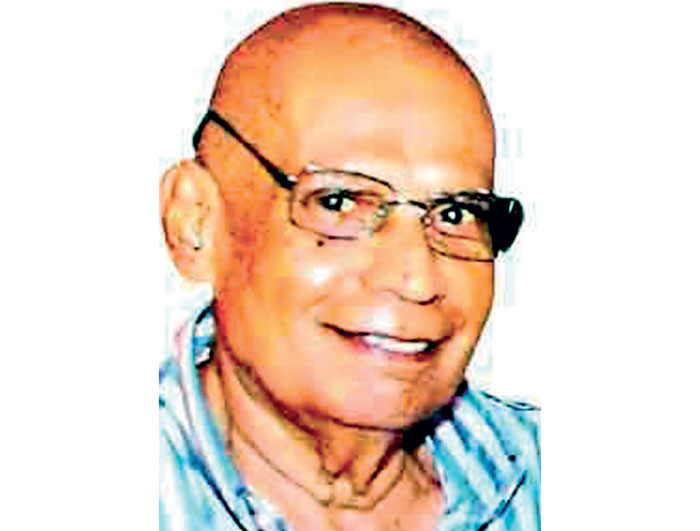
Dr Wimal Hettiarachchi was a distinguished economist, central banker, and scholar who made major contributions to public finance, monetary policy, and economic development in Sri Lanka. The sad news of his passing did not come as a shock to me as we were both nonagenarians, and I a year older than Wimal who we always called “Hetti”, my chidren referring to him as “Uncle Hetti”!
Our friendship began over 70 years ago as fellow students at the four year Diploma in Commerce at the Ceylon Technical College. The course began with about 30 students, most of whom dropped out along the way leaving the three of us i.e. Hetti, Sinniah Ramanathan, and myself to carry the baton through the fourth year last lap.
Hetti and I did not complete the fourth year, leaving Rama to do the honours. An exemplary student Rama not only secured the BSc. (Econ) degree but upon graduation proceeded to do Accountancy and qualified as a Chartered Accountant in England, and was appointed Financial Controller of the Singer Co. where he was promoted to its International Board of Directors, holding the number two position in Singer worldwide, when he passed away in South America.
Hetti joined the Central Bank in the days when it was located in the Hemas Building in York Street. He lost no time in registering as an external student of the then Vidyodaya University (now Sri Jayawardene University) for the Bachelor of Business Administration degree which he passed with First Class Honours, the first to do so through a period of six years. This achievement promoted his position within the Central Bank where he was appointed an Executive in the Economic Research Department.
From then onward Hetti’s career saw a meteoric rise within the Central Bank, and he occupied such commanding positions as Director of Economic Research, Acting Governor of the Central Bank, and member of the Monetary Board.
Hetti was awarded a scholarship to Oxford University where he was a student under Lady Ursula Hicks wife of the world renowned economist Sir John Hicks. Her belief in distributive justice, and her views in favour of equitable wealth distribution as an important outcome of monetary policy seemed to have rubbed off on Hetti who emerged from Oxford University with a D Phil. His thesis for the D.Phil was on “The growth of Central Banking and Monetary Policy in Ceylon”.
I am happy to note that upon returning to Ceylon, he lent me his luxuriously bound thesis to read and digest. I marvelled at his prodigious attempt at mastering all the available views on Central Banking and its role in guiding the national economy.
My friendship with Hetti lasted 70 years and we were very close socially too. When he romanced and sought the hand of his wife to be, Damayanthi, he foresaw some trouble ahead and being a close friend sought my assistance. It was decided that I should visit Damayanthi’s home together with Hetti and approach Damayanthi’s father in a more acceptable manner than Hetti would have thought possible by himself alone.
On the appointed evening, we were received most cordially by Mr Weerasooria (Damayanthi’s dad) who however mistook me to be the suitor! I was doing everything possible to ensure a victory for Hetti, and did my best in politeness and civility only to find that dear old Mr Weerasooria mistook me to be the suitor. When things were explained later on that evening, Mr W could not resist firing a barb at me over dinner by saying “so you brought your advocate with you?”
Our friendship was such that when I was posted to Bhutan on a two year assignment by the UNICEF funded Save the Children, USA, in 1981, Hetti who was in USA doing a secondment with the World Bank worked out a scheme for himself to be posted to Bhutan by the World Bank. Hetti arrived in Bhutan only to find me back in Colombo temporarily prior to migrating to Australia. He was a rare jewel of a friend and was deeply disappointed.
I chose to migrate to Australia as my two sons were on the cusp of secondary education for which there were no good facilities in Bhutan, the better educational facilities being 500 km away in Darjeeling. The prospect of boarding my sons at the age of 10 to 12 frightened the daylights out of me and my wife. Fortunately the option of permanent migration cropped up and we grabbed it with both hands.
Hetti and Damayanthi visited us in Melbourne around 2004 and later as Chairman of the Securities and Exchange Commission when they stayed in a five star hotel to attend a conference. He hosted us to a magnificent dinner. There were other occasions too in Sri Lanka where the two families spent holidays together.
One occasion I will never forget when our two families were spending a fortnight’s holiday in the Central Bank staff bungalow in Bandarawela. Our children were playing on a side yard when our elder son Harsha, then just four years old, slipped and fell down a ravine. Hetti, without the slightest regard for his own safety, rushed down and picked up the child while I, the coward, was thinking what to do! That was typical Hetti in action! Unforgettable.
At the Central Bank, he rose to be Director of Economic Research, and was later appointed Executive Director. He served as Sri Lanka’s Alternative Executive Director of the International Monetary Fund. Following his retirement from the Central Bank, he was appointed Chairman of the Securities and Exchange Commission of Sri Lanka, and a member of the Institute of Policy Studies.
My dear friend Hetti has left us. Gone are the days when we would return from a Royal Thomian match, both of us looking the worse for wear by liquor and both supporting opposite camps. Hetti’s sons, Manjula, and Mangala, both attended S. Thomas, Mount Lavinia while our elder son, Harsha, is a fourth generation Royalist. Our younger boy, Sumal, attended Primary School and beyond in Australia.
May you be rewarded with eternal peace my dear friend, and my heartfelt sympathies go to Manjula, Mangala, Syamani and their families.
Hugh Karunanayake
Melbourne Australia

“Suresh Sallay is the mastermind behind the Easter Sunday attack”: For argument’s sake, let us assume this to be true even though it is far from being proved ‘beyond reasonable doubt’ by a court of law. Minister Ananda Wijepala, however, in his statement to the parliament painted a picture of absolute certainty of Sallay’s guilt. The unfairness and the implications of this callous statement was well analysed in the editorial “Probes and politics” (The Island, 12 June). International media picked up Minister Wijepala’s statement, making Sallay guilty in the eyes of the world. Perhaps, they are not aware that what is stated in the parliament of Sri Lanka is not necessarily the truth! The more important question is how the reputational damage done to Sallay can be reversed.
Shortly after concluding his statement, Minister Wijepala referred to what he called ‘unexplained’ deaths including that of Rajeewa Jayaweera, in 2020. The fact that Rajeewa, unfortunately, took his own life has been confirmed, repeatedly, by his family. When rumours started circulating after the death of Kapila Chandrasena, Rajeewa’s brother Sanjeewa wrote an article titled, “Sri Lanka Airlines Airbus Scandal and the Death of Kapila Chandrasena and my Brother Rajeewa” (The Island, 17 May), wherein he stated:
“On behalf of my sisters and myself, I wish to state unequivocally that my brother, Rajeewa Jayaweera, took his own life in June 2020 due to personal circumstances. His death had absolutely no connection whatsoever to his writings regarding the Airbus scandal. Neither the Rajapaksa’s, nor any political actor, nor any state agency was involved in his death. The magisterial inquiry into the matter returned a verdict of suicide. Those who know me personally are aware of my forthright and combative nature. Had there been even the slightest credible suspicion surrounding my brother’s death I would never have rested until justice was pursued. Since this was established clearly as a case of suicide, I sincerely hope that those who continue to circulate unfounded theories will finally allow the matter to rest with dignity.”
In spite of this heartfelt appeal, Wijepala’s mention makes it very insensitive, adding to the agony of Sanjeeva and his sisters. Further, this inaccuracy casts doubts on the entire statement, as the minister seems ill-informed. Going by his statement, the CID seems to think it has evidence for a successful prosecution. If so, why is it allegedly ill-treating Sallay? Is this punishment before conviction or is there a more sinister motive?
Even if details of torture mentioned in some quarters could be disregarded as exaggerations, there is no doubt that Sallay has been subjected to ill-treatment, which resulted in his admission to hospital. It is noteworthy that Wijepala mentioned that Sallay became uncooperative the moment Gota was prevented from leaving the country. Perhaps, it is in an attempt to implicate the Rajapaksas that the Minister mentioned Rajeewa’s death, quite unjustifiably and insensitively.
The most important question is whether the CID’s confidence is misplaced and biased. The fact that it is biased is obvious as the director of the CID is Shani Abeysekara. He and his superior, Ravi Seneviratne, both, have an ulterior motive. They are accused of failure to prevent the Easter Sunday attacks in spite of the information furnished by many agencies including the one headed by Sallay. They are apparently trying to find a scapegoat. It was bad enough for the NPP government to pull these two out of retirement and instal them in high posts of law-enforcement, without clearing their names, but allowing them to be in charge of this investigation illustrates that they are clueless of the dictum that “Not only must Justice be done; it must also be seen to be done.” This dictum, derived from the principle of natural justice and is followed the world over, clearly shows that mere appearance of conflict of interest is sufficient ground for a conviction to be quashed.
The working hypothesis of the CID seems to be that Sallay masterminded the Easter Sunday terror attacks to ensure Gotabaya Rajapaksa’s election as President. It was obvious that Gota had an easy ride and there was absolutely no need for Sallay or anyone else to resort to terrorism to enable him to win.
It is surprising that the Director of the CID went to Paris to record a statement from Azad Moulana, who fled Sri Lanka to avoid arrest, to get confirmation of what the latter stated to Channel 4. By the way, expenses incurred by the team that went to the UK regarding Ranil’s expenses are kept under wraps in spite of an RTI request. Perhaps, the team spent more public money than Ranil did!
Those driven by a vested interest must be hoping that Sallay will continue his fast and perish. This would be a better outcome for them given the farcical manner in which investigations are being conducted. It is hoped that their dream will not come true.
by Dr Upul Wijayawardhana ✍️
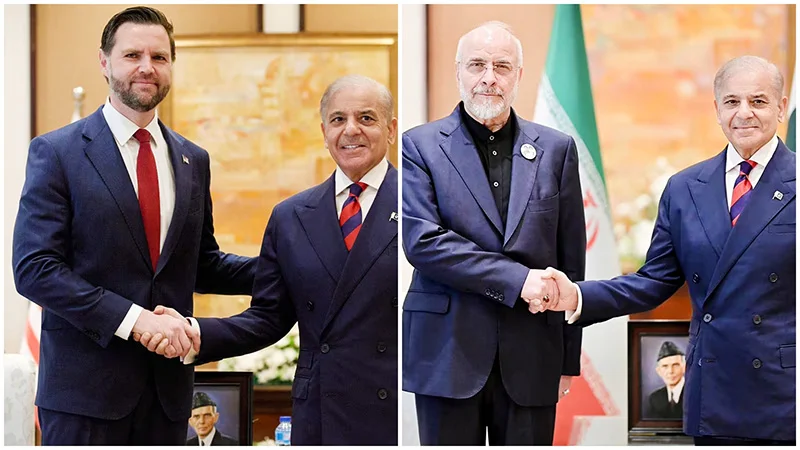
“Thanks to the tireless mediation efforts of Pakistan and Qatar, significant progress has been made in ending the war in Lebanon…”
–Iran’s Foreign Minister Abbas Araghchi on X
The recent Memorandum of Understanding (MoU) between Iran and the United States which resulted in a high-level meeting in Lucerne, Switzerland, is a testament to the highly skilled diplomacy of the South Asian nation, Pakistan, and is admirable for the very difficult task they undertook and achieved with panache. They remained unruffled throughout and continue to do so, despite the unpredictable nature of the relationship between the parties to the conflict, the US and Iran, at times turning publicly hostile, and subject to an influential spoiler in Israel determined to sabotage a positive outcome, making the process as delicate as defusing an explosive device with seconds to detonate.
Pakistan remained engaged steadfastly, even when the parties walked out of negotiations, refused to attend them, or seemed to give up any hope of a diplomatic endgame and returned to the Strait of Hormuz for actual and verbal wars. In the meantime, Lebanon was clearly being turned into the new Gaza, which was a red line for the Iranians.
The Pakistanis kept talking, visiting not only the two main belligerents USA and Iran, but the regional actors paying the price of an escalating conflict; perfecting the draft agreements while broadening the stakeholders who were invested in a peaceful diplomatic outcome, and aiming to do so as fast as was possible. It seemed like a long shot, especially with X messaging playing its now indispensable, often colorful role. The Pakistani team’s faith in the process was magnificently rewarded in the news coming out of Lucerne after the first day of negotiations of encouraging progress, with Qatar supporting Pakistan as joint mediator in the important venture.
This stage in the negotiations was described by Pakistani Prime Minister Shehbaz Sharif as “make or break”, which was also echoed by some analysts and mainstream media. The expectations were cautious but positive, and the world watched with renewed hope, if somewhat muted, as Pakistan presided over the opening media conference with confidence.
It wasn’t a perfect pitch to play on by any means: the Israelis had escalated their bombing of Lebanon, a million Lebanese were displaced and the Iranians had closed the Strait, yet again, with a day to go for the talks. As the teams were about to start negotiations, X swooped over Lake Lucerne dropping President Trump’s message about the Iranians being unable to return to “their f…..g country” if they didn’t open the Strait, the unprintable language no longer shocking through regular usage.
It was reported that the Iranians had included psychologists in their communications team in Teheran to comprehend the cultural idiosyncrasies of the President of the United States, which clearly helped them to remain engaged with the process in Lucerne despite the provocation. Iran’s response that the US should choose their words carefully because their weapons were at the ready to strike at Israel, had the media rushing to report that the talks had broken down. In a secondary issue, according to the Tasnim news agency, the US had wanted International Atomic Energy Agency (IAEA) Director General Rafael Grossi who was on site in Lucerne to be present at the talks, but Iran wouldn’t have it.
Great Innings
It is on this unenviable wicket that Pakistan, supported now by Qatar as mediators, seem to have played a beautiful innings.
The process was flawless. According to reports, the mediators met separately with the two teams to discuss the draft, before the main negotiations began. This would have minimised the points of disagreements which may have soured the atmosphere between the two signatories, while the mediators did the work to accommodate those views. The results announced after 12 hours of negotiations showed that all concerned stayed engaged with the process and were persuaded to sign on to a viable diplomatic roadmap.
According to the Ministry of Foreign Affairs of Qatar, which released the statement on the 22nd of June 2026 from Lucerne, they agreed to establish several creative mechanisms which have every chance of keeping things on track:
* A High Level Committee, which will provide political oversight on the mediation.
* Chief negotiators will report regularly to the High Level Committee
* Working groups on nuclear issues
* Working group on sanctions
* Working group for monitoring, and dispute resolution group to ensure the effective implementation of the MoU and on other matters.
* A communication line between the parties to avoid incidents and miscommunication with the aim of safe passage for commercial vessels through the Strait of Hormuz.
· A de-confliction cell between the parties, the Lebanese Republic and facilitated by the Mediators, to ensure the adherence of the termination of military operations in Lebanon.
Pakistan has always had well-trained, sophisticated diplomats. I was lucky to have met several and see their outstanding performances at the United Nations in Geneva, Paris, Lisbon and Singapore. They played a role well above the size of their economy or weight in world affairs. My first encounters with Pakistani diplomats were in Islamabad, where my father was Chargé d’Affaires at the Sri Lankan High Commission, and I made lifelong friends at the Institute of Modern Languages where trainee diplomats and military officers studied, and which I too attended.
Their diplomats were always well-spoken, well-versed in diplomatic practice and were often the first to protest if procedure was violated in those forums. They worked tirelessly, were no strangers to long hours, and were motivated to keep going until a result was reached. Their language skills, especially in the most widely used global language English, which they retained, as did India, as the language of higher education and administration, served them very well.
Pakistan and Sri Lanka
From what I have seen, Pakistan was impressive in their solidarity with their regional partners, often taking the lead to resolve issues, being regularly elected to speak for the OIC (Organization of the Islamic Conference), for example. Sri Lanka could unhesitatingly rely on their firm friendship and support, and played a leading role during my husband, Dr Dayan Jayatilleka’s tenure as Ambassador/PR in Geneva during the decisive last years of Sri Lanka’s war and in the immediate aftermath, when Sri Lanka was under severe pressure at the UN Human Rights Council.
As trusted supporters, my husband invited them to be part of a mechanism that he proposed to the EU of a “Quad” which would represent Sri Lanka’s interest, together with him as Sri Lanka’s Permanent Representative to the UNHRC, in all further negotiations with the EU which had 12 members in the Human Rights Council. The EU was exerting pressure on him to meet with the 12 of them for further talks on the draft resolution into which they meant to insert accountability for war crimes and to remove any reference to Sri Lanka’s sovereignty which Dayan had refused to countenance.
Pakistan readily agreed, as did India, as well as Cuba as the current chair of the NAM and Egypt as the incoming Chair of NAM, to form the Quad. As it happened, while the Quad was more than ready to debate any issues, the EU decided not to continue with the meeting after that show of regional and Global South solidarity and strength. The Quad however continued to operate as a unit and played a critical role at a moment in the proceedings when unexpected negotiations were called by the President of the Human Rights Council in the middle of the Special Session, and stood solidly together refusing to budge on the agreed draft. In this instant, India and Pakistan worked closely together in support of Sri Lanka, earning our eternal gratitude.
Pakistan’s emergence as a global player navigating complex international issues with such sophistication and facility, was no surprise to those who had seen them function. And yet it was not known widely. When Lakshman Kadirgamar was Foreign Minister of Sri Lanka, he sent my husband together with a few others to observe Pakistani Foreign Policy think tanks and to learn their modus operandi. The group returned impressed. The only surprise perhaps has been its overtaking of India, a great regional power, in global conflict resolution. India has been conspicuously silent, and has had no role in these important initiatives.
Exceptional Global Diplomacy
The Pakistani diplomatic initiatives taken when all seemed lost, and sustained against all odds have offered the world a valuable interlocutor in conflict resolution, and their place in global diplomacy is now acknowledged. The MoU between the United States and Iran is called the “Islamabad Memorandum of Understanding”. Analysts have said that this initiative is significant for the fact that unlike the JCPOA, regional actors rather than extra-regional ones have been made stakeholders, therefore has a considerable probability of success.
This is a significant achievement of no small measure, because Iran and the United States have been hostile for decades. In the only high-level meeting since 1979 between the two countries which took place recently in Islamabad, Pakistan has managed the process with remarkable patience, confidence and faith, to bring it along to a place of hope. According to Pakistan TV, at the end of the Lucerne meeting, JD Vance praised Pakistan’s role in bringing the US and Iran together to the negotiating table, calling PM Sharif and Field Marshal Munir, his best friends in the region. He had also said “We love Pakistan”.
Considering what Pakistan had actually attempted and succeeded in doing, this is remarkable. It has been able to by-pass the decade’s old propaganda against Iran as an existential threat in the region, especially to Israel, which was an established position in US policy circles. Consider the context: Trita Parsi, Executive Vice President of the Quincy Institute based in Washington revealed in an interview with Tucker Carlson that Israel has been pushing the narrative of Iran as an existential threat to their country for decades with success, while not believing it themselves within Israel. He said when he did his PhD on the subject, he interviewed several top officials including those in intelligence services in Israel, and found that rather than the irrational, destabilizing, suicidal actor they were portraying Iran as, successfully, to US policy circles, they believed the opposite, and regarded their adversary as a cautious calculating, rational actor. ().
JD Vance’s optimistic framing of the Lucerne discussions as a historic opportunity to transform the Middle-Eastern region for long term, sustainable peace is a testament to Pakistan‘s expert navigation of the diplomatic Hormuz Strait where a number of intractable issues had no safe passage, but are now freed for discussion.
With the dedication, expertise and diplomatic skills that the mediators have shown, the on-going process

itself may be considered a victory. The new development in this round of negotiations, that of active engagement of regional countries, may yet help protect the process, and assist in the complex navigation required to circumvent the mines that may be placed in its way.
by Sanja de Silva Jayatilleka

South Korea football coach quits as president calls for probe into World Cup loss

Europe’s heatwave linked to 1,300 deaths, WHO says, as Germany hits record 41.7C

Padikkal fifty, Sudeera five-for before India A, Sri Lanka A settle for draw

“May this sacred Poson Festival illuminate every heart with compassion, loving-kindness and wisdom”- President

Canada score late to beat South Africa and reach last 16 at World Cup 2026

Tector and Moondra headline Ireland’s historic series sweep against India

‘Dates have the highest sugar content to fight Coronavirus’

Sunday Island 27 December – Headlines

#SundayIsland 17th December – Headlines

Sunday Island – 28th March

Sunday Island Headlines – 21 March

Sunday Island – 21st February – Headlines
-
 News11 hours ago
LAWASIA warns against ad hoc initiative to increase judges’ retirement ages
-
 Opinion6 days ago
Ranasinghe Premadasa: The man who would not take ‘No’ for an answer
-
 News2 days ago
Another 1,132 Sri Lankan Personnel to be deployed for United Nations Peacekeeping Missions
-

 Opinion5 days ago
Sri Lanka’s national security: Justice, reconciliation, and forward-looking vigilance
-

 News6 days ago
US Assistant Secretary of State for South and Central Asian Affairs meets President
-

 News3 days ago
Kelaniya emerges as highest ranked Lankan uni in Times Higher Education Sustainability Impact Ratings
-
 Opinion4 days ago
A triumph for Pakistan’s skilled diplomacy at Iran-US talks
-

 Editorial6 days ago
FCID’s big catch