
News
National Research and Development Policy draft stakeholder awareness programme successfully concludes


The three-day stakeholder awareness programme on the Draft National Research and Development Policy, jointly organised by the Presidential Secretariat and the Ministry of Science and Technology, successfully concluded yesterday (03) at Temple Trees.
Dr. Nandika Sanath Kumanayake, Secretary to the President; G.P. Saputhanthri, Secretary to the Prime Minister; Dr. Harshana Suriyapperuma, Secretary to the Ministry of Finance; Y.L. Mohamed Nawawi, Secretary to the Ministry of Science and Technology; and Senior Advocate J.M. Wijebandara, Director General of Legal Affairs at the Presidential Secretariat, participated as invitees at this three-day programme.
This Draft National Research and Development Policy has been prepared under the guidance of Professor Gomika Udugamasooriya, Senior Presidential Advisor on Science and Technology, and Professor G.W.A. Rohan Fernando, Chairman of the National Science and Technology Commission, with the facilitation of the National Science and Technology Commission. It has received contributions from numerous local and international experts.
During this programme, Professor Gomika Udugamasooriya, Senior Presidential Advisor on Science and Technology, briefed the participants on the Draft National Research and Development Policy.
In line with the government’s policy of “A Thriving Nation – A Beautiful Life,” the objective of this programme is to secure stakeholder participation in formulating the necessary National Research and Development Policy framework to guide Sri Lanka towards a prosperous knowledge-based economy.
During the programme, ideas and suggestions from experts in the research and development field were gathered to ensure that the National Research and Development Policy, when practically implemented, aligns with national needs. Accordingly, this aims to formulate a futuristic policy to establish a centralised mechanism essential for successfully addressing current challenges in that field.
Delivering the keynote address, Professor Gomika Udugamasooriya pointed out that there is currently a visionary leadership that prioritises and values the research and development sector. He stated that economic progress, social well-being and environmental sustainability are the main objectives of formulating this national policy. He further added that according to United Nations reports, only about 60% of Sri Lanka’s human capital is utilised, and since the country has a highly intelligent population, this policy approach is crucial for properly leveraging their potential.
Professor Udugamasooriya stated that developed countries allocate between 3% and 5% of their GDP to the research and development sector, while countries like Sri Lanka have so far allocated a very small percentage to this sector. He expressed satisfaction that this situation is changing under the current government and further mentioned that investment in the research and development sector is essential for the advancement of innovation and for achieving high economic growth.
Professor G.W.A. Rohan Fernando, Chairman of the National Science and Technology Commission, in his inaugural address, stated that this Draft National Research and Development Policy proposes both a legal framework for research and an ethical framework of international standards. He further added that this is expected to strengthen Sri Lanka’s research and development sector, bringing it on par with those in countries such as India, China, Malaysia and Korea.
Accordingly, this Draft National Research and Development Policy has been prepared based on 10 objectives, including creating a conducive environment for research and innovation within the country, encouraging researchers and innovators, identifying national development priorities and establishing a broad platform for inventions and research focused on these, allocating adequate financial provisions for these research and development activities, and ensuring proper commercialisation.
This programme will be implemented with seven principles: promoting equity, effective governance, ensuring trustworthiness and transparency, embracing diversity, and inclusivity. Notably, gender considerations have also been taken into account during the drafting of this policy. The programme will be implemented as a joint initiative involving four sectors: the government, the private sector, the general public and international stakeholders.
Furthermore, the research and development sector has been categorised under 7 main themes: Agriculture and Food Security, Health, Science and Education, Technology Sector, Natural Resources, Economy and National Security and Arts and Human Development.
The concluding address of the programme was delivered by Y.L. Mohamed Nawawi, Secretary to the Ministry of Science and Technology, who stated that this programme should be implemented not individually but collectively, as a team, with collaboration and he invited all stakeholders to participate.
At the end of the awareness session, which was held from 2:00 PM to 4:00 PM on all three days, stakeholders were given the opportunity to present their ideas and suggestions. Professor Gomika Udugamasooriya and the panel of experts provided answers and clarifications for these.
Over 650 individuals participated in this three-day programme, including Ministry Secretaries, Heads of Departments, and other senior government officials; Vice-Chancellors, Deans, and Heads of Departments from government and private universities; representatives from public and private sector research institutions; and independent researchers.

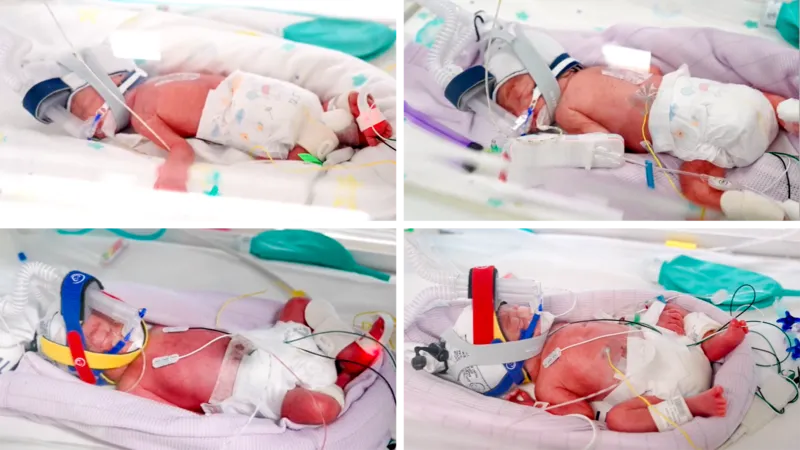
An Australian woman has given birth to rare, naturally-conceived identical quadruplets after a pregnancy described as “extremely high risk” by the Royal Brisbane and Women’s Hospital.
The four girls, who were delivered via caesarean section at 28 weeks and four days on 14 July, were monozygotic quadruplets – where a single fertilised egg splits into four embryos.
The hospital said the girls’ mother, 34-year-old Jenitar Na’amoana, and her husband Jortham, already had four children and were taken by “immense surprise” when told to expect quadruplets.
Dr Alexa Bendall, who cared for the mother from the start of her pregnancy, estimated identical quadruplets occur “at one in every 15 million pregnancies” and said “but to share the same placenta – this is unheard of”.
Bendall, who is a maternal foetal medicine specialist and obstetrician, said such a pregnancy was very high-risk, with the hospital admitting Na’amoana as an inpatient at 25 weeks so she could be monitored.
“We always said that if we could get her to 28 weeks, we would be doing well,” Bendall said.
“So the fact that we’ve got four beautiful, healthy babies born at 28 weeks and four days is incredible and we’re very happy to be a part of it,” she added.
“Jenitar has taken everything in her stride from day one… she has somehow dodged every complication and risk for both herself and her babies,” Bendall said.
The newborn girls have been named Emily, Harriet, Catherine, and also Alexa, after Alexa Bendall, who described it as “a beautiful tribute”.
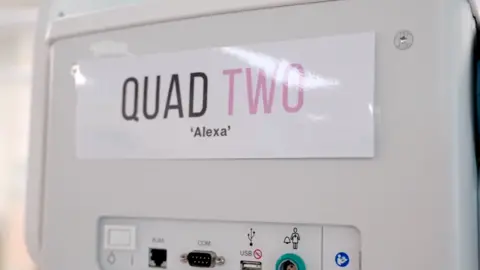
The babies will stay in the hospital’s neonatal intensive care unit until they grow to full term and are “currently doing extremely well”, Bendall added.
The parents’ other children are between one and 10 years old and the mother has recently launched an online fundraising campaign to help buy a van with at least 10 seats.
In a message alongside the fundraiser, which has already received over A$37,000 (£19,261) in donations, Na’amoana wrote: “Our four precious miracles have arrived safely, and while our hearts are overflowing with gratitude, the reality of caring for four newborns at once has brought challenges we never could have imagined.”
Naturally conceived quadruplets are extremely rare, with doctors estimating the odds at about one in 700,000 births.
(BBC)


… bribe giver departs Colombo port
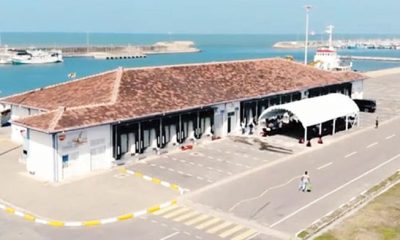
The Merchant Shipping Secretariat (MSS) is investigating a complaint received from the Captain of an Indonesian flagged vessel Sensho that he had to pay an official USD 5,000 bribe to facilitate what our sources called port state control inspection.
Sources said that the cement carrier arrived at the Colombo Port, on Friday, and departed after having passed the rigorous inspection. Responding to queries, sources said that after paying the bribe, the vessel’s Captain has lodged complaints with MSS and the Commission to Investigate Allegation of Bribery or Corruption (CIABOC).
In spite of the government’s high profile anti-corruption drive there seemed to be fresh cases, sources said, adding that MSS had received a comprehensive complaint. The vessel had departed Colombo for Jeddah, sources said.
“The issue at hand is whether there have been unreported cases of MSS personnel receiving bribes,” sources said, acknowledging that the Captain, instead of immediately bringing the demand for USD 5,000 bribe to the MSS, had paid it and departed Colombo. (SF)
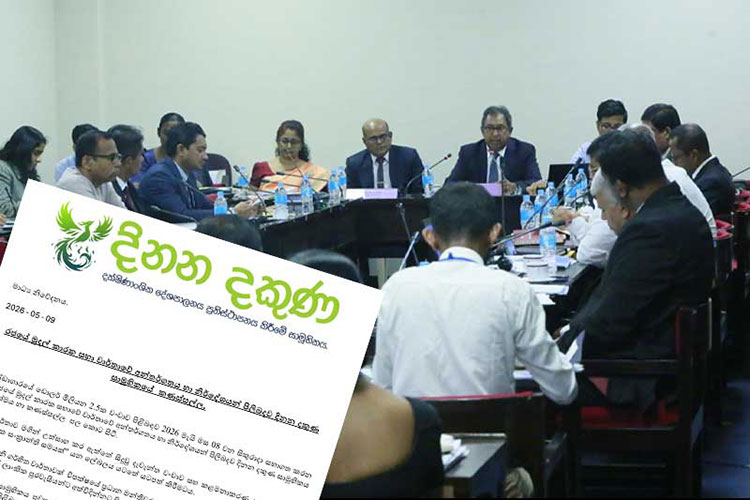
An opposition political group, styled as Dinana Dakuna, has accused the Committee of Public Finance (COPF) of protecting the masterminds behind the USD 2.5 mn theft from the Treasury.
Commenting on the recent COPF report on the theft, the group has alleged that the all-party parliamentary grouping made an attempt to shift the blame to the Central Bank as part of a cover-up. It has described the COPF report as a deliberate attempt to suppress the truth.
The group said that the COPF conveniently asserted that the theft took place due to the inexperience of officers concerned, thereby diverting the attention from those who perpetrated it.
An alleged attempt to portray the collapse of the administrative set-up that led to the USD 2.5 mn theft as a human resource problem, has also been questioned by Dinana Dakuna.

Rare identical quadruplets born in Australia

Showers will occur in the Western, Sabaragamuwa and North-western provinces and in Kandy, Nuwara-Eliya, Galle and Matara districts

Merchant Shipping Secretariat probes bribery scandal

Theft of USD 2.5 mn: Dinana Dakuna claims COPF trying to protect mastermind

COPF chief slams security sticker scam

CAA urged to protect soap users

‘Dates have the highest sugar content to fight Coronavirus’

Sunday Island 27 December – Headlines

#SundayIsland 17th December – Headlines

Sunday Island – 28th March

Sunday Island Headlines – 21 March

Sunday Island – 21st February – Headlines
-
 Business2 days ago
‘Giving up was never an option’: The fisherman who fought back after losing millions in SL
-
 Features2 days ago
Two memorable excerpts from a former SLAF commander’s memoir
-
 Latest News3 days ago
Davis cup Asia/Oceania Group IV 2026 to be held in Colombo from 20th to 25th July
-
 Features2 days ago
Erdoğan’s New Republic
-

 Life style2 days ago
Taste of the Swiss Alps comes to Colombo
-
 Features6 days ago
Dirty Money
-
 News3 days ago
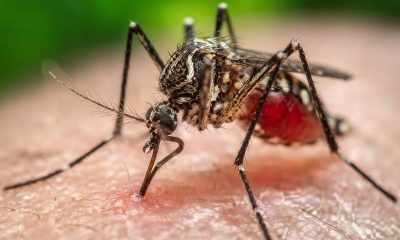
Dengue outbreak gallops ahead: Infections surpasses 73,455, leaving 50 dead
-
 News3 days ago
Evidence recorded in money laundering case against Yoshitha Rajapaksa