
News
Prince William’s docuseries shines global spotlight on Lankan rangers saving endangered elephants

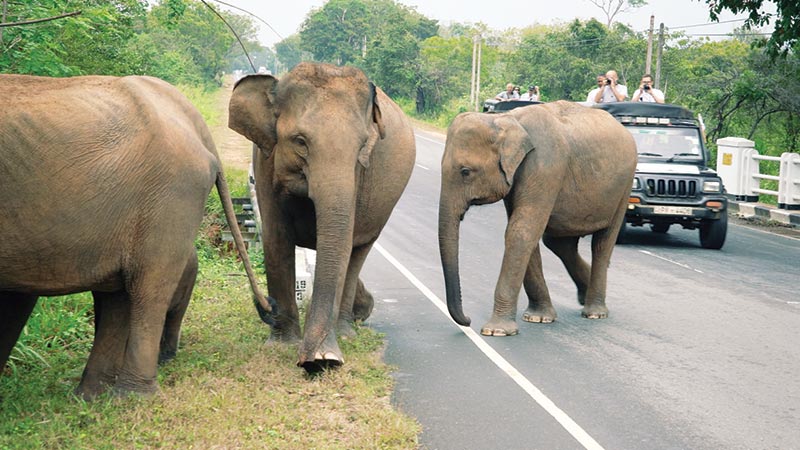
London, United Kingdom, 20th June 2025: Today, Prince William and The Royal Foundation’s United for Wildlife programme have released the newest episode of its groundbreaking docuseries, Guardians, highlighting the individuals at the forefront of wildlife protection and conservation. This week’s episode focuses on an incredible team of rangers in Sri Lanka working to minimise threats of human-elephant conflict, fostering a more peaceful coexistence between wildlife and the communities living to help save this much-loved species from extinction.
Guardians, which launched in May, seeks to change the narrative around rangers, driving recognition and pride in the vital yet often misunderstood work they do to protect our planet. In this moving episode, we meet ranger Chinthaka Pathirana, who, for over 20 years, has been a veterinary expert within the Department of Wildlife Conservation’s (DWC) Veterinary Clinic in Randenigala. Renowned for his leadership and integrity, viewers learn of the work of Chinthaka and his team as they bravely risk their lives to rescue and monitor elephants, alongside balancing patrolling duties and mitigating conflict.
Sri Lanka is home to the highest density of wild elephants per square mile, with a species population of between 5,000 and 6,000. For decades, humans and elephants have peacefully co-existed, but habitat encroachment, deforestation and agricultural expansion have made this enduring relationship more fragile. Communities in the region are now experiencing one of the highest rates of elephant-human conflict globally and in 2023, 176 humans and 470 elephants tragically lost their lives. Through immersive film footage, and powerful interviews, this film highlights the emotional and technical efforts of ranger teams as they work to reduce harm to animals whilst minimising impact on humans.
The groundbreaking docuseries was the brainchild of Prince William and to which he has voiced the trailer and individual episode introductions. Each episode focuses on a different ranger community from across the globe and the specific challenges they face in safeguarding often endangered species and fragile ecosystems.
Prince William said: “I’ve had the privilege of meeting a number of rangers throughout my life and have seen firsthand the vital work they do. Yet their stories are often overlooked or misunderstood. The reality is that protecting our natural world has become one of the most dangerous jobs on the planet. We need to understand and recognise Nature’s Guardians, and the critical work they do.
“The rangers we meet in this series are an inspiration to us all. Every day, they take huge risks as nature’s frontline of defence, standing between poachers and endangered species, supporting sustainable human-animal coexistence and fighting habitat loss.
“As they work to protect our oceans, our forests, our plains, our mountains and biodiversity, they are also educating, community building and furthering science. These are the unsung heroes — the true Guardians of the natural world, defending nature and the future of the planet for all of us.”
Elephants are vital to the broader environment in Sri Lanka, acting as “ecosystem engineers,” influencing forest structure by creating clearings and pathways and dispersing seeds which diversifies plant life. Without this crucial species, the delicate balance of the local environment would unravel.
Tracking and monitoring elephant movements and behaviour is a central focus for conservation efforts in Sri Lanka, affording rangers crucial information on when and where elephant-human conflict is happening. The episode shows Chinthaka and his team putting themselves in the path of danger as they fit a GPS collar onto a recently spotted elephant. These cutting-edge GPS technologies provide a lifeline in building a map for coexistence but with each elephant weighing between two and five tonnes, fitting them comes with a very real threat of rangers being tramples or charged. In the gripping sequence, audiences have the rare opportunity to see how the highly skilled team work quickly to attach the collar, whilst minimising the impact to the elephant.
Chinthaka Pathirana, veterinary expert within the Department of Wildlife Conservation said:
“From a young age, we had a connection with the forest. Elephant – human conflicts were not as intense as they are now. Our main objective is to minimise the impact on people and reduce the harm to animals. Looking forward, we hope to increase forest coverage and ensure that wild animals have adequate habitats. So, the role of the ranger is vital.”
The series was co-produced by The Royal Foundation with award-winning studio Zandland and follows the extraordinary stories from rangers across the globe. In addition to the episode based in Sri Lanka, other instalments will explore ranger communities in:
Central African Republic and the breathtaking Dzangha-Sangha protected area, following a reformed poacher who now dedicates his life to protecting the wildlife he once hunted.
The Himalayas, India where high in the Spiti Valley rangers are working to bring co-existence between the snow leopards known as ‘Ghosts of the Himalayas’, and local communities.
Mexico’s Sea of Cortez once called ‘the world’s aquarium’ – and the story of a reformed illegal fisherman now working to protect this threatened ecosystem.
Kruger National Park in South Africa where teams work round the clock to protect, rescue and rehabilitate critically endangered rhinos which face daily poaching threats.
Caru Indigenous Land, Brazil and the community-led fight to preserve their heritage and protect ancestral lands from environmental destruction.
Benjamin Zand, Series Director & Executive Producer, ZANDLAND said:
“Sri Lanka is a country that has always captivated me, ever since I first visited in 2018 — stunningly beautiful, but facing a complex challenge when it comes to coexistence between people and wildlife. Chinthaka and his team are doing one of the toughest jobs out there: protecting one of the world’s most iconic animals while navigating real tensions with local communities. His warmth, commitment and belief in coexistence deserve to be championed. At Zandland, we’re proud to tell stories like these — stories that don’t just show the beauty of wildlife, but the human struggle behind protecting it.”
The series will be available to watch across all of BBC Earth’s YouTube and social channels with a new episode landing weekly. Episodes will also be screened at Adventure Cinema locations across the UK.

Latest News
Sun directly overhead Bentota, Thiniyawala, Iththakanda, Udawalawe, and Kataragama about 12.08 noon t9day (06)


The sun is going to be directly over the latitudes of Sri Lanka from 28th of August to 07th of September due to its apparent southward relative motion.
The nearest places of Sri Lanka over which the sun is
overhead today (06) are Bentota, Thiniyawala, Iththakanda, Udawalawe, and Kataragama about 12.08 noon
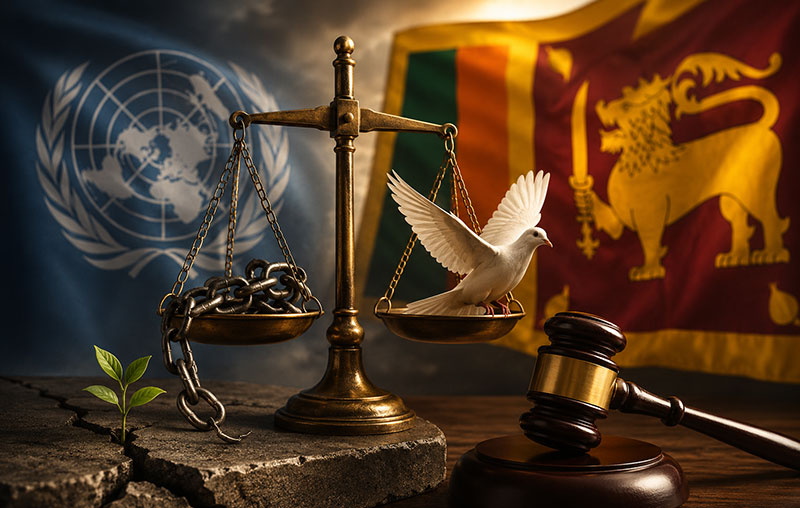
MONETABRIEF –The UN human rights chief on Thursday welcomed Sri Lanka’s robust anti-corruption drive but urged President Anura Kumara Dissanayake to apply the same vigour to ending impunity for continuing rights abuses.
In its latest report to the UN Human Rights Council in Geneva, High Commissioner Volker Turk noted that cases of torture and deaths in custody continued to be reported in Sri Lanka despite the change of administration.
“While it is encouraging that the Sri Lankan authorities have taken action to address corruption cases and some crimes linked to the post-war period, more needs to be done to end the long legacy of impunity in the country,” the rights chief said.
His report, covering October 2025 to July 2026, notes steps to tackle corruption, including high-profile arrests and investigations linked to political killings, enforced disappearances and the 2019 Easter Sunday attacks.
He said it had been a difficult period for Mr Dissanayake’s new government, following the devastating Cyclone Ditwah which killed some 650 people and devastated much of the island and a global spike in energy prices.
The report noted that the Human Rights Commission of Sri Lanka had documented 602 cases of torture and ill-treatment in 2025 and 138 cases by April 2026.
The local commission also reported 18 deaths in custody last year and a further three by April this year. In one such case, a 40-year-old inmate detained for a minor drug-related offence died at Welikada Prison in Colombo on 3 May, allegedly from severe beatings.
“This Government still has an opportunity to turn the tide on decades of abuse of executive power, repressive laws and custodial violence, and entrenched impunity,” Turk said.
He regretted that the government had yet to deliver on its promise of legal and institutional reforms and continued to apply the repressive Prevention of Terrorism Act (PTA), resulting in arbitrary arrests and prolonged detention without charge.
Civil society actors, activists and journalists remained subject to state surveillance, while tensions over land and religious sites continued to simmer, the report said.
It also highlighted violent riots at Negombo Prison in July, which left at least 32 dead, underscoring the urgent need for prison reform to address systemic issues, including severe overcrowding.
The UN Human Rights Office had received at least 16 allegations of surveillance against civil society actors, activists and journalists, the report said.
There was “a clear and continuing pattern of state surveillance, intimidation and reprisals by military and intelligence officials, including from the Criminal Investigations Department or the Terrorism Investigation Division”.
“Individuals are repeatedly questioned about their travels, especially to Geneva and engagement with UN human rights processes, as well as their organizational affiliations, funding sources, and participation in protests or commemorative events.”
While the Government had continued to denounce racism and promote national unity, wider efforts to ensure truth and justice risked stalling and the momentum for transformative change being lost, the report warned.
Failures to effectively investigate and prosecute crimes under international law allegedly committed during the armed conflict persisted.
“It is crucial that there is decisive and meaningful action toward accountability for crimes and violations by all parties during the more than two-decade armed conflict,” Turk said.
He noted the recent decision by the Attorney-General to indict former Eastern Province Chief Minister Sivanesathurai Chandrakanthan, also known as Pillayan, and three others in connection with the abduction and murder of former Eastern University Vice-Chancellor Professor Sivasubramaniam Raveendranath in 2006.
“It is, however, regrettable that many other serious emblematic cases remain stalled for years, including the killing of 17 Action Contre La Faim aid workers in Muttur 20 years ago,” he said, calling for meaningful steps to resolve such delays.
The High Commissioner urged Sri Lanka to redouble its reconciliation and accountability efforts. He called for a moratorium on the use of the Prevention of Terrorism Act pending its repeal, as well as the release of long-term detainees held under it.
He also called for all individuals credibly accused of human rights violations to be excluded from senior positions in government, the security sector or the diplomatic service until such allegations were genuinely addressed and resolved.
He urged the Government to support victims’ memorialisation initiatives and to release military-occupied lands.
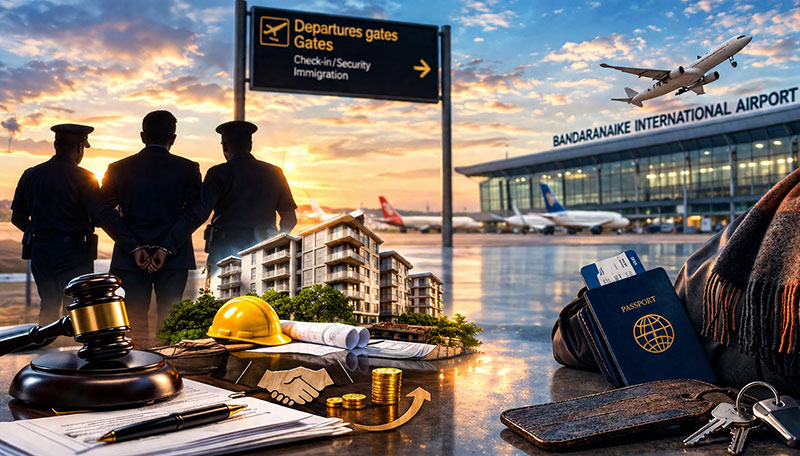
A dispute between a wholly owned subsidiary of Lanka Realty Investments PLC, Mulberry Holdings (Pvt) Ltd., and a contractor, Omni Engineering & Trading Solutions, that resulted in Executive Director Hisham Jamaldeen of Lanka Realty being stopped at Katunayake and prevented from leaving on a business visit to the UK has been resolved with Jamaldeen bailed and the travel ban imposed on him revoked by the Maligakanda Magistrate, Lanka Realty’s said in a Stock Exchange filing last week.
This followed Mulberry agreeing to pay Rs. 25 million to Omni on or before Sept. 26.
Following media reports of Jamaldeen being prevented from leaving the country at the BIA, Lanka Realty made two Stock Exchange filings on Sept. 3 – the first detailing the dispute between the two parties and the second indicating that the matter had been settled.
In the first filing, the Secretaries for Lanka Realty said:
“The article refers to Mr. Mohamed Hisham Jamaldeen, Executive Director of Lanka Realty Investments PLC and a Director of Mulberry Holdings (Pvt) Ltd, a wholly owned subsidiary of the Company and the developer of “Mulberry Residences” in Colombo 10.
“Mulberry Holdings (Pvt) Ltd entered into a construction contract with Mr. Randika of M/s Omni Engineering & Trading Solutions on 21st June 2022 for a sum of LKR 32,854,992.00), which is less than 1% of the total value of the “Mulberry Residences” Project which is around LKR 3.6 Billion.
“The said contract is governed by the CIDA/SBD1 Standard Bidding Document Conditions of Contract, which provides for adjudication and, if required, arbitration as the applicable dispute resolution process. The Company understands that the underlying matter relates to a contractual payment dispute involving Mulberry Holdings (Pvt) Ltd’s aforcsaid contract.
“Following a call received from the Colombo Crime Division (CCD), Mr. Jamaldeen went to the CCD on 25th August 2026 and provided a statement in relation to the matter inter alia explaining that the matter in dispute was arising from a civil contract. He was not arrested on that date and was not informed at that time or thereafter prior to receiving information at the Airport, that a travel ban had been imposed.
“On 2nd September 2026, while travelling overseas for business on a pre-arranged itinerary, Mr. Jamaldeen was informed at immigration of a travel ban imposed on 24th August 2026, following which he was arrested by the CCD. A bail application is expected to be made when Mr. Jamaldeen is produced before the Magistrate’s Court of Maligakanda today, 3rd September 2026.”

Shree Charani, Prema Rawat spin Pakistan out for 55 in one-sided contest

Sun directly overhead Bentota, Thiniyawala, Iththakanda, Udawalawe, and Kataragama about 12.08 noon t9day (06)

Showers above 75 mm are likely at some places in the Uva and Eastern provinces.

Tharanga creates history with Diamond League crown in Brussels

UN welcomes Lanka’s anti-graft drive, seeks end to impunity

Dispute which triggered listed company director being detained at BIA resolved

‘Dates have the highest sugar content to fight Coronavirus’

Sunday Island 27 December – Headlines

#SundayIsland 17th December – Headlines

Sunday Island – 28th March

Sunday Island Headlines – 21 March

Sunday Island – 21st February – Headlines
-

 Features7 days ago
When Sri Lankan stories find their own voice
-

 News7 days ago
BASL takes exception to Justice Ganepola being denied a place in SC
-

 News4 days ago
Denied of promotion to SC despite vacancies, justice Gurusinghe retires
-

 Latest News4 days ago
Grade 5 scholarship exam results released
-

 News4 days ago
22A: SC urged to suspend hearing, appoint full bench
-

 Midweek Review5 days ago
The local and global dynamics of Sri Lanka’s 22nd Amendment
-

 News4 days ago
Govt. seeks NATO assistance
-

 Business7 days ago
ADB-funded Thalaiyadi plant serves as blueprint for vulnerable dry zones in Sri Lanka