Connect with us

Latest News

“Our ultimate goal is to restore national sovereignty through economic stability and self-reliance” -President

Published

on

President Anura Kumara Disanayake, delivering the keynote address at the international conference “Sri Lanka’s Road to Recovery: Debt and Governance” in Colombo today (16), declared that by 2028 Sri Lanka will have laid the foundation for a stable and self-reliant economy, one capable of independently meeting its external debt obligations. Emphasizing that true sovereignty cannot exist amidst economic collapse, he asserted, “Our ultimate goal is to restore national sovereignty through economic stability and self-reliance.” He urged public officials and citizens alike to contribute to this national endeavour, stressing that the ongoing reform process demands a collective and sustained effort.

The conference, a landmark event jointly hosted by the Ministry of Finance, the Central Bank of Sri Lanka and the International Monetary Fund (IMF), drew global attention as it examined the country’s recovery from economic crisis, the progress of debt restructuring and future challenges under the IMF’s Extended Fund Facility (EFF) programme.
The President acknowledged that while a degree of macroeconomic stability has been restored, Sri Lanka must not be lulled into complacency. “Surface-level stability is not enough,” he stated. “We must deepen this stability through structural reforms that reshape the foundations of our economy.” He also noted several achievements of the current administration within a relatively short timeframe, expressing confidence in continuing this trajectory towards lasting political, economic and social stability.
This conference was held to reflect on Sri Lanka’s experiences, lessons learned and progress made during the debt restructuring process, as well as to discuss the progress and upcoming challenges related to the Extended Fund Facility programme with the International Monetary Fund.
Central Bank Governor Dr. Nandalal Weerasinghe echoed these sentiments, crediting the IMF and international partners for their support in Sri Lanka’s turnaround from a historic crisis that culminated in a sovereign default in 2022. Recalling the severity of the crisis, marked by hyperinflation, shortages and institutional erosion, Dr. Weerasinghe attributed the collapse to years of fiscal mismanagement and unchecked vulnerabilities.
“Stabilization was just the first step,” he noted. “The real test lies in sustaining growth through structural change.”
He highlighted the progress made under the EFF programme, including: Taming inflation – now back to single digits; Rebuilding external balances – including rare current account surpluses and reserve growth; Improving fiscal discipline – with narrowing deficits and emerging primary surpluses.
Dr. Weerasinghe further underlined the importance of governance reforms, pointing to new legislation such as the Central Bank Act, the Public Financial Management Act and the Anti-Corruption Act as pillars of long-term institutional credibility.
Urging stakeholders to maintain policy consistency, empower the private sector and protect the vulnerable, he emphasized: “Sri Lanka’s transformation must be domestically driven, with strong institutions and united public commitment.”
Delivering a pivotal message, IMF First Deputy Managing Director Dr. Gita Gopinath commended Sri Lanka’s hard-won gains but reminded attendees of the cost borne by the people, particularly the most vulnerable.
 “The key lesson from this crisis is that it must never happen again,” she said, stressing the need for continued reforms targeting structural weaknesses such as unsustainable subsidies and inefficient pricing mechanisms. Though socially painful, she insisted such changes are essential for resilience.
She also cautioned against “reform fatigue,” highlighting that half of Sri Lanka’s 16 past IMF programmes faltered due to reversals. “This time must be different,” Dr. Gopinath urged. “Success should be measured not just by numbers but by whether this becomes Sri Lanka’s last IMF programme.” She called for inclusive governance, civil society engagement and equitable policymaking that reaches beyond Colombo, reaffirming the IMF’s commitment while urging national ownership of the recovery path.
Following is the full speech delivered by President Anura Kumara Disanayake;
“A few years ago, our country faced the consequences of the most severe economic crisis in its history. At that juncture, we were confronted with two possible paths: either to continue along the same failed and destructive route, or to choose a new path that would enable us to rebuild and uplift our nation.
Today, we can proudly state that the path we chose has brought significant victories to our country. That success required responsibility and commitment from the political leadership. Moreover, critical responsibilities were borne by state institutions such as the Central Bank and the Ministry of Finance. However, the greatest contribution came from the public, who bore the brunt of these reforms. They made immense sacrifices and endured hardships to help rescue the nation from this crisis.
At present, our country has achieved a level of economic stability. We have reached the stage where debt restructuring is nearing completion and for a notable period, we have been able to maintain stability in the value of the dollar. Furthermore, we have been able to generate expected state revenue and build up foreign reserves. These indicators reflect strong macroeconomic stability. Nevertheless, the deep wounds of the crisis have not yet healed. We must understand that the crisis is not yet resolved in its entirety.
Therefore, while surface-level stability has been established, it is imperative to further solidify this stability and to elevate the economy to a higher level. This requires the implementation of new reforms and transformations within the economic system. I would like to draw attention to a few critical factors in this regard.
To ensure economic stability and recovery, we need a strong public service. However, the expenditure we currently incur to maintain the public service is excessive and unsustainable. Our goal must be to provide an efficient public service at minimal cost to the citizen. We have already decided that certain state institutions should be closed.
 These institutions were established in response to socio-economic needs of a bygone era, which are no longer relevant. Some institutions are now obsolete and therefore, must be restructured or dissolved.
Additionally, we have multiple institutions performing overlapping functions. These must be consolidated. Some state institutions also require a redefinition of their objectives and goals.
Hence, we are committed to implementing a robust transformation of the state apparatus. For this to be successful, inefficiency and more importantly, corruption and bribery must be eradicated from the public sector.
Recent news reports highlight the depth of the current crisis: the Inspector General of Police is in hiding; the Commissioner General of Prisons has been imprisoned; officers from the Department of Motor Traffic and the Department of Immigration and Emigration have been arrested. This raises serious concerns about the state of our institutions. Inefficiency, bribery and corruption significantly contributed to this crisis. Corruption is not merely about immediate transactions, it resulted in vital projects being neglected and unnecessary ones being implemented, which continue to burden us today.
Thus, to overcome this crisis, enhancing institutional efficiency and decisively combating corruption are essential. We are committed, as a government, to this cause.
We believe that the state should retain a certain degree of involvement in sectors that are sensitive to the economy. Sri Lanka’s energy and financial markets are relatively small, which poses the risk of monopolies forming. To counter this, the state must maintain a presence in key sectors.
However, such state institutions must not become burdens on the public. For instance, entities like the Ceylon Electricity Board and the Ceylon Petroleum Corporation are closely tied to both the economy and people’s daily lives. While we believe the government must retain oversight over these entities, they must not impose excessive costs on the public.
Prices must reflect actual production costs. The price of a unit of electricity must correspond to the cost of its generation. We are committed to upholding this principle.
At the same time, we are prepared to strengthen the necessary mechanisms to reduce production costs. Services should be provided to citizens at a cost equivalent to their actual expense.
However, we are aware that there are low-income groups who cannot afford even these costs. While we implement economic reforms and await the benefits to reach the people, we cannot simply ask them to endure the hardship in silence. The state must provide relief to these groups during this transitional period. This is the responsibility of a just government.
In every society, there are segments of the population that are disconnected from economic activity, be they the elderly, the disabled, or individuals whose circumstances prevent them from participating in the economy. It is the duty of the state to protect such groups. Talking about economic development while abandoning these communities is futile. This is a question of humanity, justice and fairness.
We therefore support a policy of providing well-targeted assistance to vulnerable communities. This assistance is not to be politicised. We view it as a matter of social justice and social protection. Based on our past experiences, welfare programmes have often been politicised. But I assure you, we will never use social protection schemes for political gain.
On another note, while we have achieved stability in several sectors, there are others where progress must be expedited. Firstly, we must attract direct foreign investment (FDI). Looking back over the past several decades, we have failed to attract sufficient FDI due to the prevailing global and local economic conditions. This must change.
However, the challenge of attracting investment does not come from a place of economic strength, but from rebuilding after collapse. Our financial market lost credibility and we experienced a situation where people could not afford daily necessities. Foreign reserves hit rock bottom. We are now in the process of recovery.
Yet, is this recovery sufficient to attract investment? I believe we must offer certain incentives to investors. Given the current context, we must focus on creating a more attractive environment for investment, which may include offering strategic relief. We are in discussions with the International Monetary Fund in this regard.
In addition, we face the question: how do we revitalise our national economy and production? Many small and medium enterprises (SMEs) collapsed during the economic downturn. Over 90% of them failed not due to internal mismanagement, but due to the broader economic collapse. Therefore, we must provide targeted relief to help them recover.
Thirdly, while economic growth is important, economic expansion is equally critical. Rural communities have become marginalised and excluded from the mainstream economy. While urban economic indicators may appear positive, they do not reflect the realities of those left behind.
For economic growth to deliver real benefits to the people, economic expansion must be pursued. I believe we must launch initiatives to integrate citizens from remote areas into the economic system. Therefore, to maintain the current stability and to transition to a stronger state, we have a tremendous task ahead of us.
We must be deeply grateful for the support extended by the International Monetary Fund in implementing this programme, as well as for the patience and endurance shown by our citizens, especially if they felt unfairly affected during this process. As I have previously stated, it is our aim to make this the final programme undertaken with the IMF’s Extended Fund Facility. We are hopeful of achieving this goal. By the year 2028, we aspire to build a stable economy with sufficient growth to service our debt independently.
A state cannot maintain sovereignty where the economy has collapsed. A nation cannot retain independence when its economy is in ruin. Whether we like it or not, we have already lost a degree of our sovereignty and independence. Therefore, the ultimate outcome must be the restoration of our national sovereignty and self-reliance. This requires a strenuous and unwavering effort.
It is not a task we can abandon. There is a clear mission to accomplish, and in pursuing that, I expect the commitment of the political leadership, the responsibility of public officials and the cooperation of the people.”


Latest News

Iyer to lead in last two New Zealand ODIs, Kushagra earns maiden call-up

Published

on

By

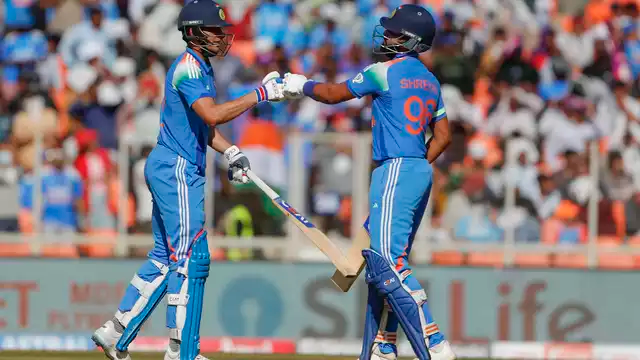
Gill & Iyer will share leadership duties across the five New Zealand ODIs [Cricbuzz]
Shreyas Iyer has returned as India’s ODI vice-captain for the upcoming five-match series against New Zealand, having missed the preceding ODI series against the West Indies due to India’s T20I commitments during the Asian Games.

Iyer will be the vice-captain for the first three ODIs before taking over the captaincy for the fourth and fifth matches, with Ishan Kishan appointed his deputy for the final two games. This allows Shubman Gill, the regular ODI skipper and Test captain, to focus on preparing for the two-match Test series, part of the World Test Championship cycle, which follows the ODIs.

Prasidh Krishna also returns to the ODI squad for the first three matches, but his availability is subject to fitness. He sustained a left hamstring injury during the second ODI against the West Indies and was replaced by Anshul Kamboj. Meanwhile, Kamboj has also been named in the squad for the first three New Zealand ODIs.

India have also made changes to their squad for the latter half of the series, with Tilak Varma and Kumar Kushagra coming into the 16-member squad for the fourth and fifth ODIs. Prasidh and Kamboj, who are also part of the Test team, are among those not included in the squad for the final two matches. Auqib Nabi, meanwhile, has been included in the squad for the fourth and fifth ODIs.

Rohit Sharma and Virat Kohli feature in both squads, alongside Ruturaj Gaikwad, Nitish Kumar Reddy, Axar Patel, Naman Dhir, Gurnoor Brar, Arshdeep Singh, Mohammed Siraj and Kuldeep Yadav. Incidentally, Reddy, Kuldeep and Siraj are also part of the Test squad but have been retained for the last two matches. KL Rahul has been named as the wicketkeeper for the first three matches, while Kishan will take over the role for the final two ODIs, with the former set to join the Test preparations.

The ODI series begins on November 4, following India’s five-match T20I series. The first ODI will be played in Auckland, while the second game will be held in Wellington on November 7. Hamilton will host the third match on November 10, while the last two ODIs will be played in Mount Maunganui on November 13 and 15. The Test series begins on November 19.

Squad for the first three ODIs: Shubman Gill [C], Rohit Sharma, Virat Kohli, Shreyas Iyer [VC], KL Rahul [WK], Nitish Kumar Reddy, Axar Patel, Naman Dhir, Anshul Kamboj, Gurnoor Brar, Ruturaj Gaikwad, Arshdeep Singh, Ishan Kishan [WK], Mohammed Siraj, Prasidh Krishna*, Kuldeep Yadav

Squad for fourth and fifth ODIs: Shreyas Iyer [C], Rohit Sharma, Virat Kohli, Tilak Varma, Ishan Kishan [WK, VC], Nitish Kumar Reddy, Axar Patel, Naman Dhir, Auqib Nabi, Gurnoor Brar, Ruturaj Gaikwad, Arshdeep Singh, Kumar Kushagra [WK], Mohammed Siraj, Yash Thakur, Kuldeep Yadav

[Cricbuzz]
Continue Reading

Latest News

Pope pictured for first time since surgery and cancer diagnosis

Published

on

By

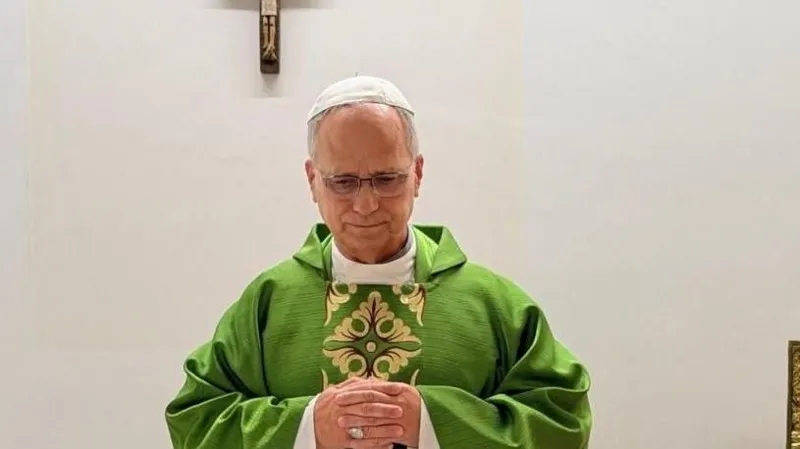
Pope Leo thanked medical staff as he was pictured for the first time since his lung surgery [BBC]

Pope Leo XIV has been pictured celebrating Mass from hospital, in the first images of him released by the Vatican since he underwent lung surgery.

The 71-year-old pontiff was diagnosed with lung cancer after the surgery at Rome’s Gemelli Hospital on Tuesday afternoon, which the Vatican said had been “successful” and proceeded without complications.

The images shared on Friday showed the Chicago-born Pope wearing a green robe while standing behind a makeshift altar on the tenth floor of the hospital.

Pope Leo “celebrated with the medical and nursing staff” and thanked workers for their service, the Vatican press office said.

On Friday, the Pope’s doctors said tests had shown “a steady improvement in his general condition” since his procedure.

His doctors said that a chest X-ray indicated “good recovery of the operated lung”.

The whole lower lobe of the Pope’s right lung was removed “to ensure the procedure was radical”, the Vatican said following the surgery.

“After the operation, the Pope awoke normally and returned after a brief period of observation to his room,” it said earlier, before he spent a “peaceful night” at the hospital.

Reuters Pope Leo celebrates mass from hospital, he is wearing a green robe and standing before a white wall adorned with a wooden crucifix. He is standing next to his personal secretary who holds a red book and his wearing white and green.
The pontiff is expected to remain at the hospital for about a week as he recovers [BBC]

Pope Leo first announced that he would be having the operation during his weekly Sunday prayers, telling the crowd in St Peter’s Square that doctors had found a “well-contained” nodule on his lung “at an early stage” and advised him to have it removed.

Nodules are quite common and not necessarily cancerous, but after it was examined the medical team confirmed it was, “as suspected by pre-operative tests”, the Vatican said. He was diagnosed with lung adenocarcinoma.

The Vatican has stressed that the Pope had shown no symptoms of infection or illness prior to the procedure.

[BBC]
Continue Reading

Latest News

Qatar announces ‘massive’ solar plant project in Lebanon

Published

on

By

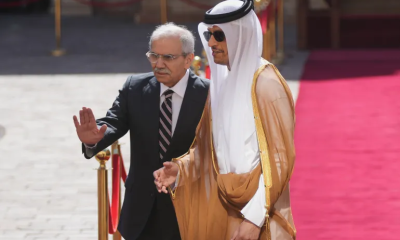
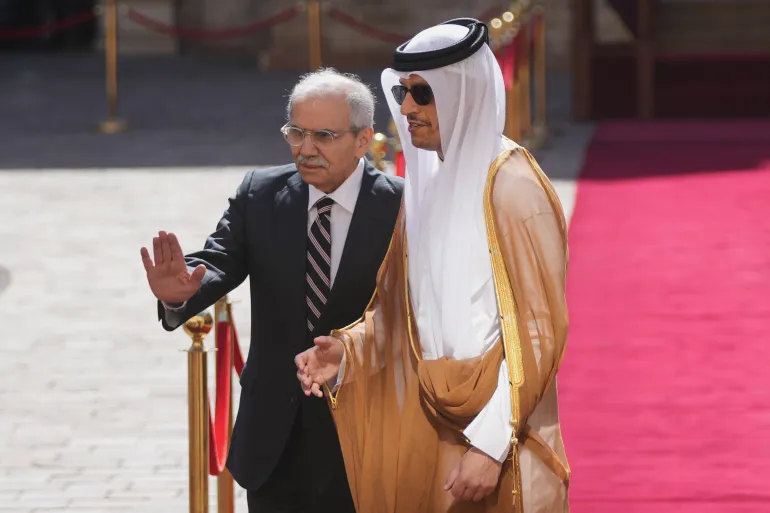
Lebanon's prime minister welcomed Qatar's PM in Beirut on Friday [Aljazeera]

Qatar’s prime minister has announced plans to set up what he described as a “massive” solar plant in Lebanon to help ease its energy crisis.

Sheikh Mohammed bin Abdulrahman bin Jassim Al Thani made the announcement during his visit to Beirut on Friday, after meeting his Lebanese counterpart, Nawaf Salam.

“We have agreed to establish a comprehensive framework for cooperation in the energy sector and to present viable solutions,” Sheikh Mohammed said.

QatarEnergy has reached an agreement with French company TotalEnergies to jointly develop a solar power plant in Lebanon as an initial project.

The aim is to develop a major investment project “that would benefit the Lebanese economy, as well as the Qatari companies and entities participating in it”, he added.

Prime Minister Salam said he would put the plans for Lebanon’s electricity sector to the Lebanese Cabinet soon.

“The Qatari side will fund, implement and activate the project without any cost on the Lebanese state,” Lebanon’s leader said, adding that such a move is important because of the country’s financial crisis.

Lebanon’s state electricity company is one of the biggest sources of debt, haemorrhaging about $40bn over past decades with a bloated workforce and outdated infrastructure. The company provides only a few hours of electricity a day and the state, until a year ago, took advances from the Central Bank when diesel fuel ran out.

Sheikh Mohammed said Doha stands in “solidarity with the Lebanese people” and the entire region “in this dire hour”. Lebanon has been struggling with multiple energy crises in recent years and the situation has been compounded by the country’s financial collapse and Israel’s ongoing assault.

Earlier in the day, the Qatari PM also met Lebanon’s president and parliament speaker.

Among the topics discussed was the situation in southern Lebanon, where Israel continues its assault, capturing dozens of towns and villages.

Sheikh Mohammed said “Israeli violations within the Lebanese territories” were a large part of his talks.

He said that Israel should withdraw from Lebanon and cease its attacks, adding that Qatar is working in coordination with the United States to help lay the groundwork for future reconstruction in southern Lebanon to allow displaced people to return to their homes.

Israeli attacks on southern Lebanon have continued despite a ceasefire agreed in June. Under the agreement brokered by the US, the Lebanese government is to disarm Iran-backed Hezbollah. In return, Israeli forces will gradually withdraw from southern areas that they occupy. However, Hezbollah is not part of the agreement and has refused to disarm until Israel withdraws from the country.

Lebanese authorities say Israeli attacks have killed more than 4,300 people in the country since March. About 1.2 million people were also displaced in Lebanon at the height of the war.

Although most have returned home since the June ceasefire, more than 300,000 people remain displaced, according to the International Organization for Migration.

Lebanon’s PM Salam thanked Qatar for its “continuous” support during some of Lebanon’s “darkest hours”.

[A;jazeera]

Continue Reading

Trending