
News
Lanka votes with 148 other countries demanding immediate ceasefire in Gaza


Sri Lanka joined 148 other nations in voting in favour of a United Nations General Assembly resolution demanding an immediate, unconditional, and lasting ceasefire in Gaza, as the humanitarian crisis in the region continues to escalate.
The resolution was adopted during an emergency session held on Thursday (12) at the UN Headquarters in New York. It comes in the wake of the UN Security Council’s failure to pass a similar measure last week, which was blocked by a veto from the United States.
In total, 149 countries supported the resolution, while 12 voted against and 19 abstained.
The United States and Israel were among those opposing the measure, joined by countries including Argentina, Hungary, and Paraguay.
Notably, India, Georgia, Ecuador, Romania, and Ethiopia abstained from the vote.
Key elements of the resolution:
* Ceasefire: Calls for an immediate, unconditional and permanent ceasefire by all parties.
* Hostages: Demands the immediate and unconditional release of all hostages held by Hamas and other armed groups.
* Implementation: Urges the full and immediate implementation of Security Council resolution 2735 (2024), including the ceasefire, hostage and prisoner exchanges, return of displaced persons, and withdrawal of Israeli troops from Gaza.
* International law: Reaffirms that all parties must uphold international humanitarian and human rights law, with particular attention to civilian protection and accountability for violations.
* Starvation as a weapon: Strongly condemns the use of starvation and the denial of aid as tactics of war.
* Humanitarian access: Demands the full, safe and unimpeded delivery of aid – including food, medicine, water, shelter and fuel – throughout Gaza.
* Detention practices: Calls for the humane treatment and release of those arbitrarily detained, and the return of remains.
* ICJ advisory opinion: Recalls the request for an urgent advisory opinion from the International Court of Justice on Israel’s obligations in the Occupied Palestinian Territory.
* End of blockade: Demands Israel immediately lift the blockade on Gaza and open all border crossings for aid deliveries.
* Accountability: Urges Member States to take necessary steps to ensure Israel complies with its international legal obligations.
* UN and humanitarian personnel: Calls for full respect for the work and immunity of UN staff and humanitarian workers.
* Protection of aid workers: Urges both humanitarian and UN bodies to ensure the safety of their personnel.
* Medical neutrality: Underscores the duty to protect medical workers, health facilities, and transport routes.

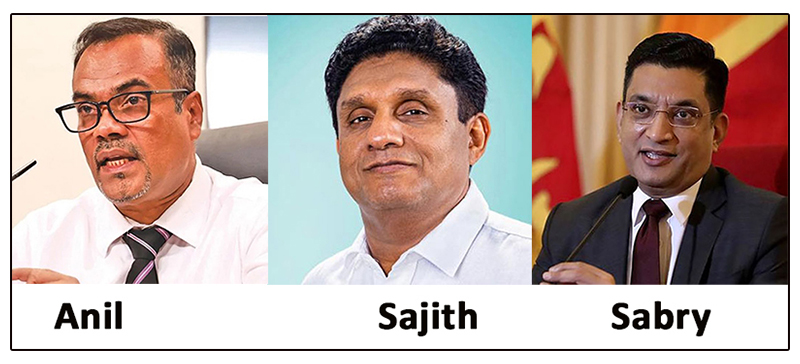
Opposition and SJB Leader Sajith Premadasa has launched a scathing attack on the government for the 50% Customs duty surcharge on vehicle imports, accusing the latter of burdening the public with additional costs, despite its earlier promises to make vehicles more affordable.
Addressing the media in Tissamaharama, on Saturday, Premadasa said those who had once pledged to make a Vitz car available for Rs. 1.2 million had now moved in the opposite direction by increasing duties on vehicles.
Premadasa questioned assurances given by Deputy Finance Minister Dr. Anil Jayantha Fernando that vehicle prices would not significantly increase due to the surcharge, asserting that the President, the government and its 159 Members of Parliament must take responsibility for the consequences of the decision.
The Opposition Leader also voiced concern over the depreciation of the rupee, warning that the local currency was weakening rapidly against the US dollar and that continued depreciation would lead to higher inflation, rising commodity prices and further increases in the cost of living.
He said economic stabilisation could only be achieved through stronger export earnings, growth in the tourism sector, higher foreign remittances and increased Foreign Direct Investments (FDIs).
Premadasa further accused the President, the Finance Minister and the Government of lacking a basic understanding of economics, claiming that repeated policy mistakes had adversely affected the economy and the public.
He called for an increase in subsidies, arguing that rising living costs were placing families under severe financial strain and affecting their ability to look after their families.
Premadasa added that shoring up foreign reserves and arresting the depreciation of the rupee would be critical in meeting debt obligations and safeguarding public welfare.
Meanwhile, the Vehicle Importers Association of Sri Lanka (VIASL) warned that the Customs duty surcharge would lead to steep increases in vehicle prices, further reducing affordability for consumers.
VIASL spokesperson Arosha Rodrigo told the media that the surcharge, introduced through a gazette notification, had come on top of existing customs duties and the depreciation of the rupee against the US dollar.
“Vehicle prices are rising at a rate that no one can afford. The new surcharge on top of this is unbearable for vehicle importers. Many vehicles will increase by Rs. 1.5 million to Rs. 2.5 million,” Rodrigo said.
He explained that customs duties on all vehicles, whether imported privately or through dealerships, would rise due to the duty surcharge.
Responding to mounting criticism, Deputy Finance Minister Dr. Anil Jayantha urged the public not to be misled by what he described as false claims that vehicle prices would rise by 150% due to the surcharge.
Dr. Jayantha said misinformation was being circulated regarding the surcharge and insisted that claims of a 150% increase in taxes or vehicle prices were “completely false.”
He explained that the temporary three-month surcharge was intended to delay non-essential private vehicle imports and reduce pressure on foreign exchange reserves during a period of economic uncertainty.
“The message we are giving is simple: if you can postpone importing a vehicle for personal use, please do so. This is not a move intended to increase vehicle prices,” he said.
According to the Deputy Minister, existing taxes on vehicle imports were already at approximately 130%, and the newly announced surcharge mechanism had been widely misunderstood in public discourse.
He further clarified that vehicles imported under Letters of Credit opened on or before May 15, 2026, would not be affected by the revised tax structure.
“Even if those vehicles arrive months later, they will continue to be taxed under the previous rates. The new tax structure only applies to LCs opened after May 15,” Dr. Jayantha said.
He also stressed that there was no reason for consumers to rush to purchase vehicles, fearing price increases.
Dr. Jayantha noted that motorcycles, three-wheelers and vehicles imported for commercial purposes had been excluded from the temporary measure.
He maintained that the policy was aimed at managing pressure on foreign exchange reserves, maintaining economic stability and curbing unnecessary import demand during the three-month period.
Meanwhile, former Finance Minister Ali Sabry, in a social media post, has endorsed the government’s decision to impose a 50% Customs duty surcharge on vehicle imports, calling a timely intervention to protect the country’s foreign currency reserves. He has said it is a necessary safeguard.
“The Government’s decision to impose a 50% surcharge on the import of vehicles, in the midst of escalating global uncertainty and external pressures, is a prudent and timely measure aimed at protecting Sri Lanka’s fragile external sector and preserving scarce foreign exchange reserves,” Sabry said in a statement on social media.
He has also praised the government’s decision to exempt the Letters of Credit opened on or before May 15, 2026, from the surcharge. “It avoids unnecessary uncertainty, prevents retrospective complications, and protects already embattled importers from further hardship and arbitrary administrative difficulties. In times of crisis, clarity, consistency, and fairness in implementation are just as important as the policy itself,” the former Minister has said, warning that Sri Lanka’s recovery remains vulnerable to global conflicts that disrupt energy markets, trade routes, supply chains, investor confidence, tourism, and financing conditions.
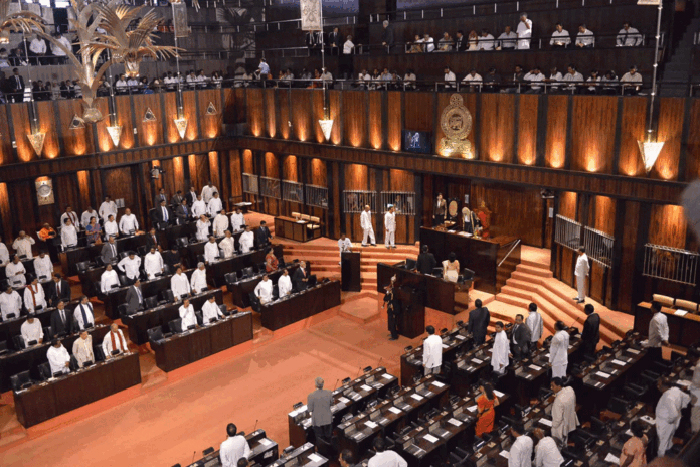
A Bill seeking to repeal the Chief of Defence Staff Act No. 35 of 2009 has been published in an extraordinary gazette notification, paving the way for the abolition of the post of Chief of Defence Staff.
The draft legislation, titled the “Repeal of the Chief of Defence Staff Act, 2026,” was published in the Government Gazette on May 15 under instructions of the Minister of Defence, according to official sources.
The Bill seeks to repeal the existing law and provide for matters connected with and incidental to its repeal.
Under the proposed legislation, the office of the Chief of Defence Staff will cease to exist from the date the new Act comes into operation. The incumbent holding the post will thereafter be reassigned to the respective armed service to which he belongs.
The draft Bill further stipulates that all movable and immovable property belonging to the Office of the Chief of Defence Staff will be vested in the Ministry in charge of the subject of defence once the Act takes effect.
News
Preventing teenage pregnancies: Police ask parents to pay more attention to children’s emotional needs

Police have raised concerns over a growing number of teenage pregnancies in Sri Lanka, urging parents and communities to strengthen family bonds and remain vigilant to protect children from exploitation and abuse.
Issuing a public awareness statement, the Police Media Division has identified the weakening of emotional bonds within families as a key sociological factor contributing to the increase in teenage pregnancies.
Police have said that increasingly demanding lifestyles have reduced the amount of time some parents spend with their children, understanding the latter’s emotional needs, daily activities and personal concerns, particularly those of young girls.
According to complaints received by police stations, some girls seek affection, care and emotional support from individuals outside the family when they feel neglected or deprived of attention at home.
“In many cases, girls turn to mobile phones and social media as a substitute for emotional support when they become distant from their parents,” police have said.
Parents and children are urged to report incidents of abuse, exploitation or harm to the nearest police station or through emergency hotlines 119, 118, 109 and 107.

Showers will occur at times in the Western, Sabaragamuwa, Central, North-western and Northern provinces and in Anuradhapura, Galle and Matara districts

Surcharge on vehicle imports irks SJB, pleases ex-Finance Minister

Bill to repeal Chief of Defence Staff Act gazetted

Preventing teenage pregnancies: Police ask parents to pay more attention to children’s emotional needs

Ex-leader of “Mahason Balakaya” arrested over cabana fraud

HNB Life reports 54% surge in gross written premium for Q1 2026

‘Dates have the highest sugar content to fight Coronavirus’

Sunday Island 27 December – Headlines

#SundayIsland 17th December – Headlines

Sunday Island – 28th March

Sunday Island Headlines – 21 March

Sunday Island – 21st February – Headlines
-
 News5 days ago
Ex-SriLankan CEO’s death: Controversy surrounds execution of bail bond
-

 Features1 day ago
Sri Lankan Airlines Airbus Scandal and the Death of Kapila Chandrasena and my Brother Rajeewa
-
Features6 days ago
High Stakes in Pursuing corruption cases
-

 Features6 days ago
When University systems fail:Supreme Court’s landmark intervention in sexual harassment case
-
 Midweek Review5 days ago
A victory that can never be forgotten
-
 News2 days ago
Lanka’s eligibility to draw next IMF tranche of USD 700 mn hinges on ‘restoration of cost-recovery pricing for electricity and fuel’
-
 Features3 days ago
Mysterious Death of United Nations Secretary General Hammarskjöld
-

 Business4 days ago
Lime trees to crack HEC conundrum