
News
Proposed elevated highway in Athurugiriya faces major environmental roadblock


by Ifham Nizam
Residents in and around Thalangama wetland area have sought legal assistance from the Centre for Environmental Justice against the proposed construction of an Elevated Highway over Thalangama Environmental Protected Area.
When contacted, CEJ Executive Director/ Environmental Scientist Hemantha Withanage told The Island they would file legal action against the proposed construction. Withanage said that they had already written to the Central Environmental Authority (CEA) Director General, P.B. Hemantha Jayasinghe in that regard.
Withanage said that they were not happy with the CEA, stressing that it should be focusing more on environmental aspects.
Speaking on World Wetlands Day, President Gotabaya Rajapaksa stressed the importance of conserving in the process of development and how inappropriate development activities led to environmental degradation and wetland destruction.
The CEA said that they had sought the Attorney General’s advice on whether it could grant approval for any Environmental Impact Assessment (EIA). Withanage said he believed that the Attorney General’s Department should consider the fact that the said project would ruin a biodiversity hotspot.
The Road Development Authority’s proposed elevated highway across the protected Thalangama wetland and Averihena tank has been heavily criticised by the residents as well environmentalist groups claiming it as a nationally and internationally recognised biodiversity hotspot included in the Ramsar Convention.
The 10.4km stretch of highway is the second phase of a 17.3km project from New Kelani Bridge in Orugodawatte to Athurugiriya. About 3.15km of road crosses the Averihena Tank and surrounding paddy fields, which are part of the Thalangama wetland, gazetted as an Environmental Protected Area (EPA), according to CEJ Legal Officer K Nimmi Sanjeewani.
“Even if an EIA is done, we will protest it as what is proposed is not an approved activity under the EPA gazette,” CEA Director General Hemantha Jayasinghe told the media.
According to Withanage, the protected area spans nearly 118 hectares and permitted uses of the Thalangama EPA as listed in Schedule II of the said Gazette, include cultivation of paddy, fishing, nature trails and construction of towers for the observation of birds, an environmental education information center and a sales outlet and the construction of a security post. The Schedule III list out the conditions subject to which the permitted uses can be carried out.
Withanage also said that recognising the uniqueness and the importance of the Thalangama Wetlands and owing to its ecological, hydrological and historical importance it was declared as an Environmental Protected Area (EPA) under the National Environmental Act (NEA) No.47 of 1980 (as amended) in 2007.
He said wetlands and EPA supported a rich ecosystem that hosted thousands of species of exotic flora, over a hundred different species of resident, endemic and migratory birds, several species of butterflies and dragonflies, a few species of damselflies, reptiles and amphibians, and some small mammals. It was also a paradise for birds.


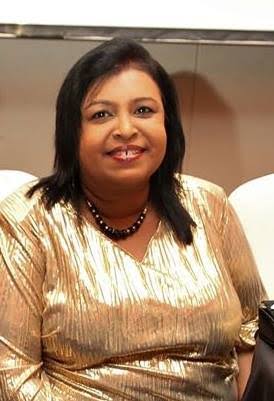
It has been reported quoting family sources that veteran singer Mariazelle Goonetilleke has passed away this morning (10) at the age of 68
She had been receiving treatment at the Kalubowila Teaching Hospital.

The wife of retired Major General Suresh Sallay has lodged a further complaint with the Human Rights Commission of Sri Lanka (HRCSL), alleging that her husband’s fundamental rights continue to be violated as Criminal Investigation Department (CID) officers prevent him from having confidential consultations with his lawyer while he is under detention at the National Hospital.
In a letter addressed to the HRCSL Chairman on Thursday, Mrs. S.B.M.S.B. Sallay has said the latest complaint was filed in relation to an earlier complaint concerning the detention and treatment of her husband.
Full text of the letter: I, Mrs. S.B.M.S.B. Sallay, respectfully write to lodge this further complaint in relation to my earlier complaint bearing reference H RC-HO-1 103-26, concerning the detention and treatment of my husband, Retired Major General Suresh Sallay.
I wish to bring to the attention of the Commission a further serious violation of his fundamental rights that occurred on 08 July 2026 during a consultation between my husband and his Attorney-at-Law, Mr. Asith Siriwardena, while my husband remains under detention and is receiving treatment at the National Hospital.
I am informed by his Counsel that he is presently permitted to consult with my husband only once a week for a period of approximately twenty minutes. During the consultation held on 08 July 2026, officers of the Criminal Investigation Department (CID) stationed at the Cardiac Coronary Care Unit of the National Hospital informed Counsel that they had received instructions from higher authorities that my husband should not be permitted to meet with his
legal counsel in private. Consequently, the officers remained present throughout the consultation and refused to permit a confidential lawyer-client meeting.
This conduct constitutes a grave infringement of my husband’s fundamental right to communicate privately and confidentially with his legal counsel. Confidential communication between an accused or detainee and his lawyer is an indispensable safeguard of the right to legal representation, the right to prepare his defence, and the right to a fair trial. The denial of confidential legal consultations undermines these fundamental protections guaranteed under the Constitution of the Democratic Socialist Republic of Sri Lanka and the applicable provisions governing persons detained under the Prevention of Terrorism Act.
The confidentiality of communications between a lawyer and client is also a well-recognized principle under international human rights law and forms an essential safeguard against arbitrary detention, coercion, and unfair legal proceedings.
In view of the foregoing, I respectfully request the Human Rights Commission of Sri Lanka to urgently intervene and take all necessary steps within its statutory mandate to:
1. Ensure that my husband is afforded immediate and unrestricted confidential access to his legal counsel without the presence or supervision of law enforcement officers;
2. Inquire into the instructions allegedly issued by higher authorities requiring CID officers to remain present during lawyer-client consultations;
3. Direct the relevant authorities to cease any practice that interferes with confidential legal consultations; and
4. Take such further action as the Commission considers appropriate to safeguard my husband’s constitutional and human rights.
This complaint is made as a further complaint to Complaint No. H RC-HO-1103-26, and I respectfully request that it be placed on the same file and considered together with my previous complaints.
I respectfully seek the Commission’s urgent intervention in this matter.
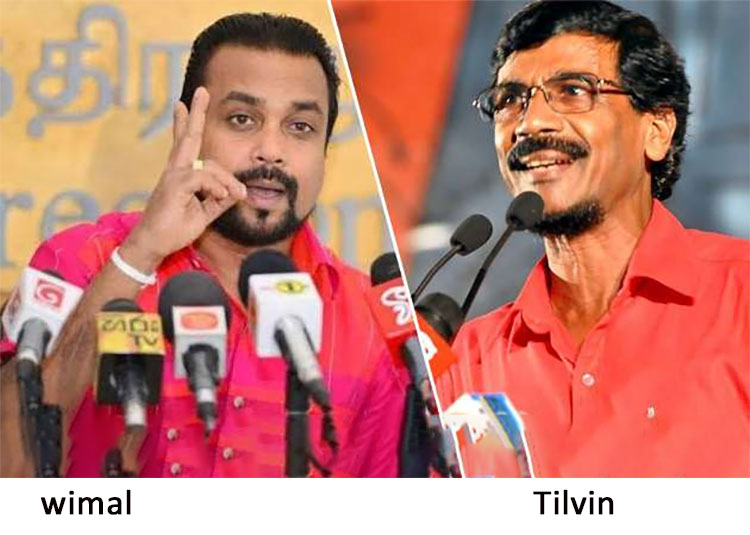
The Supreme Court yesterday (9) upheld a Colombo Commercial High Court order directing former Minister Wimal Weerawansa to pay Rs. 1 million in damages to Janatha Vimukthi Peramuna (JVP) General Secretary Tilvin Silva for violating intellectual property rights.
A three-member Supreme Court bench dismissed in its entirety an appeal filed by Weerawansa challenging the earlier Commercial High Court ruling.
The case was instituted by Silva, who alleged that Weerawansa had violated provisions of the Intellectual Property Act by publishing his book “Neththa Wenuwata Aththa” (“Truth Instead of Lies”), which contained the JVP’s political ideology and official party documents without authorisation.
The Supreme Court also affirmed the order restraining the publication and distribution of the book in its existing form. However, the court ruled that the book could be republished if the 60-page section identified as infringing intellectual property rights was removed.

Dharmaraja and Kingswood set for historic rugby clash on Saturday

Sri Lankan singer Mariazelle Goonetilleke passes away at the age of 68

Tensions erupt in Indian state after 11-year-old raped and murdered

US and Iran trade attacks as Khamenei is buried

Several spells of showers will occur in the Western, Sabaragamuwa and North-western provinces and in Galle, Matara, Kandy and Nuwara-Eliya districts

Canadian PM visits Saudi Arabia to strengthen energy, mining partnerships

‘Dates have the highest sugar content to fight Coronavirus’

Sunday Island 27 December – Headlines

#SundayIsland 17th December – Headlines

Sunday Island – 28th March

Sunday Island Headlines – 21 March

Sunday Island – 21st February – Headlines
-
 News6 days ago
Singapore-based Buddhist monk marks nearly four decades of humanitarian service
-

 News7 days ago
Freedom 250: US Embassy celebrates America’s 250th Independence Day through magic of American cinema
-
 News15 hours ago
Herath warns prospective migrant workers not to get fleeced by racketeers
-

 News5 days ago
AI concerned over proposed SL military deployment in Haiti
-

 Midweek Review3 days ago
Unexpected focus on ‘pieces of tin’ worn by military men
-

 Features6 days ago
The NPP’s New Challenge: Balancing Easter Lawfare and Economic Welfare
-
 Latest News4 days ago
Nyamhuri and Ngarava stun Bangladesh by defending 141
-

 News2 days ago
Negombo Prison riot: Ensuring protection of prisoners fundamental responsibility of the state – UN