
Editorial
Environmentalists aren’t a nuisance

Wednesday 17th February, 2021
The government has, true to form, sought to make light of severe environmental degradation caused by some of its development projects, and programmes to help the rural folk. Its ill-conceived scheme to promote traditional agriculture by releasing what it calls residual forests for farming has had a devastating impact on the country’s forest cover, which has decreased to an alarming 17%. Land grabbers are having a field day. They have encroached on the Sigiriya sanctuary as well on the pretext of growing crops.
Minister of Highways Johnston Fernando, speaking at a recent function to mark the launch of an irrigation project, lashed out at environmentalists. He seems to consider them a nuisance. What he ought to realise is that the proposed irrigation reservoirs will invariably fail for want of water if the country’s forest cover recedes further. He should know the value of trees more than anyone else because his electorate, Kurunegala, is in the North-Western Province affected by a chronic water scarcity.
In ancient times, Sri Lankan kings built reservoirs to raise the water table and thereby facilitate the growth of forests besides meeting the water needs of humans and animals. Those rulers believed in sustainable development. They knew that the success of their irrigation projects hinged on the expansion of the forest cover. They succeeded in their endeavour and the country became the Granary of the East. Today, there are reservoirs, but the forest cover is fast disappearing. Rains fail; so do crops, and food is imported.
Johnston is one of the few ministers who work really hard. But he must not dupe himself into believing that environmentalists are an impediment to development and the ongoing protests against the destruction of forests and wetlands are part of a conspiracy to sabotage the government’s development drive. He is seeing more devils than vast hell can hold.
Johnston said, at the aforesaid event, that he could not understand why an endangered tree, Curdia zeylanica, in the path of the Central Expressway under construction, in Gampaha, was being given the same treatment as a Bodhi. Some Buddhist monks have draped a saffron robe around the tree to save it. Environmentalists will tell the Minister that every tree is sacred and must therefore be protected. The challenge before the Ministry of Highways, the Road Development Authority, the Forest Department and the protesting environmental outfits is to put their heads together and figure out how to construct the expressway while saving the invaluable tree. An intelligent solution is called for.
Meanwhile, environmentalists and concerned citizens have come together to save a wetland in a suburb of Colombo; an elevated highway is to be built across the Talangama wetland, which is an ecological treasure trove, and the historical Averihena tank. This biodiversity hotspot, declared an EPA (Environmental Protection Area) in 2007, is home to a wide range of flora and fauna, and more than 100 bird species are sighted in the area, according to ornithologists. The area is also a famous tourist attraction. It is surprising why those who designed the highway did not care to spare the biodiversity hotspots, recognised under the Ramsar Convention, and some populous areas. The process of issuing the Environmental Impact Assessment Report for the road project has hit a snag.
One may argue that development is always at the expense of the environment. But development has to be made sustainable if it is to benefit humankind and other creatures; we must do everything possible to reduce environmental damage to a bare minimum in achieving our development goals and might as well do without the development projects that entail huge environmental and social costs.
It behoves governments to consult all stakeholders when development projects are planned and decisions that affect ecologically sensitive areas are taken. Political leaders and bureaucrats must not consider it infra dig to do so if environmental degradation is to be avoided.


Tuesday 1st September, 2026
Minister of Public Security Ananda Wijepala recently claimed that efforts to bring back former Central Bank Governor Arjuna Mahendran, a citizen of Singapore, wanted in connection with the 2015 Treasury bond scam, had run into a brick wall as the latter was living under a different name in Singapore. According to information received by the Criminal Investigation Department (CID), Mahendran had changed his name to Harjan Alexander, Wijepala said.
Mahendran has denied Minister Wijepala’s claim as baseless. He has issued a rebuttal, signing it as Arjuna Mahendran, and giving his residential address in Singapore. Has the CID got it wrong? Has Mahendran sought to mislead investigators? Has Singapore refused to extradite Mahendran? If so, why? What legal hurdles stand in the way of Mahendran’s extradition? The government should provide answers to these questions.
Following the conclusion of a special presidential commission probe into the bond scam, Mahendran left the country quietly when it became clear that the UNP-led Yahapalana government and the then Prime Minister Ranil Wickremesinghe, who had brought him as the Central Bank Governor, could no longer shield him. Political parties have since used the Treasury bond scam as a political slogan during election campaigns, but none of them is obviously keen to go to the extent of having Mahendran extradited.
When the SLPP made a solemn pledge, in the run-up to the 2019 regime change, to bring back Mahendran from Singapore expeditiously, if it was voted into power, we argued that he would be safe under an SLPP government as well, given his political connections. The SLPP government reneged on its promise after winning elections. As actor-turned-politician Ranjan Ramanayake has famously said, friendship transcends politics in Sri Lanka.
A brief look at political dynamics and alignments during the Yahapalana period may help one understand why the successors of the UNP-led government (2015-2019) have not pulled out all the stops in trying to have Mahendran extradited. It is doubtful whether there is any political party that has not benefited from the bond scammers’ largesse. Many MPs also received funds from the company involved in the bond scam.
The Yahapalana government’s survival, after losing a working majority due to the breakaway of the SLFP, with the then President Maithripala Sirisena turning hostile towards PM Wickremesinghe, was mainly due to successful political and legal interventions made by the JVP and the ITAK; they propped up that beleaguered administration, effectively frustrating the efforts of President Sirisena and former President Mahinda Rajapaksa to muster a working parliamentary majority after sacking Wickremesinghe as the PM and to dissolve Parliament when their plan went awry.
The NPP government, led by the JVP, does not want to open a can of worms by bringing Mahendran back to stand trial, for it was honeymooning with the UNP when the Treasury bond scam was committed in early 2015. The JVP was even represented on the Yahapalana government’s National Executive Council, at the time of the bond scam. One may recall that the COPE (Committee on Public Enterprises) under the then JVP MP Sunil Handunetti’s chairmanship, refrained from apportioning the blame for the bond scam to PM Wickremesinghe, as evident from its final report although the JVP is now castigating him.
The SJB bigwigs who have embarked on an anti-corruption crusade took great pains to cover up the bond scam in and outside Parliament, as members of the Yahapalana government. Some of them were members of the COPE; they even sought to dilute the COPE report on the bond scam by having a slew of footnotes incorporated into it. Unsurprisingly, the SJB leaders are not demanding Mahendran’s extradition. In fact, they pretend that the Treasury bond scam never happened, and Mahendran does not exist. So much for their commitment to upholding accountability.
Nothing could be more naïve than to expect any government to have Mahendran extradited. It is a textbook example of waiting for Godot.


Monday 31st August, 2026
It never rains but it pours. While taking a huge political gamble by trying to amend the Constitution to raise the retirement ages of the judges of the Superior Courts and grappling with numerous problems caused by an unfolding El Niño event, the JVP-NPP government has another potential issue to contend with; it is likely to come under intense pressure to grant the public sector employees a substantial pay hike and some tangible relief to other salaried workers.
Sri Lanka ranks 120th out of 130 countries in the latest Visual Capitalist (VC) global minimum wage comparison, based on data from the International Labour Organisation. The VC report puts Sri Lanka’s monthly minimum wage, measured in purchasing-power terms, at the equivalent of USD 200, placing it among the lowest in the world. Sri Lanka also ranks last among the South Asian countries covered by the index. Pakistan ranks 68th with USD 570, followed by Nepal at 78th with USD 490, Bangladesh at 89th with USD 379 and India at 111th with USD 233.
Sri Lanka’s appallingly low ranking in the VC minimum age index could not have come at a worse time for the JVP-NPP government, which is now in the process of preparing Budget 2027. It will prompt the state sector trade unions which have been up in arms against the high cost of living to demand higher pay.
One may recall that among the numerous relief measures the NPP promised the public in the run-up to the 2024 elections were biannual pay hikes for state employees, a 30% power tariff decrease, substantial fuel price reductions, and tax exemptions for essential goods. The NPP leaders said funds would not be a problem because they would eliminate corruption and recover the country’s stolen assets. There is no way the government can claim that it is without adequate funds to meet workers’ demand for pay hikes. Its leaders have been boasting that the Treasury is overflowing with funds. After all, in 2025, President Anura Kumara declared in Parliament that a household would receive as much as one million rupees even if a single roofing sheet had been blown away by Cyclone Ditwah.
Taxes of one kind or another already take a sizeable bite out of household incomes. The government is doing its best to convince the IMF that there is no need for a property tax as the country’s tax revenue has increased significantly. However, whether its efforts will reach fruition remains to be seen. While fighting for power, leftist movements like the JVP frequently project themselves as Robin Hood and his Merry Men, promising to champion the rights of the poor, fight corruption, and redistribute wealth through progressive or “Robin Hood” taxes, but the JVP/NPP, ensconced in power, is behaving like Prince John and the Sheriff of Nottingham, squeezing the taxpayers dry to raise government revenue.
Sri Lankans are facing a double whammy of falling purchasing power and a soaring cost of living. Prices of some essential food items have increased again. Millers exploit farmers and consumers alike with impunity. They make huge profits and buy helicopters and Rolls-Royces while farmers are selling their movable and immovable assets to repay loans and consumers are pawning their valuables as they have no other way of dulling the pangs of hunger, under a government of self-proclaimed Marxists who coined pithy political slogans, such as ‘unta Lamborghini, apita badagini—’Lamborghinis for them and hunger for us’ to muster popular support, while out of power.
Going by World Bank data, Sri Lanka’s poverty rate is likely to remain above 22% through the current year. People are struggling to make ends meet. Needless to say, pecuniary woes have made them extremely unhappy. This fact is borne out by the 2026 World Happiness Report, wherein Nepal ranks 99th, Pakistan 104th, India 116th, Bangladesh 127th and Sri Lanka 134th out of 147 countries. The countries ranked below Sri Lanka are Ethiopia, Comoros, Eswatini, Tanzania, Egypt, the Democratic Republic of the Congo, Lebanon, Yemen, Botswana, Zimbabwe and Afghanistan.
It is said that in ancient Rome, rulers used bread and circuses or panem et circenses to distract people from political problems and loss of freedom. In this country, people are apparently being treated to only circuses to distract them from food issues and serious politico-economic problems. There are frequent arrests, which receive wide publicity, and government politicians bellow rhetoric, vowing to eliminate corruption, while people are demanding relief.
It may be said that when the wolf is at the door, people’s love for a government flies out of the window, as we saw during the SLFP-led United Front government (1970-1977) and the SLPP government (2019-2024). Both those administrations had two-thirds majorities. Huge parliamentary majorities of governments count for nothing when people are struggling to keep their heads above water and their pleas for relief go unheeded.

Politics is more about pure theatre than actual delivery anywhere in the world. This is arguably more so about Sri Lankan politicians, their parties, and successive governments. It is therefore only natural that the incumbent government ensures that maximum possible pollical mileage accrues to it from the repatriation of Sri Lankan criminals arrested overseas. Among the underworld characters brought back here during the past two years or so are several drug kingpins, Shiran Basik being the latest.
Perhaps, it would not have been possible to bring back Basik if he had not filmed some Iranian missile attacks on targets in the United Arab Emirates (UAE) and stored the videos thereof in his mobile phone, drawing the attention of the UAE law enforcement authorities, who arrested him. Nevertheless, Sri Lanka has gained tremendously from his arrest and extradition, for he ran his narcotics operation from Dubai, which has become a haven for Sri Lankan criminals on the run.
Police are investigating alleged links between Basik and a number of prominent politicians, and eight of them are expected to be arrested and questioned as investigators widen their probe into his financial dealings and network of associates, according to media reports. All those who have been in league with criminals must be brought to justice.
Among those who are to be interrogated on their alleged links to Basik include a sitting MP, four former ministers, and at least one of them is said to be a woman. Police are also investigating allegations that Basik provided large sums of money to some politicians during election campaigns. Drug dealers are known to lavish funds on politicians and political parties during elections through various fronts. This may explain why Kudu Lal, who was the main supplier of heroin in Colombo, was allowed to flee the country during the SLFP-led UPFA government in 2010.
The nexus between drug dealers and politicians is only too well known. It has now been revealed that drug barons have invested their black money in films and teledramas. The police have found that Basik had contacts with several artistes and even financed some films and soap operas. This shows how the drug Mafia has spread its tentacles over various fields.
Basik’s beneficiaries are said to include some popular filmmakers-turned-lawmakers, allegedly representing both the ruling party and the Opposition. Responding to allegations levelled against them on social media, two of them have claimed that they were unaware of the actual sources of finance for their films or teledramas. Curiously, they tear into their political opponents, claiming that they have information about the latter’s ill-gotten wealth stashed away in other countries. So, how can these artistes-turned politicians who have allegedly benefited from Basik’s largesse claim that they did not know their benefactors’ identities and backgrounds, just like Pip, the orphan, in Dickens’ Great Expectations. Even if the drug dealers concerned had used fronts to finance or sponsor movies and soap operas, an investigation is called for because the artistes who have benefitted from drug money must be held answerable. Some of these politicians are ardent campaigners for good governance and have embarked on a mission to institutionalise accountability. Let them be urged to set an example to others by surrendering to the police instead of trotting out lame excuses. What they have alleged to have done amounts to money laundering.
Following the assassination of Sarath Ambepitiya, an upright High Court judge, we revealed that Kudu Nauffer, who masterminded the murder, had used a front to sponsor food and beverages served at a judicial officers’ function. A drug dealer, named Shiyam, and his wife, posed as wealthy garment factory owners, before being arrested with a huge stock of heroin in their Ward Place residence, where they had entertained political and business leaders among others. Kudu Lal had himself elected to the Colombo Municipal Council. In 2002, the then IGP T. E. Anandaraja attended a drug dealer’s party in a Colombo hotel. In 2013, a drug dealer obtained a letter from the then Prime Minister D. M. Jayaratne’s office, requesting the Customs to clear some freight containers on a priority basis; the Customs detected 131 kilos of heroin, concealed in one of them. Such is the socio-political clout of drug barons.
One may recall that while Makandure Madush, known as Sri Lanka’s Napoleon of Crime, was operating from overseas, his father died in a road accident. Among the mourners at the funeral of the underworld kingpin’s father were many politicians from both the government and the Opposition. Madush was dominating the underworld at the time, generously helping politicians and artistes, some of whom were arrested with him in Dubai in 2019. He was killed while in police custody. The police claimed an underworld gang had been shot dead in a crossfire. Politicians who had benefited from him must have heaved a sigh of relief.
It is hoped that the police will ensure the safety of Basik and ascertain more information from him about politicians, artistes and others who have benefited from his drug money either directly or indirectly.

Nahida, Marufa help Bangladesh brush aside Indonesia

Showers will occur in the Western, Sabaragamuwa, Southern and Uva provinces and in Kandy and Nuwara-Eliya districts

Sun directly overhead Kalpitiya, Talawa, Sinharagama, Galkadawala, Nachchaduwa, Padikaramaduwa, Gomarankalla and Verugal about 12.10 noon today (01)

SJB asks what Speaker intended to do about allegations against CJ

Navy Chief attends strategic-level discussions in Delhi

ICRS: Sustained and collective efforts critical to address issue of missing persons

‘Dates have the highest sugar content to fight Coronavirus’

Sunday Island 27 December – Headlines

#SundayIsland 17th December – Headlines

Sunday Island – 28th March

Sunday Island Headlines – 21 March

Sunday Island – 21st February – Headlines
-

 News4 days ago
Eight politicians in drug kingpin probe
-

 Features2 days ago
“Wrap Me Up in My Blazer”— A Gentlemanly Bradby Reminiscence
-

 Business4 days ago
Sri Lanka opens up: A new season of direct connectivity
-

 Features4 days ago
Redefining ageing in Sri Lanka
-
 Features6 days ago
Insights from Chieftains of Uva: Genealogy of two Kandyan Families – Part II
-
 Latest News5 days ago
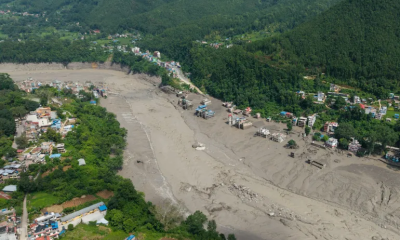
Nepal-Tibet floods: What happened, what caused them and who is missing?
-

 Editorial6 days ago
Warning of power cuts: El Niño and corruption
-

 Features6 days ago
Export diversification: Missing the wood for the trees – Part I