
Business
Where were the women?

It’s been 70 years since the Bandung Conference brought leaders of Asian and African countries together in a collective effort to forefront anti-colonial and anti-imperial struggles. Twenty-nine Asian and African countries attended and the 1955 conference symbolised a ‘new spirit of solidarity of the Third World’ . The conference underscored two principles of Third World politics – decolonisation and development – and led to the establishment of the Non-Aligned Movement (NAM) and an alternative conversation on how the world should be ordered including a proposal for a New International Economic Order (NIEO).
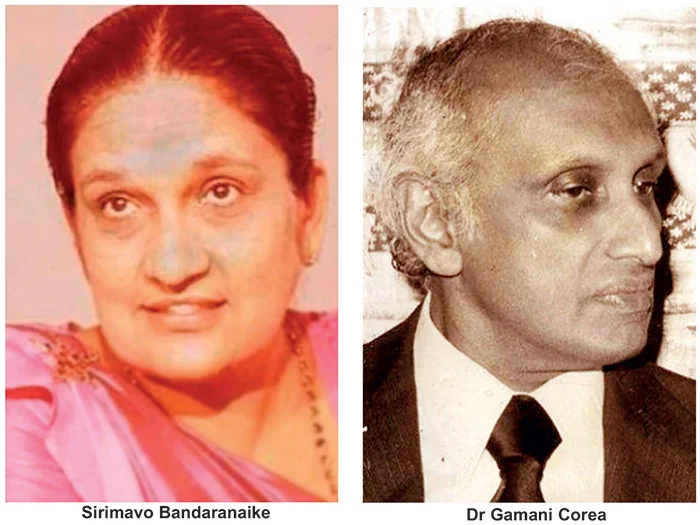
It was a time when Sri Lanka punched significantly above her weight – Mrs Sirimavo Bandaranaike was an acknowledged leader of NAM, Dr Gamani Corea pushed for more favourable trade terms for the global south from his position as the Secretary of UNCTAD, and Ambassador Shirley Amerasinghe pushed against international competition to acquire the resources of the sea bed and was a key player in the International Law of the Sea conferences. It was a time when the themes of the Bandung conference, economic cooperation, respect for fundamental human rights and the principles of the UN Charter, promotion of world peace and recognition of the equality of all races and the equality of all nations large and small, framed the discussions between nations.
Today we live in a world that is experiencing economic, ecological and geo-political crises, and where the above themes of Bandung have been sidelined if not completely obliterated. Many global south countries are deeply entrenched in debt, world peace is wilfully ignored, and genocidal actions and structural violence proliferate from Burma to Palestine. It is also a world in which limiting global warming to 1.5° Celsius is no longer possible and the consequences of climate change presents an existential crisis. It is a time where the revival of the “Bandung spirit” should provide a resonance that can inspire and inform the foreign policies and international relations of small states like Sri Lanka.
A two-day conference in Colombo, organised by IDEAS in collaboration with the BCIS and Yukthi on the 2nd and 3rd of June 2025 at the BCIS in Colombo, will bring together thinkers from Latin America, Africa and Asia to share what the Bandung spirit can portend for the world going forward. BCIS and partners will also organise a series of events leading up to the conference, and following it, to keep the spirit of Bandung at the forefront of our thinking.
In this article I ask the question famously raised by Cynthia Enloe in her writings on international relations –where were the women? It seems like there were NO female delegates at the conference . And even though the 10 points of the Bandung Declaration reiterated the principles of the UN Charter and set a standard for international relations’ and that championed coexistence instead of co-destruction, it did not explicitly refer to women’s rights. Neither this lack of representation nor the omission of women’s rights from the agenda or outcome of the conference meant that women were missing from anti-colonial and anti-imperial struggles that underscored the Bandung spirit – far from it.
In the first half of the 20th century, starting before Bandung, different constellations of national and international women’s organisations planned and implemented three conferences that foreshadowed the rise of women’s international solidarity in Asia and Africa and could have, as some commentators have argued, informed the emerging pan-Asian and Afro-Asian movement for anti-imperialist regional cooperation symbolized by Bandung.
In 1949 the Conference of the Women of Asia was held in Beijing, China, hosted by the Women’s International Democratic Federation (WIDF) together with the All-China Women’s Democratic Federation and Mahila Atma Rakshi Samiti (MARS) or Women’s Self-Defense Committee from West Bengal, India; in 1958 the Asian-African Conference of Women was held in Colombo, Ceylon (Sri Lanka), under the aegis of five national women’s organizations from Indonesia, India, Pakistan, Burma, and Sri Lanka; and in 1961 Afro-Asian Women’s Conference was held in Cairo, Egypt, organized by the Afro-Asian Peoples’ Solidarity Organization (AAPSO) with strong support from the Non-Aligned Movement, including Gamel Abdel Nasser’s government in Egypt.
Not only did the 1949 conference precede Bandung but it took place well before the now familiar United Nations World Conferences on Women, the first of which was held in Mexico City in 1975 ushering in the UN Decade for Women. The early 20th century gatherings of women from Africa and Asia were the outcome of what was a long-standing critique by women from the colonised countries of Western feminism and the development of solidarity along common issues faced by women in the global south
There were several strands to the agenda and demands of global south women at this point in history. A social reform agenda demanded better access for women to education, health care, and social welfare and sought to “modernise” cultural and religious practices. In some ways this agenda mirrored the agitation by nationalist reformers in societies that were demanding decolonisation who saw education and freedom for women, and monogamy, as markers of modernity and development, They strived to create the “enlightened” woman, a partner for the “bourgeois man”, who negated everything that was considered ‘backward’ in the traditions of the colonised societies. The concept of the “new woman” became eagerly adopted, albeit with regional variations, from Egypt to Japan, China to Korea While the ‘new woman’ image at one level reflected characteristics of the emancipated women of Europe and the USA, and the demand for education allowed women from the bourgeois classes to come out of their homes and into various professions and social work, there was also an underlying conservative emphasis on traditional ideals of the woman as wife and mother, reinforcing women’s role as care givers despite the quest for legal equality.
A second strand of feminist agitation In the early 20th century comprised a nationalist and state agenda that sought equal rights for women in independent nations and women’s full participation in public life. As women became more educated their demands also stretched to obtaining voting rights. This agitation was fuelled as the growing feminist literature of the women’s movement (books, journals and magazines) began catering to the educated and literate ‘new’ woman and reported the efforts for women’s emancipation in different parts of the world. So women in Asia and Africa were able to access information about suffragist and feminist struggles in Europe and by the early decades of the 20th century women in China, India, Japan and Sri Lanka were agitating for women’s suffrage in their countries, organising demonstrations and storming the legislature when voting rights were not granted.
What has received the least attention however in the historic accounts has been that strand of feminist organising that sought to restructure the economy as well as social relations and cultural and political practices to enfranchise all women. These feminist movements tended to push their change agenda beyond the nationalist struggles even after formal independence was granted. They recognised that economic pressures from imperial powers and the national propertied classes and business lobbies weakened the political will of governments to institute reforms. Colonial forms of ownership of the means of production continued under the new decolonised systems. They mobilised peasant women and landless migrants in urban areas with the aim of building a movement led by rural, peasant, working class and middle class women. Their activism was based on anti-imperialism, mass-based organising, a membership dominated by rural women and anti-capitalism. It was this strand of feminist analysis and thinking that dominated the first of the international conferences that was held in Beijing in 1949. Some commentators have argued that this ideological stance of the first pan-Asian women’s conference informed the emerging pan-Asian and Afro-Asian movement for anti-imperialist regional cooperation symbolized by Bandung.
(Ms Priyanthi Fernando is the Executive Director of the Bandaranaike Centre for International Studies. The views expressed in this article are her own.)
(To be continued)
by Priyanthi Fernando


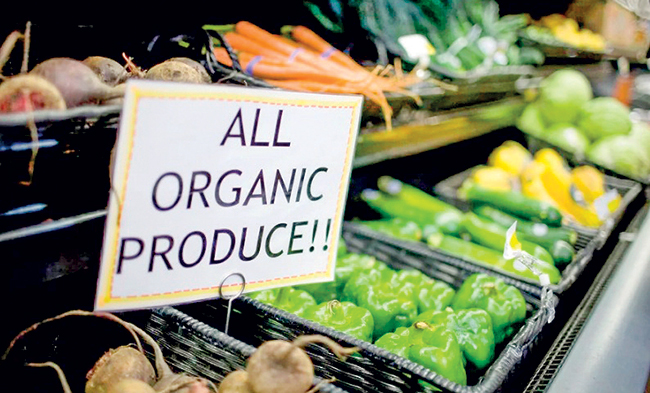
Online food retail has changed how trust is built. When customers browse your digital shelves, they are no longer holding a package, reading fine print or inspecting seals in person. Instead, their decisions hinge on small on-screen signals, badges like “Organic,” “Non-GMO,” “Fair Trade.” These labels now act as silent salespeople, influencing whether a product is added to the cart or quietly skipped.
For a growing segment of online shoppers, particularly younger, digitally fluent consumers, these badges are not decorative. They are decision shortcuts. But they are also increasingly questioned. Is the claim credible? Is it verified? Is it meaningful or simply marketing language? When shoppers cannot physically examine packaging, uncertainty creeps in and skepticism grows.
Recent findings from a comprehensive survey conducted by the TilliT team reveal a critical tension for online food retailers. TilliT is a digital platform that has been using AI and Blockchain for end-to-end tracking of global supply chains and the survey covered over 1,000 consumers representing diverse demographics and included both an online questionnaire and in-person meetings to ensure depth and representation.
The results show that while digital grocery delivers speed and convenience, it also introduces a trust gap. Today’s shoppers are informed, value-driven and actively seeking alignment with health, ethical and dietary priorities. Yet too often, the digital shelf fails to communicate credibility clearly. This is no longer just a branding challenge; it is a trust problem. And in e-commerce, trust is what turns product views into purchases.
The digital grocery cart is being pushed most frequently by younger adults. Our survey data shows a clear concentration of shoppers in the 18-34 age range, with significant activity among those aged 18-24 and 25-34.
Their shopping frequency varies, some are weekly devotees to delivery apps, while others shop online for food a few times a month or only occasionally. When it comes to their spending philosophy, the majority are pragmatic balancers, seeking a sweet spot between price and quality. However, a meaningful and growing segment, often driven by health, ethical or dietary needs, is explicitly willing to pay more for higher quality or for products bearing labels they trust. This signals a market where value is increasingly defined by transparency and credibility, not just the lowest price.
Here’s a curious finding: some online shoppers admit they usually don’t even notice certification badges while browsing. The digital interface, with its rapid scrolling and visual noise, can make these small icons easy to miss. But for those who do look, these badges become powerful signals. The most frequently noticed and sought-after labels include Organic, Sugar-free/Low sugar, Gluten-free, Vegan/Vegetarian and Non-GMO, followed by Halal and Fair Trade. Crucially, when a shopper’s eye does land on a relevant badge, its importance skyrockets.
Most rate these certifications as ‘very’ or ‘somewhat’ important in their final purchase decision. An Organic badge isn’t just decoration for a health-conscious millennial; it’s a key filter in their search for authenticity.
Don’t mistake notice for naivety. Online shoppers approach these badges with a healthy dose of caution. When asked about their level if trust, responses paint a picture of a skeptical yet hopeful audience. The most common sentiments are ‘I mostly trust it’ and the telling ‘I am not sure.’ Far fewer express full, unwavering trust. This ‘trust gap’ is the central challenge for brands and retailers. Shoppers want to believe the claims, but the digital environment, where anyone can slap a ‘natural’ icon on a product image, breeds uncertainty. This is especially true for claims related to sustainability or ethical sourcing, where verification feels more abstract than checking for gluten.
This is where the solution becomes crystal clear. Shoppers are practically begging for proof. A strong majority find a ‘Verified by an independent system’ mark, accompanied by a clickable link to view the actual certificate, to be ‘very’ or ‘extremely’ valuable. This isn’t a nice-to-have; it’s a powerful trust-builder. The data is striking: when presented with detailed certificate information (who issued it, its validity dates, what it actually means), most respondents said it would make them ‘much more likely’ to buy the product.
In a world of vague claims, verifiable, third-party validation is the antidote to doubt. It transforms a badge from a marketing symbol into a credible credential.
So, what should that click reveal? Shoppers have spoken and their priorities are pragmatic. Above all, they want a simple explanation in everyday language. Jargon and technical terms create barriers. Following that, they want to know the issuing organization’s name, is it a reputable certifier? Validity dates are critical; is this certification current? Shoppers also want clarity on scope: which specific products or ingredients does this certificate cover? Knowing the country of issuance is also a common request, adding another layer of context. This checklist is a blueprint for digital transparency: keep it simple, show the source, prove it’s current and define the scope.
Given this hunger for verification, the business implication is straightforward. When presented with a choice between two online shops selling the same product, one that clearly verifies and explains its certification badges and one that does not, respondents showed a very strong preference for the verified shop. They are ‘very likely’ or ‘somewhat likely’ to choose the platform that offers transparency. This isn’t a minor tilt in preference; it’s a significant competitive advantage. In the battle for the digital grocery basket, the retailer that invests in making labels trustworthy isn’t just building consumer confidence; it’s driving conversion and loyalty.
While the demand for verification is high, baseline understanding of common labels varies. Shoppers tend to be very familiar with terms like Organic, Vegan and Gluten-free, labels often tied to immediate personal health or dietary choices. However, familiarity drops noticeably for other important certifications like Non-GMO, Fair Trade or specific allergen-free claims. This ‘familiarity gap’ presents an opportunity. It’s not enough to just verify a Fair-Trade badge; brands and retailers can also play an educational role by explaining, in that simple language shoppers crave, what that certification means for workers and communities. Transparency paired with education is a powerful combination.
The journey from a digital storefront to a delivered grocery bag is paved with questions. The findings are a clear signal to the food and retail industry: the era of passive, decorative badges is over. Today’s online shopper, particularly the younger, value-driven consumer, is a detective. They are looking for clues, verifying sources and making informed choices aligned with complex personal values. The brands and platforms that will thrive are those that recognize this shift. They will move beyond simply displaying labels to actively validating them, explaining them in human terms and building a bridge of trust that turns cautious scrolling into confident clicking.
In the end, the most important ingredient in the future of online food shopping won’t be listed on the label, it will be the transparency that proves the label is true.
by a special correspondent
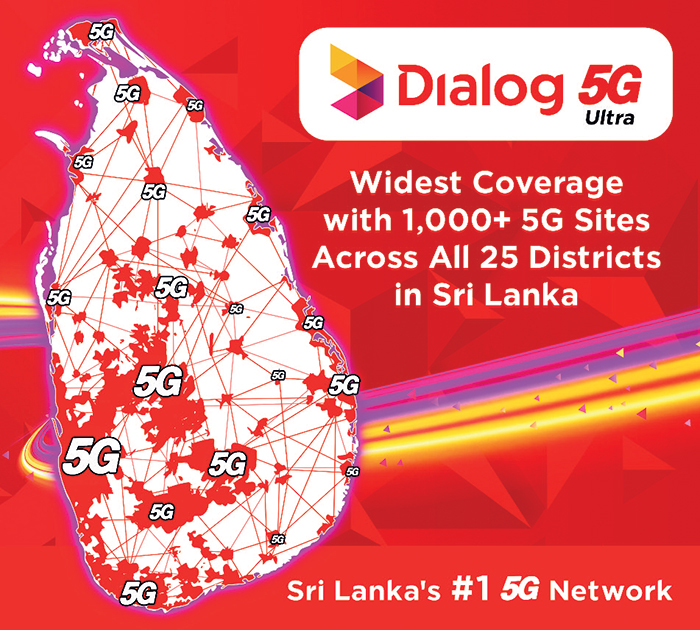
Dialog Axiata PLC, Sri Lanka’s #1 connectivity provider, announced that its 5G network has surpassed 1,000 live sites, marking a major milestone in the rapid expansion of next-generation mobile connectivity across the island. The milestone reflects Dialog’s continued progress in line with rollout commitments set by the Telecommunications Regulatory Commission of Sri Lanka (TRCSL), with the company already achieving the 2026 rollout targets ahead of schedule. This further strengthens Dialog 5G Ultra as the country’s fastest-growing 5G network, supporting Sri Lanka’s ongoing digital transformation and future-ready ambitions.
Building on its commercial launch of 5G with over 220 sites serving more than 1.5 million subscribers, Dialog has scaled its network at pace, extending coverage across all districts. This continued expansion strengthens the foundation for more reliable, high‑speed connectivity, enabling individuals, enterprises, and communities to engage more meaningfully in an increasingly digital economy.
Commenting on the milestone, Supun Weerasinghe, Director / Group Chief Executive of Dialog Axiata PLC, said, “Surpassing 1,000 5G sites marks an important step in strengthening Sri Lanka’s digital infrastructure. At Dialog, our focus goes beyond expanding network reach — it is about enabling new possibilities across communities and industries, empowering enterprises to innovate, and supporting the country’s long‑term digital and economic progress. As we continue to invest in next‑generation connectivity, we remain committed to building a digitally inclusive future and unlocking the full potential of 5G for Sri Lanka.”
As the first operator to commercially enable 5G in Sri Lanka, Dialog continues to lead the evolution of mobile connectivity, building on its legacy of introducing 2G, 3G, and 4G technologies to the country. Through sustained investment in world‑class infrastructure, Dialog 5G Ultra is designed to support future‑ready applications ranging from enhanced consumer experiences to enterprise innovation and emerging digital ecosystems.
Customers with 5G‑compatible smartphones can experience Dialog 5G Ultra by being within a 5G coverage area, enjoying enhanced speeds and next‑generation performance. To further broaden access to 5G technology, Dialog has introduced the Dialog A76 5G, the country’s most affordable 5G smartphone, priced at LKR 35,999, alongside flexible payment options that make upgrading to 5G more accessible.
Aligned with its brand promise of “The Future. Today.”, Dialog continues to play a pivotal role in shaping Sri Lanka’s digital landscape by extending advanced connectivity nationwide and supporting long‑term innovation, inclusion, and economic growth. For more information, please visit www.dialog.lk/5g
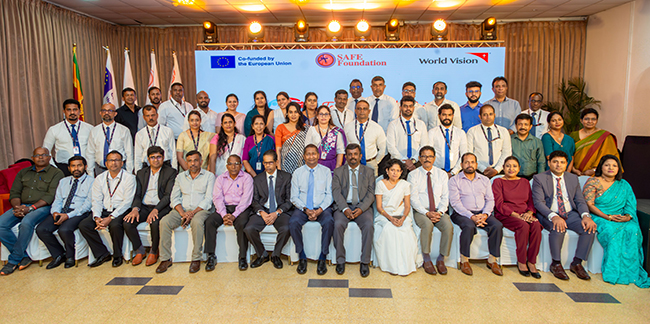
The European Union (EU)-funded “Together We Rise” initiative, implemented by World Vision and SAFE Foundation in Sri Lanka, is a €2.6 million project designed to strengthen civil society and promote human rights, inclusion and accountable governance. Over three years, the project will support 50 civil society organisations (CSOs) by providing targeted training and resources, while also engaging government institutions, policymakers and 250 social activists to enhance transparency, accountability and civic participation.
The initiative is expected to reach 701,100 people across nine districts, with a focus on underserved and conflict-affected areas. Participating organisations will include women-led, youth-led and those representing persons with disabilities. In addition, more than 350 CSO staff will benefit from tailored capacity-building and technical support to strengthen their effectiveness and long-term sustainability.
To achieve this, the project will begin by conducting a Capacity Development Needs Assessment (CDNA) to better understand the strengths and gaps of selected CSOs. Based on these findings, tailored Capacity Development Plans will be developed for each organisation, ensuring support is relevant, targeted, and impactful. Furthermore, through a capacity-building approach, CSOs will be strengthened in key areas including governance and leadership, financial management and compliance, inclusion, safeguarding, and gender equity, civic engagement and advocacy, digital capacity and innovation, as well as resilience and long-term sustainability.
Dr. Johann Hesse, Head of Cooperation at the European Union in Sri Lanka, noted, “With this EUR 2.6 million programme, the EU is investing in a stronger partnership with civil society for inclusive and sustainable development. Civil society organisations work alongside public institutions, helping to reach communities, mobilise citizens, and support the implementation of activities that are both national and EU priorities”.
In addition, selected CSOs will receive small grants to implement their development plans and respond to community needs, ensuring that learning is translated into action. The project will also create platforms for dialogue and engagement between communities, civil society, and government stakeholders, supporting advocacy efforts and influencing policy change.
Highlighting the importance of addressing structural inequalities, Nirosha Hapuarachchi, Project Manager for Together We Rise at SAFE Foundation, noted, “Youth unemployment (ages 15–29) stands at 34.5% in 2025, according to the Department of Census and Statistics. This highlights a critical gap between the skills possessed by young people and the demands of the labour market. Similarly, women and persons with disabilities continue to face social, economic, and structural challenges that limit their ability to access their rights and opportunities. In response to these challenges, the ‘Together We Rise’ project aims to promote inclusive development by addressing the needs and rights of youth, women, and persons with disabilities, enabling them to achieve sustainable, improved well-being”.
The initiative was introduced through a stakeholder engagement platform that brought together representatives from the EU, government institutions, civil society organisations, and community leaders, highlighting the importance of partnerships in driving sustainable development.
Chandrarathna D. Vithanage, Director General of the National Secretariat for Non-Governmental Organisations, emphasised the role of partnerships, stating, “A country can only truly develop when the government, business sector, and civil society work together. Together We Rise is a timely initiative with clear goals to strengthen the NGO sector, and I look forward to being part of this journey, building knowledge, fostering trust, and empowering village-level communities to take charge of the challenges they face.”
Underscoring the importance of inclusive, community-driven approaches, Glattes Rosairo, Project Manager for Together We Rise at World Vision Lanka, remarked, “Together We Rise is not just a phrase – it is a commitment to building strong, collaborative relationships that empower CSOs. This initiative prioritises listening to communities, amplifying the voices of persons with disabilities, youth, and women, and strengthening grassroots leadership to ensure sustainable and meaningful impact across Sri Lanka.”
Grounded in a rights-based, inclusive, and locally led approach, the project prioritises listening to communities, amplifying marginalised voices, and strengthening grassroots leadership – ensuring sustainable and meaningful impact across Sri Lanka.

‘Dates have the highest sugar content to fight Coronavirus’

Sunday Island 27 December – Headlines

#SundayIsland 17th December – Headlines

Sunday Island – 28th March

Sunday Island Headlines – 21 March

Sunday Island – 21st February – Headlines
-

 News4 days ago
Treasury chief’s citizenship details sought from Australia
-

 News6 days ago
BIA drug bust: 25 monks including three masterminds arrested
-
 News3 days ago
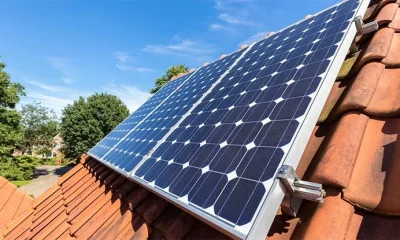
Rooftop Solar at Crossroads as Sri Lanka Shifts to Distributed Energy Future
-

 News6 days ago
Banks alert customers to phishing attacks
-
 News5 days ago
Govt. assures UN of readiness to introduce ‘vetting process’ for troops on overseas missions
-
 News2 days ago
“Three-in-one blood pressure pill can significantly reduce risk of recurrent strokes”
-
 Business5 days ago
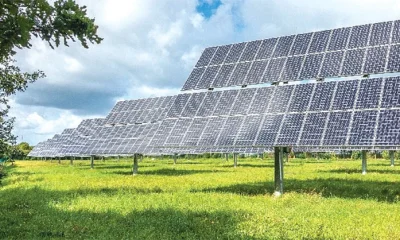
ADB-backed grid upgrade tender signals next phase of Sri Lanka’s energy transition
-

 News4 days ago
Central Province one before last in AL results