
Business
World Bank may convert infrastructure loans into tradable assets


A game-changer for Sri Lanka’s capital market
As the global community convened for the World Bank Group’s 2025 Spring Meetings under the timely theme “Jobs: The Path to Prosperity,” one message stood out: prosperity in the developing world depends not only on physical infrastructure but also on strong financial systems.
Among the influential voices at this year’s gathering was Douglas L. Peterson, Special Advisor to S&P Global and a longstanding advocate of resilient market economies.
Drawing from a decade-long tenure as CEO of S&P Global, Peterson delivered key insights that resonate deeply with the challenges and opportunities facing emerging economies such as Sri Lanka.
Peterson stressed that while global capital is abundant, it doesn’t move indiscriminately. “It follows signals, namely, data, transparency, regulatory certainty, labour and market stability.”
“When investors look to deploy capital in developing markets, they’re seeking a solid financial infrastructure,” Peterson said. “That includes reliable data, transparent pricing mechanisms, independent credit rating agencies, and clearly defined bankruptcy laws.”
These factors may not make headlines, but Peterson underscored their essential role.
“Financial infrastructure enables confidence, and confidence attracts investment,” he said.
A key initiative Peterson is championing in collaboration with the World Bank is titled ‘Originate to Distribute’, a structured finance approach where loans are created by institutions like the World Bank but sold to private investors.
Traditionally, loans from development banks remain on their balance sheets for decades. This initiative proposes standardising and structuring such loans so that private investors can purchase, pool, and trade them – essentially converting infrastructure loans into a new, tradable asset class.
“This is about creating velocity and scale,” Peterson said. “If the World Bank can originate loans and distribute them to the private sector, every dollar stretches further. It helps close the multi-trillion-dollar infrastructure investment gap.”
For countries like Sri Lanka, where public finances are under pressure, such a model could unlock significant private capital provided the regulatory environment and financial infrastructure are prepared to support it.
In alignment with the World Bank’s focus on job creation, Peterson prioritised five sectors he believes are pivotal for employment growth in developing nations: infrastructure (both physical and digital), agri-business, healthcare, tourism, and manufacturing. The common thread across all these sectors, he asserted, is infrastructure.
“Build an airport and you get hotels, transport services and even carbon savings,” Peterson said. “A bridge not only connects communities but also cuts costs, travel time, and emissions.”
According to Peterson, infrastructure investment yields a multiplier effect, often generating an additional $1.40 to $1.60 for every dollar spent. It also catalyses other industries. Manufacturing depends on roads and ports; tourism needs transport and energy; agriculture requires logistics and storage; and healthcare relies on reliable access and communication systems.
Peterson’s reflections also touched on a more structural issue that Sri Lanka is currently facing; the need to develop robust domestic capital markets. He emphasised moving beyond a banking-dominated financial system toward one that includes institutional investors like insurance companies and pension funds.
“These institutions become long-term investors,” he noted. “They form the foundation for sustainable infrastructure investment. Homegrown capital reduces reliance on external debt and increases financial resilience.”
Peterson’s remarks serve as a timely reminder as job creation and long-term prosperity in Sri Lanka will not come through piecemeal efforts. Instead, they require coordinated investments in both physical and financial infrastructure, from better roads and ports to regulatory frameworks that inspire investor confidence.
Unlocking private capital through trust, transparency, and smart financial engineering is the way forward. And as leaders like Peterson have shown, the tools and models already exist. It is now up to policymakers and financial leaders in Sri Lanka to ensure Sri Lanka is ready to embrace them.
Douglas L. Peterson currently serves on the board of the UN Global Compact and was formerly CEO of S&P Global, where he expanded the company’s market capitalisation from $16 billion to over $150 billion. He also led the G7 task force on sustainable finance in 2021.
By Sanath Nanayakkare

by Claude Gunasekera
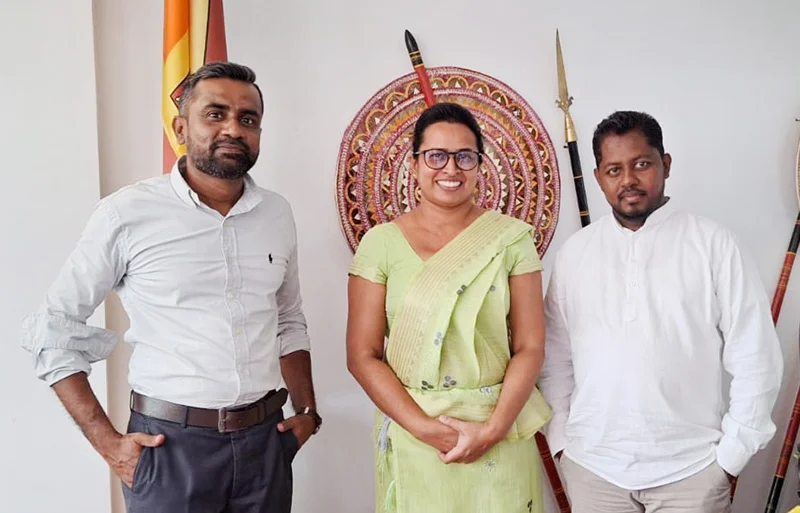
The Sri Lanka Tourism Development Authority (SLTDA) officially launched its nationwide capacity-building campaign, “Grow your Tourism Business with National Tourism Skilling Programme (NTSP),” August 31, from the scenic regional hub of Ella. Directed under the leadership of the Tourism Deputy Minister, Prof. Ruwan Ranasinghe, the comprehensive initiative aims to transform micro, small, and medium enterprises (MSMEs) by accelerating their digital readiness and business formalization across the local hospitality ecosystem.
The entire islandwide operation is under the direct coordination of Ms. Tharanga Rupasinghe, the SLTDA Director of Standards and Quality Assurance, ensuring that all rural operators align seamlessly with international hospitality standards. By utilizing the framework of the NTSP, the campaign focuses on delivering essential digital payment tools, modern online marketing insights, and compliance frameworks directly to village-level enterprises, handcraft artisans, and independent tour operators. Speaking at the launch event in Ella, Tourism Deputy Minister Prof. Ruwan Ranasinghe emphasised that sustainable growth in the travel sector relies heavily on empowering smaller stakeholders to become resilient, data-driven participants in the modern market. “True economic resilience in our tourism sector cannot be achieved through large-scale infrastructure alone, but must be built from the ground up by transforming our local communities and regional MSMEs into direct, digitally enabled beneficiaries of global travel traffic,” Prof. Ranasinghe noted. Through this synchronized, localized training approach, the SLTDA intends to systematically protect cultural heritage while elevating the service quality benchmarks of regional travel hotspots nationwide.
Regional hospitality groups, led by the Ella Tourism Association, have strongly welcomed the launch of the SLTDA national skilling campaign, calling it a vital step toward safeguarding the destination’s international reputation. Local operators noted that rapid commercial growth in the Uva Province has highlighted an urgent need for structural standardization, making the arrival of the National Tourism Skilling Programme (NTSP) highly timely. The grassroots response focused heavily on the benefits of formalization and digital integration for the region’s diverse service sector. The Ella Homestay Owners Collective praised the focus on digital payment tools, noting that transition support will help smaller vendors capture direct bookings and reduce their reliance on third-party booking commissions.
The Uva Tuk-Tuk and Adventure Guides Association highlighted that the safety and compliance training will build trust with high-spending international travelers, effectively raising service quality benchmarks across the town. Local association leaders emphasized that having Ms. Tharanga Rupasinghe, SLTDA Director of Standards and Quality Assurance, directly coordinate the field training ensures the program addresses practical, local challenges rather than just theoretical rules. Following the initial rollout, regional committees have pledged to work alongside the SLTDA to ensure that even the smallest village artisans and micro-enterprises achieve official registration, positioning Ella as a model hub for high-quality, community-driven sustainable tourism.
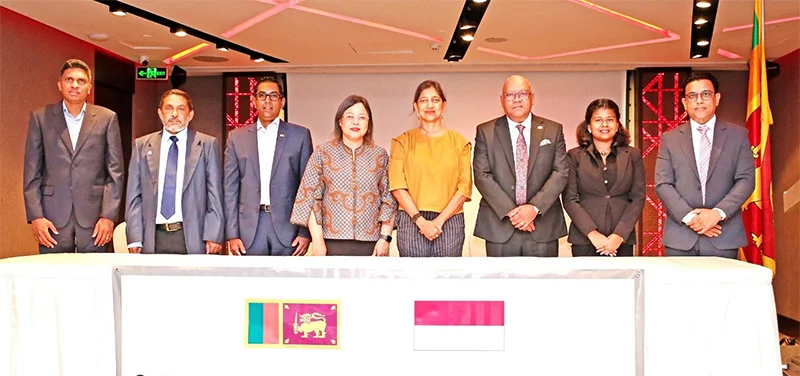
The Sri Lanka–Indonesia Business Council of The Ceylon Chamber of Commerce held its 3rd Annual General Meeting recently, bringing together Council members and key stakeholders to review the Council’s activities and priorities for the year ahead. The AGM was graced by Dewi Gustina Tobing, Ambassador of Indonesia to Sri Lanka and Patron of the Council
Delivering her address, Dewi Gustina Tobing, Ambassador of Indonesia to Sri Lanka, provided a comprehensive overview of Indonesia’s political and economic landscape, highlighting the country’s focus on promoting economic independence, strengthening sectoral resilience, improving public welfare, and facilitating both inbound and outbound investment.
Re-elected as President of the Council for 2026/27, Sheamalee Wickramasingha, Chairman / Group Managing Director of Ceylon Biscuits Ltd. acknowledged the instrumental role played by the Ambassador in the re-establishment of the Council and reflected on the Council’s key achievements during the past year. She highlighted the successful Sri Lanka–Indonesia Business Delegation to Indonesia, which provided valuable opportunities for Sri Lankan businesses to engage with Indonesian counterparts and explore avenues for commercial cooperation.
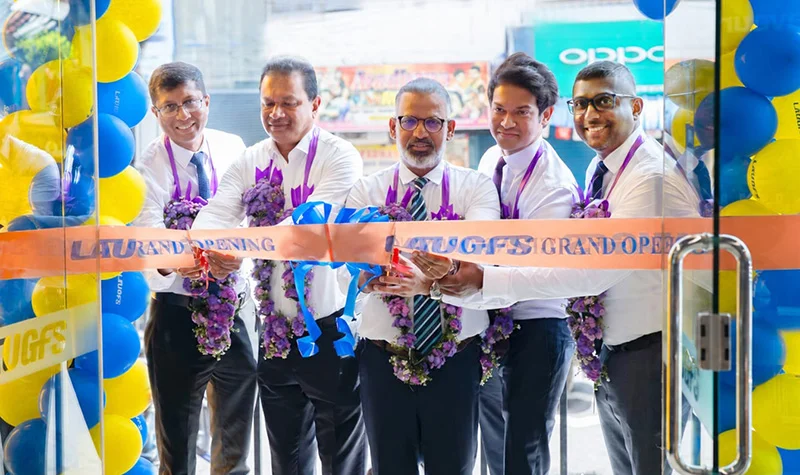
LAUGFS Supermarkets has further strengthened its growing retail presence with the opening of its 46th outlet at No. 78, K.B. Christy Perera Mawatha, Kotahena. The new outlet operates 24 hours a day, offering customers a wide range of products together with bakery and hot food options, providing greater convenience and accessibility to the surrounding community.
The new Kotahena outlet further expands LAUGFS Supermarkets’ growing network and reflects the Group’s continued focus on strengthening its presence in strategic locations across the country. The opening ceremony was attended by the Group Chairman, Group Executive Vice Chairman, Acting Group Managing Director/Group Executive Director and senior management.
Commenting on the opening, the Sector Managing Director/CEO – Retail, Niroshan De Silva, said, “The opening of our 46th outlet reflects the dedication, teamwork and determination of our people, who have worked exceptionally hard to bring this outlet together. The new Kotahena outlet is designed to offer customers greater convenience, with an inbuilt bakery and hot food facility that provides freshly prepared food alongside our wide range of products, all under one roof. Our focus is to ensure that every LAUGFS Supermarket operates to the highest standards and consistently delivers quality, convenience and service excellence to our customers.”
The opening of the Kotahena outlet marks another significant milestone in LAUGFS Supermarkets’ ongoing expansion, bringing its products and services closer to more customers while further enhancing its 24-hour retail offering. With its growing network of outlets and continued focus on customer convenience and service excellence, LAUGFS Supermarkets remains committed to strengthening its presence and creating greater value for customers across Sri Lanka.

Showers above 100 mm expected at times in the Western, Sabaragamuwa, Central, Uva and Southern provinces, and in Ampara and Batticaloa districts

Controversy over absence of Agriculture Minister, Deputy at NPP’s inaugural farmers’ rally

Thousands march in Jaffna demanding international investigation into Chemmani

FAC that sank last month recovered in salvage operation

Advocata Institute honours Dr. Paikiasothy Saravanamuttu with inaugural Freedom Award for lifelong service to civic freedom in Sri Lanka

Who committed genocide and created mass graves in Sri Lanka?

‘Dates have the highest sugar content to fight Coronavirus’

Sunday Island 27 December – Headlines

#SundayIsland 17th December – Headlines

Sunday Island – 28th March

Sunday Island Headlines – 21 March

Sunday Island – 21st February – Headlines
-

 Sports4 days ago
DDS set to lose Test captaincy
-

 News4 days ago
Sri Lanka faces new grid challenge as rooftop solar surges: former CEB GM
-

 Latest News4 days ago
Shafali, Deepti power India into sixth T20 Asia Cup final
-

 Latest News3 days ago
Sri Lanka thwart Fatima Sana challenge to secure Asia Cup final spot
-
 Opinion6 days ago
Navigating Sri Lanka’s Israeli Dilemma
-
 Features5 days ago
Lost for 90 years: Rare Goby resurfaces in Jaffna
-

 News2 days ago
Gnanasara Thero absconding after SC ruling
-

 News3 days ago
Ammunition cache found in old Kandy bungalow