
Business
UAE Pledges Support for the Promotion of Energy, Tourism, Investment and Foreign Employment Sectors


The Deputy Prime Minister and Minister of Foreign Affairs of the United Arab Emirates (UAE), Sheikh Abdullah Bin Zayed Al Nahyan, stated that the UAE will prioritize the promotion of the energy, tourism, foreign investment and foreign employment sectors while further strengthening its longstanding ties with Sri Lanka.
The Deputy Prime Minister who is currently on an official visit to Sri Lanka accompanied by a high-level UAE delegation made these remarks during a meeting with President Anura Kumara Disanayake at the Presidential Secretariat on Tuesday (22).
The Deputy Prime Minister emphasized that this visit aims to further strengthen and expand the strong and longstanding bilateral relations between the two nations, with a focus on achieving mutual economic benefits through deepened cooperation for both countries.
Extending his best wishes on behalf of the UAE and its people to the new administration of Sri Lanka, the Deputy Prime Minister assured the UAE’s full support for the new government’s development agenda. Furthermore, he praised President Anura Kumara Disanayake’s dedication, efforts and commitment toward rebuilding Sri Lanka, as well as his positive approach toward relations with the UAE.
In response, President Anura Kumara Disanayake emphasized that Sri Lanka has now established an investment-friendly environment. He assured that unlike in the past, the country would not allow the re-emergence of an unstable climate that discouraged investment. The President also stressed that there are now strong legal frameworks in place to protect investments. The President also briefed the delegation on the government’s steps toward debt restructuring and achieving economic stability. Additionally, he outlined investment opportunities available in port terminal development, port city development, the tourism industry, the energy sector and transportation sector.
President Disanayake further emphasized that the new government’s objective is to position Sri Lanka as the region’s leading investment hub and premier tourist destination.
Among those present at the meeting were Minister of Labour and Deputy Minister of Economic Development, Dr. Anil Jayantha Fernando, Senior Additional Secretary to the President Roshan Gamage, Minister of State (UAE) Ahmed Ali Al Sayegh; UAE Ambassador to Sri Lanka. Khaled Nasser Al Ameri, Assistant Minister for Economic and Trade Affairs (UAE) . Saeed Mubarak Al Hajeri, Assistant Minister of Foreign Affairs for Energy and Sustainability Affairs (UAE) Abdulla Balalaa, Deputy Chief of Staff at the Office of the Minister of Foreign Affairs to the UAE, Ahmed Burhaima, Director of the Policy Planning Department at the Ministry of Foreign Affairs (UAE) Muath Alwari, Senior Media and Content Specialist at the Office of the Minister of Foreign Affairs (UAE) Maitha Al Mansouri, Desk Officer for Asian Affairs and Pacific Department (UAE) Ms. Huda Al Abdali and several other officials.
[PMD]


USD 2.5 million sovereign debt payment:
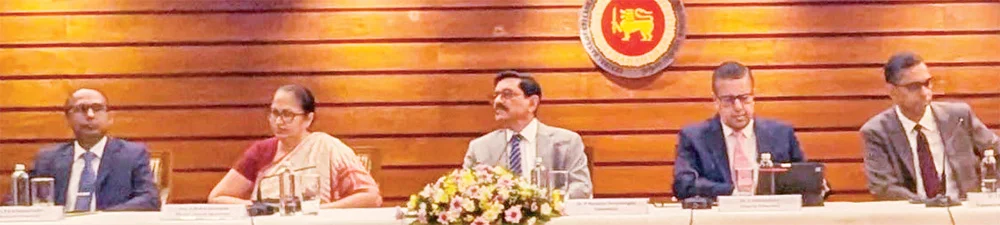
The Central Bank merely carried out the controversial USD 2.5 million sovereign debt payment in accordance with instructions issued by the government, Central Bank Governor Dr. Nandalal Weerasinghe said yesterday, emphasising that the institution acted solely in its capacity as banker to the state.
Addressing a question at a public seminar, Dr. Weerasinghe explained that the Central Bank’s responsibility in such transactions is operational rather than supervisory. According to him, once the Ministry of Finance or the Treasury issues a payment order, the Central Bank processes the transfer exactly as instructed, without involvement in determining the beneficiary or the broader decision-making process behind the payment.
The Governor’s remarks came in response to a query regarding the widely discussed USD 2.5 million sovereign debt repayment reportedly sent to a party in Australia and later alleged to have been siphoned off by a cyber criminal.
“The Central Bank is the banker to the government just as it is to commercial banks,” he explained. “When we receive a payment instruction from the Ministry of Finance or the Treasury, we execute that payment in line with the instructions given to us.”
He noted that the Central Bank credits the account specified by its client, in this case, the government — and subsequently informs the relevant authorities once the transaction has been completed. If a payment cannot be processed or is rejected by the banking system, the Bank notifies the client accordingly. And when a payment is successful, the client would receive a notification, he said.
However, Dr. Weerasinghe indicated that the Central Bank would not necessarily be aware if recipient details had been altered elsewhere in the chain of communication prior to the transaction reaching the Bank for execution.
The Governor also highlighted the institutional changes that took effect from January 1, 2026. He explained that when the Public Debt Department functioned under the Central Bank, the institution had a more direct role in sovereign debt management and decision-making. With the External Debt Department now operating under the Ministry of Finance, the Central Bank’s role has become largely facilitative.
Under the current arrangement, he said, the Bank simply processes payments on behalf of the government. If the Treasury provides funds in Sri Lankan rupees, the Central Bank converts them into US dollars before remitting the payment. Alternatively, the payment may be made from government accounts maintained at the Central Bank or from the country’s foreign reserves.
To simplify the explanation, Dr. Weerasinghe compared the process to an ordinary customer instructing a commercial bank to transfer money to a designated recipient. In such instances, the bank processes the transaction based on the customer’s instructions rather than independently verifying the account details of the recipient.
Through his remarks, the Governor strongly conveyed that the Central Bank had no involvement in the policy or decision-making aspects of the disputed payment and acted purely as the executing financial institution on behalf of the government.
By Sanath Nanayakkare
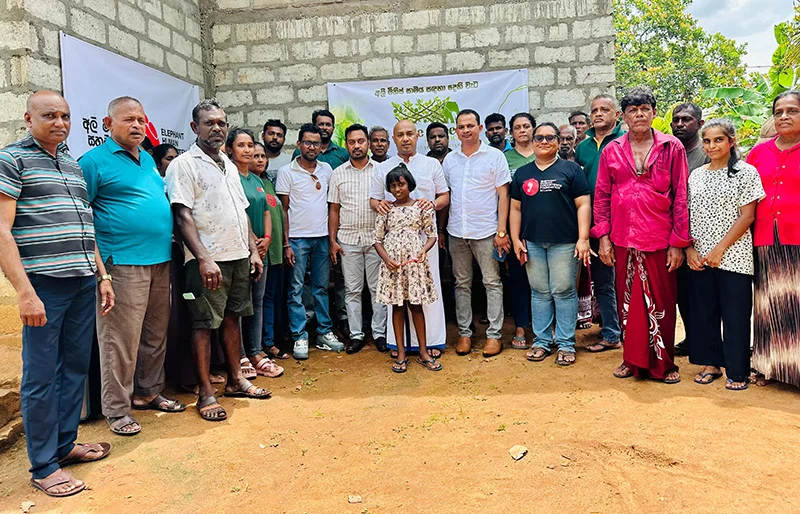
A pioneering community-based conservation initiative aimed at reducing the devastating impact of Human-Elephant Conflict (HEC) while strengthening rural livelihoods was launched on Sunday in the Anuradhapura District under the theme “Lime Trees for Peace Between Elephants and People.”
The project, spearheaded by the Elephant Human Coexistence Foundation, was officially launched in Maningamuwa Village in the Central Nuwaragam Palatha Divisional Secretariat area, marking what conservationists describe as a practical and environmentally sustainable approach to one of Sri Lanka’s gravest socio-economic and ecological crises.
As part of the inaugural phase, 1,200 lime plants were distributed among four farming families to establish bio fences around agricultural lands.
The initiative seeks to use citrus-based living barriers as a natural deterrent to elephants, reducing crop raids without harming wildlife.
Co-Founder and Director of the Foundation, Panchali Panapitiya, said the project was designed not only to protect crops, but also to transform vulnerable farming communities into active custodians of coexistence.
“Human-Elephant Conflict cannot be solved through fear, violence, or isolation,” Panapitiya told The Island Financial Review. “We believe coexistence becomes sustainable only when communities themselves are empowered as leaders and partners in conservation. This initiative combines environmental protection with livelihood security.”
She said the lime tree fences would create a “living shield” around farms while simultaneously generating long-term economic benefits for rural families.
“Coexistence grows as communities thrive. Peace takes root when livelihoods are strengthened,” she said.
Sri Lanka continues to record alarming levels of Human-Elephant Conflict annually, with both elephant and human fatalities increasing in recent years. Rural farmers in districts such as Anuradhapura, Polonnaruwa, and Moneragala frequently suffer severe crop losses, while conventional mitigation methods — including electric fencing — often remain costly, difficult to maintain, or ecologically disruptive.
Against this backdrop, conservationists say the use of lime-based bio fencing presents a low-cost and climate-friendly alternative.
The Foundation noted that similar citrus-based deterrent systems have already demonstrated success in parts of Africa and Thailand, where elephants naturally avoid strong citrus scents. The Sri Lankan initiative aims to scientifically assess the effectiveness of local lime species as protective barriers for small and medium-scale farms.
Importantly, lime tree bio fences have already been recognised in the official Anuradhapura District Plan for the Mitigation of Human-Elephant Conflict, giving the initiative institutional backing from the District Secretariat, Divisional Secretariats, and the Department of Wildlife Conservation.
Panapitiya stressed that the project also carries broader environmental and social goals beyond conflict mitigation.
“This is about restoring harmony between people, elephants, and landscapes,” she said. “At the same time, these trees contribute to carbon sequestration, biodiversity conservation, and economic resilience in farming communities.”
A notable component of the programme is its emphasis on women’s empowerment within the agriculture sector, traditionally dominated by men. The Foundation believes conservation-linked agriculture can create pathways towards financial independence for rural women while strengthening household resilience.
The project’s broader objectives include reducing fatalities linked to Human-Elephant Conflict, improving rural economic stability, increasing community participation in conservation efforts, and supporting the long-term preservation of Sri Lanka’s endangered elephant populations.
Environmentalists attending the launch described the initiative as an example of how conservation and rural development can work together rather than in opposition.
Those present at the event included Panapitiya, Co-Founder and Director Manoja Weerakkody, Co-Founder and Director Duminda Dissanayake, officials from the Central Nuwaragam Palatha Divisional Secretariat, and representatives of the Department of Wildlife Conservation.
The Foundation expressed hope that the programme would eventually be expanded throughout the Anuradhapura District and potentially replicated in other Human-Elephant Conflict hotspots across Sri Lanka.
By Ifham Nizam
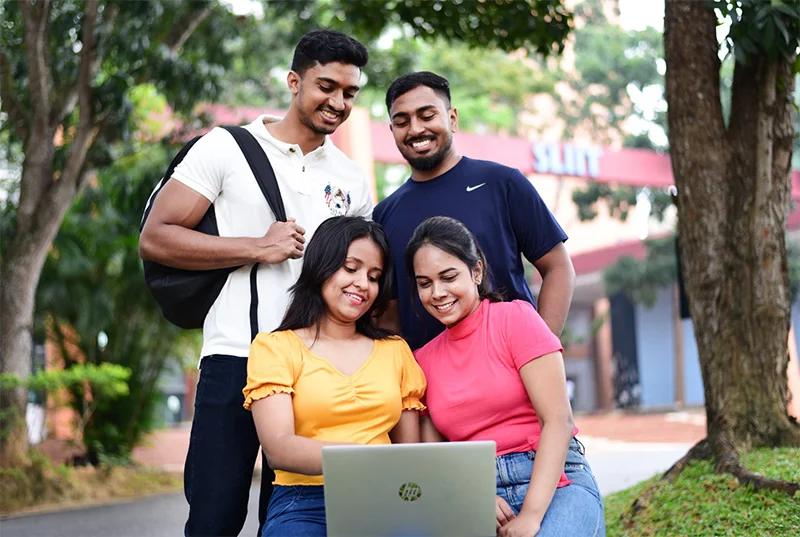
“Bro” is a word you hear frequently at SLIIT. Study halls, elevators, canteens and even corridors echo with lively chatter of students either discussing project work, venting frustrations, debating the latest films or catching their breath from laughing. Almost immediately, ethnic backgrounds, religious beliefs, gender, and place of origin don’t matter when you hear “Bro, send me the notes,” or “Bro, let’s go for the match.”
The traditional idea of a family requires some form of biological relationship, but behind the gates at SLIIT, this is not necessarily the case. In a student body of over 25,000, studying more than 100 different programmes, friend groups frequently develop into something deeper: a sense of belonging that feels like family. Every year on International Day of Families (May 15), we are reminded of the importance of family in creating our identities and these close-knit groups at SLIIT are no different.
For many students, the university experience begins with uncertainty. Being surrounded by unexpected faces and new expectations can be intimidating at first. However, it is during these moments that long-term ties begin to form. A simple introduction during orientation, a shared chuckle during lectures, or teamwork in group projects are frequently the beginnings of meaningful friendships.
SLIIT’s vibrant student life is designed to foster these friendships. From faculty-led events and sports activities to student organizations and societies, students are nudged to collaborate despite their differences. Most importantly, these environments are designed to inspire growth and personal reflection even when faced with conflicting ideas. What results is a strong sense of community and students who have the skill to thrive in challenging situations.
These relationships evolve throughout time. Friends who stood in as study partners, motivators, and emotional support systems stay connected even after they graduate. For many alumni, these friendships are among the most treasured aspects of their academic experience. Even after transitioning into professional employment, these ties remain strong, forming networks of support, collaboration, and continued friendship.
According to Harshana, currently in their third year at SLIIT, it is critical to remember that family is not only defined by where we come from, but also by the ties we form. The friendships created at SLIIT teach that sometimes the strongest families are those we create for ourselves.

Vaibhav Sooryavanshi picked in India ‘A’ squad for one-day tri-series in Sri Lanka

Saudi Arabia set to host Dunes League T20 from October

The guidance of Religious Leaders is essential to strengthen coexistence among communities. — Prime Minister

‘Watermelon deaths’ in Mumbai puzzle investigators

Mass sex abuse allegations force closure of boarding school in Indonesia

Gunshots fired in Philippine Senate where lawmaker wanted by ICC is holed up

‘Dates have the highest sugar content to fight Coronavirus’

Sunday Island 27 December – Headlines

#SundayIsland 17th December – Headlines

Sunday Island – 28th March

Sunday Island Headlines – 21 March

Sunday Island – 21st February – Headlines
-

 News5 days ago
Lanka Port City officials to meet investors in Dubai
-
 News2 days ago
Ex-SriLankan CEO’s death: Controversy surrounds execution of bail bond
-

 News6 days ago
SLPP expresses concern over death of former SriLankan CEO
-

 Editorial7 days ago
The Vijay factor
-
 News6 days ago
Police inform Fort Magistrate’s Court of finding ex-CEO of SriLankan dead under suspicious circumstances
-
 Features3 days ago
When University systems fail:Supreme Court’s landmark intervention in sexual harassment case
-
Features3 days ago
High Stakes in Pursuing corruption cases
-

 Features7 days ago
Palm leaf manuscripts of Sri Lanka – 1