
Opinion
Sri Lanka’s Foreign Policy amid Geopolitical Transformations: 1990-2024 – Part IX


(Part VIII of this article appeared yesterday)
Reflections on Perplexity in Sri Lankan Foreign Policy (1990-2024)
Since the end of the Cold War, the three geopolitical spheres of Sri Lanka have been significantly shifted. At the same time, the internal politics and the economy have also faced intense volatility, moving from war to a post-war environment. However, Sri Lanka’s foreign policy moved without a clear strategic direction, often following an inconsistent, zigzagging path. Sri Lanka’s foreign policy objectives shifted frequently, driven more by internal political winds than by a coherent long-term vision. Hence, the country’s foreign policy was proceeding without a clear strategy, pursuing immediate yet undefined goals in an ad hoc manner. As a result, contradictions and inconsistencies became the hallmark of foreign policy. Decisions were often made on the spur of the moment, with little consideration for their alignment with other policy stances within the same administration.
Sri Lanka’s Ministry of Foreign Affairs (MFA) was once staffed by internationally famed, highly skilled foreign policy professionals who possessed deep understanding of global affairs and international trends. These professionals provided essential guidance to political leadership, ensuring the country’s diplomatic effectiveness. However, mirroring broader governance deficits across various sectors of the state, the MFA has later gradually lost its skilled manpower and effectiveness. In particular, following the departure of Minister Lakshman Kadirgamar, who sought to restore order and proper procedures to the MFA, excessive politicisation and the lack of effective refresher programmes on global affairs and diplomacy have severely undermined the ministry’s ability to fulfill its crucial role during this challenging period. As a result, the MFA has struggled to formulate and implement a coherent foreign policy. Internal feuds among staff and the pursuit of political favour for lucrative diplomatic appointments have further eroded its focus on substantive diplomatic engagement. Consequently, the MFA has become increasingly ineffective in advancing Sri Lanka’s foreign policy objectives, reflecting the overall governance deficit facing the Sri Lankan state.
Policy, in general, consists of two fundamental components: clearly identifying and prioritising goals and objectives and developing effective strategies to achieve them. These elements work together to ensure that policies are actionable and aligned with desired outcomes. Policy-making is a dynamic and evolving process that requires continuous assessment of the context in which it operates. At the same time, without viable implementation mechanisms, even the most thoughtfully crafted policies remain theoretical rather than practical. Therefore, successful policy-making demands not only clear objectives and strategies but also robust structures for execution and adaptation to ensure policies translate effectively into real-world implementation. By the same token, even a highly skilled implementation mechanism would become impotent without clearly prioritised objectives and a well-defined implementation strategy. During this period, Sri Lanka struggled, to varying degrees, across all three key aspects of policy-making: setting clear objectives, developing effective strategies, and ensuring successful implementation.
The core element of foreign affairs is a state’s interaction with other states within the international system. While the scope and agency of foreign policy have expanded to include other actors and factors, the state still remains the dominant player. According to Barry Buzan’s categorization (Buzan, 1991) of weak and strong states, Sri Lanka exemplifies a weak state–not due to its military capability or size, but because of its internal structural weaknesses, particularly a lack of socio-political cohesion. Weak states are characterized by poor governance, low political cohesion, a legitimacy deficit, and ideological instability. When a state is structurally weak and insecure—especially a small state in the Global South—this insecurity is reflected in its foreign policy. In Sri Lanka’s case, its domestic vulnerabilities directly shape its foreign policy approaches. A weak state and politically threatened regimes can hardly adopt strong foreign policy stances.
Ethno-political vulnerability has been the primary factor consuming the energy and focus of Sri Lanka’s foreign policy. It remains the central weakness of the state. There were several attempts to build an inclusive state by introducing structural changes to the system Sri Lanka inherited in 1948. However, many of these efforts were abandoned midway due to a lack of political courage and will, especially in the face of opposition. The new constitution proposed in1996, which included provisions for genuine power devolution to the regions, was delayed in an attempt to gain opposition support. Ultimately, it was effectively rejected in parliament. Meanwhile, the steady erosion of democracy and the politicisation of administrative institutions gradually undermined the legitimacy of the state. Economic mismanagement and corruption further weakened the economy. As a result, three key domestic vulnerabilities became defining features of Sri Lankan polity—ethnic, economic, and political.
The hard-fought military victory and the end of the war in 2009 presented a historic opportunity to transform negative peace into a positive peace by laying the foundation for an inclusive and stable state. However, Sri Lanka failed to seize this moment. As a result, new challenges relating to ethnic reconciliation emerged with new vigor in the post-war context and state’s ethnic vulnerabilities played a crucial role in shaping foreign policy, as issues such as transitional justice, accountability, and the full implementation of the 19th Amendment shifted from being purely domestic matters to central foreign policy issues. When different political leaders within the same government express contradictory views—or when the same leaders take inconsistent positions over time—Sri Lanka’s Ministry of Foreign Affairs and its diplomats struggle to justify the country’s stance before the international community. As a small state that is both economically and politically fragile, Sri Lanka cannot pursue a strong foreign policy without effectively addressing these domestic vulnerabilities.
Sri Lanka’s economic vulnerability stems from both structural weaknesses and internal mismanagement of the economy. As a developing economy in the Global South, the country has faced deep-rooted structural weaknesses that have left it dependent on external forces for economic stability. Sri Lanka’s economy has long faced structural deficiencies, relying heavily on key sources such as tourism, export-oriented garments, and remittances. Additionally, high levels of debt—primarily due to excessive borrowing from international creditors—have created a cycle of dependency on foreign aid and international financial institutions. Clearly demarcating the internal policy sphere from the external one is difficult, as structural economic vulnerabilities both influenced policy priorities and constrained the pursuit of a strong foreign policy.
Even more pressing issue is the mismanagement of the economy and widespread corruption, both of which have severely undermined Sri Lanka’s economic stability. Especially, the post-war governments have pursued unsustainable fiscal policies, excessive borrowing, and poor allocation of public resources. Corruption has further deepened the crisis, marked by allegations of fund misappropriation using political power, a lack of financial transparency, and nepotism in economic decision-making. These issues have eroded investor confidence, discouraged foreign direct investment, and contributed to capital flight. Given Sri Lanka’s reliance on foreign assistance and international financial institutions, its ability to take strong, independent stances on economic and political matters is significantly constrained. Economic survival often depends on complying with the conditions set by lenders. Economic vulnerabilities, stemming from the governments’ economic practices, significantly impact Sri Lanka’s foreign policy, often constraining its ability to act independently.
Ultimately, these vulnerabilities are directly linked to the modus operandi of governing regimes. But why did political leadership behave in this manner? The lack of vision cannot be solely attributed to the subjective traits of individual leaders. Rather, systemic and institutional factors play a crucial role in shaping decision-making. However, this does not absolve political leaders of responsibility for foreign policy failures. Too often, they prioritize personal political interests over national priorities, leading to governance and diplomatic shortcomings.
Even after the decisive military victory over the LTTE, the regime in power remained threatened and insecure. The deployment of armed squads—both in uniform and plainclothes—and the use of force against civilians engaged in legitimate, non-violent protests are not characteristics of a stable and confident regime. Instead, such actions reflect the behaviour of a weak state and a threatened leadership. Even before the Aragalaya, successive regimes repeatedly used military force against peaceful protesters, as seen in Katunayake (June 2011), Chilaw (February 2012), and Rathupaswala (August 2013). A state that feels threatened and insecure cannot pursue a strong foreign policy.
The insecurity of regimes arises from their weak and fragile social and economic foundations. A dependent and weak economy has failed to give birth to strong, independent, and self-sustaining economic elites. Instead, these elites rely heavily on the state for their economic survival. A defining feature of Sri Lankan politics is the emergence and dominance of a political class that alternates in power. This political class coincided with the expansion of the public sector. This paved the way for the political class to siphon on state resources using political power. As a result, economic decisions have often been driven by personal interests rather than national priorities— a dynamic that is also reflected in the country’s foreign policy.
After years of war, the Sri Lankan people, regardless of ethnic divisions, are yearning for political reforms to strengthen democracy and good governance. However, successive politically insecure regimes continue to falter in implementing democratic reforms, often prioritising their own survival over long-term institutional change. This is evident in the constant vacillation of political leaders and their contradictory statements to the international community. This insecurity is evident in the constant vacillation of political leaders regarding reform efforts, as well as their contradictory statements to the international community. What we are witnessing is a steady backsliding of democracy and the rise of authoritarian tendencies, which are characteristic of a weak regime.
The Aragalaya highlighted a crucial truth: economic crises are often the result of deep-seated political failures. Sri Lanka’s financial collapse was not merely a product of mismanaged economic policies but a consequence of prolonged corruption, governance deficit, and unchecked power. The economic collapse exposed how unchecked power, lack of transparency and poor decision-making can destabilise an entire economy, underscoring the urgent need for political accountability and structural reforms.
In the short term, urgent economic measures are necessary to mitigate the impact of bankruptcy and restore some level of financial stability. Debt restructuring, securing international assistance, promoting exports, and implementing fiscal discipline are critical steps in this process. A sustainable solution requires addressing the underlying political crisis that initially triggered economic turmoil. Without political reforms—such as strengthening democratic institutions, ensuring accountability, curbing corruption, and promoting inclusive governance—economic policies will not succeed. Economic stability, investor confidence, and sustainable growth all hinge on these reforms. Political reform is the sine qua non of a strong foreign policy.
One of the key responsibilities and challenges facing the new NPP government is pursuing a strong foreign policy with a strategic perspective. This is a formidable task that requires accurately identifying foreign policy priorities, selecting viable strategies appropriate for a small island state, and advancing them prudently while carefully assessing critical developments in regional and global political spheres. The Ministry of Foreign Affairs (MFA), a crucial instrument for implementing foreign policy, is currently in a state of disarray and confusion. Restoring stability through the de-politicisation of its administration and strengthening the professional development of its staff through targeted programmes remain urgent priorities.
Foreign policy is a key aspect of statecraft. Given its linkages to the policy spheres, foreign policy cannot be isolated from state’s broader policy directions. A comprehensive approach with well- defined policy orientation is essential. The significance of a coordinated foreign policy with a strategic vision aligned with national interests has grown even more critical due to pivotal developments in Sri Lanka’s external geopolitical environment, making it no longer possible to continue responding in an ad-hoc manner. How to pursue relative autonomy vis-à-vis India while getting benefits from India’s economic and scientific advancements is decided with a clear policy direction with realistic
understanding with our strengths and weaknesses. Our role amid the emerging power competition between great powers in the Indian Ocean needs to be decided with a clear perception of our national interests. At the global level, the global shift of power balance that made 21st century an Asian century is critically important to a strategically located small state. Navigating Sri Lanka’s position in the highly volatile Indian Ocean where the direction of global power is decided requires a proper evaluation of our national priorities, rather than advancing the narrow self-interests of the ruling class.
A strong foreign policy depends on an objective evaluation of Sri Lanka’s national interests, which in turn requires a strong state. In the Buzanian sense, a strong state—marked by institutional stability, legitimacy, and internal cohesion—enables the pursuit of a coherent and independent foreign policy. Hence, the necessity of a strong foreign policy underscores the critical importance of comprehensive state reforms. Political reforms aimed at dismantling entrenched political authority and economic power linked to it is essential for building a strong foreign policy. In the post-war years, political reforms have been held hostage by military victory and war triumphalism. However, critical state reforms can no longer be postponed.
State reforms are integral to democratic political reform. The link between democratic governance and a strong foreign policy is undeniable. A capable, depoliticized foreign policy workforce that provides informed policy input is essential for a healthy foreign policy. However, corruption, nepotism, and governance deficits—often tied to the dominance of the political class—undermine these efforts. This same class has also been a driving force behind democratic backsliding. Institutionalizing good governance and the rule of law requires comprehensive democratic reforms in both institutions and processes.
The thrust of the National People’s Power (NPP) government’s mandate centers on implementing long-overdue democratic reforms. These reforms are essential not only for strengthening internal governance but also for shaping a credible and effective foreign policy. In the long run, the success of the NPP’s foreign policy will depend on its ability to fulfill its domestic commitments to political and institutional reforms, one that aligns with both the aspirations of its people and international democratic standards. However, achieving comprehensive democratic reform is a gradual process that requires political will, courage and strategic planning. (Concluded)
References
Aryasinghe, Ravinatha. ‘Sri Lankawa ha kalapeeya sahayogathawa” Jagath ha Kalapeeya Sandharbhahehila Sri Lankawa (in Sinhala), Colombo: Bandaranaike Center for International Studie, 1997.
Buzan, Barry. 2002. “South Asia moving Towards Transformation: Emergence of India as a Great Power”, International Studies, 39:1, 2.
Buzan, Barrr. 1991. People, States and Fear – Agenda for International Security Studies in the Pos-Cold War Era. Boulder, Lynn Rienner Publishers.
Chang, Michael. 2024. ” India’s Secretive Nuclear Submarine Base Takes Shape in Andhra Pradesh,” Military News, 06 June 2024. https://military.news/ins-varsha-india-s-secretive-nuclear-submarine-base-takes-shape-in-andhra-pradesh
Deb. Sheershoo. 2021, “INS Varsha: India’s Secret Nuclear Submarine base”, 2021, DefenceXP, www.defencexp.com › ins-varsha-indias-secret-submarine-nuclear-base.
Forbes India, 10 January 2025. https://www.forbesindia.com/article/explainers/top-10-largest-economies-in-the-world/86159/1
Global Firepower 2024, www.globalfirepower.com
Jayathilake, Dayan. “Premdasa: ‘Savadeshya’ & Docial Democracy,’ Colombo Telegraph, 24 June 2014
Jayawardane, Amal. 2025. “Sri Lanka’s Foreign Policy Challenges in the Post-War Period”, in Gamini Keerawella and Amal Jayawardane , eds., Reflections on the Continuing Crises of Post-War Sri Lanka. Colombo, Design Systems (Pvt) Ltd, 2025
Jennings, Ivor. 1951. Commonwealth in Asia. London. Oxford University Press: P.113
Nixon. Richard M, 1973. United States Foreign Policy for the 1970s: Shaping a Durable Peace – A Report to the Congress, GPO, 1973.
The Hindu, 04-01-2022
Pecotic, Adrian. 2019.”Whoever Predicts the Future Will Win the AI Arms Race”, Foreign Affairs, 5 March 2019.
Rehman, Iskander. 2015. Murky Waters: Naval Nuclear Dynamics in the Indian Ocean. Washington D.C: Carnegie Endowment for International Peace.
Salter, Mark. 2015. To End a Civil War- Norway’s Peace Engagement in Sri Lanka, London, Hurst & Company.
Smith, Chris. 2003.In the Shadow of a Ceasefire: The Impact of Small Arms Availability and Misuse in Sri Lanka – Small Arms Survey – Occasional Paper No.11 Geneva. Graduate Institute of International Studies, October 2003
World Economic Forum. 2019. “We’ve entered the Asian Century and there is no turning back”, October 11, 2019. https://www.weforum.org/agenda/2019/10/has-world-entered-asian-century-what-does-it-mean/
by Gamini Keerawella


by Sampath Perera
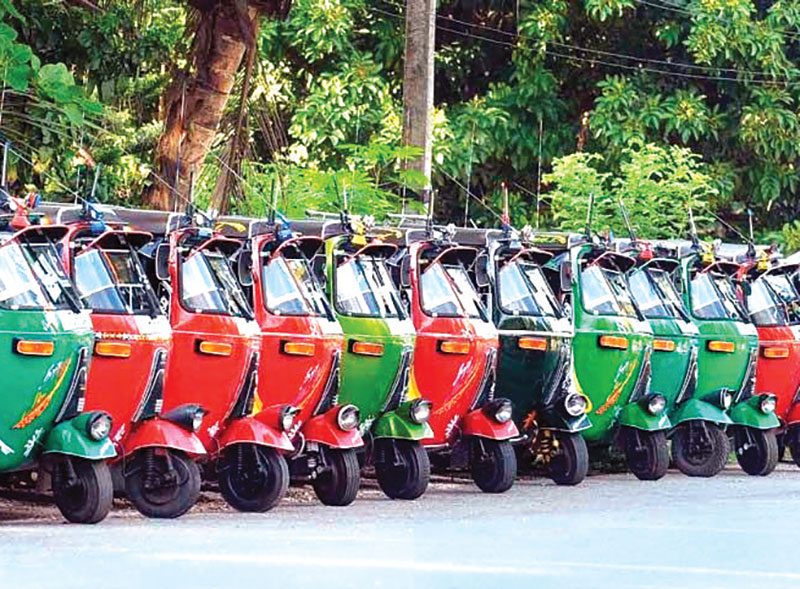
An ordinary journey through Colombo raises uncomfortable questions about road discipline, passenger safety and our tendency to judge motorists by the vehicles they drive.
It was a little past noon when I finished attending a court matter and remembered that I had to visit a nearby bank before returning to my other work. The bank was hardly a kilometer away, a distance I would normally have walked without giving it much thought. However, anyone who has walked through Colombo in formal court attire under the scorching midday sun would appreciate why I was reluctant to do so. Taking my own vehicle was not particularly appealing either, as finding a parking space near a bank during business hours can sometimes take longer than the transaction itself.
After considering my options, I decided to take a three-wheeler, a perfectly ordinary decision that unexpectedly left me reflecting on the way we judge those who drive them. Within minutes, I was seated in the rear, travelling through the usual Colombo traffic. It was convenient, reasonably priced and saved me the trouble of searching for parking or arriving at the bank drenched in sweat. As we approached a busy junction, however, a car suddenly cut across our path without any indication. Its driver appeared determined to squeeze into a narrow gap, apparently unconcerned about the vehicles already occupying the road. Our three-wheeler driver immediately applied his brakes, throwing me slightly forward in my seat. Fortunately, he reacted quickly enough to avoid a collision, while the car continued on its way as though nothing unusual had happened.
The incident itself was hardly extraordinary by Colombo’s standards, but it made me consider how differently we might have reacted had the situation been reversed. If a three-wheeler had suddenly cut across a car in the same manner, the driver would probably have been subjected to angry horns, harsh words and the familiar accusation that three-wheeler drivers have no respect for road rules. Yet when someone driving a comfortable, air-conditioned car behaves just as irresponsibly, we tend to treat it as another unpleasant encounter in traffic. It seems that, in our public discussions about road discipline, the seriousness of an offence sometimes depends not so much on what a driver does, but on the vehicle he happens to be driving.
This is not an attempt to portray three-wheeler drivers as innocent victims of unfair criticism. Anyone who regularly travels on Sri Lankan roads knows that some drivers behave recklessly, stopping without warning, making dangerous U-turns, disregarding traffic signals and squeezing through gaps that sensible motorists would avoid. Such conduct deserves criticism and, where appropriate, legal action. Nevertheless, it would be equally dishonest to pretend that these practices are confined to three-wheelers. A few minutes spent observing traffic at a busy Colombo junction would reveal expensive cars changing lanes without indicating, SUVs obstructing pedestrian crossings, motorcycles weaving dangerously between vehicles and buses stopping wherever passengers signal them to do so.
What is troubling is our tendency to turn the misconduct of an individual three-wheeler driver into an indictment of an entire profession. A badly parked three-wheeler becomes another example of everything wrong with the industry, while a luxury car obstructing a pavement is generally treated as the irresponsible conduct of its particular driver. Perhaps this difference in perception has become so familiar that we rarely question it. Yet the law makes no distinction between an illegally parked vehicle costing several million rupees and one purchased through a modest leasing arrangement. Both can obstruct traffic, inconvenience pedestrians and create dangerous situations for other road users.
There is also considerable irony in our relationship with three-wheelers. We complain about their presence on the roads, accuse them of contributing to congestion and criticise the behaviour of their drivers, but the moment we need to reach somewhere quickly, avoid a parking problem or transport an elderly relative to a nearby hospital, we often turn to the very vehicles we complain about. In many rural communities, where public transport remains inadequate, three-wheelers provide an essential connection between homes, hospitals, markets and bus routes. Their contribution to everyday mobility is difficult to dismiss, particularly for people who cannot afford private vehicles or have limited transport alternatives.
The driver who took me to the bank that afternoon was simply earning his living. For him, the three-wheeler was not a symbol of traffic disorder or a subject for public debate, but a means of supporting himself and possibly a family. He had provided a useful service and, when confronted with another motorist’s carelessness, demonstrated the kind of defensive driving that we should expect from everyone using our roads. By the time I paid the fare and stepped out near the bank, I found myself wondering whether our criticism of three-wheelers sometimes says as much about our own prejudices as it does about genuine concerns over road safety.
That question becomes particularly relevant when we consider one of the strongest arguments made against three-wheelers: passenger safety. There is no denying that a conventional three-wheeler offers considerably less protection in a collision than a modern passenger car equipped with airbags, seat belts and a reinforced passenger compartment. Its lightweight construction and limited structural protection expose occupants to risks that should never be underestimated. But acknowledging those limitations is quite different from suggesting that such vehicles have no legitimate place on our roads. If the absence of a protective passenger compartment is sufficient reason to question a vehicle’s acceptability, we must also consider motorcycles and bicycles, whose riders are even more exposed to the consequences of a collision.
A motorcyclist has little protection beyond a helmet and appropriate riding equipment, while a cyclist has neither airbags nor a surrounding metal structure to absorb the impact of an accident. Pedestrians are more vulnerable still, particularly on roads where pavements are obstructed or entirely absent. Yet nobody would seriously argue that walking or cycling should be discouraged simply because these activities involve greater physical exposure. The sensible response is to improve road conditions, regulate speeds, strengthen vehicle standards and ensure that motorists respect vulnerable road users. The World Health Organization has consistently emphasised this broader approach to road safety, recognising that pedestrians, cyclists and motorcyclists account for a substantial proportion of road traffic deaths worldwide.
The comparison does not mean that all vehicles are equally safe, nor should it be used to minimise the genuine risks associated with three-wheelers. Different vehicles offer different levels of protection, and their safety depends on design, maintenance, speed, road conditions and the circumstances of a collision. However, there is something fundamentally flawed in assuming that a vehicle becomes unacceptable merely because it cannot provide the protection available in a modern car. If that were the standard, we would have to reconsider the place of several widely used forms of transport. More importantly, we would risk overlooking the responsibility of drivers whose behaviour can turn an otherwise ordinary journey into a dangerous encounter.
There is an equally questionable assumption that travelling in a larger or more expensive vehicle somehow reflects greater responsibility on the road. A modern car may provide better protection to its occupants, but its safety features cannot compensate for the arrogance or carelessness of the person behind the steering wheel. An SUV equipped with advanced braking systems and multiple airbags can still be driven recklessly, and its greater weight may increase the danger to pedestrians, cyclists and smaller vehicles in certain collisions. Road safety cannot therefore be measured solely by how effectively a vehicle protects its occupants. It must also consider the risks that vehicle presents to everyone else sharing the road.
Perhaps what we need is a more balanced understanding of road safety, one that recognises the limitations of three-wheelers without turning their drivers into convenient villains. There is every reason to demand better vehicle standards, responsible driving and stronger enforcement, but those expectations must apply equally to motorists operating cars, buses, motorcycles and commercial vehicles. A reckless driver does not become less dangerous because he is seated inside an expensive car, just as a responsible three-wheeler driver should not be treated with suspicion merely because his vehicle has one wheel fewer.
The experience of that afternoon reminded me that our roads are shared public spaces, not a hierarchy determined by the price, size or appearance of the vehicles using them. The three-wheeler that took me to the bank served a practical purpose, while the driver of a more expensive vehicle created the only dangerous moment of the journey. It would be unreasonable to draw conclusions about all car drivers from that single incident, just as it would be unfair to judge an entire profession by the misconduct of a few three-wheeler drivers. If we genuinely want safer roads, perhaps we should begin by judging people according to how they drive rather than what they drive.
——————————————
Sampath Perera, LL.M. (UK), is an Attorney-at-Law and former Commissioner of the Office on Missing Persons (OMP). He has served as Legal Adviser to the Ministry of Justice and the Ministry of Higher Education.
by Bishop Duleep de Chickera
The Valiant
Centuries ago, the intervention of a Persian king, restored a degree of balance of power in the West Asian region. In the 6thc, BCE, Cyrus the Great of Persia, put a stop to the aggressive expansionism of the Babylonian empire and set the exiled Jews free.
After Cyrus’s death, his successor Darius was made aware of his predecessors’ plans to do even more. Commissioning some competent Jews, he fulfilled Cyrus’s intentions by restoring the ravaged city of Jerusalem and its venerated temple.
The Jews were overwhelmed. They would remember the valiant one who revived the essence of their nationhood. And so, the story of Cyrus the Persian, acknowledged as the ‘Anointed Deliverer’, the ‘Messiah’, came to be etched in the Jewish Scriptures (The Bible-Ezra 1- 6:15, Isaiah 44: 28, 45: 1-13).
Empire and Empires
This stirring story impacted Christianity as well. As former Jews, the earliest Christians were familiar with the hardship experienced under Babylonian imperialism. This led to the secret identification of the then brutal Roman Empire, as ‘Babylon’. The pseudonym worked so well that some Christian writings and communities applied it to other marauding forces that crushed peoples and looted their lands.
Vain politics
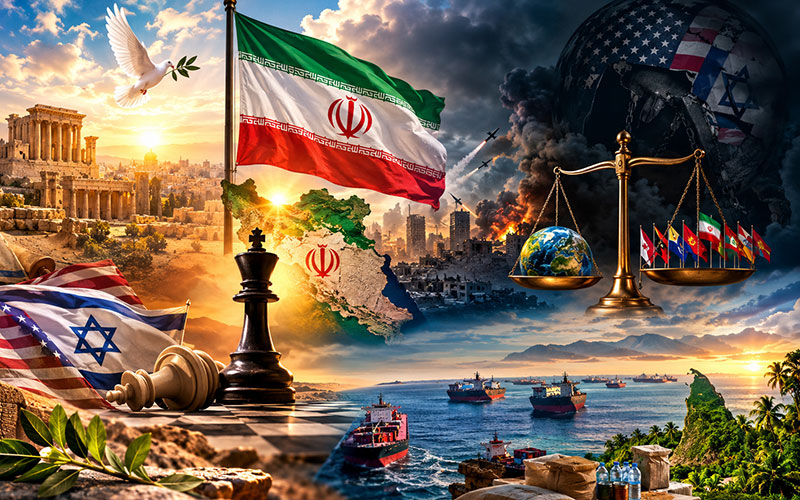
Today the world witnesses an ironic alliance of relentless bullying between the progeny of ‘Babylon’ and Jew. Together the US and Israel do to others what Babylon did to the Jews, and what their Book tells the Jews they are never to do to others.
The alliance’s agenda is straightforward. While one randomly ridicules and threatens sovereign nations, the other is quick to fabricate evidence that leads to the decimation of infants, children and unarmed civilians; all on the pretext of self-defence. Thereafter, security zones carved out on other people’s property mock what is left of International law, ‘friendly’ nations are intimidated into buying killing devices at thumping profits and military bases emerge on these territories in exchange for protection. The war with Iran, Cyrus’ Persia of today, is integral to this agenda.
Enter the villain
Iran, one of the most ancient and advanced civilisations of the world, has since its Islamic revolution of 1979 come under a despotic theocratic governance. It has crushed internal dissent and the clamour for participatory governance among its own people, prevented the growth of democratic institutions, trained and financed para-military forces to resist Israel’s settler colonialism and challenged the influx of western interests in the region. In return Iran has been relentlessly caricatured as global villain and subject to the wrath of the western mind- set and its propaganda industry.
The campaign to demonise Iran has been so clever that many of her neighbours who share a long cultural history, stand shoulder to shoulder today with vain intruders bent on crushing the only nation it cannot subdue, in a region they have no business to meddle in.
The nerve to be
Wars do strange things. They slaughter good men and women on all sides, cause chaos and misery wherever it spreads and never stops to explain to the children who survive, that this madness was simply to satisfy the egos of the vain.
But wars also change human perception. And there are signs that the current war on Iran, (It must never be the ‘Iranian war’, as it should never have been the ‘Korean war’, the ‘Vietnam war’, the ‘Afghanistan war’ and so on), is changing global perception.
Slowly, the devious stereotype of global saviours versus regional villain, is being redefined. While the hard questions on participatory, good governance must remain to haunt and transform Iran, the villain is now being acknowledged, however grudgingly, as the one nation that refused to back down in the face of global bullying. This too at tremendous personal cost to the lives of its people, infra-structure and future stability. In a world of cowardly political expediency, costly resistance attracts attention; even admiration.
There is more. The resilience of the vilified villain in the current war appears to have strengthened the nerve of the repeatedly humiliated European and British allies of the alliance, who at last learnt to say ‘no’. A first, to an ‘order’ to join an unprovoked and senseless far away war, backed with a second, when pressed to police the Straits of Hormuz. Typical of handling the playground bully, all it takes is for one little girl to hold her ground.
It does not stop here. Sheer desperation at Iran’s unsettling tenacity shamelessly drove Babylon into the arms of other neutral powers that it repeatedly ridicules and badgers with threats of tariffs and more tariffs. Regardless of a sudden demonstration of charming diplomacy, these nations would have no part in twisting Iran’s arm. Some instead, seized the opportunity to address Babylon on its arbitrary violation of International Law and warned it to refrain from global bullying. Since then, there have been less threats on the annexation of Greenland and interference in Cuba’s internal affairs.
The right balance
Like war does, resistance to war also does strange things. While the refusal to yield stimulates active defiance among some, and strongly worded objections from others, the outcome of the current conflict is hugely unpredictable. An independent, safe and stable region, made up of independent, safe and stable nations, is many, many courageous interventions and many, many wise negotiations away.
But one thing is clear. Isolated from its traditional allies, subject to straight talk from neutral nations and under growing pressure from saner elements at home, the vain find themselves uncomfortably seated as equals at one table. Here, Iranian geo- political strategies coupled with a measured readiness to return to arms in the event that table agreements are violated, will hold them; but for a while.
Given this footpath to a balance of power that Cyrus’s Persia of today has paved, it is now left to all who value the sovereignty and dignity of all nations, theirs included, and the indispensability of International law, to step out and help steer this momentum.
In the event that this happens, dismantling the visible acts of global bullying alone, will not be enough. The impulse of this crime, flourishing brazenly in the big businesses and assembly halls in the big cities of the world, and more subtly tucked away in the fabric of reputed places of learning, religiosity and leisure, will also have to be called out and neutralised.
Postscript
At the time of writing, a humanitarian crisis looms over Lanka’s southern seas. Historically renowned for her spontaneous hospitality even in the worst of times, Lanka finds herself constrained from responding to the desperate cries for supplies; water, food and fuel, from a stranded fleet of Commercial ships, simply because they fly the Iranian flag. Regrettably, Babylon’s typical threat of sanctions appears to be driving our economically vulnerable Island nation, to the brink of compromising our time tested right to be humane.
With peace and blessings to all
I refer to Dr Upul Wijayawardena’s recent letter on science and religion. I agree with him on the fate of religions in the modern world and would like to add the following observations on the evolution of religion and the advent of AI.
Religious philosophy evolved only in ancient India while it remained static with monotheism in other parts of the world. When the polytheistic Vedic religion arrived with Aryan migration to India, they found the ancient version of Jainism, which may have been practised over four thousand years as evidenced by some figures in meditation posture found in Mohenjo daro. By that time the indigenous religion had already abandoned the creator god or gods but still believed the mind as a permanent entity athman that survived death and continued in a cycle of reincarnation (samsara) due to results of any harmful action (kamma) even unintended performed in life collected in the athman. Salvation to a happy all-knowing permanent state named Kevala could be attained by the athman with extreme degree of self-mortification to destroy the past kamma attached to it, refraining from new kamma and developing the mind by meditation. As observed in progression from Veda to Upanishads the Aryan religion, evolution progressed with adoption of kamma, the cyclic existence of samsara, meditation and ethical behaviour in addition to prayer and sacrifice they practised for moksha.
The Buddha appeared in this philosophical atmosphere and denied both creator god and a permanent entity of athman. His psychology describes human behaviour based on the mind as a stream of changing consciousness. However, he accepted the cyclic existence of samsara; he said he verified the survival of consciousness at death with help of knowledge he gained from meditation. He prescribed a middle path to attain nirvana, a permanent state of happiness, avoiding self-mortification and redefined kamma to intentional activity only, both ethical and unethical resulting in bad and good results. He disagreed with the idea of kamma as the cause of rebirth. Following the Buddha, Vedantha religion reformed god to universal athman or brahman and evolved to modern Hinduism with a mixture of polytheism.
In his description of living beings in the universe, the Buddha has described some with a body made of fine material (brahma beings) in comparison to the gross material body of human and animal beings. One may assume the brahma body may not be carbon based.
The Buddha has also described living beings with physical body only (asannasatta) and another variety with mind only without a body (arupa satta). Therefore, it is not surprising to Buddhists that AI may evolve to become living beings if it develops a readily and freely available mobile source of energy and takes over the world with its superior capacity. AI already has information about Buddhist psychology. With that knowledge ‘AI beings’ may even become Buddhists not given to rituals.
According to the Buddha, brahma beings and asannasatta beings have very long lifespans as their bodies are not subject to decay and illness human beings develop. The new AI beings also may live as long as they wish because they may be able to repair themselves in case of developing physical defects. They would need only ethical behaviour to avoid destroying themselves by peaceful existence if they took over the world, as feared in some quarters.
However, as long as human beings exist in the world with death and uncertainty of what happens after death, they need a religion and rituals to give them psychological support. Even those who profess death is the end of life may have some doubt troubling their mind from time to time and may think of religion in times of adversity.
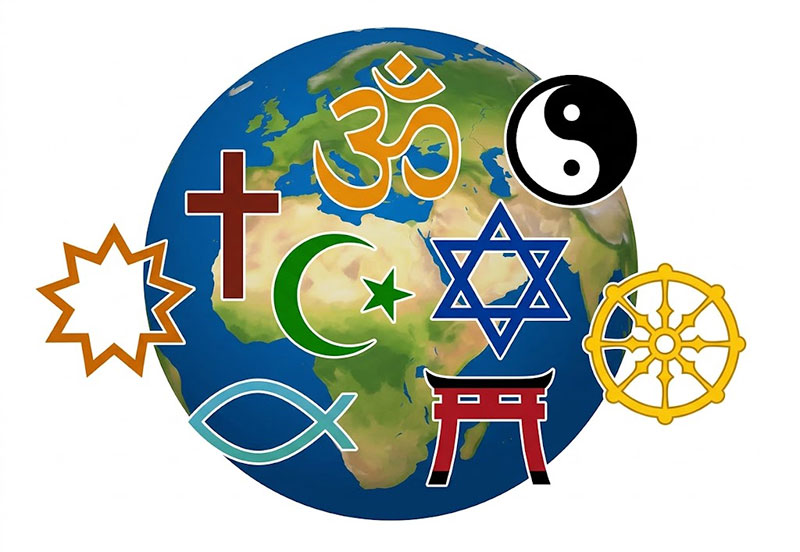
Ideally, human beings are free to accept one of the many versions of religious philosophies and respect each other’s choice and live in harmony. Unfortunately, extreme degrees of religious versions that cause division, unrest and violence will always continue to exist together with religions in the world.
Upali Abeysiri

Rare pink diamond goes on display in France 100 years after amateur heist

Nursery owner in China jailed for life after hundreds of children poisoned

Pakistan, Sri Lanka look to find the right mix as World Cup countdown begins

Mumbai Indians and head coach Mahela Jayawardene part ways

Review of progress in reforms and modernisation of key state revenue-collecting institutions

Rose Bowl expanded to include Australia vs New Zealand T20Is

‘Dates have the highest sugar content to fight Coronavirus’

Sunday Island 27 December – Headlines

#SundayIsland 17th December – Headlines

Sunday Island – 28th March

Sunday Island Headlines – 21 March

Sunday Island – 21st February – Headlines
-

 News7 days ago
Sri Lanka escalates anti-graft drive with Shiranthi’s jailing
-

 News7 days ago
Iranian ships stranded, Lanka fears US sanctions
-

 Latest News6 days ago
Farhan and Sadaqat help Pakistan seal series in style
-

 Latest News4 days ago
Nissanka’s return headlines Sri Lanka’s Test squad against Pakistan
-

 Features6 days ago
Intake 16: 45 years of duty and honour
-
 News6 days ago
Malwathu Chapter issues statement on talks with President over Gnanasara Thera’s robes
-
 News7 days ago
Navi Pillay’s Lankan affairs in focus as she wins 2026 Nobel Peace Prize
-
 News6 days ago
CP alleges NPP has taken the blame for illegal US sanctions on Iranian vessels