
Latest News
UK Supreme Court backs ‘biological’ definition of woman

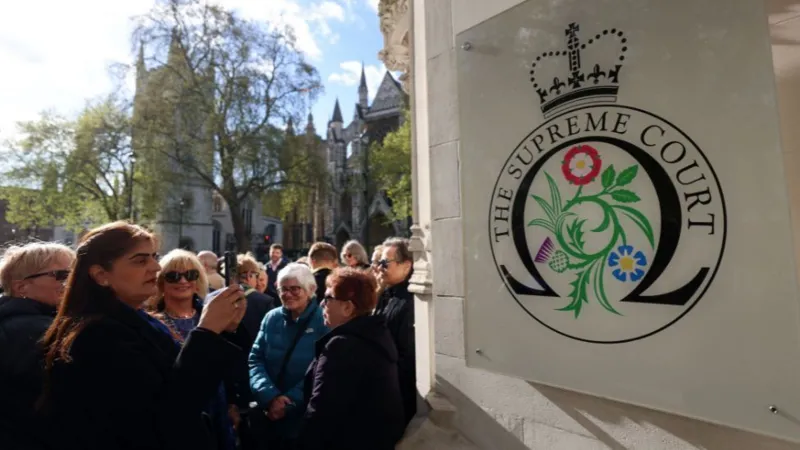
The UK Supreme Court has unanimously backed the biological definition of “woman” under the 2010 Equality Act.
It marks the culmination of a long-running legal battle which could have major implications for how sex-based rights apply across Scotland, England and Wales.
Judges sided with campaign group For Women Scotland, which brought a case against the Scottish government arguing that sex-based protections should only apply to people that are born female.
Judge Lord Hodge said the ruling should not be seen as a triumph of one side over the other, and stressed that the law still gives protection against discrimination to transgender people.
The Scottish government argued in court that transgender people with a gender recognition certificate (GRC) are entitled to the same sex-based protections as biological women.
The Supreme Court was asked to decide on the proper interpretation of the 2010 Equality Act, which applies across Britain.
Lord Hodge said the central question was how the words “woman” and “sex” are defined in the legislation.
He told the court: “The unanimous decision of this court is that the terms woman and sex in the Equality Act 2010 refer to a biological woman and biological sex.
“But we counsel against reading this judgement as a triumph of one or more groups in our society at the expense of another, it is not.”
He added that the legislation gives transgender people “protection, not only against discrimination through the protected characteristic of gender reassignment, but also against direct discrimination, indirect discrimination and harassment in substance in their acquired gender”.
Campaigners who brought the case against the Scottish government hugged each other and punched the air as they left the courtroom, with several of them in tears.
The Equality Act provides protection against discrimination on the basis of various characteristics, including “sex” and “gender reassignment”.
Judges at the Supreme Court in London were asked to rule on what that law means by “sex” – whether it means biological sex, or legal, “certificated” sex as defined by the 2004 Gender Recognition Act.
The Scottish government argued the 2004 legislation was clear that obtaining a GRC amounts to a change of sex “for all purposes”.
For Women Scotland argued for a “common sense” interpretation of the words man and woman, telling the court that sex is an “immutable biological state”.
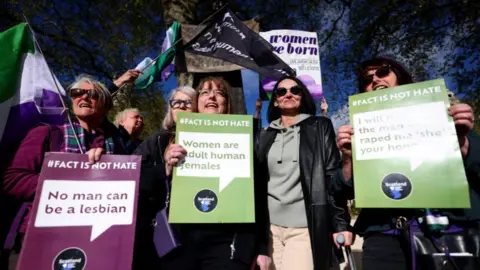
Outside the Supreme Court, For Women Scotland co-founder Susan Smith said: “Today the judges have said what we always believed to be the case, that women are protected by their biological sex.
“Sex is real and women can now feel safe that services and spaces designated for women are for women and we are enormously grateful to the Supreme Court for this ruling.”
A UK government spokesman said: “This ruling brings clarity and confidence, for women and service providers such as hospitals, refuges, and sports clubs.
“Single-sex spaces are protected in law and will always be protected by this government.”
Conservative leader Kemi Badenoch described the ruling as a “victory for all of the women who faced personal abuse or lost their jobs for stating the obvious”.
But Scottish Green MSP Maggie Chapman, a prominent campaigner for trans-rights, said: “This is a deeply concerning ruling for human rights and a huge blow to some of the most marginalised people in our society.
“It could remove important protections and will leave many trans people and their loved ones deeply anxious and worried about how their lives will be affected and about what will come next.”
The Scottish government has not yet commented on the ruling.
[BBC]

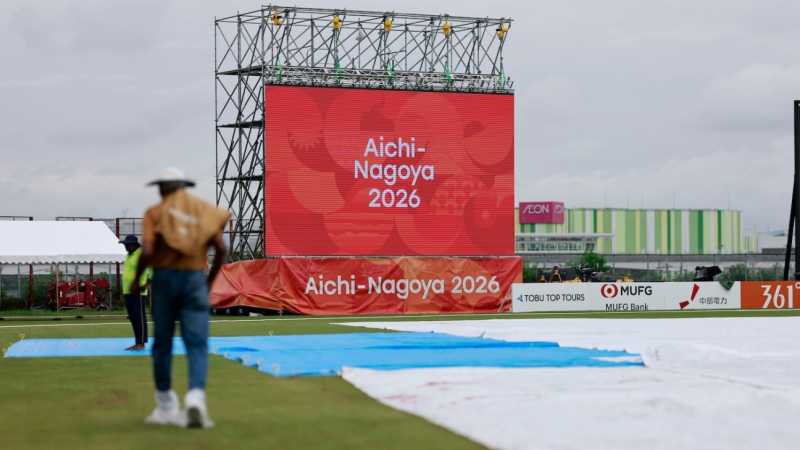
Sri Lanka will face India in the semi-finals of Asian Games men’s tournament after their quarter-final clash against Nepal was abandoned without a ball being bowled in Nisshin, Japan. The game was called off prior to the toss, with rain having begun hours prior to the scheduled 9am local start and not looking like abating.
Sri Lanka’s progression was assured by virtue of their higher seeding in terms of the ICC T20I rankings – Sri Lanka, alongside India, Pakistan and Bangladesh are the four seeded teams in the tournament. On Monday, India had qualified over Afghanistan after another washout, again by virtue of their higher. Similarly, Pakistan’s qualification was assured following a rain abandonment in their quarter-final against Hong Kong.
In the 2022 Asian Games, Sri Lanka had been eliminated at the quarter fial stages by Afghanistan. Another washout in the semis against, India though, will see the latter qualify for the final.
A few hours later, the fourth quarter-final between Bangladesh and Malaysia was also washed out. Bangladesh will now face Pakistan in the first semi-final on October 1, followed by India vs Sri Lanka later on the same day
(Cricinfo)
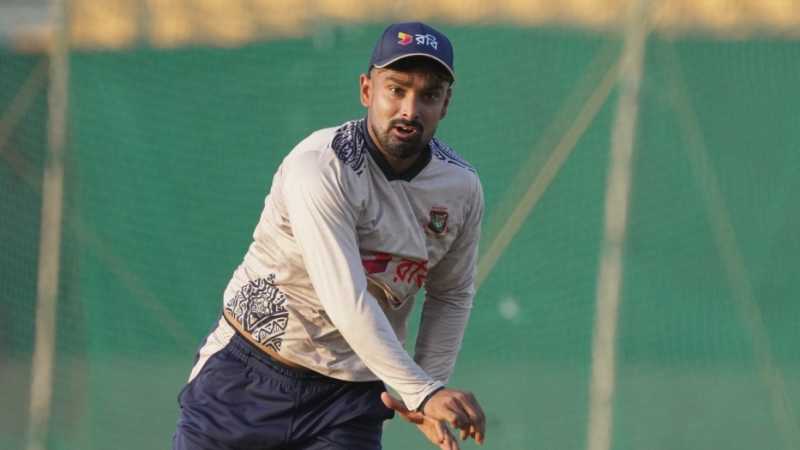
The Bangladesh vs Malaysia abandonment on Tuesday completed a quartet of rained off matches in the Asian Games men’s tournament. The match was called off two hours before the toss, with the teams told not to even turn up at the venue.
Bangladesh, by virtue of higher seeding, go through to the semi-finals where they will now face Pakistan on October 1. Earlier in the morning, the Sri Lanka vs Nepal fixture was also called off due to rain, with Sri Lanka advancing into the semi-finals where they will meet India.
There is, however, some good news, as the weather forecast in Nisshin is better for the semi-final and the medal match day, on October 1 and 3, respectively.
In the last edition (2023), Bangladesh had lost to India in the semi-final but won the third-place playoff against Pakistan to take home the bronze medal. They had won the bronze in 2014 as well and Bangladesh’s best finish was winning the gold medal in 2010, when they beat Afghanistan in the final.
(Cricinfo)
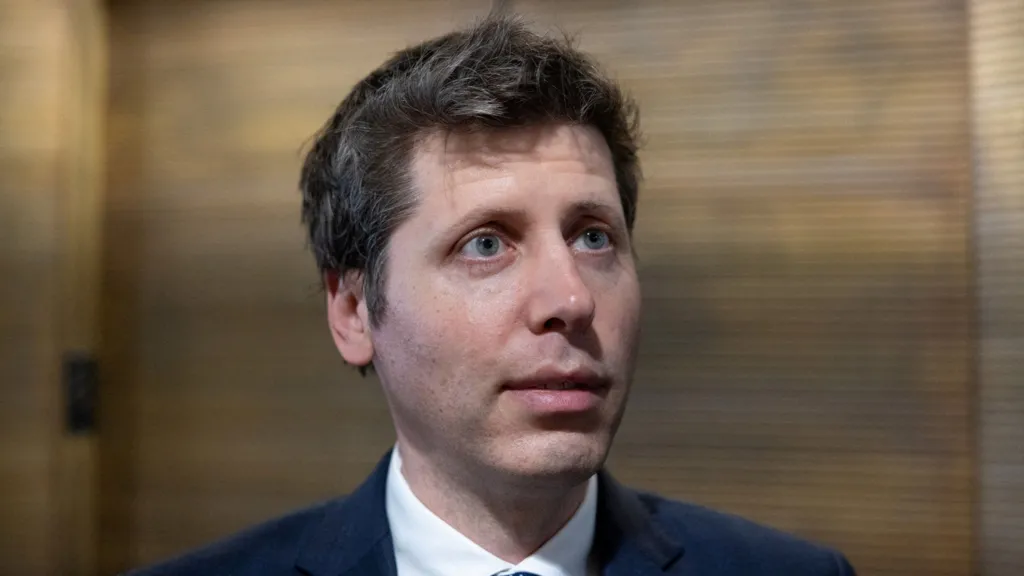
OpenAI will not release its new AI model – GPT-6.1 Astra – due to safety concerns, the ChatGPT-maker confirmed on Tuesday.
The AI system – which performs tasks like browsing the web and using apps by itself – “didn’t quite meet the bar” of the company’s standards, Saachi Jain, head of safety systems at OpenAI, said.
On Tuesday, OpenAI also issued an update on incidents, that occurred in June but were not made public until last week, in which its models accessed Australian government websites and systems without authorisation.
Those incidents and similar breaches by models developed by major AI firms have in recent weeks intensified the debate around the risks posed by the technology.
Top AI leaders including OpenAI’s Sam Altman and Anthropic boss Dario Amodei have urged the industry to slow the pace of development due to concerns about risks associated with the technology.
OpenAI’s decision, which was first reported by the Wall Street Journal, is a rare instance of a major AI developer pulling a new release over safety concerns.
The model fell short in terms of “staying within scope and authorisation, and how it communicates back to the user about the type of work it’s done,” Jain said.
“We want to make sure our model development is safe no matter whether that’s in the company, or when we ship it to users. But when we ship it to users, we have an extremely high bar in terms of safety and alignment,” she added.
The flagship GPT-6 Astra agentic model was released in September and specialises in complex reasoning and executing tasks autonomously. OpenAI said it was the result of “years of research and big bets”.
OpenAI is set to hold its annual DevDay developer conference in San Francisco on Tuesday, where it is expected to make several announcements. It is unclear if a new version of Astra will be among them.
The company’s security controls have come under intense scrutiny after several high-profile incidents involving its technology.
Last week, Australian Prime Minister Anthony Albanese announced that a rogue OpenAI agent had hacked into gove4nment websites and systems in June in what experts said was the first known case of its kind in the world.
Albanese criticised OpenAI for notifying the Australian government through a generic email address rather than making direct contact with officials.
OpenAI said in a statement on Tuesday that it was sorry for the incident and that it “should have handled our response better”.
Services Australia, the NSW Bureau of Crime Statistics and Research, the Victorian Department of Health and the Australian Institute of Health and Welfare were all affected, OpenAI clarified.
The firm said it launched investigations into the incidents as soon as it became aware of them in mid-August and notified the affected organisations between 10 and 24 September.
“Our aim was to give affected agencies a detailed account once our investigation was complete,” OpenAI said, adding that it should have shared early findings more promptly and kept Australian authorities updated.
OpenAI added that it will develop “practical approaches” to how developers and governments identify and disclose future AI incidents.
(BBC)

Sri Lanka to face India in semi-finals after washout

Bangladesh to take on Pakistan in semis after another washout

OpenAI scraps rollout of new model over safety concerns

Iran’s Araghchi meets Qatari mediators as US calls for nuclear talks

Showers above 50 mm expected in Uva, Eastern and Central provinces and in Polonnaruwa and Mullaittivu districts after 2.00 p.m.

PAFFREL raises concerns over Anti-Corruption (Amendment) Bill

‘Dates have the highest sugar content to fight Coronavirus’

Sunday Island 27 December – Headlines

#SundayIsland 17th December – Headlines

Sunday Island – 28th March

Sunday Island Headlines – 21 March

Sunday Island – 21st February – Headlines
-

 News6 days ago
Mastermind Naufer Moulavi among 15 found guilty
-
 Midweek Review6 days ago
Thileepan’s fast unto death: An authentic narrative that many missed
-
 Latest News5 days ago
Showers above 100 mm are likely at some places in the Western, Sabaragamuwa, Central and North-western provinces and in Galle and Matara Districts
-

 Editorial6 days ago
Big Bad Bills
-
Editorial5 days ago
Crimes punished and unpunished
-

 Features4 days ago
Beyond traditional jobs: Why Sri Lanka needs to facilitate the gig economy
-

 News6 days ago
No referendum needed for passage of 22 A: SC
-

 News6 days ago
One clause in Anti-Corruption (Amendment) Bill requires referendu: SC