
News
Opp. alleges move to strip Ranil, SF, Rajitha, Patali, others of civic rights


‘Political Victimisation’ PCoI report:
by Shamindra Fedinando
An Opposition political grouping has accused the SLPP government of planning to deprive civic rights of several members of parliament and ex-MPs.
Opposition activists former Deputy Minister Karu Paranavithana, Attorney-at-Law Crishmal Warnasuriya, Attorney-at-Law Shiral Lakthilaka and Ananda Lanarolle alleged the government targeted former Prime Miniter and UNP leader Ranil Wickremesinghe, SJB MPs Patali Champika Ranawaka, Dr. Rajitha Senaratne and Field Marshal Sarath Fonseka, JVP leader Anura Kumara Dissanayake, SLMC leader Rauff Hakeem and TNA leader R. Sampanthan on the basis of the report of the Presidential Commission of Inquiry (PCoI) into Political Victimization.
Public servants implicated in the PCoI report, too, face the possibility of losing civic rights.
The issue was taken up at a press conference called at the National Library and Documentation Services Board on Friday (5).
The PCoI consisted of retired Supreme Court Judge Upali Abeyratne, retired Court of Appeal Judge Daya Chandrasiri Jayathilake and retired IGP Chandra Fernando. Ms. Pearl Weerasinghe functioned as the Secretary to the PCoI.
President Gotabaya Rajapaksa received the report on January 8. The President appointed the PCoI on January 20, 2020.
The PCoI inquired into alleged cases of political victimization that took place in the wake of investigations conducted by the Commission to Investigate Allegations of Bribery or Corruption, FCID, CID and the Special Investigation Unit of the Police from January 8, 2015 to November 16, 2019.
Lakthilaka alleged that President Gotabaya Rajapaksa was planning a Myanmar style authoritarian rule. The SJB National List nominee said that the electorate empowered Gotabaya Rajapaksa at the Nov 2019 presidential poll, in spite of them repeatedly warning of the looming threat of dictatorship in case the SLPP candidate won.
Alleging that the Justice Abeyratne committee report had been prepared outside the existing law, one-time advisor to President Maithripala Sirisena warned of dire consequences if the government exploited the report to advance its despicable political agenda. Lakthilaka claimed that PCoI project threatened the very basis of the country’s judiciary.
Asked to explain what the Bar Association of Sri Lanka’s role should be, Lakthilaka told The Island yesterday (7) that if the BASL, the Law Commission and the Justice Minister addressed the issues at hand, there was no requirement for them to take it up. Pointing out that the BASL election was around the corner, Lakthilaka said that the primary body representing the interests of the lawyers and the Law Commission couldn’t remain silent on the matter.
Addressing Friday’s media briefing, lawyer Lakthilaka urged President Gotabaya Rajapaksa not to abuse and exploit available laws and the follow democratic way of governance.
Karu Paranavithana said that the PCoI process threatened Sri Lanka’s judicial system. Pointing out that the electorate overwhelmingly empowered Gotabaya Rajapaksa with executive powers, the former Deputy Media Minister alleged the President was bent on seeking dictatorial powers. Paranavithana compared what he called judicial crisis in Sri Lanka with Myanmar military seizing executive, parliamentary and judicial powers for a period of one year.
Paranavithana also claimed that the Abeyratne report had created necessary ground situation for an authoritarian administration.
The former yahapalana MP questioned the justification in appointing a Special PCoI to examine the Abeyratne report. The Special PCoI was established by way of a gazette extraordinary, dated January 29, 2021. The Special PCoI will be chaired by Supreme Court Justice Dhammika Samarakoon and will also comprise SC Justice Kumuduni Wickremasinghe and Court of Appeal Judge Ratnapriya Gurusinghe.
Lawyer Warnasuriya asked whether a Special PCoI could be appointed to examine PCoI report appointed in terms of another Act. Warning of calculated efforts to undermine the supremacy of the judiciary, Warnasuriya expressed confidence that those who had been appointed to the Special PCoI, too, would recognize the looming danger. Warnasuriya assured that whatever the challenges; they would definitely stand by the public and do everything possible to thwart the SLPP’s political project.
Ananda Lanarolle urged all members of the judiciary to take a common stand.
Meanwhile, former Additional Solicitor General Srinath Perera told the media that the Abeyratne report if implemented could destroy the public faith in the judiciary. Perera explained how the government sought to exploit the report to its advantage at the expense of all democratic institutions and cleared those near and dear to the administration who had been found guilty of courts or were currently facing proceedings.
Opposition activist Lal Wijenayake yesterday told The Island that the judiciary would be definitely moved against the government in that regard. Wijenayake said that they were in the process of discussing ways and means of tackling the threat and judicial measures would be taken.


Rs. 16 bn BMW revenue fraud:
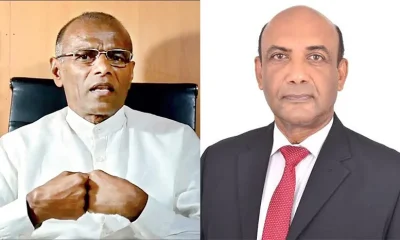
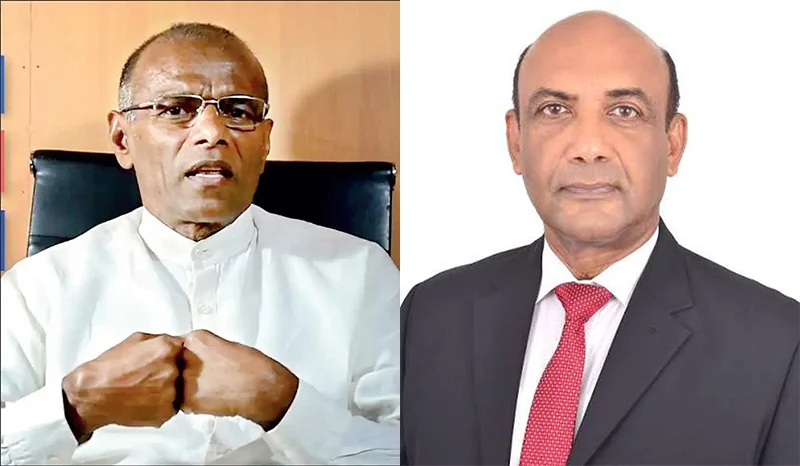
Public interest litigation activist Nagananda Kodituwakku has said he will initiate appropriate proceedings against Director General of Customs, Wimal S.K. Liyanagama, in terms of the Anti-Corruption Act No 9 of 2023, unless the Customs carries out a revenue fraud inquiry to recover approximately Rs 16 bn in lost government revenue.
General Secretary of Vinivida Foundation, and former Customs officer, Kodituwakku said that though the Department, in response to his request for a meeting to discuss the issue, in writing, assured them that the investigation was underway, they found that the actual situation was not so.
Kodituwakku alleged that the Customs Chief had neglected what he called statutory duties under the Customs Ordinance, by disregarding his request for a meeting.
Kodituwakku said the investigation into the importation of 1,728 brand new BMW vehicles, under the concessionary duty permits issued by the government for the public servants, between 2011 and 2014, had been stalled.
The civil society activist said that investigations had revealed the vehicles hadn’t been imported by the permit holders themselves but others. It also transpired that the value of the imported vehicles, mentioned in the commercial invoices, proforma invoices and the CusDecs, tendered to Customs in the names of the permit holders, were not the actual values for the vehicles in question.
The high-profile case has been handled by the Central Investigation Directorate, at that time headed by Murugesu Thayabaran, a batchmate of Kodituwakku.
The ex-Customs officer said that he had appeared as counsel for Thayabaran in Court of Appeal and was determined to bring the case to a successful conclusion. According to him, the importer, over the years, had been represented by nine President’s Counsel as the case dragged on from the time of P.S.M. Charles, Director General, Customs.
Kodituwakku made available letters he wrote to the Customs and other parties on this issue, to The Island. Pointing out that the Court of Appeal on 7 May, 2024, dismissed the importer’s final appeal regarding the case pertaining to the revenue loss of Rs. 16 bn, Kodituwakku said that although the court had cleared the way for the Customs probe, no action had been taken.
However, the Court of Appeal ruling was given before Liyanagama succeeded Seevali Arukgoda as DG Customs on 6 May, 2026. Liyanagama served as Director General of the Department of Management Services at the Treasury before the new appointment.
Kodituwakku said that he had also brought the Customs case to the attention of the Commission to Investigate Bribery or Corruption (CIABOC).
Emphasising the failure on the part of the Opposition to raise this issue, both in and outside Parliament, Kodituwakku said that since the exposure of the BMW scam, during Mahinda Rajapaksa’s presidency, there had been four presidents, namely Maithripala Sirisena, Gotabaya Rajapaksa, Ranil Wickremesinghe and incumbent Anura Kumara Dissanayake. Unfortunately, successive administrations had allowed the interested parties to drag the case. The lack of interest shown by political parties revealed that they not only protected those responsible but encouraged corrupt practices of allowing third parties to import vehicles in terms of permits issued to legitimate recipients of such permits.
Having campaigned on an anti-corruption platform, during the presidential and parliamentary polls in 2024, the NPP couldn’t, under any circumstances, turn a blind eye to this situation, Kodituwakku said, adding that even the IMF should be concerned of the failure on the part of successive governments to recover the money.
By Shamindra Ferdinando
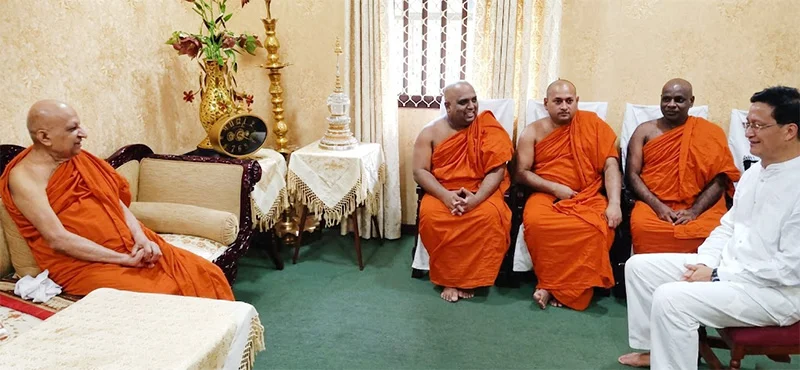
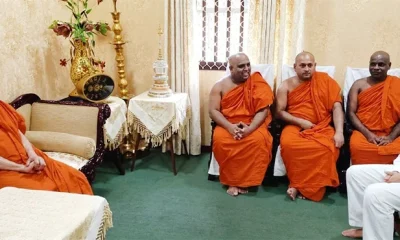
Outgoing Chinese Ambassador to Sri Lanka, Qi Zhenhong, who is scheduled to conclude his tenure on July 31, visited Kandy on the afternoon of July 18 to pay respects and receive blessings from the Mahanayake Theras of the Malwathu and Asgiriya Chapters.
During the visit, the Most Venerable Thibbotuwawe Sri Sumangala Mahanayake Thera of the Malwathu Chapter and the Most Venerable Warakagoda Sri Gnanarathana Mahanayake Thera of the Asgiriya Chapter hailed the Ambassador’s dedicated service to the country.
The Malwathu Mahanayake Thera noted that Ambassador Qi had performed his duties as a diplomat to the highest possible standard. He stated that the Ambassador’s contributions during his nearly six year tenure, including assistance during natural disasters and support for economic, educational, cultural, and religious sectors, would never be forgotten.
Expressing his appreciation, the Mahanayake Thera remarked that he would like the Ambassador to remain in Sri Lanka even after retirement.
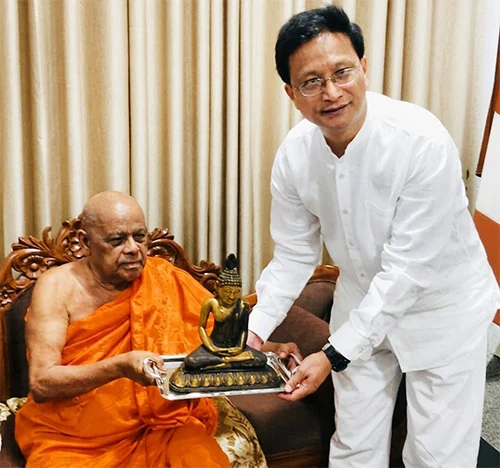 The Asgiriya Mahanayake Thera, Most Venerable Warakagoda Sri Gnanarathana Thera, also commended the Ambassador’s efforts in supporting infrastructure development during various natural disasters and praised his initiatives in strengthening the bilateral relations between China and Sri Lanka.
Reflecting on his tenure, Ambassador Qi Zhenhong stated that the Sri Lankan economy is gradually improving under the new government. He noted that the Chinese government fully supports the current government’s focus on industrial policy, state owned enterprise reform, and exports.
The Ambassador highlighted several ongoing collaborative projects, including an agreement to provide school uniforms, the reconstruction of 14 bridges destroyed by cyclones, and the upcoming arrival of the first batch of electric buses and vehicles.
“Sri Lanka feels like my second home,” the Ambassador said, adding that he is grateful for the generous support and sincere friendship extended to him by the people of Sri Lanka. He confirmed that while his tenure ends on July 31, he will continue to engage with Sri Lanka whenever possible.
The Ambassador also visited the Senior Member of the Asgiriya Chapter, Most Venerable Godagama Sri Mangala Thera, to receive further blessings, with other prominent members of the Maha Sangha also in attendance.
By S.K. Samaranayake
News
Move to extend retirement age of top judges: BASL asks govt. to stop process pending meaningful consultations
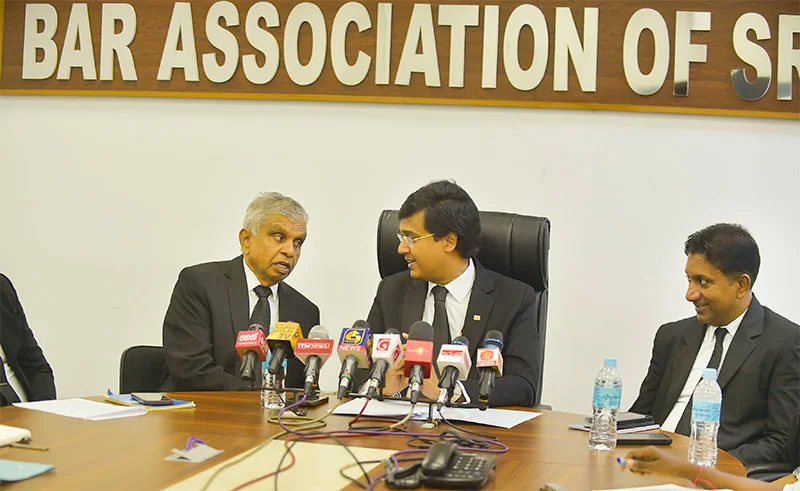
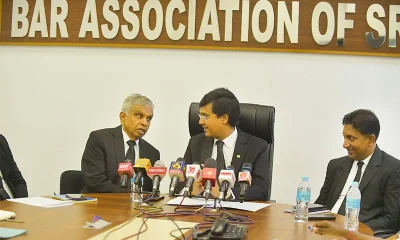
President of the Bar Association Rajeev Amarasuriya yesterday (21) briefed the media regarding the action taken by them to discourage the NPP government from increasing the retirement age of superior court judges.
Amarasuriya, flanked by BASL Deputy President Rienzie Arsecularatne (right) and Treasurer Pasindu Silva reiterated their strong opposition to the alleged move. The briefing took place at Dr. H.W. Jayawardene QC Auditorium, BASL Secretariat, Mihindu Mawatha.
Pointing out that the move to bring in a constitutional amendment to facilitate the project would be detrimental to the judiciary and the country, the BASL requested an opportunity to meet Justice Minister Harshana Nanayakkara to discuss the issues at hand.
The BASL proposed that the delegation would consist of members of the Executive Committee, President’s Counsel and senior members of the legal fraternity.
Amarasuriya said that the BASL was willing to assist the Justice and National Integration Ministry in a consultative process in case the government decided to do so. “We sincerely hope that no further steps will be taken in relation to this proposal until meaningful consultation has taken place with the principal stakeholders of the justice sector,” Amarasuriya said.

A few showers will occur in the Western, Sabaragamuwa and North-western provinces and in Kandy, Nuwara-Eliya, Galle and Matara districts

Customs asked to resume probe or face legal action

Outgoing Chinese Ambassador Qi Zhenhong bids farewell to Mahanayake Theras

Move to extend retirement age of top judges: BASL asks govt. to stop process pending meaningful consultations

Govt. mum on identities of JVP founder’s wife and children

Three high-profile alleged suicides shaping key investigations

‘Dates have the highest sugar content to fight Coronavirus’

Sunday Island 27 December – Headlines

#SundayIsland 17th December – Headlines

Sunday Island – 28th March

Sunday Island Headlines – 21 March

Sunday Island – 21st February – Headlines
-
 Business3 days ago
‘Giving up was never an option’: The fisherman who fought back after losing millions in SL
-
 Features3 days ago
Two memorable excerpts from a former SLAF commander’s memoir
-
 Latest News4 days ago
Davis cup Asia/Oceania Group IV 2026 to be held in Colombo from 20th to 25th July
-
 Features3 days ago
Erdoğan’s New Republic
-
 Life style3 days ago
Taste of the Swiss Alps comes to Colombo
-

 News4 days ago
Dengue outbreak gallops ahead: Infections surpasses 73,455, leaving 50 dead
-
 News4 days ago
Evidence recorded in money laundering case against Yoshitha Rajapaksa
-

 News5 days ago
Money laundering case against Yoshitha, fixed for pre-trial conference