
News
Govt. in fresh bid to improve education in North

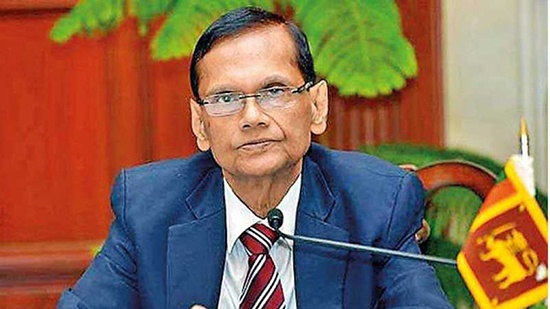
Japanese Ambassador joins GL in Kilinochchi
By Shamindra Ferdinando
Education Minister Prof. G.L. Peiris yesterday (3) said that he was undertaking a three-day visit to the North this week to explore ways and means of developing the education sector.
Prof. Peiris said that President Gotabaya Rajapaksa was keen to develop the education sector as part of the overall efforts to improve the living standards of the people in the North.
Japanese Ambassador Akira Sugiyama is scheduled to join Prof. Peiris in Kilinochchi, where the Agriculture Faculty of the Jaffna University is situated.
Prof. Peiris, who is also the Chairman of the ruling SLPP, said that Covid-19 caused a severe setback to the national economy, though the government was determined to implement planned projects. A boost for the Northern Province education was a necessity, Prof. Peiris said, adding that the government wanted to reach out to the people.
 Responding to another query, Prof. Peiris said: “We are looking at education sector reforms. Decision makers cannot ignore the need for reforms required to prepare youth for jobs, particularly in the private sector.”
The Education Minister’s visit takes place in the wake of the recent removal of a war memorial within the Jaffna University. The issue is likely to figure in the Education Minister’s discussions with Vice Chancellor of the Jaffna University S. Srisatkunarajah.
Prof. Peiris confirmed the scheduled meeting with the VC and Deans of faculties. Asked whether lawmakers representing the people of the Northern region would be participating in any of the events attended by him, Prof. Peiris welcomed the opportunity.
India sought Prime Minister Mahinda Rajapaksa’s intervention over the sudden removal of the memorial by the University authorities.
There couldn’t be any issue in the government working closely with Opposition political parties for the benefit of the public though differences remained on other matters, such as constitutional reforms.
Sri Lanka brought the war to a successful conclusion in May 2009.
Prof. Peiris who served as the first post-war Minister in charge of External Affairs said that the country couldn’t achieve real reconciliation though progress was made. The education sector could be one field where all stakeholders could work together.
Prof. Peiris expressed concern over the participation of some primary school students in a demonstration in Kilinochchi on Monday (1). Prof. Peiris said that such actions couldn’t be condoned in any manner and he had quite forcefully condemned it.
A section of the media reported some civil society groups, demanding the immediate release of LTTE convicts and suspects in custody, brought out some students. Prof. Peiris said that the previous Rajapaksa government ended the heinous practice of using children as cannon fodder and also as tools in propaganda efforts.
Prof. Peiris said that he would definitely look into the matter. The international community, too, wouldn’t want various interested parties to exploit children in support of politically motivated agendas. The Minister appreciated the reportage of the children’s participation in the Kilinochchi protest.
Minister recalled how children were used during the conflict. Successive governments tried in vain to stop the exploitation of children for ‘military purposes.’ During President Kumaratunga’s tenure, Sri Lanka even secured the support of the UN to bring an end to forcible recruitment of children as child soldiers.
Prof. Peiris said that the government was contemplating far reaching education sector reforms meant to address challenges. The renowned law academic said that the government was confident of conducting the GCE Ordinary Level examination in March though some continued to express concern over the Covid-19 getting out of control. Acknowledging the need to follow health guidelines in spite of the recent launch of the vaccination programme, Prof. Peiris said that the situation in the Northern and Eastern Provinces continued to improve with schools recording much improved attendance.



Anuradhapura Chief Magistrate, Siyapath Sasindu Wickramaratne, on Friday (12) ordered former Atamasthanadhipathi Pallegama Hemarathana Thera, who stands accused in a case involving the alleged serious sexual abuse of a minor girl, to provide a blood sample for DNA testing.
Accordingly, the court directed the suspect monk to appear before the Government Analyst’s Department on June 16 and provide a blood sample to the Government Analyst.
The order was issued after considering a further report submitted to court by the Nittambuwa Police.
Police informed the court that, pursuant to an earlier court order, certain case material had been forwarded to the Government Analyst on May 4, 2026, for DNA examination.
According to police, the material consisted of clothing allegedly stained with blood, which had been buried and concealed by the girl and later recovered during investigations.
Police further informed the court that the Government Analyst’s report had confirmed the presence of DNA evidence on the clothing.
Investigators told court that it was necessary to obtain a biological sample from the suspect monk in order to compare it with the DNA evidence recovered from the garments.
Police therefore requested an order compelling the suspect to provide a blood sample so that it could be determined whether the DNA evidence found on the girl’s clothing matched that of the suspect.
Having considered the submissions, the Magistrate ordered the suspect monk to provide the blood sample. The court also directed the Government Analyst to submit the report of the subsequent DNA examination.Pallegama Hemarathana Thera was previously remanded in connection with the case and was later released on stringent bail conditions.

(Asiatimes) From this week, those using private buses in Sri Lanka may face severe transport disruption, as operators in the sector have decided to cut services by 50%. Among the reasons for the protest are mounting losses, rising fuel costs and the government’s failure to grant fare concessions. At a press conference held on 7 June, Gemunu Wijeratne, president of the Sri Lanka Private Bus Owners’ Association, explained that “the authorities have not responded positively to requests for a review of bus fares and support measures regarding fuel”.
Meanwhile, around 25% of private transport vehicles have already voluntarily ceased operations due to financial difficulties. According to the majority of owners, “the decision comes after ongoing disputes with the authorities regarding fare adjustments and financial relief, which have not been met to date, despite numerous requests made over a long period”. Commuters, especially in Colombo and the surrounding areas, risk facing delays and overcrowding as the reduced fleet operates under the new directive.
According to Wijeratne, “the association will continue to provide a reduced service until the government approves a revised bus fare, in line with the rise in fuel prices”. The alternative for the government, he continues, is to provide “a direct subsidy to operators, as recent fuel price increases have placed considerable pressure on daily transport operators”.
During peak hours such as the morning, school finishing times and the evening rush hour, only essential services will be guaranteed. During these times, instead of four journeys, only three will be made. Overall, operations will be reduced to around 50%. “The government,” the chairman clarifies, “must take responsibility for this situation, as the majority of students and employees use private buses for their daily commutes, particularly to and from Colombo to various parts of the country.”
Operators in the sector point out that although they requested a temporary exemption to guarantee bus services for one month, neither the National Transport Commission nor the Minister of Transport responded positively. The annual fare review is due to be implemented during the first week of July, adding that they have the “legal authority” to “apply the revised fares”. On 5 June, Wijeratne continues, “we held discussions that were unsuccessful. Diesel prices are expected to rise by the end of this month. In view of all this, we are proceeding with the fare review. This year’s fare adjustment will be difficult for the public to bear, as all costs have risen by around 20–25%”.
The president of the Association of Private Bus Owners concludes by noting that “we cannot continue to operate at a loss. For this reason, we have asked the authorities for some concessions on diesel within the regulatory framework, but these measures have not been implemented. We have therefore decided to step up our industrial action. This week we will intensify our action by changing timetables and limiting operations. The decision was taken – he notes – due to the lack of a positive response to the request for a fare review following the recent rise in fuel prices”.
Recently, the Ceylon Petroleum Corporation (CPC) increased fuel prices in accordance with its monthly pricing formula. Among the changes, the price of a litre of petrol was increased by 15 rupees, rendering the current tariff structures unsustainable. To grasp the scale of the emergency and understand the impact on the population, AsiaNews spoke to Akalanka Punchihewa, Senuli Amrasekara and Dunesh Mayadunne, commuters from various parts of the country who travel to the capital every day for work. “We struggle,” they confirm, “to get to work from Kandy, Kurunegala and Galle. The recent decision by private bus operators is a severe blow, as we have to spend several hours in long queues just to get on a bus. The service provided by buses run by the Sri Lanka Transport Board (SLTB) is inferior to that of private buses. And we cannot,” the commuters conclude, “afford to travel to work by car or motorbike, as we are unable to bear the increased cost of fuel.”
by Arundathie Abeysinghe

Former Minister of Special Projects and former Deputy Minister of Economic Development S.M. Chandrasena was indicted before the Colombo High Court on Friday (12) on charges of corruption relating to the alleged misuse of government-imported seed maize intended for low-income farmers.
The indictment, filed by the Commission to Investigate Allegations of Bribery or Corruption (CIABOC), contains two charges under the Bribery Act in connection with an incident alleged to have occurred in the Anuradhapura District between January 1 and December 31, 2014.
According to the prosecution, seed maize stocks imported with public funds and earmarked for distribution to low-income farmers at concessionary prices were diverted from their intended purpose.
The indictment alleges that Chandrasena exerted undue influence on public officials, including the Director of Planning at the Anuradhapura District Secretariat, to facilitate the distribution of 36,000 kilos of seed maize to his associates instead of eligible beneficiaries.
CIABOC maintains that the alleged conduct constitutes an offence punishable under Section 70 of the Bribery Act.
Chandrasena was arrested by Bribery Commission officials on July 4 last year in connection with the investigation and was subsequently produced before the Colombo Magistrate’s Court.
He was later released on bail on August 1 after being held in custody.The case is expected to be taken up before the Colombo High Court on a future date.

Litchfield, spinners hand Australia big win over South Africa

Campbelle, Matthews outmuscle New Zealand to land famous victory

Showers will occur at times in the Western, Sabaragamuwa and North-western provinces and in Galle, Matara, Kandy and Nuwara-Eliya districts

Court orders former Atamasthanadhipathi to provide blood sample for DNA testing

High fuel prices spark outrage in transport sector, services halved

Former Minister S.M. Chandrasena indicted over alleged misuse of seed maize stocks

‘Dates have the highest sugar content to fight Coronavirus’

Sunday Island 27 December – Headlines

#SundayIsland 17th December – Headlines

Sunday Island – 28th March

Sunday Island Headlines – 21 March

Sunday Island – 21st February – Headlines
-
 News7 days ago
Women’s T20 World Cup 2026 warm-up: Chamari Athapaththu’s 94 helps Sri Lanka beat Pakistan
-

 Editorial6 days ago
Probe Sallay’s complaint
-
 News4 days ago
Local firms move millions of dollars overseas for phantom imports: Govt.
-
 News2 days ago
CIABOC summons Yoshitha over his participation in British Navy training programme
-
 Midweek Review4 days ago
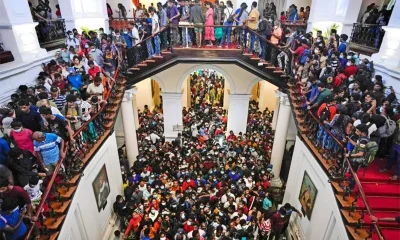
July 09: An inexcusable overall security failure and exceptional contingency plan
-

 Opinion5 days ago
Could Sri Lanka once again face an economic crisis similar to 2022?
-

 News4 days ago
AI raises concerns over arrest of Sallay and rapper under PTA
-
 News5 days ago
Sallay refuses to end hunger strike unless probe is taken out of CID led by Shani